Why low-noise fan electronics are harder than they look
A Low noise handheld fan circuit board has one job that sounds simple and turns out to be annoyingly demanding: keep a small portable fan moving air without adding whine, clicks, or unstable speed behavior. For sourcing managers and product teams, the board is not just a control part. It is where battery behavior, motor drive, user experience, and manufacturability all meet. If the electronics are sloppy, the fan may still spin, but it will sound cheap, drain quickly, or behave inconsistently at low speed.
That is why buyers looking at a Rechargeable mini fan control PCB or a Portable cooling fan PCB assembly should think beyond the basic schematic. The board has to work with the battery, the motor, the switch logic, and the enclosure. In compact handheld products, there is little room for thermal margin or noisy layouts, so the PCB design and assembly quality matter more than many first-time buyers expect.
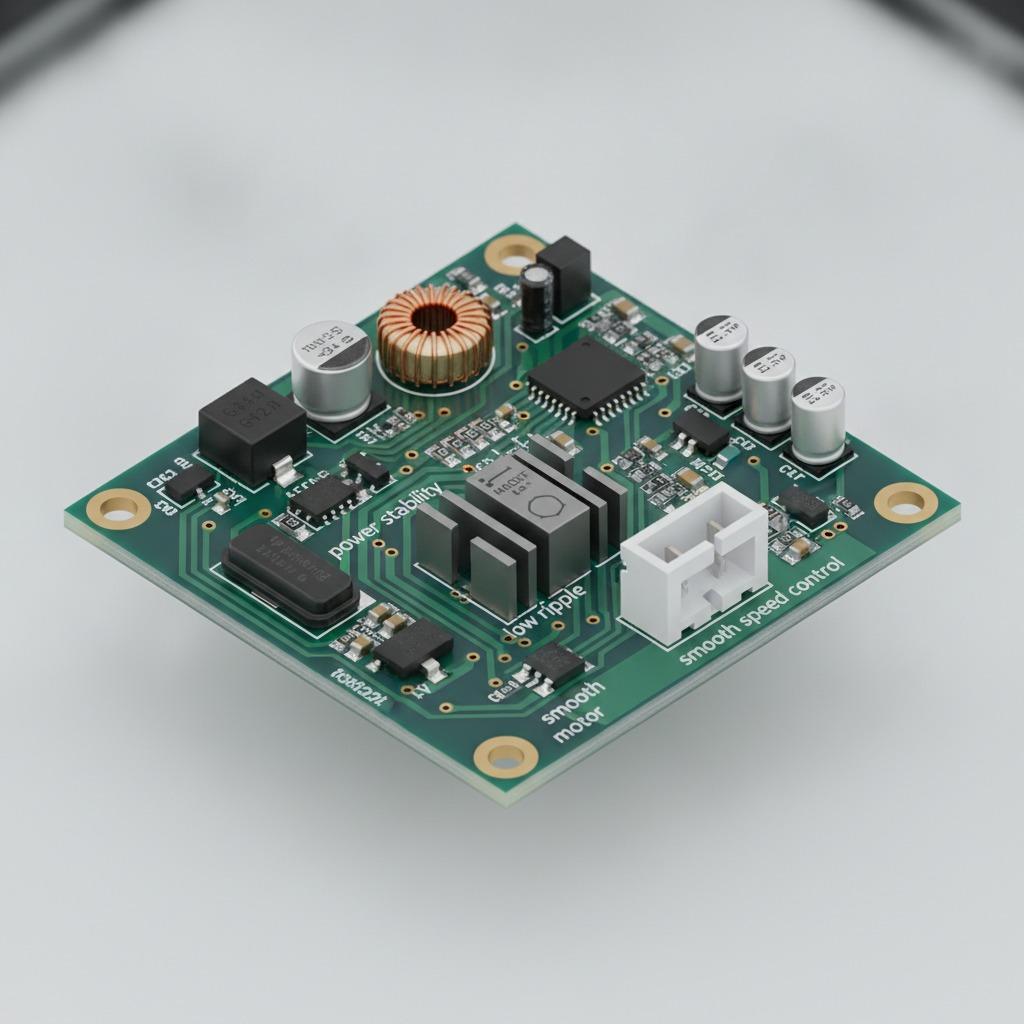
What the board is really responsible for
In most handheld fans, the electronics are centered on a low-voltage battery system, often around 3.7V. That makes the 3.7V fan driver PCB board a practical shorthand for the kind of circuit used in rechargeable personal fans. The board typically manages power delivery, speed levels, and on/off control, while also trying to keep the motor response smooth enough that the fan feels steady rather than jerky.
If the fan uses a brushed motor, the layout and drive method become even more important. A well-executed Brushed motor fan PCBA can help reduce audible electrical noise and avoid the harsh startup behavior that users notice immediately. The challenge is not only motor drive, but also how the board handles switching transitions and current changes under real battery conditions. Small problems become very obvious in a product that sits close to the user’s face.
Key design points that affect noise and user experience
Power stability
Low-voltage handheld fans live or die on stable power delivery. As the battery discharges, the motor speed can drift, and a weak control board may exaggerate that drop. A good board helps the fan hold usable performance longer and avoids abrupt changes that feel noisy or poorly tuned.
Layout discipline
In compact PCB assembly, traces, grounding, and component placement all influence electrical noise. That is not a theoretical point; cramped boards often create avoidable issues when the motor current path is not thought through. For a consumer product, a cleaner layout usually shows up as smoother operation and fewer complaints about squeal or buzzing.
Component sourcing and assembly quality
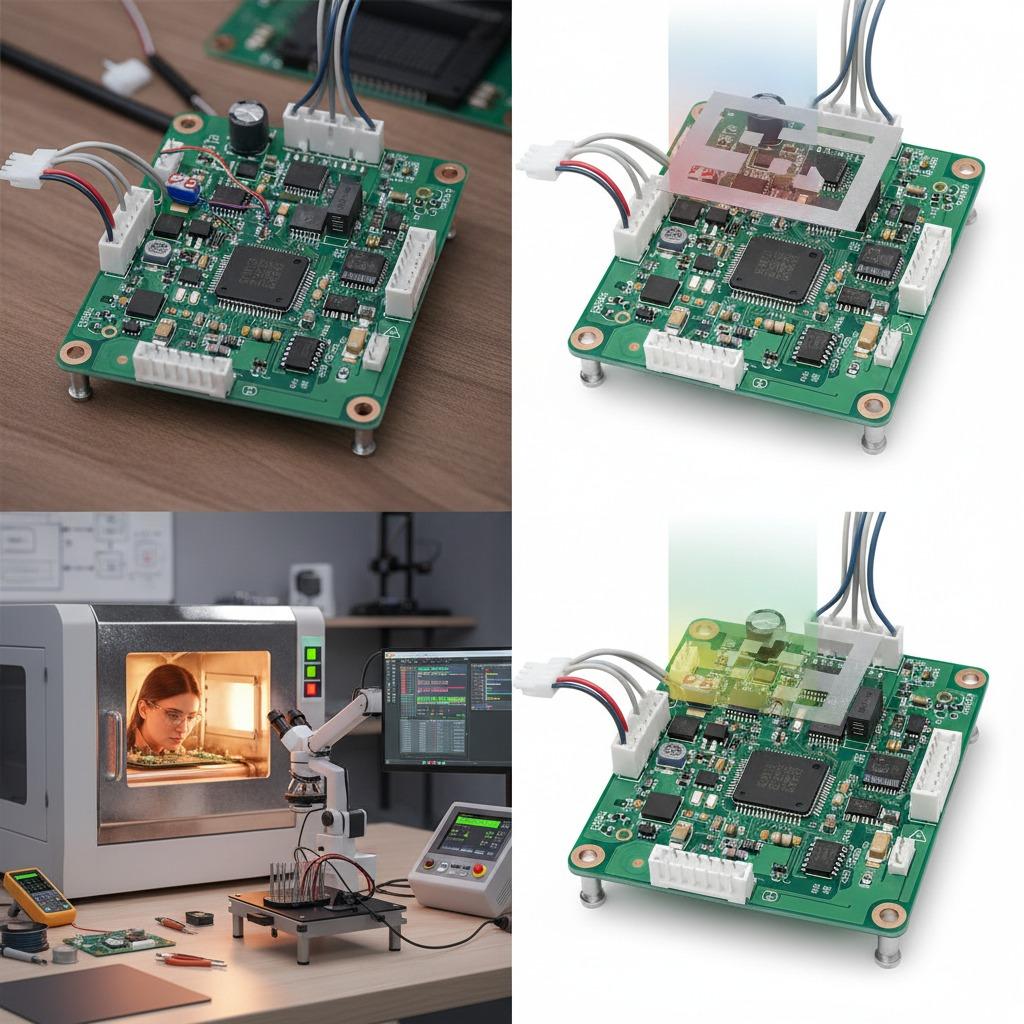
Even a sensible design can be undone by inconsistent parts or weak soldering. That is where a supplier with SMT贴片 capability and PCBA board assembly experience becomes useful. Hcdpcba, for example, offers PCB prototype service, SMT assembly for small or large runs, component sourcing, testing, and DFMA support. For a buyer, that combination matters because low-noise performance is often lost in production, not in the CAD file.
How buyers should compare options
When reviewing fan electronics, do not start with the headline feature list. Start with the use case.
If the product is a simple desk or handheld fan, a straightforward control board may be enough. If it is a rechargeable mini fan with multiple speed steps and a thin battery envelope, the control PCB needs tighter attention to start-up behavior, current draw, and acoustic comfort. In a cost-sensitive portable cooling fan PCB assembly, the temptation is to simplify the circuit too far. That can save money on paper and create warranty pain later.
It also helps to ask whether the supplier can support OEM or ODM work. A board that looks suitable in isolation may still need adaptation for the battery package, enclosure geometry, or button interface. Design-for-manufacturing review is useful here, especially when the product is small and the mechanical team has already packed the interior tightly.
Common mistakes in handheld fan PCB sourcing
The first mistake is treating the board like a generic accessory. A handheld fan is a user-facing product, and users hear defects faster than they see them. The second mistake is ignoring assembly consistency. Even a modest brushed motor fan PCBA can become unreliable if solder joints, component selection, or final testing are inconsistent. The third is forgetting that low noise is not just an acoustic target; it is often tied to power integrity and motor control behavior.
Another practical warning: if a supplier cannot discuss testing, component sourcing, and board-level assembly in the same conversation, you may end up coordinating too many moving parts yourself. That tends to slow projects down.
What a practical buyer should ask before ordering
Ask how the board handles battery voltage variation. Ask what motor type it is built for. Ask whether the supplier can provide small-batch PCB prototype service before committing to volume. Ask what testing is included at the PCBA stage. For handheld fans, those questions are more useful than generic claims about “high quality” or “low power consumption.”
If you are developing a new fan platform, it is also worth confirming whether the factory can support quick-turn changes. A small product often needs one more revision than planned. That is normal, and a supplier with responsive SMT贴片 and testing support can save a launch from slipping.
A sensible next step
For teams comparing a Low noise handheld fan circuit board against other control options, the decision usually comes down to noise behavior, battery compatibility, and how well the board can be assembled and tested at scale. A compact fan is a simple consumer product only on the outside. Under the shell, the PCB decides whether the product feels polished or merely functional.
If you are planning a custom fan board or need support for PCB prototype service, PCB assembly, or OEM/ODM production, hcdpcba can support design, sourcing, SMT, assembly, and testing under one workflow. For product teams, that reduces coordination burden, which is often worth as much as the hardware itself.
FAQ
Is a low-noise fan board only about the motor?
No. Motor selection matters, but board layout, battery stability, and assembly quality also shape the sound and feel of the fan.
Can a 3.7V board work for many handheld fans?
Often yes, but the board still needs to match the battery, motor, and speed-control requirements of the specific design.
Why use a supplier with PCBA and testing services?
Because fan performance is easy to damage during production. Integrated assembly and testing improve consistency and reduce rework.