Multi-Channel Video PCBA for Synchronized Processing and Scalable System Stability
Single-channel video systems are relatively straightforward to design.
The real complexity begins when multiple video inputs must be processed simultaneously. In many projects, systems that perform well with one camera begin to show instability when scaled to four, eight, or more channels. Frame misalignment, bandwidth congestion, and inconsistent processing latency often appear only under real operating conditions.
These issues are rarely caused by processing chips alone. Instead, they are rooted in how data paths, power delivery, and thermal load are managed at the board level.
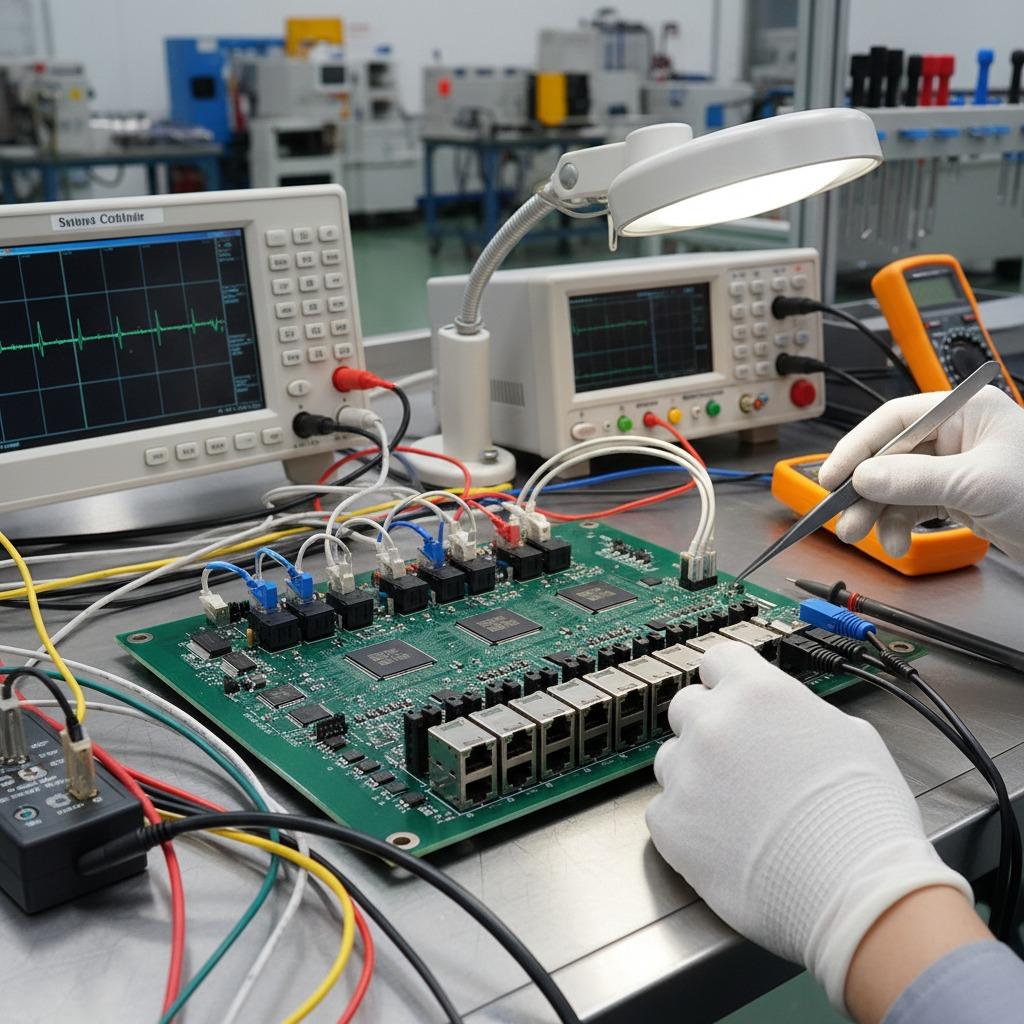
A well-engineered multi-channel video PCBA ensures that each video stream maintains timing consistency while sharing system resources efficiently. By combining controlled routing, structured bandwidth allocation, and stable manufacturing processes, our engineering team enables systems to scale from single-channel prototypes to multi-channel deployments without performance degradation.
Why Multi-Channel Video Systems Introduce New Hardware Challenges
When multiple video streams are processed simultaneously, the system must handle significantly higher data throughput while maintaining strict synchronization between channels.
For example, in a four-channel HD system, total data bandwidth can increase by more than four times compared to a single-channel setup. However, the challenge is not just bandwidth—it is maintaining timing alignment between channels. Even slight delays can result in frame mismatch or inconsistent processing results.
In a reliable multi-channel video PCBA, routing must be carefully structured so that each data path maintains consistent latency. This includes matching trace lengths across channels and ensuring that signal integrity is preserved across all interfaces.
Projects that implement these controls typically achieve 15–25% improvement in channel synchronization stability, especially in high-resolution applications.
Material and Stack-Up Strategy for Multi-Stream Data Stability
As channel count increases, signal density rises significantly. This makes PCB material performance and stack-up design more critical than in single-channel systems.
Low-loss materials help maintain signal quality across longer and more complex routing paths. At the same time, multi-layer stack-ups allow designers to separate high-speed video signals from power distribution layers, reducing interference.
In practice, multi-channel systems often require:
-
6–12 layer PCB structures
-
Dedicated ground planes for each signal layer
-
Controlled impedance routing for all high-speed channels
When these design strategies are applied within a multi-channel video PCBA, signal integrity remains stable even as routing complexity increases.
Bandwidth Allocation and Power Distribution Across Channels
Handling multiple video streams is not just about routing signals—it also involves managing shared system resources.
Each channel draws power and generates heat. When several channels operate simultaneously, localized power demand can fluctuate rapidly. If the power delivery network is not properly designed, voltage drops or noise can affect processing stability.
In optimized designs, power distribution is structured to ensure equal support for each channel. Copper planes are balanced, and current paths are minimized to reduce resistance.
In a well-designed multi-channel video PCBA, these adjustments often result in:
-
10–20% reduction in voltage fluctuation under load
-
Improved stability across all active channels
Thermal Behavior in Multi-Channel Systems
Thermal management becomes significantly more complex as channel count increases. Multiple processing paths generate heat simultaneously, often within confined areas.
If heat is not evenly distributed, certain regions of the board can reach higher temperatures, leading to performance imbalance between channels.
Effective thermal design involves spreading heat across the board using copper layers and thermal vias, while also avoiding clustering high-power components in a single area.
In real deployments, optimized thermal strategies within multi-channel video PCBA can reduce peak hotspot temperatures by 10–25°C, helping maintain consistent processing performance across all channels.
Manufacturing Consistency and Channel-Level Stability
In multi-channel systems, manufacturing variation can introduce differences between channels. Even small deviations in routing geometry or solder conditions can affect signal timing or impedance.
Maintaining strict process control ensures that each channel behaves identically across production batches.
Manufacturing Factors Affecting Multi-Channel Performance
| Manufacturing Factor | Control Method | Typical Impact |
|---|---|---|
| Differential routing | Length matching across channels | Improved synchronization |
| Stack-up consistency | Controlled impedance layers | Stable signal transmission |
| Copper balancing | Even thermal distribution | Reduced channel variation |
| Placement accuracy | Precision alignment | Consistent processing behavior |
| Process stability | Controlled reflow profiles | Reduced batch inconsistency |
Through these controls, a production-ready multi-channel video PCBA delivers uniform performance across all channels.
Compliance and System Reliability Considerations
Multi-channel video systems often operate in professional or industrial environments where reliability and regulatory compliance are essential. Increased signal density and switching activity can raise electromagnetic emissions if not properly managed.
Designing grounding strategies, shielding layers, and isolation structures into the board helps ensure compliance with standards such as CE and FCC.
A structured multi-channel video PCBA integrates these requirements from the beginning, reducing the risk of certification failure and improving deployment reliability.
Frequently Asked Questions
Q1: Why do multi-channel systems lose synchronization?
Because signal timing differences and routing inconsistencies affect channel alignment.
Q2: Does increasing channel count always reduce performance?
Not if bandwidth, power, and thermal design are properly managed.
Q3: Can manufacturing variation affect channel consistency?
Yes. Even small differences can lead to measurable timing or performance variation.
Why Multi-Channel Performance Depends on PCBA Architecture
A well-designed multi-channel video PCBA ensures that multiple video streams operate in sync, share system resources efficiently, and maintain stable performance under continuous load. When signal integrity, power distribution, and thermal management are aligned, systems can scale without sacrificing reliability.
If you want to evaluate how board-level architecture affects multi-channel video system performance, reviewing proven PCBA capabilities is a practical first step. You can learn more about our engineering and manufacturing expertise here:
👉 https://www.hcdpcba.com
For projects involving multi-camera systems, real-time video platforms, or high-bandwidth applications, early technical discussion can significantly reduce system-level risks. Our engineering team is ready to support your project here:
👉 https://www.hcdpcba.com/en/contact-us