What Buyers Really Mean by an SMT Loaded PCB Board
An SMT Loaded PCB Board is more than a bare circuit board with parts on it. For engineers and sourcing teams, it usually means a board that has been assembled, inspected, and prepared for the next stage of the product life cycle, whether that is prototype validation, pilot build, or full production. That matters because the decision is not just about getting components onto copper; it is about whether the board can be built repeatably, tested sensibly, and scaled without hidden rework.
In practice, buyers use the term when they need a finished assembly that can move quickly from design files to a working unit. That can include single-sided or double-sided SMT work, mixed technology assembly, and sometimes downstream testing. The point is simple: the board should arrive ready for real evaluation, not as a half-finished manufacturing exercise.
Why This Stage Matters
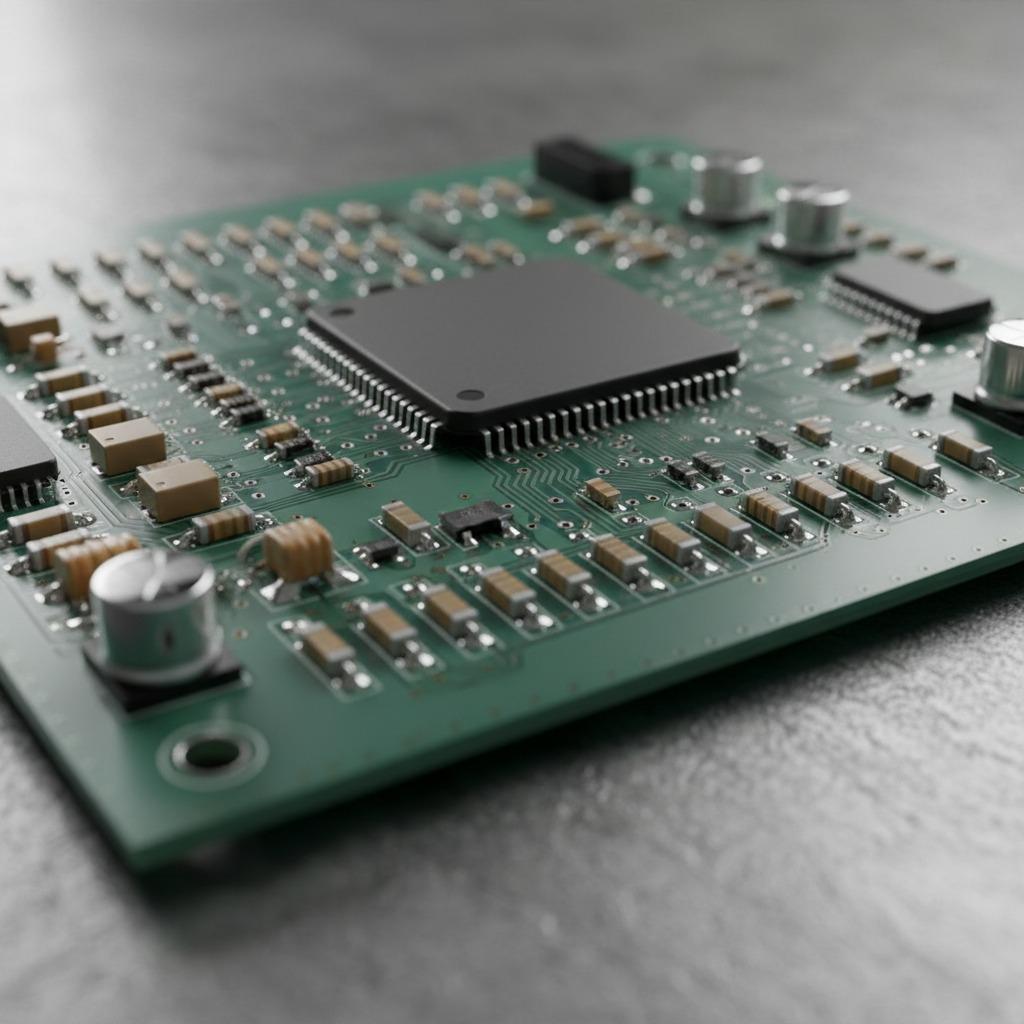
The assembly stage often exposes issues that were invisible in CAD. Footprint choices, component orientation, solderability, panel design, and thermal balance can all affect whether the first build behaves as expected. A well-managed build reduces the chance of chasing problems later in the product cycle, when delay costs are higher and design changes are more disruptive.
That is one reason companies working in industrial control, medical electronics, automotive electronics, communications, IoT, and smart home products put so much emphasis on assembly quality. A board that looks correct on paper can still fail in the factory if the process is not matched to the design. A practical manufacturing partner helps close that gap early.
SMT, Through-Hole, and Mixed Assembly
The most common distinction is between surface-mount and leaded parts. SMT is efficient for dense layouts, fine-pitch devices, and modern compact products. It also supports faster placement and cleaner automation when the design is well prepared.
A Through Hole Populated PCB still has a place, especially where connectors, transformers, power parts, or mechanical strength are important. Many products use both methods on the same assembly. In that case, the real question is not which technology is better in the abstract, but which combination best serves the product’s electrical, mechanical, and service requirements.
For compact electronics, the finished unit is often discussed as a Loaded Printed Circuit Board, which is a broad term that covers boards with installed components, whether the assembly is simple or highly integrated. In more advanced designs, the structure may become a Multi-layer Loaded Circuit Board, where routing density, impedance control, and heat management all become part of the manufacturing conversation.
What Good Assembly Service Should Cover
A capable build partner does more than place parts. It should also help with sourcing, process planning, and testing. hcdpcba, for example, positions its service around SMT assembly, PCB prototyping, component sourcing, assembly, testing, DFMA support, and OEM or ODM work. That is useful because many production problems start before the first solder paste is printed.
When sourcing components, buyers want a clear chain of responsibility. Are the parts customer-supplied, or does the assembler handle procurement? If the latter, how are substitutions controlled? There is no glamour in those questions, but they are the ones that protect schedules.
DFMA support is equally important. A design that is friendly to manufacturing and assembly is usually cheaper to build and easier to inspect. Small decisions, such as component spacing or package selection, can reduce risk in the line and shorten debugging later.
Testing Is Not an Afterthought
Many teams underestimate how much value testing adds to a populated board. A Functional Test Loaded Circuit Board is not just a board that powers on; it is one that has been checked against a known operating condition or a defined test flow. That distinction matters because a visually perfect board can still fail in the field if a latent fault remains hidden.
For buyers, the practical question is how much test coverage is needed for the product stage. Prototype builds may only need basic electrical checks and targeted functional validation. Production builds often need more repeatable procedures. The right level depends on product complexity, failure cost, and how much downstream troubleshooting the customer can tolerate.
How to Choose a Manufacturing Partner
Start with the product itself. Dense boards, mixed technology assemblies, and multi-layer layouts demand a supplier that understands process control, not just placement speed. Then look at how the supplier handles quotations, component sourcing, and design feedback. Fast response is helpful, but only if the communication is technically sound.
For buyers, a few cautions are worth keeping in mind. First, do not assume a build quote includes testing unless it is clearly stated. Second, confirm whether the assembler can support both small runs and larger volumes, because many products move through both stages. Third, ask how the supplier manages confidentiality if the design is sensitive; that detail matters more than people often admit.
hcdpcba highlights quick quoting, small-batch and high-volume SMT production, no engineering fee for SMT work, strict quality control, and confidential one-to-one service. Those are the kinds of operational points buyers typically want spelled out before a project starts, especially when timing is tight.
Common Mistakes That Slow a Build
The most common mistake is treating assembly as a downstream purchase instead of a design constraint. If the footprint is awkward, the component spacing is tight, or the board stack-up is not aligned with the layout goal, the factory ends up compensating for the design. That usually costs time.
Another frequent issue is unclear build intent. A team may ask for a prototype when what it really needs is a production-like pilot build. Those are not the same thing. The first is for learning; the second is for validating repeatability. The distinction changes component sourcing, testing, and even how much process documentation is needed.
What to Ask Before You Release Files
Ask whether the supplier can support your board type, whether that is a compact industrial controller, a high-density communication module, or a mixed-technology assembly with challenging connectors. Ask how they will handle component shortages. Ask what inspection and test steps are included. And ask what design feedback they provide before production starts.
Those questions may seem basic, but they are often the difference between a clean first build and a round of avoidable corrections. The best manufacturing partners do not just accept a file set; they help the customer understand where the file set may create risk.
Next Step for Buyers
If you are preparing an SMT Loaded PCB Board for prototype or production, the most efficient next step is to review the design for manufacturability, confirm the assembly and test scope, and then match the build to the product’s real stage. For teams that need PCB prototyping, SMT assembly, sourcing, testing, or OEM and ODM support, a conversation with a supplier like hcdpcba can help narrow the process before money and schedule are on the line.
That early alignment is rarely dramatic, but it is usually where the project stays on track.