Why Portable Projector Electronics OEM Requires System-Level Planning
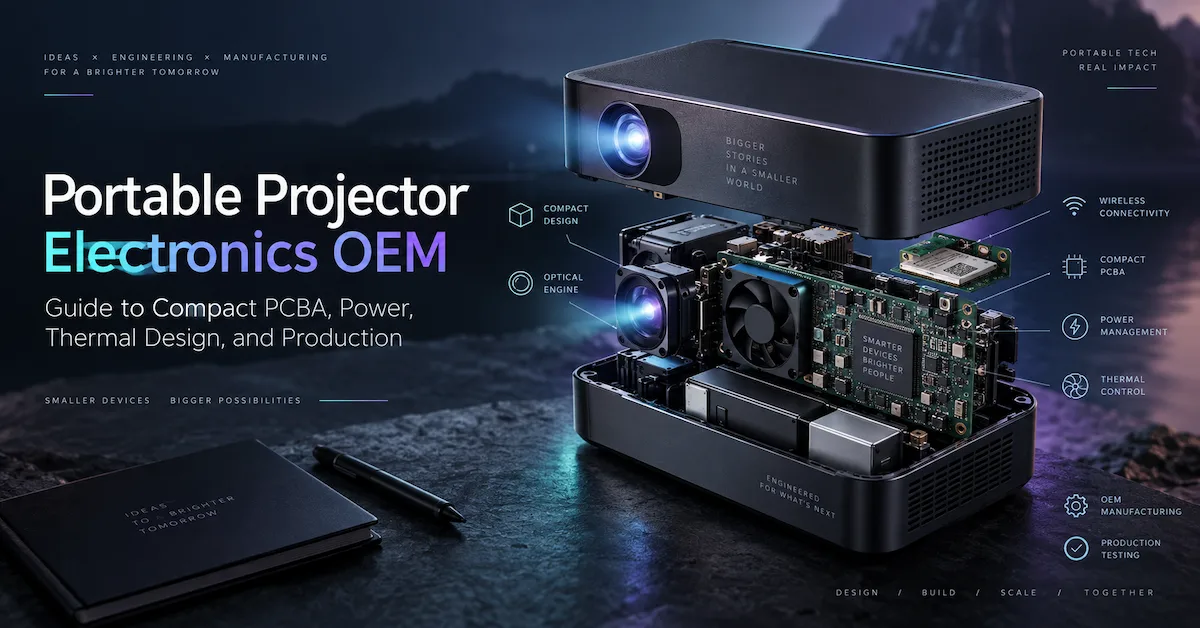
A portable projector electronics OEM project is not simply a conventional projector made smaller. Once the enclosure becomes compact, the mainboard, optical engine, power electronics, wireless modules, audio circuit, cooling system, connectors, firmware, and mechanical structure must share limited internal space without creating unacceptable heat, interference, assembly difficulty, or production variation. For OEM buyers, this makes electronics architecture one of the earliest decisions in product development rather than something that can be finalized after the enclosure has already been designed.
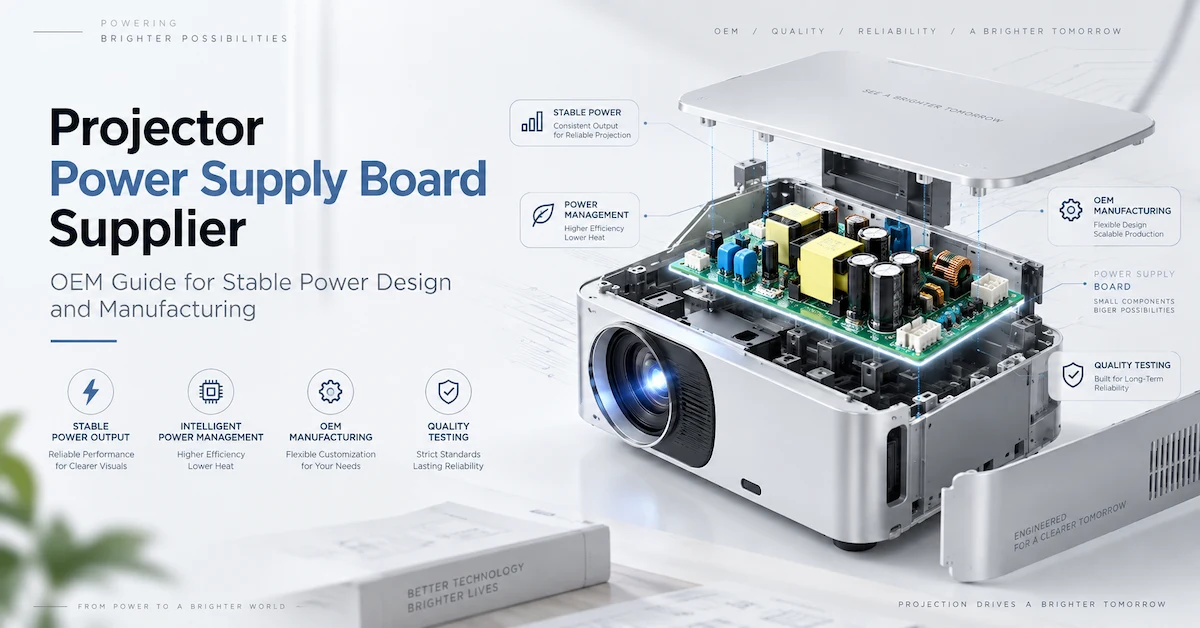
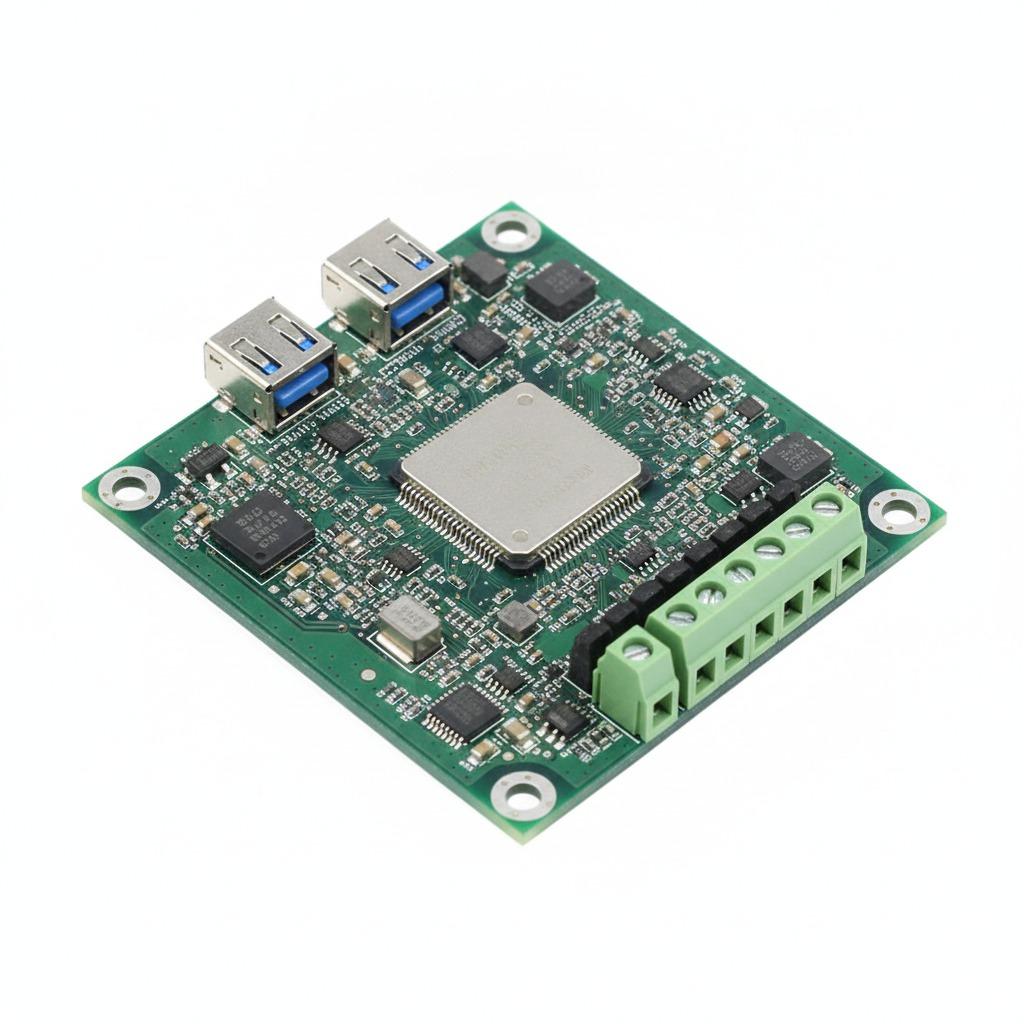
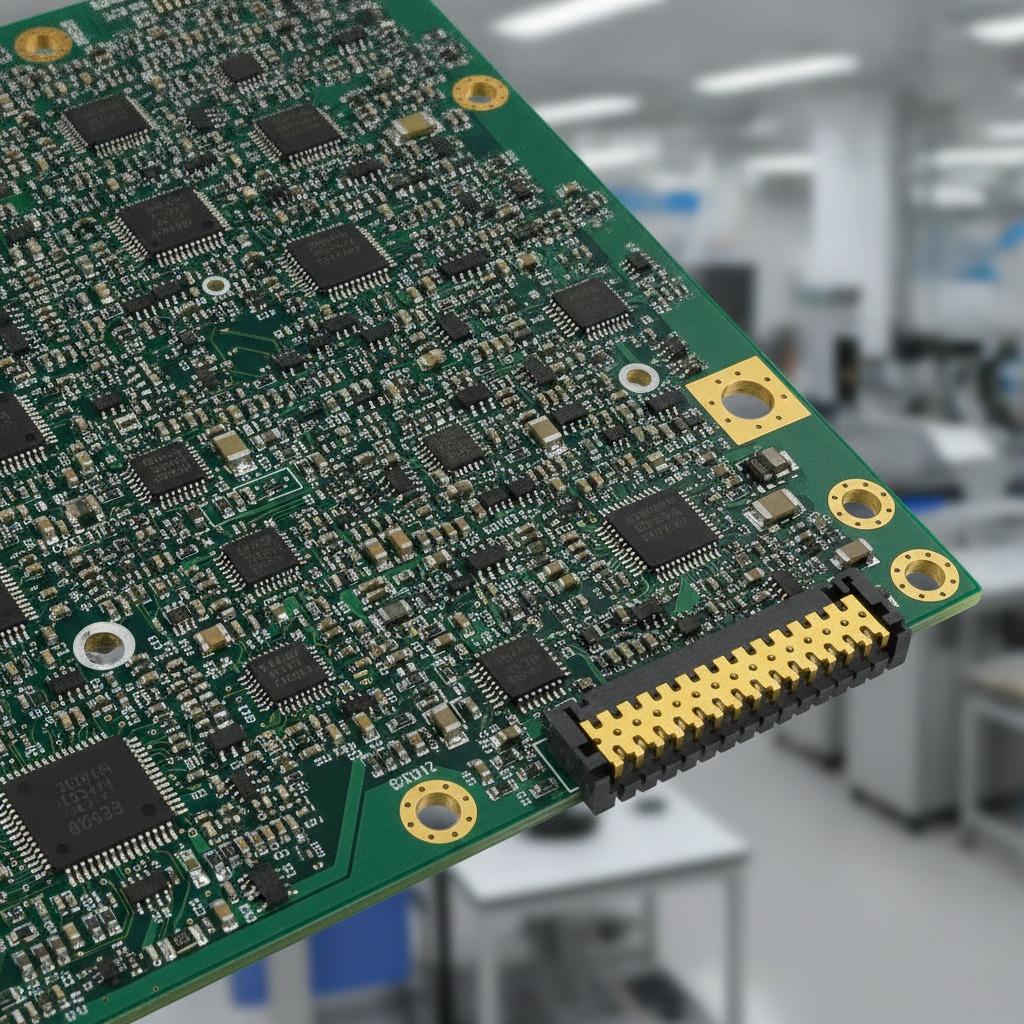
HCDPCBA's existing projector content describes projector PCBAs as responsible for functions such as image processing, power management, interfaces, wireless connectivity, audio, cooling control, and communication with the optical system. Its manufacturing services cover PCB prototyping, SMT assembly, component sourcing, DFMA, assembly, testing, and OEM/ODM support, while its website also maintains a dedicated Projector Series for projector-related products.
For a portable product, the practical sourcing question is therefore not simply, “Can this factory assemble our board?” It is: Can the electronics, optics, power system, thermal design, firmware, and manufacturing process be developed into one repeatable product platform?
Which Buyers Need a Portable Projector Electronics OEM Partner?
This type of manufacturing partner is most relevant to projector brands, consumer-electronics companies, hardware startups, private-label buyers with customization requirements, design houses, and product companies developing portable or compact projection equipment. It is particularly useful when the project requires a customized mainboard, special connector layout, wireless functions, enclosure-specific PCB geometry, power optimization, or integration with a selected optical engine.
A simple off-the-shelf solution may be more appropriate when an existing projector platform already satisfies the product's size, interfaces, performance, software, and commercial requirements. A deeper OEM or ODM project becomes more useful when the company needs meaningful changes to the electronics or finished product architecture.
HCDPCBA's existing Mini Projector PCBA Supplier Guide identifies portable projectors, smart projectors, home-theater products, business presentation devices, and compact multimedia equipment as relevant projector PCBA applications.
Define the Finished Projector Before Defining the PCBA
One of the most common OEM mistakes is choosing a mainboard before the complete product requirements have been clarified. A processor or PCB that appears suitable during early development can later conflict with the optical engine, enclosure, thermal system, interface arrangement, power supply, or software plan.
Before asking for a portable projector electronics OEM quotation, define the finished-product architecture as far as possible.
| Requirement Area | Questions OEM Buyers Should Define |
|---|---|
| Product positioning | Portable entertainment, smart projector, travel projector, business presentation or another application? |
| Mechanical envelope | What are the maximum PCB and enclosure dimensions? |
| Optical system | Which optical engine or display architecture will be used? |
| Resolution target | What native and input-resolution requirements apply? |
| Software platform | Embedded firmware, Android-based system or another platform? |
| Connectivity | Wi-Fi, Bluetooth, HDMI, USB, Type-C, audio or other interfaces? |
| Power source | DC adapter, USB-C power, internal battery or another architecture? |
| Audio | Internal speaker, amplifier requirement and external audio interface? |
| Thermal system | Fan, heatsink, airflow path and temperature monitoring? |
| User controls | Buttons, IR remote, Bluetooth remote, app control or touch interface? |
| Production plan | Prototype quantity, pilot stage and expected repeat-production volume? |
| Testing | What functions must be verified before shipment? |
This table should be treated as an RFQ framework rather than as a fixed HCDPCBA projector specification. Exact processor, memory, optical, power, wireless, and software configurations need to be confirmed for each project.
The Mainboard Is the Electronic Coordination Center
Processing, Memory, and Storage
A smart portable projector may require an application processor, RAM, storage, firmware, and multimedia-processing resources. These components influence system responsiveness, video decoding capability, software compatibility, PCB layout, heat generation, BOM cost, and long-term component availability.
HCDPCBA's Android Projector PCBA Manufacturer Guide notes that Android projector electronics may need to coordinate the processor, memory, storage, wireless connectivity, display and optical interfaces, audio, power management, thermal control, external I/O, and firmware. It also warns that specific processor platforms, Android versions, memory configurations, optical interfaces, and wireless chipsets should be confirmed individually rather than inferred from another projector design.
That distinction is important for OEM sourcing. Buyers should not accept a vague promise such as “supports Android projector production” as a substitute for a confirmed hardware and software architecture.
Interfaces and External Connectivity
Portable products usually have limited panel space, so every connector affects PCB geometry and enclosure design. Depending on the intended product, buyers may need HDMI, USB-A, USB-C, audio output, DC input, wireless antenna connections, speaker connectors, buttons, IR receivers, or other interfaces.
The interface decision should be frozen early enough to coordinate PCB layout and industrial design. Moving an HDMI or USB connector after tooling has begun can affect both electronics and mechanical parts.
Wireless Communication
Wi-Fi and Bluetooth are common in smart projector products, but wireless performance cannot be evaluated only by confirming that the module has been soldered correctly. Antenna position, ground design, nearby metal, switching circuits, processor activity, enclosure materials, and mechanical layout can influence the final result.
HCDPCBA's Android projector content similarly emphasizes that RF layout, antenna position, grounding, and enclosure interaction need to be considered together.
For OEM production, separate manufacturing verification from finished-product wireless validation. Production may confirm that a module is present, programmed, and communicating; system validation determines whether the finished portable projector provides the required wireless performance in its actual enclosure.
Power Architecture Matters More as the Projector Gets Smaller
Compact electronics increase the importance of power planning because several subsystems may compete for limited electrical and thermal capacity. The processor, wireless modules, optical system, audio amplifier, fan, display-control circuits, and peripheral interfaces can have different load profiles.
A portable design may also introduce additional requirements if a battery or compact external power source is involved. Buyers should define startup behavior, power sequencing, supply rails, peak-load conditions, standby behavior, protection requirements, and the relationship between the power board and mainboard before manufacturing.
For projector brands investigating this area, HCDPCBA's projector content includes power-management and driver-board topics alongside general PCBA manufacturing. Buyers should nevertheless provide project-specific electrical requirements rather than assuming one portable projector power architecture applies to every product.
Thermal Design Must Be Reviewed With the Complete Enclosure
A smaller enclosure does not eliminate heat; it concentrates heat sources into less space. Typical contributors can include the illumination system, main processor, power conversion circuits, memory, wireless circuitry, and other control electronics.
Questions to Resolve Before Tooling
OEM engineering teams should review:
- Major heat-source locations
- Fan and heatsink positioning
- PCB-to-enclosure clearance
- Air inlet and outlet paths
- Optical-engine temperature limits
- Temperature monitoring points
- Acoustic requirements
- Expected continuous operating time
HCDPCBA's projector materials repeatedly treat thermal management as a system-level issue rather than a standalone PCB concern. Its J1 Smart Projector page, for example, specifically highlights rear heat-dissipation design as part of the finished projector architecture.
For a custom portable design, however, the actual fan, heatsink, airflow, temperature limits, and operating profile must be validated against the selected electronics and optical system.
The Optical Engine and Electronics Cannot Be Selected Independently
A projector mainboard needs to communicate correctly with the chosen display or optical system. Depending on the architecture, this can involve display controllers, illumination drivers, power sequencing, video signals, temperature monitoring, fan control, firmware, and other interfaces.
HCDPCBA's Projector Optical Engine Supplier Guide explains that the optical engine must work together with the motherboard, driver board, power system, cooling structure, and control software.
This is especially important in portable products because mechanical volume is limited. A last-minute optical-engine change can affect PCB dimensions, connector location, thermal requirements, power demand, lens position, enclosure tooling, and firmware.
For this reason, the optical platform should be selected early enough for electronics and mechanical teams to review it together.
Use DFMA Before the Portable Projector PCB Enters Pilot Production
Dense electronics and compact enclosures increase the value of Design for Manufacturing and Assembly review. A PCBA may function on an engineer's bench but still create production problems if component spacing, connectors, test points, antenna areas, fasteners, heatsinks, cables, or enclosure features are difficult to assemble consistently.
A useful DFMA review should consider:
PCB Manufacturability
Review stack-up, board dimensions, panelization, footprints, component spacing, high-density areas, connector positioning, and any special PCB requirements.
Assembly Access
Make sure operators or automated equipment can install connectors, cables, thermal materials, speakers, antennas, and other parts without damaging the board.
Test Access
Programming connectors and electrical test points should remain accessible after the board design and mechanical structure are finalized.
Mechanical Integration
PCB edges, mounting holes, component heights, heatsinks, wireless antennas, optical components, and enclosure ribs must not conflict.
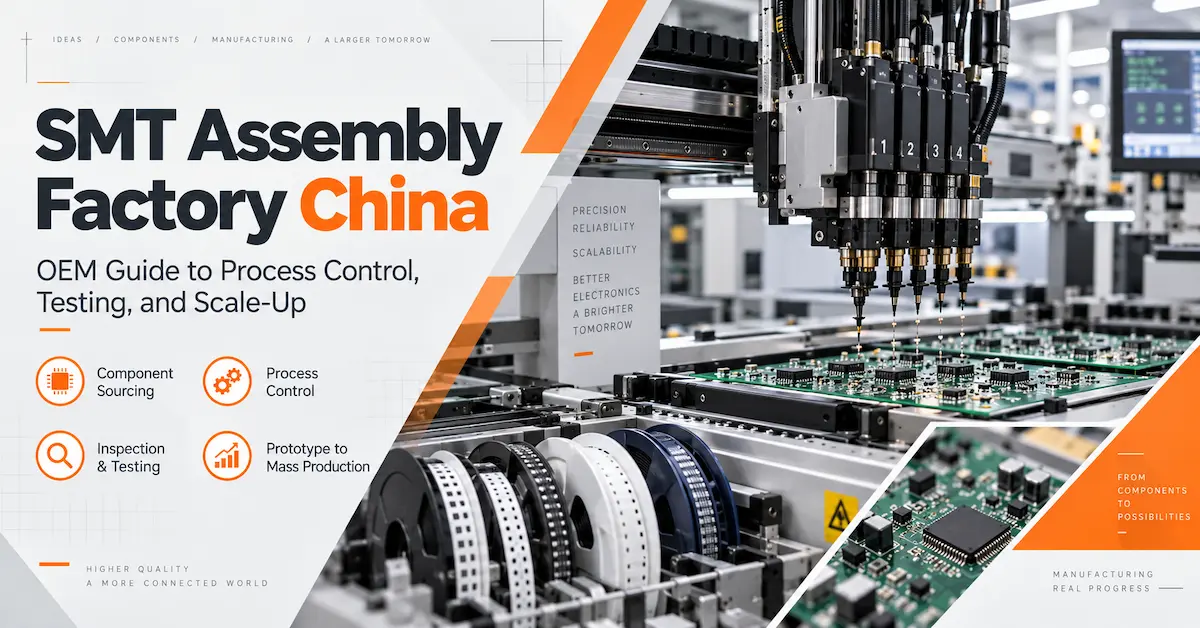
HCDPCBA lists DFMA together with PCB prototyping, SMT assembly, sourcing, assembly, and testing in its electronics manufacturing capabilities. Review HCDPCBA's manufacturing services.
Component Sourcing Can Become a Long-Term OEM Risk
A portable projector can depend on processors, memory, flash, wireless modules, connectors, power-management ICs, amplifiers, sensors, and other semiconductors whose availability may influence production planning.
A BOM should therefore identify exact manufacturer part numbers where required and establish a formal process for alternatives. A replacement should not be accepted simply because it appears electrically similar.
For important substitutions, consider:
- Firmware compatibility
- Pin and package compatibility
- Electrical characteristics
- Thermal behavior
- Wireless implications
- Mechanical fit
- Product documentation
- Required revalidation
This is one reason turnkey PCBA sourcing can offer value beyond SMT placement: the manufacturer and buyer can review sourcing and manufacturability together. HCDPCBA presents component sourcing as part of its wider PCBA and OEM/ODM manufacturing workflow.
Production Testing Should Reflect Real Projector Functions
A portable projector PCBA that powers on successfully has passed only a very basic checkpoint. OEM production needs a test strategy related to the actual functions of the product.
| Test Area | Possible Production Objective |
|---|---|
| Power | Confirm expected startup and supply behavior |
| Programming | Verify correct firmware/software configuration |
| HDMI / video | Confirm defined video-input functionality |
| USB / Type-C | Verify required interface operation |
| Wireless | Confirm basic communication according to the production test |
| Audio | Verify amplifier/speaker output where applicable |
| Fan control | Check fan activation or control behavior |
| Optical interface | Verify communication with the intended projection subsystem |
| Buttons / remote | Confirm user-control functions |
| Thermal monitoring | Confirm sensor or protection functions where designed |
| Final system test | Check agreed finished-projector functions before release |
The exact test coverage should be decided before volume production because fixtures, software, reference units, test time, and acceptance criteria can affect both cost and schedule.
HCDPCBA's projector PCB assembly material states that projector electronics can involve image processing, power, connectivity, audio, cooling, and optical-engine communication, while its manufacturing capability includes testing support.
Prototype Success Is Not the Same as Mass-Production Readiness
A prototype is primarily an engineering learning tool. It can confirm basic hardware operation, enclosure fit, interface compatibility, and early system behavior. Before mass production, however, a portable projector electronics OEM project should pass through a controlled pilot stage.
Prototype Stage
Verify fundamental design feasibility and identify major electrical, software, optical, and mechanical issues.
Engineering Validation
Confirm the selected components, interfaces, firmware, power architecture, thermal design, and mechanical structure.
Pilot Production
Use a larger but controlled build to verify manufacturing files, sourcing, SMT, assembly sequence, programming, fixtures, inspection, system test, packaging, and production records.
Mass Production
Release the approved design only after unresolved engineering issues and manufacturing risks have been closed or formally accepted.
HCDPCBA's projector and PCBA content describes prototype-to-production manufacturing rather than treating one successful sample as proof of repeatable mass production.
Compare Portable Projector OEM Models by Responsibility
Portable projector sourcing can involve very different levels of supplier responsibility. Buyers should establish which model they actually need before comparing prices.
| Cooperation Model | Buyer Typically Provides | Supplier Scope to Confirm | Best Fit |
|---|---|---|---|
| PCBA Build-to-Print | Released PCB files, BOM, firmware and test requirements | PCB/SMT assembly, programming, inspection and agreed testing | Brands with mature electronics designs |
| Turnkey Projector PCBA | Released design and product requirements | PCB, sourcing, assembly, programming, test and production coordination | Buyers wanting fewer electronics suppliers |
| Portable Projector Electronics OEM | Product architecture plus approved technical requirements | Electronics manufacturing, sourcing, PCBA integration and agreed OEM support | Brands customizing projector electronics |
| Broader ODM Project | Product concept and target requirements | Deeper engineering, prototypes, electronics integration and production preparation | New products needing significant development support |
These categories are project structures, not fixed HCDPCBA commercial packages. Exact responsibilities need to be agreed in the quotation and project documentation.
What Really Drives Portable Projector Electronics Cost?
The lowest PCBA quotation does not automatically create the lowest finished-product cost. Portable-projector electronics may be affected by processor and memory selection, PCB density, wireless architecture, connector count, power design, optical interface requirements, SMT package complexity, sourcing availability, programming, fixtures, functional testing, thermal components, assembly labor, and production volume.
A lower electronics price may create additional system cost if it requires a larger enclosure, more cooling, additional adapter boards, or more manual assembly. Conversely, an integrated mainboard may reduce mechanical and assembly complexity but increase PCB density and sourcing risk.
For this reason, compare total product architecture rather than one component price.
Clarify OEM and ODM Responsibilities Before Development
A portable projector electronics OEM agreement should state who owns and approves the important design elements. Do not rely solely on the words OEM or ODM because different suppliers may interpret those terms differently.
At minimum, define responsibility for:
- Schematic and PCB layout
- Processor/platform selection
- Optical-engine interface
- BOM approval
- Wireless module
- Firmware and operating system
- Driver integration
- Programming files
- Mechanical drawings
- Thermal system
- Test fixtures
- Production testing
- Certification activities
- Tooling
- Source files
- Engineering changes
HCDPCBA publicly describes OEM/ODM support as part of its wider electronics manufacturing business, but the exact development scope still needs to be defined for the customer's project.
What Should Buyers Send for a Portable Projector Electronics OEM RFQ?
For an existing electronics design, prepare Gerber files, BOM with manufacturer part numbers, pick-and-place data, PCB fabrication notes, assembly drawings, schematics where engineering review is required, programming files, test requirements, mechanical drawings, optical-engine interface information, quantities, and target production stages. HCDPCBA's Android projector guide recommends substantially the same project information for an effective PCBA manufacturing review.
For a product still under development, also provide:
- Target projector application
- Required product dimensions
- Target resolution
- Optical-engine information
- Software platform
- Wireless requirements
- Input/output interfaces
- Power architecture
- Audio requirements
- Cooling concept
- Target markets
- Prototype requirements
- Expected production volume
Buyers can review HCDPCBA's Projector Series, PCB/PCBA manufacturing range, and Projector PCB Assembly Factory Guide before submitting a technical package. When the requirements are ready, use the HCDPCBA Contact Us page for project-specific evaluation.
Frequently Asked Questions
1. What does portable projector electronics OEM mean?
It generally refers to OEM development or manufacturing of the electronic systems used inside a portable projector, such as the mainboard, power and control circuits, interfaces, wireless electronics, audio, cooling control, and connections to the optical system. The actual responsibility can range from build-to-print PCBA to broader customized electronics support, so buyers should define the scope contractually.
2. Is a portable projector mainboard different from a standard projector motherboard?
It can be. Portable products often place stricter limits on PCB dimensions, power consumption, connector arrangement, cooling, and mechanical integration. The exact architecture depends on the selected optical system, processor platform, product functions, enclosure, and software requirements.
3. What should I send for a projector PCBA quotation?
Prepare Gerber files, BOM, placement data, assembly drawings, quantities, firmware requirements, test requirements, mechanical information, and optical-interface requirements where relevant. If the design is incomplete, clearly identify which areas require engineering support.
4. Can an OEM manufacturer provide component sourcing as well as SMT assembly?
HCDPCBA lists component sourcing, PCB prototyping, SMT assembly, PCBA manufacturing, DFMA, testing, and OEM/ODM support within its manufacturing scope. Exact component brands, procurement responsibility, alternatives, and commercial terms should be confirmed for the project.
5. How important is thermal design in a portable projector?
It is important because the optical system, processor, power electronics, wireless functions, and other components operate in a limited enclosure. Thermal design should be evaluated together with enclosure dimensions, airflow, fan placement, heatsinks, and expected operating conditions.
6. Should wireless performance be tested at PCBA level or finished-product level?
Both levels can serve different purposes. PCBA production testing can identify assembly, programming, or basic communication problems, while finished-product validation should assess performance with the actual antenna, enclosure, electronics, and final mechanical arrangement.
7. Can an existing Android projector board simply be installed into any portable enclosure?
Not safely without review. PCB dimensions, connectors, optical interfaces, power requirements, antennas, airflow, firmware, and mechanical mounting all need to match the intended projector. HCDPCBA's Android projector guide also emphasizes system-level integration rather than treating the mainboard as an isolated component.
8. How should prototype and mass-production projector PCBAs be managed?
Use prototypes for engineering validation, then move through a controlled pilot build before releasing mass production. The approved BOM, PCB revision, firmware, assembly process, test requirements, and mechanical configuration should be controlled so later orders reproduce the validated design.
9. What factors influence portable projector electronics cost?
Important factors can include processor and memory selection, PCB design, component availability, wireless architecture, interfaces, SMT complexity, power electronics, thermal hardware, programming, fixtures, testing, quantity, and required engineering support.
10. How should I compare portable projector electronics OEM suppliers?
Compare engineering scope, PCB/SMT capability, BOM sourcing, DFMA support, projector-system understanding, test planning, prototype-to-production support, change control, communication, and commercial responsibility. Only compare unit prices after confirming that each supplier is quoting the same scope.
Conclusion
A successful portable projector electronics OEM program depends on coordinating electronics, optics, power, wireless connectivity, software, heat management, mechanical design, sourcing, and production testing as one product system. Compact dimensions make these interactions more important, not less, because a change to one subsystem can quickly affect PCB layout, enclosure geometry, component temperatures, firmware, or manufacturing complexity.
HCDPCBA's current website shows projector-related products alongside PCB prototyping, SMT assembly, customized PCBA, component sourcing, DFMA, testing, and OEM/ODM manufacturing capabilities. Its projector content also covers portable and mini projector PCBAs, Android projector electronics, projector motherboards, optical engines, and broader projector assembly considerations. For buyers preparing a new portable projector, the most useful next step is to define the finished product architecture first and then submit the corresponding electronics, optical, mechanical, firmware, quantity, and testing requirements through the HCDPCBA Contact Us page for a project-specific manufacturing review.