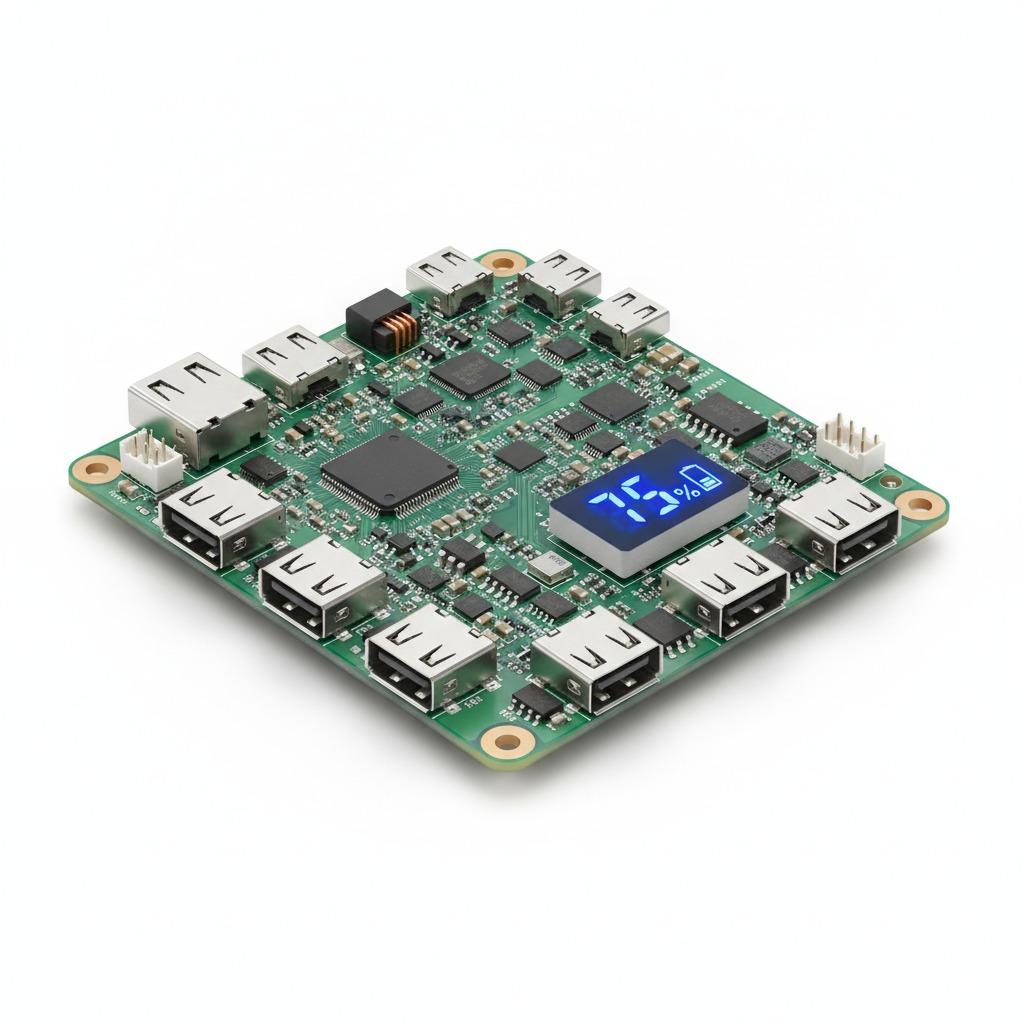
Choosing the right camera module PCB assembly supplier is one of the most important decisions for brands developing camera-related electronic products. A camera module may look small, but the PCB inside affects image stability, power performance, signal transmission, heat control, connector reliability, and long-term product quality.
For buyers developing security cameras, smart locks, baby monitors, USB camera modules, industrial vision devices, smart home cameras, or IoT monitoring products, the supplier should not only assemble a board. It should understand camera electronics, SMT assembly, component sourcing, testing, and OEM/ODM production.
HCDPCBA supports camera-related electronic projects through one-stop electronics manufacturing services, including PCB prototyping, SMT assembly, PCBA manufacturing, component sourcing, DFMA review, testing, and OEM/ODM production.
What Does a Camera Module PCB Assembly Supplier Do?
A camera module PCB assembly supplier manufactures and assembles the electronic boards used inside camera modules or camera-related devices. These boards may connect the image sensor, lens module, USB or MIPI interface, power circuit, wireless module, audio component, infrared module, and main control system.
A typical camera module PCB assembly project may include:
- PCB fabrication
- SMT assembly
- Sensor board assembly
- Main control board assembly
- FPC or connector assembly
- USB, MIPI, or custom interface circuit
- Power management circuit
- Infrared or night vision circuit
- Component sourcing
- Functional testing
- OEM/ODM customization
- Sample and batch production
For B2B buyers, the goal is not only to find a supplier that can place components on a PCB. The real goal is to reduce development risk, improve production consistency, and make sure the camera module works reliably in the final device.
Why PCB Assembly Quality Matters for Camera Modules
Camera modules are sensitive electronic products. Even small defects in PCB layout, soldering, components, or connectors can affect the final image or device performance.
Common problems caused by poor PCB assembly include:
- Image signal instability
- Blurry or delayed video
- USB or MIPI connection failure
- Sensor not recognized by the main board
- Excessive power consumption
- Heat buildup during operation
- Night vision failure
- Weak FPC or connector soldering
- Batch-to-batch performance differences
- Product failure after installation
This is why buyers should choose a camera module PCB assembly supplier with experience in PCBA manufacturing, SMT process control, component sourcing, and functional testing.
Main Applications of Camera Module PCB Assembly
Camera module PCBs are used in many smart electronic products.
| Application | PCB Assembly Requirement | Typical Buyer |
|---|---|---|
| Outdoor surveillance cameras | Stable signal, night vision, weather-related reliability | Security camera brands |
| USB camera modules | USB interface stability, compact PCBA, image testing | Embedded device manufacturers |
| Smart locks | Low power, compact structure, FPC connection | Smart lock brands |
| Baby monitors | Safe power design, night vision, audio-video support | Smart nursery product brands |
| Industrial vision devices | Stable image capture, long operation, strong connector reliability | Industrial equipment suppliers |
| Smart home cameras | WiFi support, low power, app-related hardware | IoT hardware companies |
| Doorbell cameras | Wide-angle lens support, compact PCBA, wake-up function | Smart home device brands |
| Projector vision modules | Compact electronics, sensor control, stable image input | Consumer electronics brands |
HCDPCBA’s Camera Series includes camera-related product directions, while its PCBA manufacturing category supports customized electronic board production for camera modules, smart devices, and embedded electronics.
What Buyers Should Check Before Choosing a Camera Module PCB Assembly Supplier
1. SMT Assembly Capability
Camera module PCBs usually contain small components, dense layouts, fine-pitch ICs, compact connectors, and sensor-related circuits. SMT assembly quality directly affects the stability of the final product.
Buyers should check whether the supplier can control:
- Component placement accuracy
- Solder paste printing
- Reflow soldering profile
- Fine-pitch component assembly
- Connector soldering
- Small passive component placement
- AOI inspection
- Batch consistency
If SMT quality is unstable, the camera module may pass a short power-on test but fail during long-term use.
2. Camera PCBA Engineering Experience
A general PCB assembly supplier may not understand the details of camera electronics. Camera modules require attention to signal routing, power stability, sensor interface, connector location, and EMI control.
A capable supplier should understand:
- Camera sensor board layout
- USB or MIPI signal routing
- Power management circuit
- Image signal stability
- FPC connector placement
- IR or night vision circuit
- Microphone or speaker interface
- Testing point design
- Compact mechanical fit
For OEM camera projects, engineering communication is especially important because the PCBA must match the final housing, lens position, main control board, and product function.
3. Component Sourcing and BOM Control
Camera module PCB assembly depends on stable components. A shortage or quality issue in sensors, ICs, connectors, FPCs, lenses, or power components can delay production or affect performance.
Buyers should ask whether the supplier can support:
- BOM review
- Genuine component sourcing
- Alternative component suggestions
- Supply chain risk control
- Lead time confirmation
- Cost optimization
- Batch component consistency
HCDPCBA supports component sourcing as part of its one-stop electronic manufacturing service, helping buyers reduce communication time and improve production planning.
4. PCB Prototyping Before Batch Production
For a new camera module project, prototype validation is necessary before mass production. A prototype helps buyers verify the PCBA layout, sensor compatibility, connector position, image quality, power consumption, and device fit.
Prototype testing should confirm:
- Camera image output
- Sensor recognition
- Interface compatibility
- Power stability
- Night vision or IR function
- FPC and connector reliability
- Heat behavior
- Assembly feasibility
- Final device compatibility
A supplier that supports both prototype and batch production can help buyers move from development to production more smoothly.
5. Testing Process
Camera module PCB assembly should not stop at visual inspection. Since camera modules are functional electronic parts, buyers should check whether the supplier can support electrical and functional testing.
Important testing items include:
- AOI inspection
- PCBA visual inspection
- Power-on testing
- USB or MIPI interface testing
- Image quality testing
- Sensor function testing
- Night vision testing if required
- Connector testing
- Audio-video function testing if required
- Final functional verification
HCDPCBA supports PCBA manufacturing and testing services, making it suitable for buyers who need engineering-focused production control.
6. OEM/ODM Customization Ability
Many camera module projects are not standard. Buyers may need custom PCBA size, connector direction, FPC length, lens matching, sensor option, USB interface, low-power design, housing compatibility, or private label support.
A reliable camera module PCB assembly supplier should support:
- Custom PCB layout
- Custom board size
- Sensor board assembly
- Main board assembly
- Connector and cable adjustment
- BOM optimization
- Private label manufacturing
- Sample development
- Small-batch trial production
- Long-term batch production
For buyers developing branded camera products, OEM/ODM capability can reduce the number of suppliers involved and improve project efficiency.
Camera Module PCB Assembly Specification Checklist
Before requesting a quotation, buyers should prepare a clear specification sheet.
| Item | What to Confirm |
| Application | Security camera, USB camera, smart lock, baby monitor, industrial vision |
| PCB type | Sensor board, main board, control board, interface board |
| Interface | USB, MIPI, parallel, FPC, board-to-board connector |
| Sensor | Resolution, frame rate, low-light performance, supply stability |
| Lens support | Lens holder, angle, focus distance, IR compatibility |
| PCBA size | Board dimensions, mounting holes, connector position |
| Components | BOM, ICs, connectors, FPCs, power components |
| Power | Working voltage, current, heat behavior, standby mode |
| Testing | AOI, power-on test, image test, interface test |
| Quantity | Prototype, pilot run, batch production |
| OEM needs | Logo, packaging, private label, custom board |
| Files needed | Gerber, BOM, pick-and-place file, drawings, samples |
Providing complete information helps the supplier quote faster and reduce engineering uncertainty.
OEM Camera Module PCB Assembly vs Standard Module Sourcing
Buyers should choose the right cooperation model based on their project stage.
| Option | What It Means | Best For |
| Standard camera module sourcing | Use an existing module with limited changes | Fast testing or simple products |
| Camera module PCB assembly | Build the PCB or PCBA for the camera module | Hardware developers and device brands |
| OEM camera PCBA | Customize the board based on buyer’s product needs | Branded camera product projects |
| ODM camera module development | Supplier supports design and development | Buyers needing a more complete solution |
| Turnkey electronics manufacturing | PCB, SMT, BOM sourcing, assembly, testing, and delivery | Buyers needing supply chain control |
If the buyer only needs a ready-made module, standard sourcing may be enough. But if the product requires custom structure, interface, power design, PCBA size, or long-term production stability, a camera module PCB assembly supplier is a better choice.
Common Mistakes Buyers Should Avoid
Choosing only by the lowest assembly price
Low assembly cost may hide risks in component quality, soldering reliability, testing coverage, and batch consistency.
Ignoring camera-specific PCB requirements
Camera modules need stable signal routing, proper power design, and reliable sensor connection. A general PCBA supplier may not always understand these requirements.
Not confirming connector details
FPC connectors, board-to-board connectors, USB connectors, and cable direction can affect final assembly and long-term reliability.
Skipping prototype testing
Prototype testing helps identify design issues before batch production. Skipping this step may lead to costly rework.
Not testing image performance
A board may power on successfully but still have image noise, signal delay, frame drop, or sensor instability.
Overlooking component supply risk
Camera sensors and key ICs may change over time. Buyers should confirm component availability and alternatives before scaling production.
How HCDPCBA Supports Camera Module PCB Assembly Projects
HCDPCBA can support buyers from early prototype to batch manufacturing.
PCB prototyping
Prototype production helps verify camera circuit design, board size, connector placement, and compatibility with the final device.
SMT assembly
SMT assembly supports compact camera PCBA production with controlled soldering and component placement.
Component sourcing
HCDPCBA can help buyers manage BOM sourcing, component alternatives, supply chain timing, and purchasing efficiency.
DFMA review
DFMA review helps identify design risks before production, including difficult assembly, weak connector placement, poor test point access, or unnecessary cost.
PCBA testing
Testing can include PCBA inspection, power-on testing, image function testing, interface testing, connector testing, and final functional verification.
OEM/ODM production
HCDPCBA can support customized camera module electronics, private label needs, board-level changes, and long-term manufacturing cooperation.
Buyers can learn more about HCDPCBA’s company capabilities through the About Us page.
Quality Control Points for Camera Module PCB Assembly
A complete quality control process helps reduce after-sales risk.
| QC Point | Purpose |
| BOM review | Confirm component accuracy and availability |
| Incoming inspection | Check PCBs, ICs, connectors, FPCs, and key components |
| SMT inspection | Verify placement, soldering, and missing parts |
| AOI inspection | Detect visible PCBA defects |
| Interface test | Confirm USB, MIPI, or custom signal stability |
| Image output test | Check clarity, frame rate, noise, and sensor function |
| Power test | Verify voltage, current, and heat behavior |
| Connector test | Confirm FPC, USB, or board-to-board connection reliability |
| Functional test | Verify final board operation |
| Golden sample approval | Lock production standard before batch manufacturing |
For camera-related products, testing should combine PCBA inspection and real image output verification.
What Information Should Buyers Provide for a Fast Quote?
To receive a more accurate quotation, buyers should prepare:
- Product application
- Gerber files
- BOM
- Pick-and-place file
- PCB drawings
- Camera sensor requirement
- Interface type
- PCBA size requirement
- Connector and FPC details
- Power requirements
- Testing requirements
- Quantity estimate
- Existing sample or reference image
- OEM/ODM customization needs
If files are not complete, buyers can still share functional requirements and product photos so the supplier can provide an initial feasibility review.
Why Work with HCDPCBA?
HCDPCBA is suitable for buyers who need an engineering-focused camera module PCB assembly supplier instead of a simple board assembly vendor. For camera module projects, HCDPCBA can connect PCB prototyping, SMT assembly, component sourcing, testing, and OEM/ODM support into one manufacturing process.
This helps buyers reduce supplier coordination, improve development speed, and control production risk.
For brands developing camera modules, security cameras, smart locks, baby monitors, industrial vision devices, USB camera modules, or IoT monitoring products, HCDPCBA can support the project from prototype to production.
FAQ
1. What is a camera module PCB assembly supplier?
A camera module PCB assembly supplier manufactures and assembles printed circuit boards used inside camera modules or camera-related electronic devices.
2. What files are needed for camera module PCB assembly?
Common files include Gerber files, BOM, pick-and-place files, PCB drawings, testing requirements, and product specifications.
3. Can camera module PCBs be customized?
Yes. Buyers can customize PCB size, connector position, sensor board layout, interface type, power design, and testing requirements.
4. Why is SMT quality important for camera modules?
SMT quality affects soldering reliability, signal stability, connector strength, and long-term camera performance.
5. What testing is needed for camera module PCB assembly?
Testing may include AOI inspection, power-on testing, interface testing, image output testing, connector testing, and functional verification.
6. Can HCDPCBA support prototype and batch production?
Yes. HCDPCBA supports PCB prototyping, SMT assembly, PCBA manufacturing, component sourcing, testing, and OEM/ODM production.
7. What applications use camera module PCBA?
Camera module PCBA can be used in security cameras, smart locks, baby monitors, USB camera modules, industrial vision systems, smart home devices, and IoT products.
8. How can I get a quote for camera module PCB assembly?
You can prepare Gerber files, BOM, quantity, interface requirements, PCBA size, testing needs, and OEM customization details before contacting the supplier.
Conclusion
Choosing a camera module PCB assembly supplier is a key step for camera-related product development. Buyers should evaluate SMT assembly quality, camera PCBA engineering experience, component sourcing ability, prototype support, testing process, and OEM/ODM customization capability.
For security camera brands, smart home companies, industrial vision equipment suppliers, baby monitor brands, smart lock manufacturers, and IoT hardware developers, working with an engineering-focused PCBA manufacturer can reduce development risk and improve production consistency.
HCDPCBA supports camera module PCB assembly projects through PCB prototyping, SMT assembly, PCBA manufacturing, component sourcing, testing, and OEM/ODM electronics manufacturing. If you are developing a custom camera module PCBA project, you can explore HCDPCBA’s PCBA manufacturing services or Camera Series to plan your next OEM project.