What engineers really mean when they ask for a DAC module
A DAC module is rarely just a simple board with a chip on it. In practice, buyers are usually looking for a compact way to turn digital control signals into an analog output that can be dropped into a prototype, an evaluation setup, or a finished product. That sounds straightforward until you have to match the board to the rest of the system: interface type, pin arrangement, mounting method, board size, and how much assembly risk you want to carry into production. For sourcing teams and product engineers, that is where the decision becomes interesting.
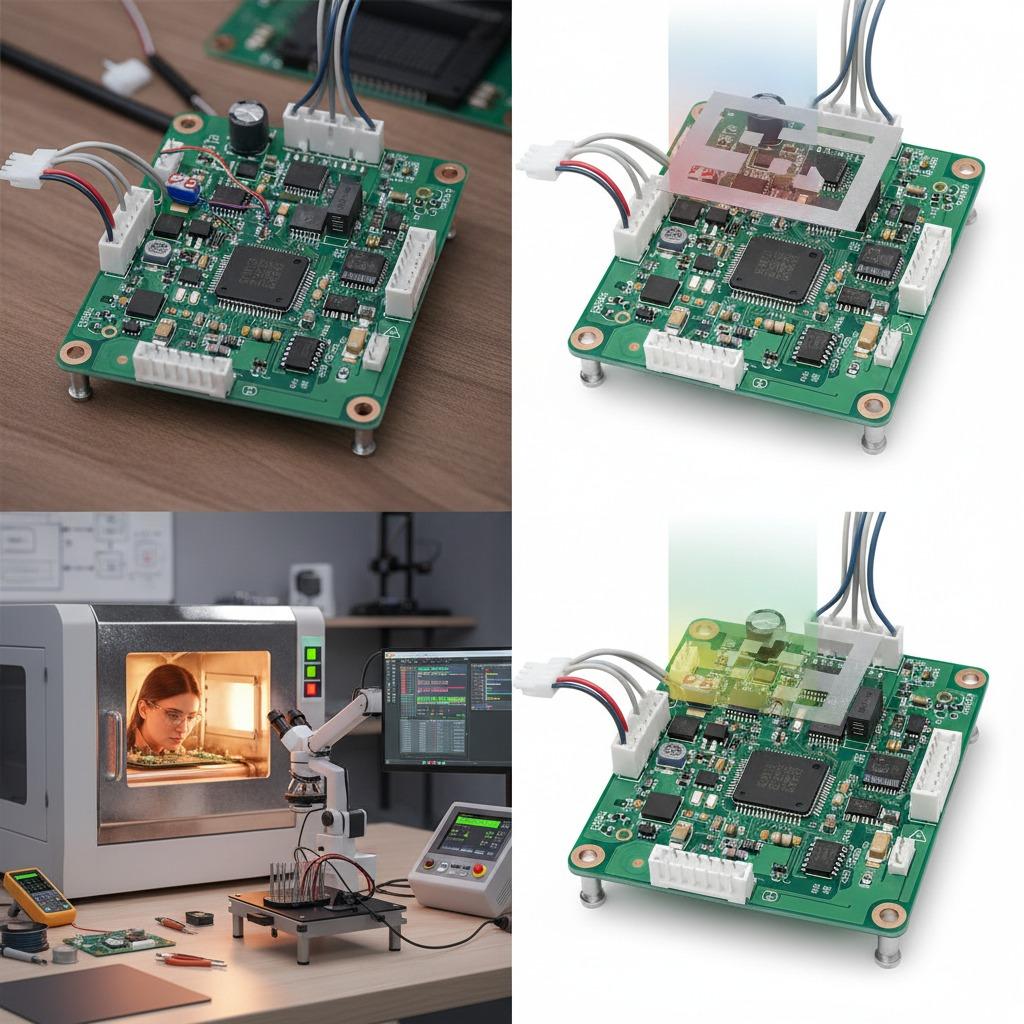
The board photo and product description point to the kind of compact PCB assembly often used in embedded control, signal interfacing, and development work. It has a small footprint, visible pin headers on the edges, a central integrated circuit, and mounting holes for mechanical fastening. Those are the kinds of details that matter when a module has to sit inside a larger enclosure or connect cleanly to a baseboard. The exact chip and electrical behavior are not identifiable from the image alone, so buyers should treat it as a functional board class rather than assume a specific device.
Why the board format matters more than people expect
On paper, a digital to analog converter module may look interchangeable with another small DA converter board. In a real assembly, it often is not. One module may be designed for bench testing, another for board-to-board integration, and a third for a production system where the pin header spacing, connector orientation, and mounting holes all affect how quickly the product can be assembled.
That is why a pin header DA conversion development board can be attractive during early design work. It lets engineers probe signals, swap variants, and move fast without committing to a dense custom PCB right away. But the same convenience can become a headache later if the board was never intended for the vibration, thermal, or packaging demands of a final product. A smart buyer keeps both phases in mind.
Visible features that tell you how a module is meant to be used
The visible structure of this board suggests standard PCB fabrication and SMT assembly, with through-hole pin insertion on the edges. That combination usually signals a module meant to be connected rather than soldered deep into a custom stackup. The mounting holes are a practical clue too. They suggest the board may need to be secured to a chassis, carrier, or enclosure, which is common in test fixtures and industrial subassemblies.
A few features are worth reading carefully:
The central square IC likely handles the core function, whether that is conversion, control, or interface logic.
The gold-plated pin headers make electrical connection straightforward, which helps during prototyping and field service.
The compact board size makes it easier to fit into crowded electronics, though compactness can also limit thermal margin.
The connector and passive components imply the module is meant to work as part of a larger system, not as a standalone consumer product.
How buyers should compare module options
When sourcing a DAC module or a similar embedded board, the first comparison should not be price. It should be integration fit. Ask whether the board matches the host system’s voltage domain, whether the connector style is convenient, and whether the mechanical layout leaves enough clearance for cables, screws, or nearby boards. If the board will sit inside an OEM product, that matters more than a slightly lower unit cost.
The next comparison is supportability. A single chip DAC development board may be fine for lab work, but production teams usually need more: consistent build quality, available component sourcing, clear documentation, and a supplier that can handle PCB prototype or PCBA board follow-on orders without changing the build in ways that surprise the customer. HCDPCBA’s mix of PCB prototyping, SMT贴片, component sourcing, assembly, and testing is relevant here because module buyers often need more than just a bare board. They need a repeatable assembly path.
Common mistakes that slow down an otherwise simple program
One common mistake is assuming the module label tells the whole story. It usually does not. Exact part numbers, protocol support, board layer count, and operating ratings are all unknown unless the supplier provides them.
Another mistake is ignoring mechanical integration until the end. A board with good electrical performance can still fail a project if the mounting points conflict with the enclosure or if the pin headers force awkward wiring.
A third mistake is treating prototype boards and production boards as the same purchase. They are related, but not identical. A prototype board often tolerates more manual handling, while a production subassembly needs better process control and verification. That is where services such as DFMA analysis, assembly checks, and board testing can save a program from expensive rework.
Practical questions to ask before you place an order
Before buying a module like this, ask the supplier for the pinout, supported operating range, assembly details, and whether the board is intended as a development board, evaluation module, or embedded subsystem. If you are moving from sample stage to OEM rollout, also ask about consistency of component sourcing and whether the assembly process can be repeated without redesign.
If your application is in industrial control, IoT, medical electronics, automotive electronics, or communications, the conversation should be even more disciplined. In those sectors, the board itself is only one part of the risk. Integration, traceability, and process control matter just as much.
A sensible next step
If you are evaluating a DAC module or a related board for a prototype, start with the mechanical fit and the interface map, then move to electrical requirements and supplier capability. For teams that need PCB fabrication, SMT assembly, component sourcing, and testing under one roof, a contract manufacturing partner such as hcdpcba can shorten the loop between concept and hardware.
The key is not to buy the prettiest board. It is to buy the one that will still make sense when the project leaves the bench and enters the real assembly flow.