Why FR4 still matters in stable control PCB design
When engineers search for an FR4 stable circuit PCB, they are usually not looking for a brochure answer. They are trying to solve a practical problem: how to build a control board that stays electrically predictable, survives field use, and can be manufactured without unpleasant surprises. In pump systems, water equipment, and industrial controllers, that usually means a board that can handle noisy environments, repeated switching, and ordinary production variation without drifting into failure.
FR4 remains the default choice for a reason. It is familiar to PCB fabs, compatible with common SMT processes, and broad enough in performance to cover many industrial control designs. For a pump circuit control board or an industrial water pressure controller, that familiarity matters because the board is not just a layout file. It is a production item, and the material stack-up, copper balance, and assembly process all affect whether the unit works consistently after shipment.
What “stable” really means on an FR4 board
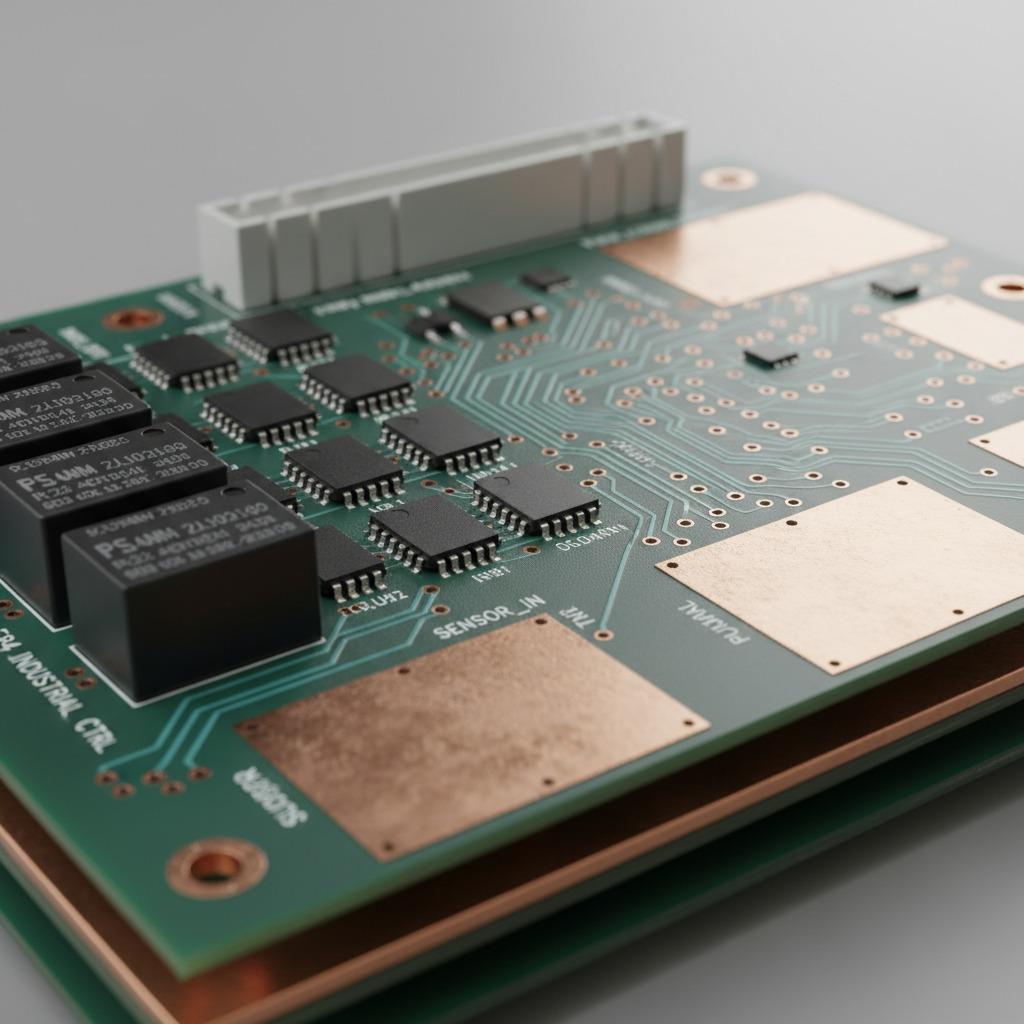
Stability is one of those words that gets used loosely. In a manufacturing context, it usually covers a few very concrete things. The PCB should keep its dimensions through fabrication and assembly. It should tolerate soldering heat without warping beyond reason. It should support clean signal routing for sensing and control functions. And, in noisy equipment, it should help reduce unwanted coupling rather than add to it.
For an anti-interference pump control board or water pressure regulator PCB, stability also includes how the board handles transient noise from relays, motors, solenoids, and power switching devices. FR4 does not magically solve EMI issues, of course. But it provides a dependable base material when the design team does the rest: thoughtful grounding, sensible separation between power and low-level sensing, and clean assembly practices.
Why FR4 is a common fit for industrial water control electronics
Many industrial water systems do not need exotic substrates. They need a board that is cost-effective, available, and manufacturable at scale. FR4 fits that middle ground well. It is widely used in control electronics because it offers a practical mix of mechanical strength, electrical insulation, and processing convenience.
That does not mean every FR4 board is equal. A stable result depends on the full stack: laminate quality, copper thickness, layer count, via design, solder mask quality, and assembly control. A simple single-sided controller and a more demanding multi-layer board for sensing, relay driving, and power regulation are not built the same way. The buyer who treats them as interchangeable usually pays for it later in troubleshooting.
Typical design considerations
For industrial water pressure applications, the PCB may need room for relay outputs, sensor inputs, protection components, and connectors that survive repeated field wiring. If the board drives a pump directly or works near inductive loads, spacing and routing deserve extra attention. Creepage and clearance are not academic details; they are often the difference between a board that passes bench test and one that fails after a season of service.
Heat management also matters. Even on FR4, repeated thermal cycling can stress solder joints and components if the layout concentrates heat in one area. A careful layout spreads load, avoids cramped hot spots, and leaves enough margin for assembly variation.
Where hcdpcba fits into the build process
hcdpcba offers PCB prototyping, SMT assembly, component sourcing, assembly, testing, DFMA support, and OEM/ODM services. That matters because stable control boards are rarely the result of PCB fabrication alone. They are usually the result of coordination between design, sourcing, assembly, and test.
For engineers developing a water system controller, one useful advantage is the ability to move from prototype to small or larger production without changing partners at every step. hcdpcba also notes support for multi-layer boards, HDI boards, and high-frequency boards, which gives some room if a control design starts simple and later grows in complexity. The practical benefit is not marketing variety; it is fewer handoffs, fewer assumptions, and usually fewer chances for a small documentation error to become a field issue.
Selection criteria buyers should not skip
If you are sourcing a stable control PCB, start with the board stack-up and expected operating environment. Ask whether the design needs extra layer separation for noise control, whether the relay and sensor sections are properly isolated, and whether the assembly house is prepared to check component placement, solder quality, and board cleanliness.
It is also worth asking how the supplier handles DFMA review. A board that is technically buildable is not always a good production candidate. Small adjustments to pad design, connector placement, or component spacing can improve yield and reduce rework. That is one of those dull-looking details that saves real money later.
Common mistakes in pump and pressure controller PCB projects
The most common mistake is underestimating electrical noise. Many teams focus on the control logic and forget that the board lives beside motors, pumps, and switching devices. Another frequent issue is overcomplicating the layout without improving performance. Extra density can make routing cleaner on paper, yet it often makes test and repair harder on the bench.
A third problem is treating procurement and design as separate conversations. If component sourcing, PCB fabrication, and SMT assembly are all handled in isolation, small mismatches can appear: unavailable parts, awkward footprints, or build steps that the layout never anticipated. Integrated service providers tend to reduce that risk, though they still need clear drawings and a disciplined bill of materials.
Practical buying advice for engineering and sourcing teams
Before releasing a design, check three things: whether the FR4 stack-up matches the electrical need, whether the control board layout respects noise and thermal constraints, and whether the manufacturer can support assembly and testing at the required volume. For water equipment, a few extra minutes spent on these checks often prevents weeks of field debugging.
Buyers should also be cautious about assuming that all “industrial-grade” boards are built the same way. Ask for process details where it matters, but keep the conversation grounded in the actual application: relay switching, sensor accuracy, enclosure space, wiring method, and service life expectations. Those are the details that shape a stable board more than broad claims do.
What to ask before you order
If your project involves an FR4 stable circuit PCB for water or pump control, ask your supplier how they handle design-for-manufacture review, component sourcing, assembly verification, and functional testing. Ask how they deal with changes during prototype iteration. And if the application is sensitive to interference, make sure the team understands the difference between merely assembling a board and building one that behaves consistently in the field.
For teams building an industrial water pressure controller or related control module, that is usually the real decision point: not whether FR4 can work, but whether the supply chain and manufacturing plan can support a stable result from the first build onward.
Need support for your control PCB project?
hcdpcba provides PCB prototyping, SMT assembly, component sourcing, testing, DFMA support, and OEM/ODM manufacturing for industrial electronics. If you are developing a stable control board for pumps, pressure regulation, or similar equipment, it is worth discussing the layout and build plan early rather than after the first round of failures. A short engineering review at the start is often cheaper than a long repair cycle later.