Why Choosing an Android Projector PCBA Manufacturer Is a System-Level Decision
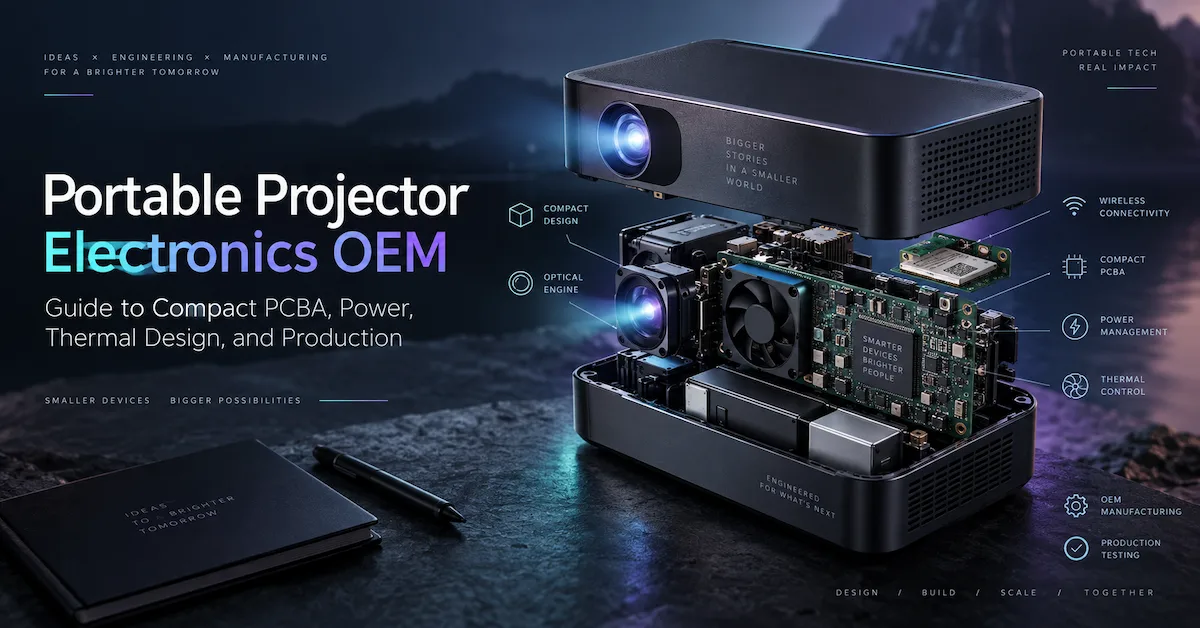
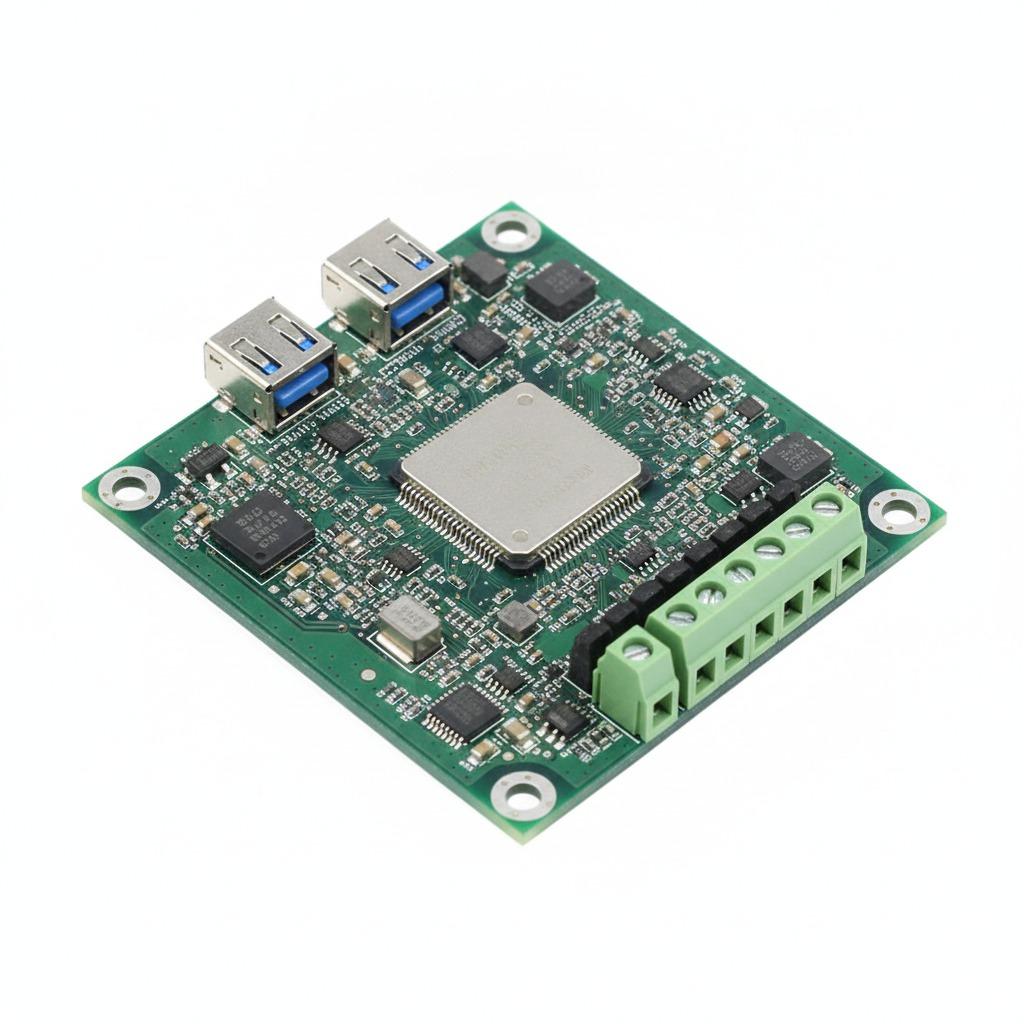
An Android projector PCBA manufacturer is not simply assembling another consumer electronics board. A smart projector mainboard must coordinate the processor, memory, storage, wireless connectivity, display and optical interfaces, audio, power management, thermal control, external I/O, firmware, and the mechanical limitations of a compact projector enclosure.
For OEM projector brands, this means a board that powers on successfully during prototype testing is not enough. The real question is whether the same hardware can remain stable during long viewing sessions, maintain consistent wireless and multimedia performance, pass production testing, and scale from engineering samples to repeatable mass production.
This makes supplier selection especially important for companies developing:
- Android smart projectors
- Portable and mini projectors
- Home theater projectors
- Wireless multimedia projectors
- Education projectors
- Hotel and hospitality projectors
- Embedded projection systems
- Private-label projector products
HCDPCBA positions itself as a one-stop electronics manufacturing partner providing PCB prototyping, SMT assembly, customized PCBA, DFMA, component sourcing, testing, and OEM/ODM services. Its website also includes a dedicated Projector Series, making projector electronics a relevant application area for its broader PCBA manufacturing capabilities.
What an Android Projector PCBA Actually Has to Control
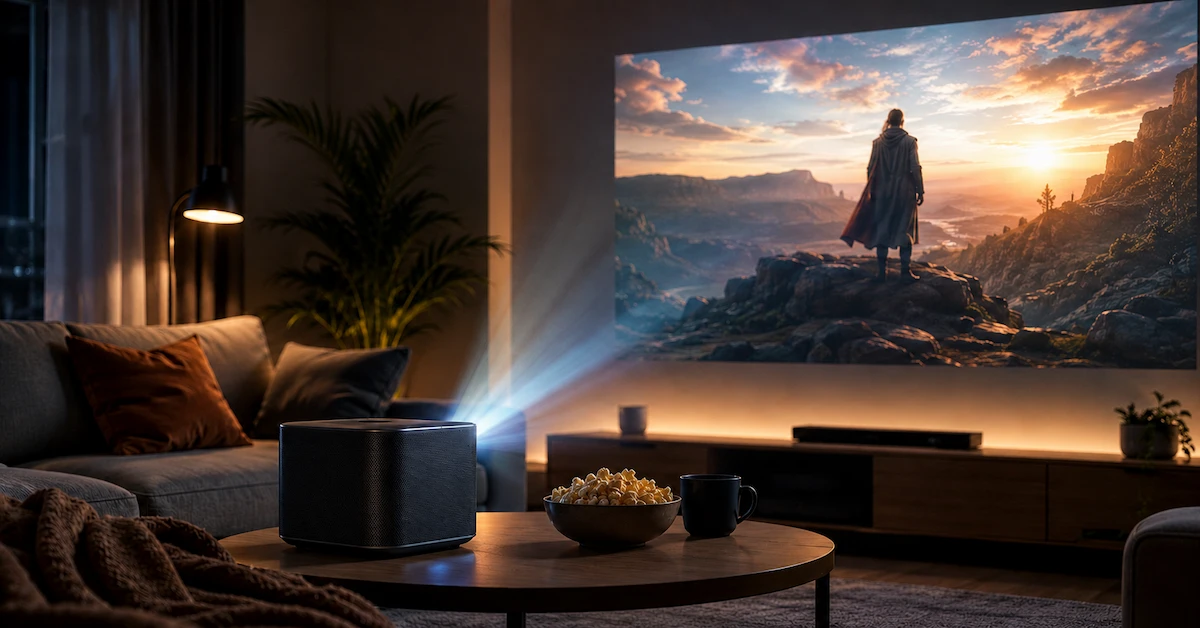
The projector mainboard acts as the electronic coordination center of the entire product.
Unlike a basic control PCB, an Android projector PCBA may need to manage several subsystems simultaneously.
| Functional Area | Typical PCBA Responsibility | Why Buyers Should Care |
|---|---|---|
| Processing | Android SoC and multimedia processing | Determines system responsiveness and decoding capability |
| Memory | DDR memory interface | Affects operating stability and data throughput |
| Storage | eMMC/UFS or other flash storage | Stores OS, applications and user data |
| Wireless | Wi-Fi and Bluetooth | Supports streaming, remote devices and connectivity |
| Display | Video output to projection subsystem | Critical to image generation |
| Audio | Codec, amplifier and speaker output | Affects multimedia experience |
| Power | PMIC, DC/DC conversion and power sequencing | Influences stability and thermal behavior |
| External I/O | HDMI, USB, audio and control ports | Determines device compatibility |
| Thermal | Fan and temperature-control interfaces | Protects the SoC and surrounding components |
| Firmware | Boot, drivers and peripheral compatibility | Determines whether hardware works as one system |
The exact architecture varies significantly between projector models. Therefore, buyers should avoid asking a manufacturer only, “Can you make this PCB?”
A better question is:
Can you manufacture, source, assemble, inspect and validate the complete projector mainboard according to our hardware, firmware and product-level requirements?
That distinction separates a basic board assembler from a manufacturing partner capable of supporting a complete projector electronics project.
Android Hardware Compatibility Should Be Defined Before PCBA Production
One of the most common sourcing mistakes is treating “Android projector” as a complete technical specification.
It is not.
An Android-based projector can differ in:
- Android platform version
- SoC platform
- CPU/GPU architecture
- DDR type and capacity
- Flash storage
- Wi-Fi/Bluetooth chipset
- display interface
- audio architecture
- HDMI implementation
- USB configuration
- remote-control interface
- optical engine interface
- cooling architecture
- firmware and driver requirements
Android compatibility also needs to be separated from Google service licensing.
According to the official Android Open Source Project, an Android-compatible implementation must meet the Android Compatibility Definition Document requirements and pass the Compatibility Test Suite. Android compatibility alone also does not automatically provide Google Play or Google branding access. OEMs requiring those services need to consider the relevant licensing path separately. Android Compatibility Program
For an OEM buyer, this means software planning and hardware manufacturing cannot be treated as completely separate projects.
Questions to define before requesting a PCBA quote
Before contacting an Android projector PCBA manufacturer, clarify:
- Which processor platform will be used?
- Which Android version or software platform is planned?
- What RAM and storage architecture is required?
- Which Wi-Fi and Bluetooth functions are required?
- Which optical engine or display interface must the board support?
- Are HDMI, USB, audio and other ports required?
- What enclosure dimensions limit the PCB?
- What cooling method will be used?
- Who is responsible for firmware and driver integration?
- Does the finished product require Android compatibility or additional Google services?
These answers affect BOM selection, layout, board construction, test fixtures and production cost.
Core Components Buyers Should Review in an Android Projector Mainboard
SoC and Processing Platform
The SoC is normally one of the most important devices on a smart projector PCBA.
It may integrate CPU, GPU, multimedia decoding and peripheral controllers. Its package type, power demand, memory interface and thermal characteristics have a direct impact on PCB layout and SMT manufacturing.
For procurement teams, the most important issue is not simply processor performance.
They should also evaluate:
- long-term component availability
- approved sourcing channels
- package complexity
- firmware availability
- peripheral compatibility
- thermal requirements
- lifecycle risk
Changing the main SoC after product development begins may require significant hardware and software redesign.
DDR and Storage
DDR routing can be sensitive to trace length, impedance and placement.
Storage devices such as eMMC also need to be selected with both performance and supply continuity in mind.
A manufacturer reviewing a projector PCBA should therefore consider the physical relationship between:
- SoC
- DDR
- flash storage
- power rails
- high-speed interfaces
Poor component placement can create manufacturing, signal-integrity and thermal problems even when the schematic itself is correct.
Wireless Connectivity
Modern smart projectors often depend heavily on Wi-Fi and Bluetooth.
This means RF layout, antenna position, grounding and enclosure interaction need to be considered early.
A technically strong smart projector PCBA manufacturer should understand that wireless performance cannot be evaluated only by checking whether the Wi-Fi component has been soldered correctly.
Antenna location, nearby metal structures, high-speed noise sources and the final housing can all influence real product performance.
HDMI, USB and Audio Interfaces
Projector buyers also need to define the physical interface configuration.
Depending on the product, the mainboard may include:
- HDMI input
- USB-A
- USB-C
- 3.5 mm audio
- speaker connections
- infrared receiver
- buttons or key boards
- DC power input
- Wi-Fi/Bluetooth antenna connections
HCDPCBA's current Q2 Projector page, for example, shows HDMI, USB, wireless connectivity, 3.5 mm audio and DC power as part of that product's interface concept. These specifications describe the Q2 finished projector and should not be assumed to apply automatically to every custom Android projector PCBA project. View the Q2 Projector.
Why Thermal Design Is a Major Projector PCBA Risk
Projectors combine multiple heat-producing systems within a relatively compact enclosure.
Depending on the architecture, heat may come from:
- application processor
- power conversion circuits
- memory
- wireless devices
- LED or other light-source electronics
- optical engine
- fan driver circuitry
The PCBA therefore cannot be evaluated independently from mechanical and airflow design.
Thermal questions OEM buyers should review
A manufacturing and engineering review should consider:
- Where is the main processor located?
- How is heat transferred away from the processor?
- Is airflow obstructed by cables or structural components?
- Are heat-sensitive components located near major heat sources?
- Does the fan receive appropriate control signals?
- Can the board operate reliably during extended playback?
- How does the final enclosure change board temperature?
The existing J1 Smart Projector on the HCDPCBA website specifically highlights rear heat-dissipation design for prolonged projector operation, illustrating why electronics, enclosure design and cooling have to be considered together in projector development.
For custom projects, however, the actual thermal solution should be validated against the customer's specific SoC, optical engine, enclosure and operating conditions.
DFMA Should Happen Before SMT Assembly
Sending finished Gerber files directly to production without a manufacturing review can move design problems downstream, where they become more expensive to correct.
DFMA—Design for Manufacturing and Assembly—can identify potential issues before production starts.
For Android projector boards, a DFMA review may examine:
PCB manufacturability
- board dimensions
- stack-up
- trace/space requirements
- via design
- copper distribution
- impedance requirements
- panelization
- surface finish
SMT manufacturability
- BGA/QFN package layout
- component spacing
- polarity
- fiducial placement
- stencil requirements
- thermal-pad design
- connector positioning
- reflow considerations
Product assembly
- PCB mounting holes
- port alignment
- antenna position
- optical-engine connectors
- fan connections
- cable clearance
- enclosure interference
HCDPCBA lists DFMA as part of its electronics manufacturing services, together with PCB prototyping, SMT, DIP, final assembly, component sourcing and testing. Learn more about HCDPCBA's manufacturing capabilities.
For a projector project, the best time to perform this review is before the design is frozen for mass production.
Component Sourcing Can Determine Whether the Project Scales
An Android projector mainboard may have a relatively complex BOM.
Beyond common resistors and capacitors, it can contain processors, DDR, flash memory, wireless devices, PMICs, connectors, audio devices and other application-specific components.
This creates several procurement risks.
Component availability
A prototype may use components that are easy to buy in small quantities but difficult to source continuously for production.
Counterfeit or uncontrolled sources
High-value semiconductors require careful supplier management.
Lifecycle changes
A component becoming obsolete can trigger redesign, firmware changes or requalification.
Unapproved substitutions
Changing a power device, memory component or wireless chipset without engineering review may alter performance.
Therefore, OEM buyers should ask an Android projector PCBA manufacturer:
- Which components are purchased through approved suppliers?
- Can manufacturer part numbers be locked?
- How are substitutions approved?
- How are shortages communicated?
- Can buyer-consigned components be accepted?
- Can BOM alternatives be reviewed before production?
- How is component traceability managed?
HCDPCBA states that its PCBA service includes component sourcing through a vetted supplier network and third-party authentication, alongside assembly and testing.
SMT Assembly Requirements for Projector Mainboards
Projector PCBA manufacturing may combine fine-pitch devices, BGA packages, connectors and power components on the same assembly.
This creates different process requirements across the board.
A typical SMT production workflow may include:
- incoming material verification
- solder-paste printing
- solder-paste inspection where specified
- component placement
- reflow soldering
- AOI
- X-Ray inspection where appropriate
- through-hole or manual assembly if required
- cleaning according to project requirements
- electrical or functional testing
The appropriate inspection plan depends on the board design and package types.
IPC identifies IPC-A-610 as an acceptance standard for electronic assemblies, while J-STD-001 defines requirements for soldered electrical and electronic assemblies. These standards are useful references when buyers and manufacturers define workmanship and acceptance criteria for production. IPC-A-610 information.
The required IPC class or customer-specific acceptance criteria should still be defined in the purchasing documentation rather than assumed.
AOI and X-Ray Solve Different Inspection Problems
For projector PCB assembly, inspection should be selected according to component structure.
AOI is useful for visible conditions such as:
- component presence
- component orientation
- placement deviation
- visible solder joints
- certain solder defects
X-Ray becomes particularly useful when joints are hidden, such as:
- BGA packages
- some QFN structures
- hidden solder connections
- internal solder conditions requiring additional verification
An OEM buyer should therefore avoid asking only:
Do you have AOI?
Instead ask:
What inspection method will be used for each critical package on our specific projector board?
HCDPCBA lists both AOI and X-Ray among its quality-control capabilities.
Functional Testing Matters More Than Visual Inspection Alone
A visually acceptable Android projector mainboard can still fail at the system level.
For example, a board could pass solder inspection but still have issues involving:
- Android boot
- memory detection
- HDMI input
- USB ports
- Wi-Fi
- Bluetooth
- audio
- image output
- fan control
- remote-control input
- power sequencing
- restart stability
This is why functional testing needs to be defined during project planning.
A useful projector PCBA test plan may include
| Test Area | What the Test Helps Verify |
| Power-on test | Basic power rail and startup behavior |
| Boot test | Processor, memory and storage interaction |
| Display output | Mainboard-to-projection subsystem communication |
| HDMI | External video input |
| USB | Peripheral and storage connectivity |
| Wi-Fi | Wireless network function |
| Bluetooth | Wireless peripheral function |
| Audio | Codec, amplifier and speaker path |
| Thermal/fan | Cooling control |
| Reboot cycle | Repeatability of startup behavior |
Not every project needs the same test fixture or test depth.
The key purchasing question is whether testing verifies the finished board's actual intended functions, rather than merely checking electrical continuity.
Prototype, Pilot Run, and Mass Production Should Be Treated as Different Stages
One of the safest approaches for a custom Android projector PCBA is to avoid jumping directly from design files to a large production order.
Prototype Stage
Best for:
- verifying the basic hardware
- checking board fit
- confirming interfaces
- debugging firmware
- validating the optical subsystem connection
Pilot Production
Best for:
- evaluating assembly repeatability
- refining test procedures
- identifying sourcing risks
- verifying enclosure integration
- checking thermal behavior
Mass Production
Requires:
- approved BOM
- approved Gerber and assembly data
- controlled firmware
- confirmed inspection criteria
- production test procedures
- approved sample or golden unit
- change-control process
HCDPCBA states that its PCBA capabilities support rapid PCB prototyping through larger production runs, with SMT assembly available from one-board minimums. Explore HCDPCBA PCBA products and manufacturing applications.
For OEM buyers, this staged approach can make engineering changes easier to identify before they affect a larger quantity of products.
What Determines Android Projector PCB Assembly Cost?
There is no reliable universal price for Android projector PCBA manufacturing because cost depends on the actual design and commercial conditions.
Key factors include:
PCB complexity
- board dimensions
- layer count
- material
- controlled impedance
- via structure
- surface finish
BOM cost
The SoC, DDR, storage and wireless components may account for a significant share of total electronics cost.
Assembly complexity
Cost can increase with:
- higher component count
- fine-pitch packages
- BGA
- double-sided SMT
- through-hole assembly
- manual processes
Testing
Custom fixtures, firmware programming, functional tests and extended validation add engineering and production steps.
Order quantity
Prototype, pilot and mass-production pricing differ because setup and material purchasing are distributed across different quantities.
Supply-chain conditions
Component availability and approved sourcing options can affect both price and lead time.
A serious quotation should therefore be based on project files rather than a generic “price per PCBA.”
What Files Should You Send to an Android Projector PCBA Manufacturer?
For a useful manufacturing review and quotation, buyers should prepare as much of the following information as possible:
- Gerber files
- BOM with manufacturer part numbers
- CPL / pick-and-place file
- PCB fabrication notes
- schematic when engineering review is required
- assembly drawing
- firmware or programming requirements
- test requirements
- mechanical drawings
- optical-engine interface information
- target order quantity
- prototype quantity
- target production schedule
- packaging requirements
If the design is still under development, it can also be useful to identify which items are fixed and which remain open for engineering optimization.
How to Compare Android Projector PCBA Manufacturers
Supplier comparison should go beyond price.
| Evaluation Area | Basic Supplier | Project-Oriented PCBA Partner |
| PCB fabrication | Yes | Yes |
| SMT assembly | Yes | Yes |
| BOM sourcing | Limited | Integrated |
| DFMA | Limited | Engineering review |
| BGA inspection | Varies | X-Ray capability when required |
| Functional testing | Basic | Project-specific planning |
| Projector understanding | Not necessarily | Relevant projector integration experience |
| Prototype support | Varies | Prototype-to-production workflow |
| OEM/ODM | Limited | Broader engineering/manufacturing support |
| Confidentiality | Must confirm | Formal project protection should be available |
The “best” supplier is therefore not automatically the factory offering the lowest assembly price.
For brands preparing a new projector, the better question is:
Which supplier can control the greatest number of technical and supply-chain risks before mass production begins?
Where HCDPCBA Fits in an Android Projector Project
HCDPCBA's current business combines two useful capability areas for projector OEM projects.
First, it provides PCB and PCBA manufacturing services, including PCB prototyping, SMT assembly, DFMA, component sourcing, assembly, testing and OEM/ODM support. Its About Us page also lists a 5,000 m² plant, 50+ employees and ISO 9001, ISO 14001, ISO 45001 and RoHS certifications.
Second, HCDPCBA maintains a dedicated projector product category that currently includes the Q2 Projector and J1 Smart Projector.
This combination can be relevant for customers developing:
- custom smart projector mainboards
- portable projector electronics
- Android-based projector hardware
- projector control PCBAs
- wireless projector platforms
- customized projector OEM/ODM projects
However, processor platform, Android version, memory configuration, optical interface, wireless chipset, firmware, certifications and finished-product performance should be confirmed individually for each project.
They should never be inferred from a generic projector category or another customer's PCBA.
Questions to Ask Before Selecting Your Manufacturer
Before approving an Android projector PCBA manufacturer, sourcing and engineering teams should ask:
- Can you review our Gerber, BOM and CPL before production?
- Can you perform DFMA for BGA and high-density areas?
- How are processor, DDR and storage components sourced?
- How do you handle component substitutions?
- Can X-Ray inspection be used for hidden solder joints?
- What functional tests can be customized for our projector?
- Can you support firmware programming?
- Can you build engineering prototypes before pilot production?
- How are engineering changes controlled after sample approval?
- How are our Gerber, BOM and firmware files protected?
These questions reveal much more about supplier capability than a simple unit-price comparison.
Frequently Asked Questions
What does an Android projector PCBA manufacturer produce?
An Android projector PCBA manufacturer assembles the electronic mainboard used to control processing, memory, storage, wireless functions, multimedia interfaces, power management and connections to the projector's other subsystems. The exact functionality depends on the customer's hardware architecture.
Is an Android projector mainboard the same as a normal projector PCB?
Not necessarily. An Android projector mainboard generally requires an application processor, memory, storage and software-related peripheral support in addition to the electronics required for projection and multimedia interfaces.
Can HCDPCBA manufacture custom projector PCBAs?
HCDPCBA provides customized PCBA, SMT assembly, component sourcing, testing, DFMA and OEM/ODM services and also has a projector product category. Whether a specific Android projector design can be manufactured should be confirmed through a technical review of the project files.
Can I order projector PCBA prototypes before mass production?
HCDPCBA states that its SMT services support one-board minimum quantities and its services include PCB prototyping. Prototype quantity, component availability and specific project lead time should be confirmed when requesting a quotation.
What files are required for an Android projector PCBA quotation?
Gerber files, BOM and CPL are the core manufacturing files. Schematics, assembly drawings, firmware requirements, testing specifications, mechanical constraints and target quantities can improve the accuracy of the manufacturing review.
Can the PCBA manufacturer source the Android SoC and memory?
This depends on the processor platform and approved supply channels. Buyers should provide exact manufacturer part numbers and define whether substitutions require written approval. HCDPCBA includes component sourcing within its PCBA services.
Does an Android projector automatically have Google Play?
No. Android compatibility and Google Play access are separate issues. Google's Android documentation states that Android compatibility does not automatically grant access to Google Play or Google branding. See the Android Compatibility FAQ.
Why is X-Ray inspection important for some projector PCBAs?
If the board contains BGA or other packages with hidden solder joints, visual inspection cannot see every connection. X-Ray can provide additional visibility into hidden solder structures.
What affects Android projector PCBA lead time?
Lead time can be affected by PCB complexity, component availability, prototype quantity, SMT complexity, inspection requirements, firmware programming, functional testing and engineering changes. A project-specific quotation is more meaningful than a generic turnaround claim.
How can I reduce risk before projector mass production?
Use DFMA before finalizing the design, lock the BOM, approve prototypes, define functional test criteria, complete a pilot run, verify thermal behavior in the final enclosure and establish formal change control before mass production.
Conclusion
Selecting an Android projector PCBA manufacturer is fundamentally a risk-management decision.
The mainboard has to bring together the Android processing platform, memory, storage, wireless connectivity, multimedia interfaces, power management, projection subsystem and thermal control while remaining manufacturable at production scale.
For OEM buyers, the strongest supplier is therefore not simply the factory that can place components on a PCB. It is the partner that can help control the transition from design review → component sourcing → PCB fabrication → SMT assembly → inspection → functional testing → prototype → pilot build → mass production.
HCDPCBA provides PCB prototyping, PCBA manufacturing, SMT assembly, DFMA, component sourcing, testing and OEM/ODM services, while its existing projector category provides additional context for projector-related electronics projects.
If you are developing an Android smart projector, mini projector or custom projection system, prepare your Gerber files, BOM, CPL, target quantity, hardware platform and test requirements, then contact HCDPCBA for a project review and quotation.