Q2 Projector Overview
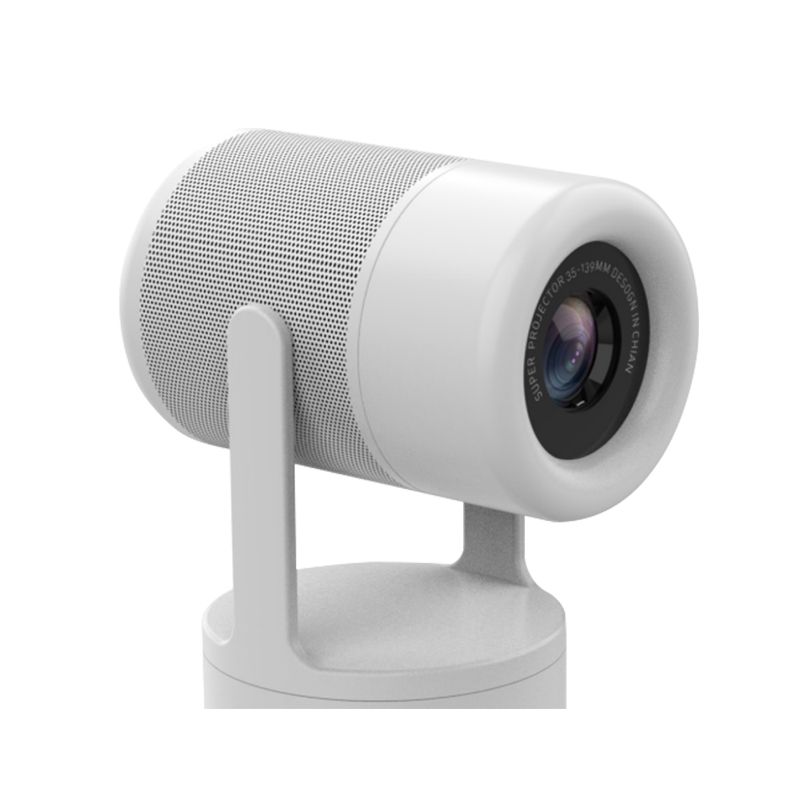
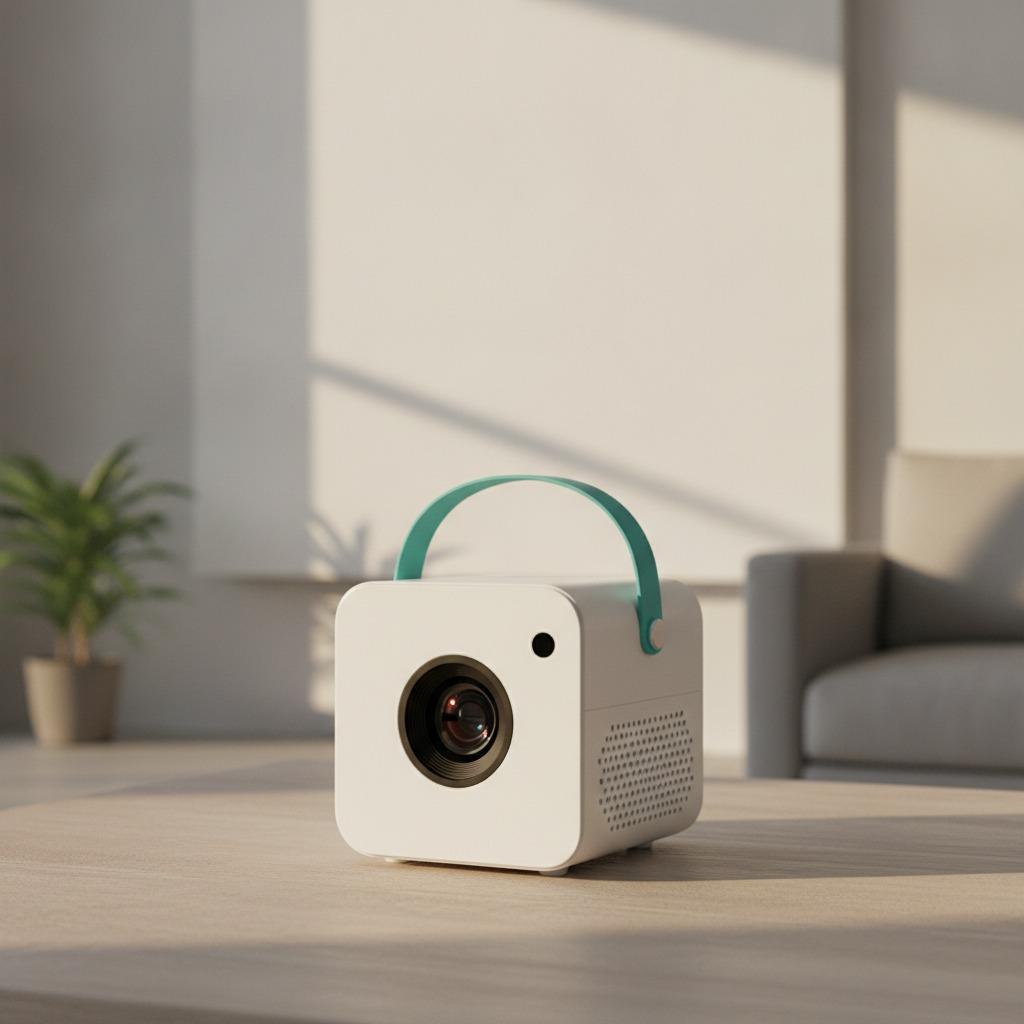
The Q2 Projector is a compact cube-style projection device designed to solve a familiar problem for buyers who need a screen or presentation surface without carrying bulky equipment. For home viewing, classroom demos, temporary meetings, or travel setups, the main advantage is portability: the unit’s small footprint and integrated carry handle make it easier to move, store, and place than many larger projection systems. Based on the visible product form, it appears suited to users looking for a practical multimedia projector rather than a fixed-installation machine.
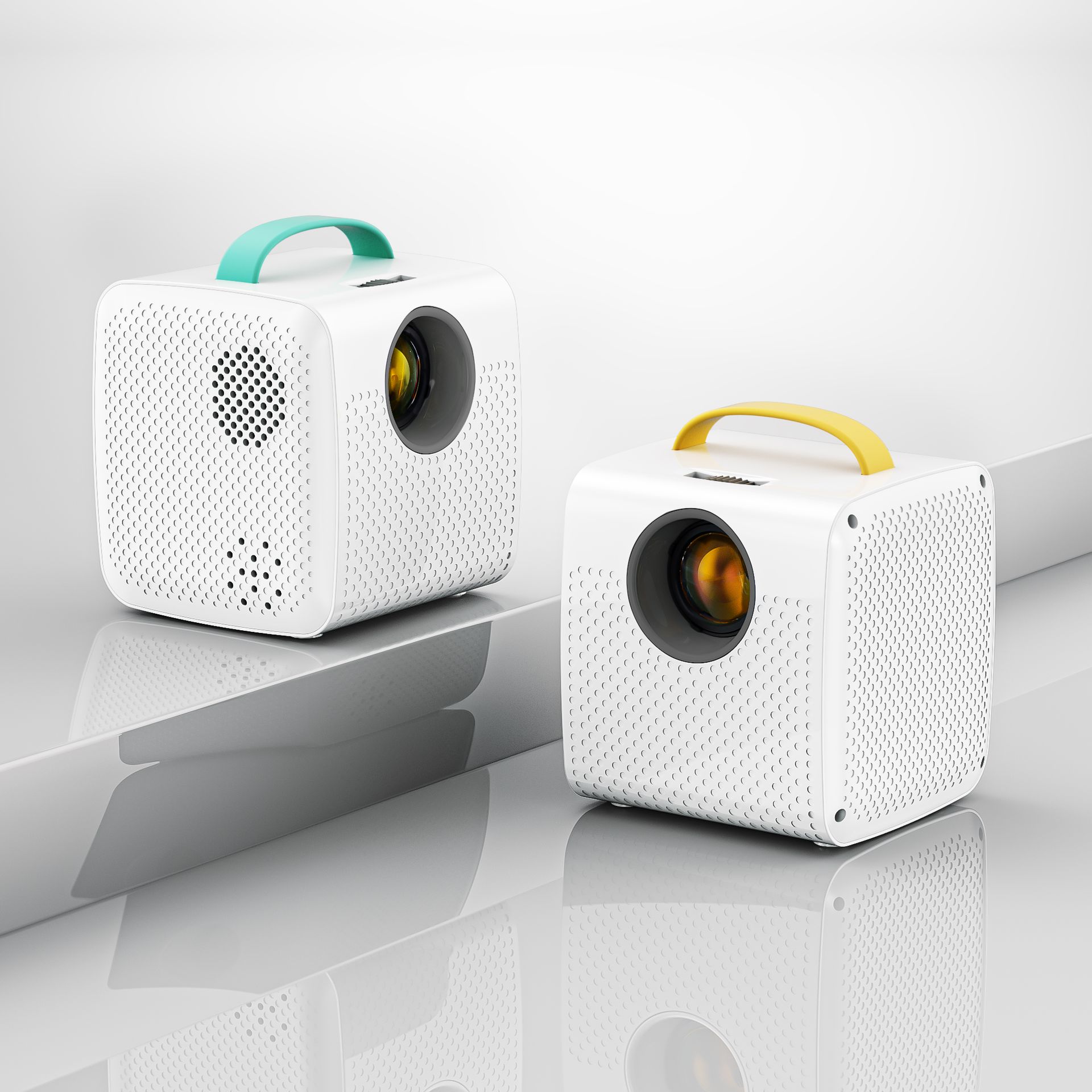
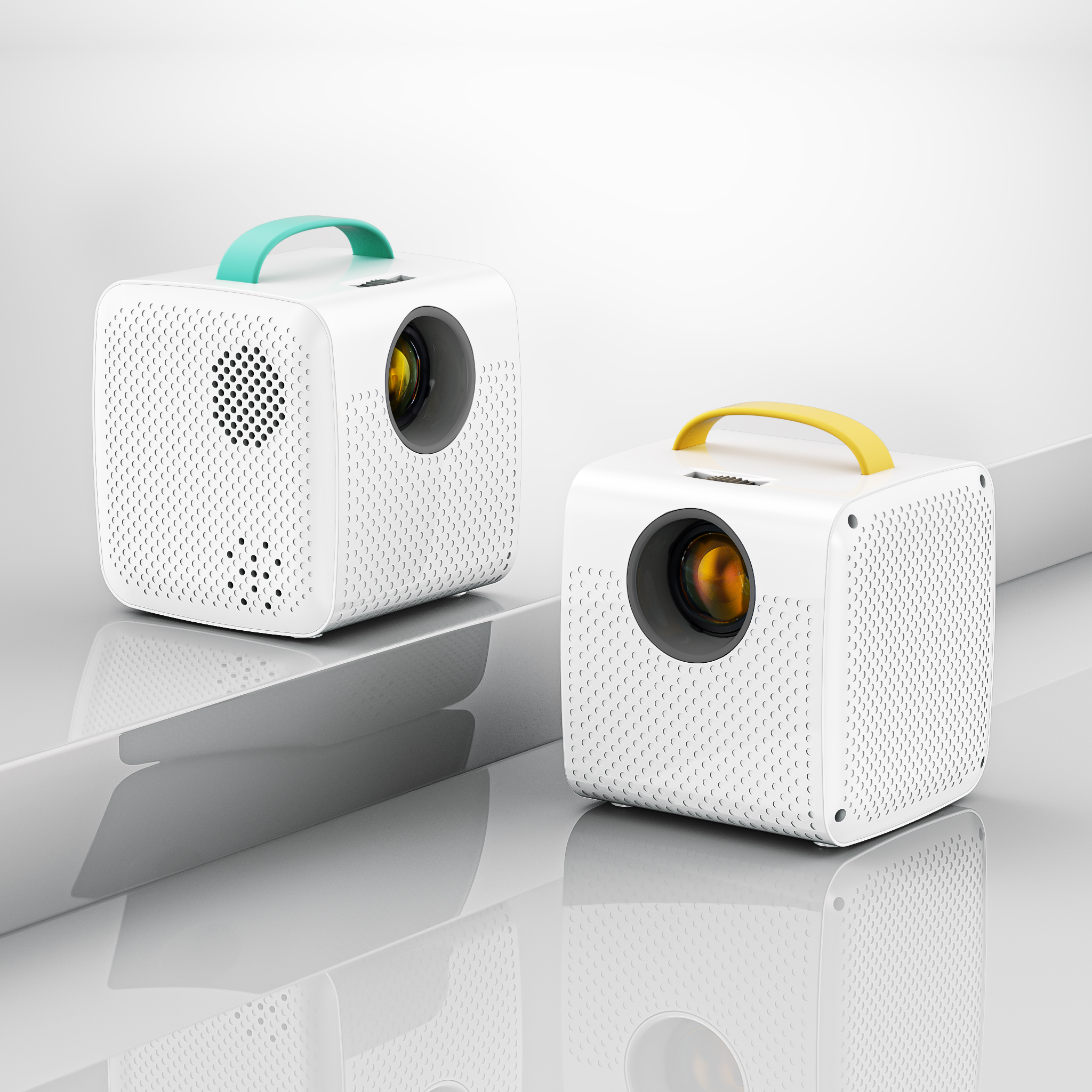
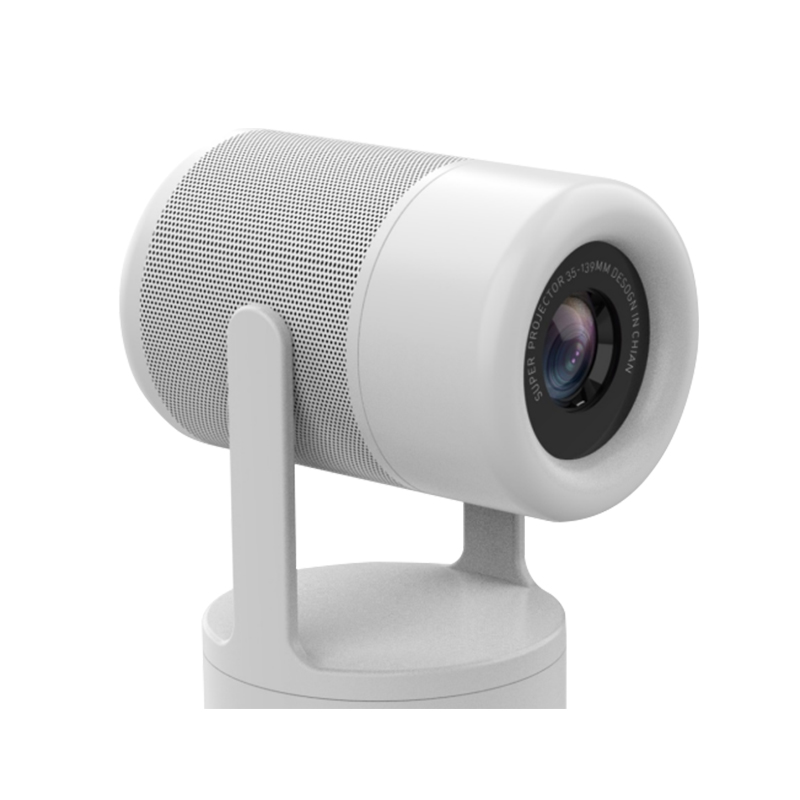
Its front-facing lens, rounded enclosure, and ventilation-style perforations suggest a consumer electronics build intended for short setup cycles and flexible placement. For buyers comparing portable projectors, the Q2 Projector stands out first as a hardware package: compact body, easy-to-carry structure, and a projection-oriented layout that supports casual entertainment and lightweight business use.
Product Structure and Visible Features
The housing is a cube-like molded enclosure with smooth rounded edges and a white matte or satin finish. A contrasting teal handle sits on top, giving the unit a clear transport function. The front lens is centered in a black bezel, which is a typical arrangement for front projection. Perforated areas along the front and side panels may support airflow, audio output, or both; the image shows the pattern but does not confirm the exact internal function.
Visible openings on the top and lower side indicate that the unit likely houses internal electronics that need ventilation and connectivity access. These are useful details for buyers who care about physical layout, because a projector’s shell design often affects cooling, handling, and placement flexibility.
Key Capabilities Buyers Usually Evaluate
Portable placement
The handled top design makes the Q2 Projector easier to carry between rooms or take on short trips. That matters for users who need a projector in different spaces instead of a permanent setup.
Front-projection layout
The visible lens position indicates a standard front-projection configuration. This supports common use cases such as wall projection, screen projection, or temporary presentation display.
Compact form factor
Compared with larger home-theater units, the cube-style body is more storage-friendly. Buyers often select best mini projectors when desk space, shelf depth, or travel convenience is a priority.
Materials and Finish Options
From the visible surface, the enclosure appears to be injection-molded plastic, finished in white with a smooth matte or lightly glossy appearance. The handle is shown in teal on one unit and yellow on another, which suggests that color variants may be possible. The lens area uses a black bezel with a glass or coated optical element, though the exact lens construction cannot be confirmed from the image alone.
For OEM or ODM buyers, exterior color, texture, logo placement, and handle styling are common customization points. These changes do not usually affect the basic housing architecture, but they can help a product line fit retail branding or private-label requirements.
Manufacturing and Assembly Considerations
The Q2 Projector fits a consumer electronics assembly workflow that typically combines plastic injection molding, optical module integration, and final system assembly. In projects like this, the enclosure, control openings, lens seat, internal cooling path, and speaker/vent areas need to be aligned carefully. hcdpcba supports OEM and ODM services, including SMT贴片, PCBA板, component sourcing, assembly, testing, and DFMA service, which is relevant when a buyer is developing an electronic projector platform or related control board.
For product developers, DFMA review can help reduce assembly complexity, improve serviceability, and make the housing easier to manufacture at scale.
Application Scenarios
The Q2 Projector is well aligned with everyday projection needs where portability matters more than permanent installation. Typical scenarios include bedroom entertainment, living-room movie nights, classroom demonstrations, small meeting rooms, travel viewing, and temporary event displays. It may also suit office teams that need a display device for occasional presentations and do not want to dedicate space to a full-size projector.
These kinds of portable projectors are often evaluated on setup speed, physical durability, and whether the shell design makes the unit practical to move frequently. That is why the handle and compact body are important selling points here.
Quality Control and Buyer Decision Factors
For a projector in this class, buyers usually want consistency in lens alignment, enclosure fit, ventilation performance, and control access. Basic quality control should include assembly inspection, functional testing, board-level verification, and optical alignment checks. Because the image does not confirm performance values, buyers should request verified data for brightness, resolution, connectivity, and audio before placing a production order.
Decision factors often include physical size, portability, housing finish, service access, and the intended usage environment. If the projector will be moved often, shell strength and handle design matter. If it will be used in a classroom or office, simple operation and stable cooling become more important. Those comparing portable projectors should also confirm whether the unit meets their required input methods and installation conditions.
Customization Guidance
For B2B sourcing, the most useful customization points usually include housing color, handle color, logo printing, button layout, vent pattern, control board configuration, and packaging. If the Q2 Projector is being developed as an OEM product, hcdpcba can support PCB development, SMT贴片, assembly, testing, and production integration. This is especially relevant when the buyer needs a reliable electronics manufacturing partner for a compact projection device or related smart hardware.
Before sampling, buyers should clarify the target use case, required interface set, power plan, and whether the product will be positioned as a home device, office unit, or entry-level educational projector.
Request a Project Review
If you are evaluating the Q2 Projector for OEM, ODM, or private-label development, the next step is to define the required appearance, internal electronics, and test standards. Share your application goal, target market, and enclosure preferences, and the manufacturing plan can be matched to the product’s intended use.
For project discussion or production support, hcdpcba can assist with PCBA, SMT, assembly, testing, and custom electronic manufacturing requirements.