Why aluminum PCB choice matters in horticultural grow lights
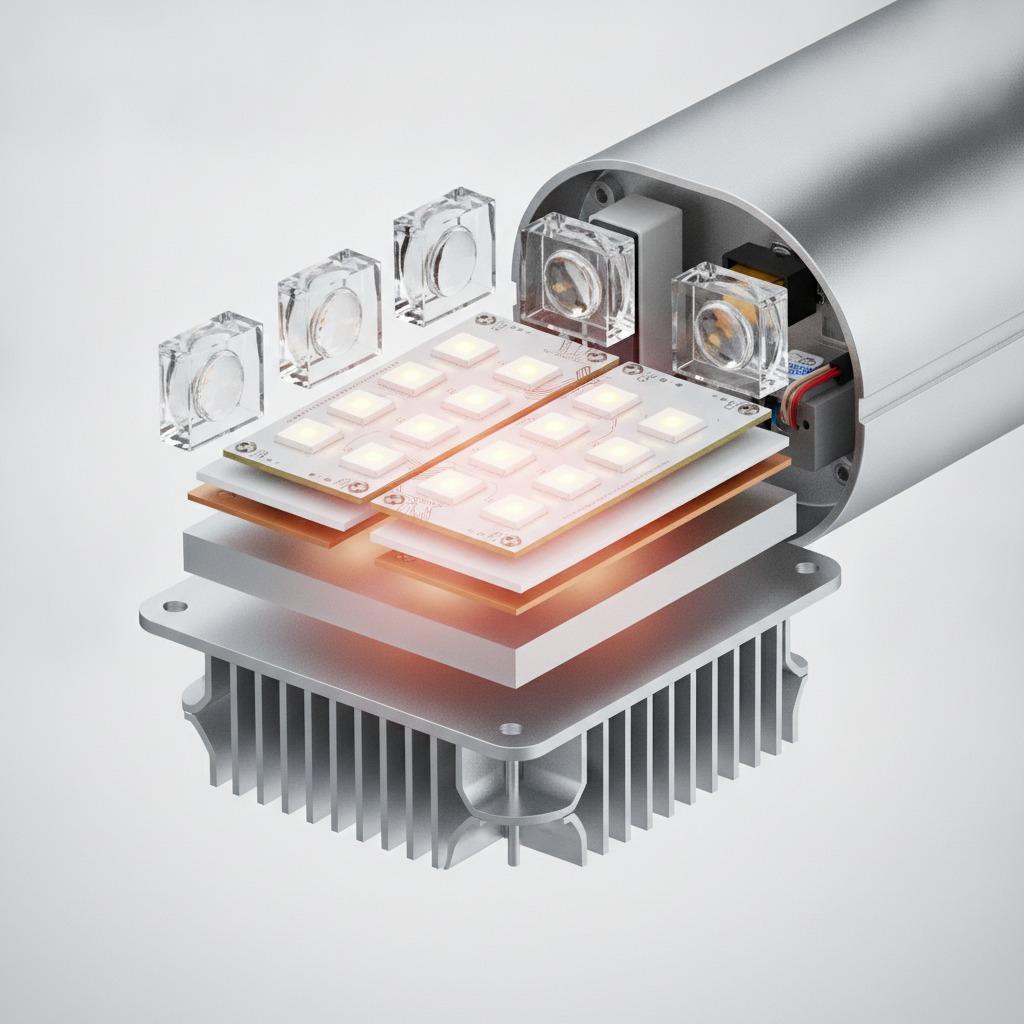
An Aluminum PCB for LED Horticultural Grow Light Plant Lamp is not just another circuit board choice. In a grow light, the board sits behind the optics, the driver, and the heat sink behavior of the whole fixture. If it cannot move heat away quickly enough, LED output drifts, color consistency suffers, and the lamp ages faster than the marketing brochure would like to admit. For growers, that means uneven canopy response. For product teams, it means warranty pressure and a hard conversation about thermal margin.
That is why the board material deserves the same attention as the LED package and the aluminum housing. In this category, the PCB is part electrical platform, part thermal path, and part reliability insurance.
What buyers are really comparing
When engineers and sourcing managers talk about a horticultural light PCB, they are usually weighing three practical questions: how much heat it can spread, how consistent the build quality will be, and how smoothly it can be assembled into the lamp structure.
A typical LED plant light circuit board has to support dense arrays, repeated thermal cycling, and long operating hours. The board must hold solder joints steady while also helping the fixture stay cool enough for stable light output. That is where a high thermal conductivity PCB earns its keep. The goal is not just to survive heat, but to flatten hot spots before they become failure points.
Where aluminum boards fit best
Aluminum-core boards are often chosen for single- and double-sided LED boards where thermal transfer matters more than ultra-high circuit complexity. They are common in lighting because they offer a practical balance: better heat dissipation than standard FR-4 in many lighting layouts, with manufacturing behavior that is still familiar to most PCB and SMT teams.
For grow lights, this matters because the fixture is often run for long daily cycles. A small thermal improvement can influence junction temperature, luminous maintenance, and the overall service life of the lamp. That may sound abstract until you are troubleshooting a row of fixtures installed over a greenhouse bench at midnight.
Key design points for plant lamp applications
Grow-light design is rarely just about making LEDs glow. Spectrum, spacing, lensing, current loading, and thermal structure all interact. The PCB has to support that stack-up cleanly.
Thermal path
The board should move heat from the LED solder pads into the aluminum base efficiently. In practice, this means the material system, dielectric layer, copper weight, and bonding quality all matter. A high thermal conductivity PCB is usually specified when LED density or drive current pushes the thermal load upward.
Electrical layout
The circuit layout should minimize unnecessary resistance and keep current distribution predictable. For a horticultural light PCB, uneven current paths can create brighter and hotter zones, which is a bad trade if uniform plant coverage is the goal.
Assembly compatibility
hcdpcba offers SMT贴片, PCB打样, 元器件代采, 组装, 测试, and DFMA support, which is useful for teams trying to move from prototype to production without scattering responsibility across too many vendors. For lighting products, that integrated approach can reduce the usual back-and-forth between design, sourcing, and factory floor realities.
Common mistakes in grow-light PCB sourcing
One frequent mistake is treating all metal-core boards as interchangeable. They are not. The thermal stack-up, dielectric performance, copper thickness, and board geometry can all affect the final result.
Another problem is overfocusing on LED count while ignoring heat removal. More emitters on the board do not automatically mean better plant performance. If the thermal design is weak, the fixture may look impressive in photos and underperform in actual use.
A third caution: some buyers specify a board before they fully settle the lamp mechanical design. That can lead to awkward mounting, poor contact with the heat-dissipating structure, or extra assembly steps that make no sense once production starts.
How to select a supplier for this type of board
For procurement teams, the best supplier is not simply the one that quotes fastest. It is the one that can support the whole path from sample to repeat production.
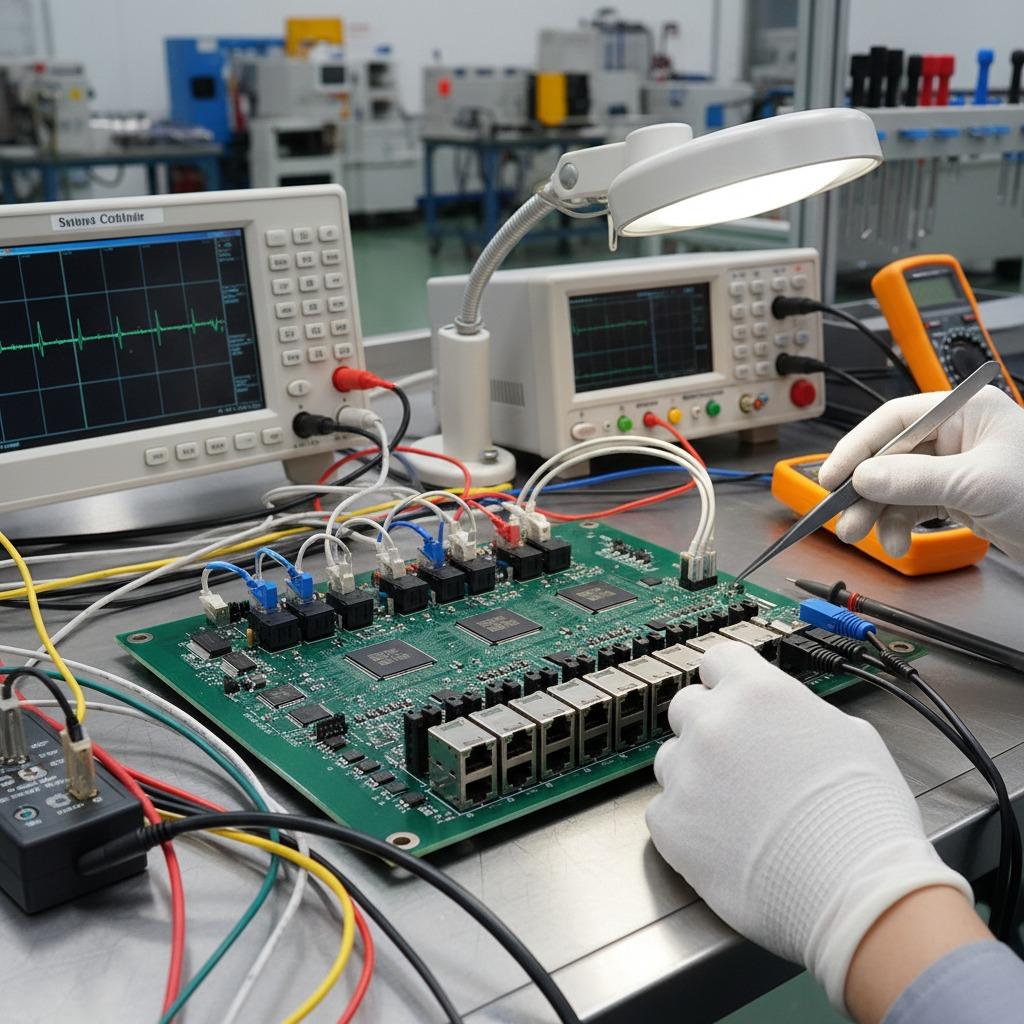
hcdpcba positions itself around PCB打样, SMT贴片, component sourcing, assembly, testing, and OEM/ODM support. That is relevant because LED lighting projects often need iteration. A board may look correct in CAD and still need a layout adjustment after thermal checks or fixture trials.
When evaluating suppliers, ask whether they can support DFMA review early. Small manufacturability changes can simplify soldering, improve yield, and reduce unnecessary cost later. Ask too how they handle quality control and whether they can support both small batch and larger volume runs. Lighting projects often start modestly, then scale faster than expected if the product catches on.
Practical buyer checklist
Before placing an order, confirm the following:
- LED power and expected thermal load
- Board size, mounting method, and spacing constraints
- Copper thickness and thermal structure
- Whether the design needs single-layer, double-layer, or more complex routing
- Assembly method and testing expectations
- Whether the fixture will run in humid or dusty growing environments
None of these points is glamorous, but they decide whether the lamp feels robust in the field or merely acceptable on paper.
FAQ
Is aluminum always better than standard PCB material for grow lights?
Not always. It depends on heat load, circuit complexity, and mechanical design. Aluminum boards are often a strong fit for lighting, but the final choice should match the fixture architecture.
Can the board be customized for different plant lamp layouts?
Yes, in many cases. Custom PCB fabrication and assembly are common in horticultural lighting, especially when lamp geometry, LED spacing, or power distribution needs adjustment.
Why involve DFMA early?
Because small design changes can make the board easier to build, easier to test, and less risky to scale. That is especially useful when the product must be reliable over long operating hours.
Next step for engineering and sourcing teams
If you are developing or refining an Aluminum PCB for LED Horticultural Grow Light Plant Lamp, start with the thermal target, then build the electrical layout around it. That order saves time. It also avoids the common trap of squeezing a hot circuit into a frame that was never quite meant to carry it.
For teams needing prototype support, SMT assembly, or a manufacturing review before release, hcdpcba can be contacted at +86 18924624188. The useful conversation is usually not about selling a board first. It is about getting the lamp architecture right before production pressure starts to shape the design for you.