What Does a Turnkey OEM Electronics Service Actually Mean?
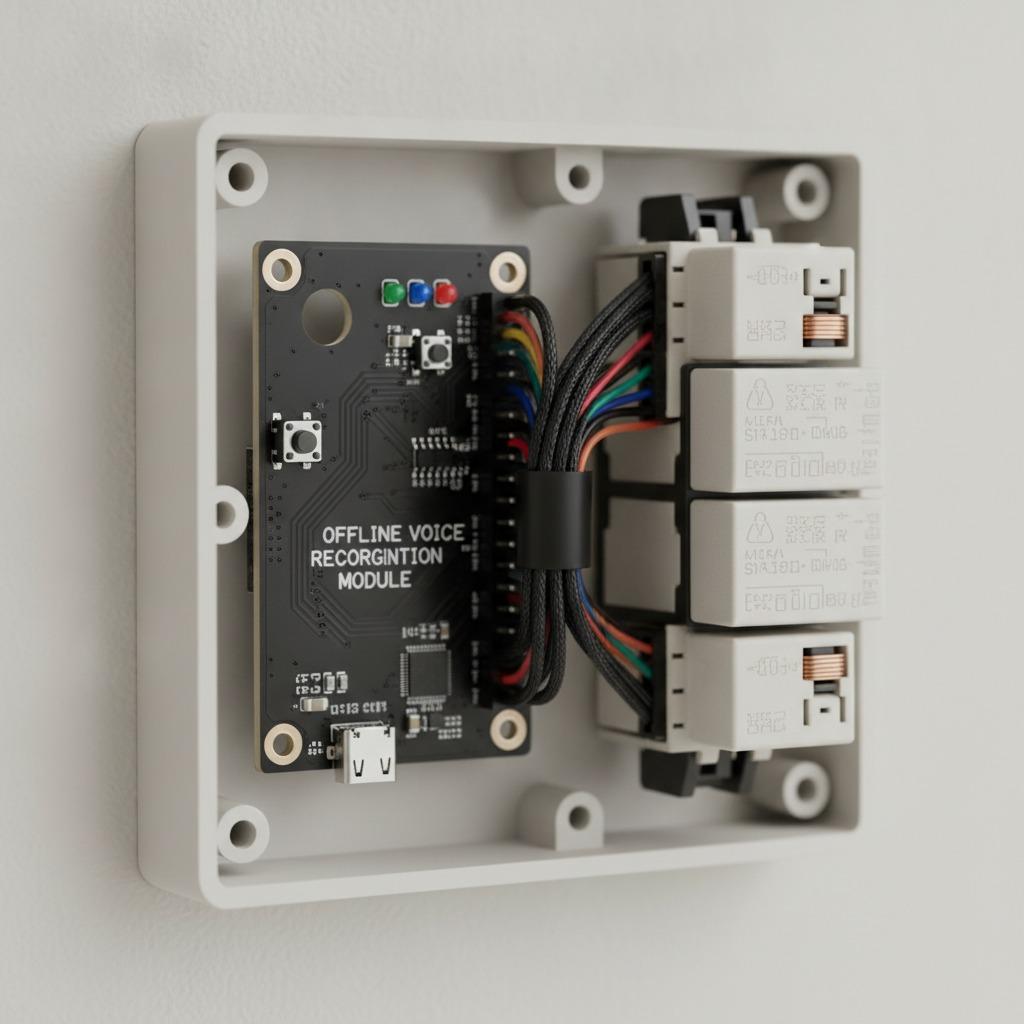
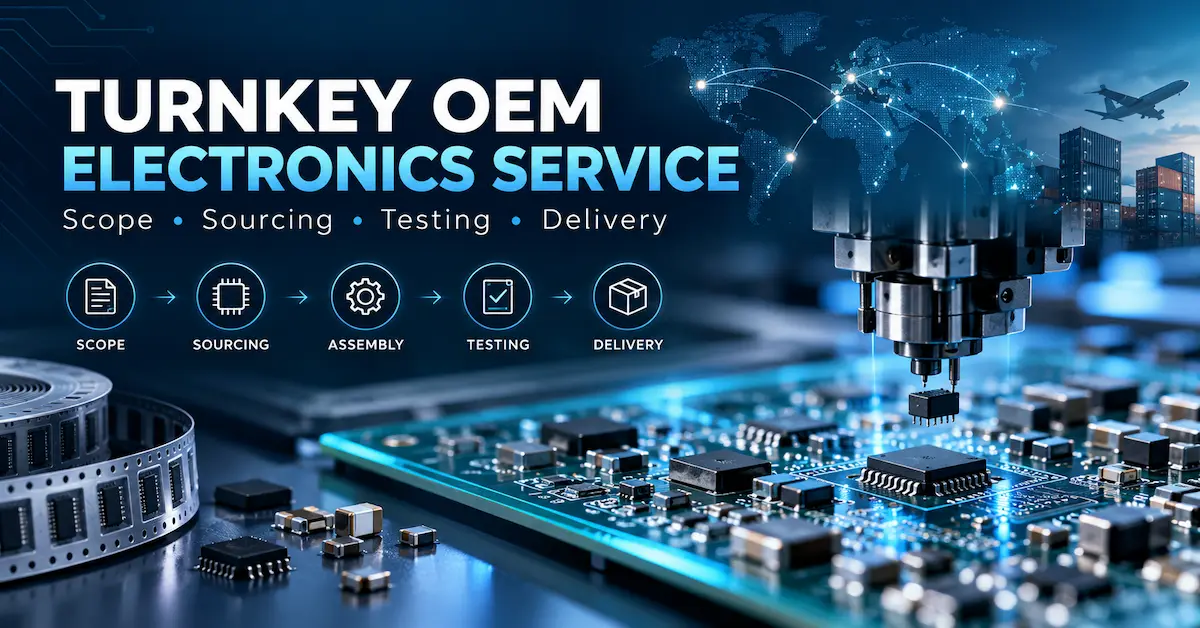
A turnkey OEM electronics service is a manufacturing arrangement in which one supplier coordinates an agreed set of activities required to turn a released electronic design into a manufactured assembly or finished electronic product. Depending on the project, the scope may include PCB fabrication, component procurement, SMT assembly, through-hole assembly, inspection, programming, functional testing, final assembly, labeling, packaging, and shipment preparation.
The important word is agreed. “Turnkey” is not a universal specification. One manufacturer may use it to describe PCB fabrication, BOM sourcing, assembly, and board-level testing. Another may include cables, enclosures, programming, mechanical integration, and final-product assembly.
For an OEM buyer, that difference matters more than the label itself.
This article deliberately focuses on those responsibility gaps. If you need a deeper explanation of board-level PCB sourcing, component procurement, SMT/DIP assembly, and PCBA testing, HCDPCBA's existing Turnkey PCBA Manufacturing Guide covers that narrower production workflow. This guide instead looks at the wider OEM relationship around the electronics manufacturing program.
Why OEM Buyers Need to Define Scope Before Comparing Quotes
Most outsourcing problems do not begin with a placement machine. They begin with different assumptions.
The procurement manager assumes the factory will source the complete BOM. Engineering assumes critical replacements require approval. The manufacturer assumes the customer will provide a working functional-test fixture. The customer assumes programming and enclosure assembly are included because the quotation says “turnkey.”
All four parties can believe they understood the project while actually describing different manufacturing scopes.
A professional turnkey electronics service therefore needs a responsibility structure before it needs a production schedule.
Common gaps that appear after the PO
- A critical IC becomes unavailable and the quotation does not define substitution authority.
- The supplier performs AOI, but the buyer expected full functional testing.
- Firmware exists, but no programming file, version, or work instruction was released.
- The quotation includes PCBAs but not cables, housing integration, or final assembly.
- The customer expects packaging artwork or labels that were not included in the quoted scope.
- A prototype is approved, but the BOM changes before mass production without a controlled release.
- The manufacturer quotes production before the required test fixture is available.
These are not unusual exceptions. They are predictable project risks that can be removed by defining the scope early.
Turnkey OEM Electronics Service vs Turnkey PCBA
Turnkey PCBA and turnkey OEM electronics manufacturing overlap, but they should not automatically be treated as the same service.
| Service Model | Typical Output | Main Responsibility to Clarify |
|---|---|---|
| PCB fabrication | Bare printed circuit boards | Board specifications, fabrication data, inspection, and delivery condition |
| PCBA assembly | Populated and assembled circuit boards | Who supplies components and which inspection or testing is included |
| Turnkey PCBA | Assembled PCBAs using supplier-managed PCB and BOM sourcing | Sourcing, assembly, board-level inspection, testing, and BOM management |
| Turnkey OEM electronics service | Project-defined electronic assembly, subsystem, or finished electronic unit | Programming, cables, final assembly, system testing, labeling, packaging, and handoff |
| ODM development | Development plus manufacturing according to an agreed scope | Engineering ownership, source files, IP, verification, and production responsibility |
A buyer who needs only assembled PCBs can work at the PCBA level. A product company that wants one manufacturer to coordinate several electronics-production stages needs a broader responsibility model.
That is also why this article uses HCDPCBA's PCBA Manufacturing Services page as the primary commercial destination. It provides the product-level context for custom PCBAs, while the surrounding OEM manufacturing agreement defines how those boards fit into the complete outsourced production program.
Build a Responsibility Matrix Before Sending an RFQ
A responsibility matrix is one of the simplest ways to improve a turnkey OEM electronics project. For each work package, answer three questions:
- Who provides the input?
- Who performs the work?
- Who approves the output?
This prevents an outsourced activity from becoming an unowned activity.
| Project Element | Buyer Input | Manufacturer Scope to Confirm | Approval Evidence |
|---|---|---|---|
| Product requirement | Functions, interfaces, application, constraints | Manufacturability review against agreed scope | Released requirement or specification |
| PCB fabrication | Approved Gerber or equivalent manufacturing data | PCB fabrication or procurement | Approved PCB revision |
| BOM | Manufacturer part numbers and substitution policy | Component sourcing where included | Approved BOM revision |
| SMT / THT | Placement and assembly information | Assembly process execution | Inspection according to agreed criteria |
| Firmware | Approved binary and programming instructions | Programming if included | Verified firmware revision |
| Functional test | Test method and pass/fail criteria | Fixture preparation or test execution as agreed | Recorded pass/fail result |
| Final assembly | Mechanical drawings and assembly requirements | Cables, enclosure, fasteners and integration if included | Approved finished configuration |
| Packaging | Label and packing specifications | Packaging preparation if included | Approved packaging configuration |
The matrix can remain short during early development and become more detailed before production release. What matters is that every major task has an owner.
What Manufacturing Files Should the Buyer Prepare?
A turnkey supplier can coordinate a large part of production, but the accuracy of the quotation still depends on the information supplied by the customer.
An early concept and a production-ready design are not the same RFQ.
PCB manufacturing data
For a released board, the project package normally identifies the PCB design and its manufacturing requirements. Depending on the board, information can include:
- Gerber or equivalent fabrication data.
- Drill information.
- Board dimensions and outline.
- Layer and stack-up requirements.
- Material requirements.
- Surface finish.
- Controlled impedance where applicable.
- Other project-specific fabrication notes.
PCBA data
- Complete BOM.
- Approved manufacturer part numbers.
- CPL or pick-and-place data.
- Assembly drawing.
- Polarity and orientation information.
- Special assembly instructions.
Programming and testing information
- Programming file where required.
- Firmware revision.
- Programming instructions.
- Functional-test procedure.
- Pass/fail criteria.
- Fixture interface where applicable.
If your board uses both surface-mount and through-hole components, HCDPCBA's Mixed Technology PCBA Guide provides additional detail on how SMT and THT assembly requirements should be separated in the production package.
Have a PCB and BOM Ready for Review?
Send the current manufacturing package together with expected quantities, testing requirements, and the final deliverable you want the supplier to provide.
BOM Sourcing Is More Than Buying Parts
Component sourcing is one of the defining differences between an assembly-only order and a turnkey OEM electronics service. When the manufacturer manages the BOM, it also becomes involved in component availability, alternative-part discussion, purchasing quantities, inventory, and supply risk.
That responsibility should not be reduced to “factory buys components.”
Lock critical manufacturer part numbers
ICs, processors, sensors, connectors, power devices, oscillators, wireless modules, memories, and other application-critical parts should normally be identified precisely when the design requires a specific device.
The more a component affects firmware, interfaces, certification, mechanical fit, signal integrity, thermal behavior, or product performance, the less suitable it is for uncontrolled substitution.
Create a substitution policy
A practical BOM can classify components into groups:
- Exact part required; no substitution without written approval.
- Approved alternatives already defined.
- Commodity components replaceable within an agreed specification.
This approach allows purchasing flexibility without giving up configuration control.
Discuss minimum purchasing quantities
The requested production quantity may not equal component purchasing quantities. Some parts are purchased in reels, trays, tubes, packs, or minimum distributor quantities.
The agreement should explain how unused customer-specific inventory is managed, especially when the project stops, changes revision, or switches components.
Review sourcing before finalizing the production date
An assembly line cannot compensate for a long-lead critical IC. Before promising a launch date, confirm the components that actually constrain the schedule.
For a broader explanation of these sourcing and supplier-control issues, the existing Reliable PCBA Supplier Selection Guide expands on BOM control, quality evidence, and repeat-production risk.
Use DFMA Before Components and Production Are Locked
DFMA is most valuable before manufacturing decisions become expensive to change.
For a turnkey OEM electronics program, the purpose of DFMA is not to replace product engineering. It is to identify design features that may create avoidable manufacturing, assembly, inspection, sourcing, or test problems.
Typical DFMA questions
- Are selected component packages compatible with the assembly process?
- Do footprints match the approved parts?
- Are polarized parts clearly defined?
- Can connectors be installed and accessed correctly?
- Are important test points reachable?
- Can critical solder joints be inspected?
- Does the board fit the intended enclosure?
- Are manually assembled parts creating unnecessary process complexity?
- Are any critical components creating obvious supply risk?
HCDPCBA publicly lists DFMA as part of its wider electronics manufacturing offering. Buyers considering a turnkey program can therefore use an early engineering review to separate design issues from production issues before the first larger material commitment.
Separate Prototype Validation From Production Readiness
A prototype proves that a product can be built once. Production readiness asks whether the approved configuration can be reproduced consistently.
Those are different questions.
Prototype stage
The prototype stage is used to uncover problems. Components may change. PCB revisions may change. Firmware may still be developing. Test methods may still be manual.
The buyer should expect engineering learning.
Engineering validation
Once the board functions, the OEM needs to determine whether it performs correctly inside the real product. Depending on the application, this may involve interfaces, loads, communication, image quality, sensors, thermal behavior, firmware, mechanical fit, or other system-level requirements.
Pilot production
The pilot stage should test manufacturing repeatability rather than merely repeat the prototype. It can expose problems with panelization, component handling, assembly sequence, fixture access, programming time, inspection, manual operations, and production documentation.
Production release
Before mass production, identify the exact approved configuration:
- PCB revision.
- BOM revision.
- Approved alternatives.
- CPL / placement revision.
- Assembly instructions.
- Firmware revision where applicable.
- Programming instructions.
- Test procedure.
- Acceptance limits.
- Labeling and packaging configuration.
Define Testing by Function, Not by the Word “Tested”
A phrase such as “100% functional test” sounds reassuring but tells the buyer very little unless the tested functions and limits are defined.
For OEM electronics manufacturing, testing should reflect the functions that determine whether the supplied board or product is acceptable.
| Test / Inspection Layer | What It Can Establish | What the Buyer Must Clarify |
|---|---|---|
| Visual / process inspection | Visible assembly conditions | Inspection criteria and sampling or coverage |
| AOI | Selected visible placement and soldering conditions | Which assemblies receive AOI and what defects are targeted |
| X-Ray where appropriate | Selected hidden solder-joint conditions | Which components or joints require X-Ray |
| Electrical check | Defined electrical conditions | Measurement points and acceptance limits |
| Firmware / boot verification | Programming result or startup condition | Approved firmware and expected response |
| Functional test | Selected product or board functions | Functions, fixture, test conditions, limits, and failure handling |
| System validation | Behavior inside the final application | Whether this remains the OEM's responsibility or forms part of the supplier scope |
HCDPCBA's current company information identifies AOI and X-Ray within its quality-control approach and lists testing among its services. The actual test coverage for an OEM order should still be specified by project.
This distinction is particularly important because inspection and functional validation are not substitutes for each other. A board can be well assembled and still contain a design, firmware, interface, or product-integration problem.
Engineering Change Control Protects Repeat Orders
One of the most important long-term benefits of a strong turnkey relationship is configuration control.
The first order may be closely watched by engineering. Six months later, the product can fail to match the approved version if component substitutions, PCB revisions, firmware changes, or documentation updates are handled informally.
Control more than the BOM
A production configuration may include:
- PCB fabrication data.
- BOM.
- Approved alternates.
- Placement data.
- Assembly drawing.
- Firmware.
- Programming process.
- Test program.
- Cables.
- Mechanical parts.
- Labels.
- Packaging.
A change to any of these items may affect production or validation.
Define the approval path
A simple change-control process should identify who proposes the change, who evaluates its technical and commercial impact, who approves it, which documents are revised, and whether additional validation is required.
This is particularly important for component shortages. A procurement problem should not silently become an engineering change.
How Should Buyers Compare Turnkey OEM Quotes?
First normalize the scope. Then compare price.
Without scope normalization, the lowest quotation often reflects the greatest number of exclusions.
Compare the same PCB specification
Make sure each supplier is pricing the same board revision, material requirements, finish, and fabrication conditions.
Compare the same BOM
Check whether all suppliers quoted the released manufacturer part numbers. If one quote assumes alternative components, it is not directly comparable until those parts are reviewed.
Compare the same manufacturing steps
SMT assembly, through-hole work, manual soldering, cable assembly, programming, and enclosure integration can create very different labor and process requirements.
Compare the same test scope
A supplier quoting AOI and visual inspection is not providing the same scope as one quoting a customer-specific functional fixture and recorded test.
Identify non-recurring costs
Ask whether engineering review, tooling, stencils, fixtures, programming setup, prototype preparation, or packaging development are separately charged.
| Quote Item | Question to Ask |
|---|---|
| PCB | Is PCB fabrication included and based on the same approved specification? |
| BOM | Are all required parts included, and were any substitutes assumed? |
| SMT / THT | Which assembly operations are included? |
| Inspection | Which inspection steps are included in the price? |
| Functional testing | What functions are tested and who provides the test procedure or fixture? |
| Programming | Is firmware loading included, and how is the approved revision controlled? |
| Final assembly | Which cables, housing parts, labels, and accessories are included? |
| Packaging | What protective and finished packaging is included? |
The relevant commercial question is therefore not “Which factory has the lowest PCBA price?” It is “Which quotation delivers the required accepted configuration at the lowest controlled total cost?”
Comparing Electronics Manufacturing Quotes?
Use one controlled PCB revision, BOM, test scope, quantity, and final deliverable when requesting quotations. That makes supplier pricing much easier to evaluate.
How Should Lead Time Be Defined?
A turnkey project schedule is built from dependencies. It should not be reduced to one generic assembly turnaround number.
The major schedule drivers can include:
- Engineering release.
- PCB fabrication.
- Critical BOM availability.
- Approval of component alternatives.
- Programming-file availability.
- Test-fixture preparation.
- Prototype revision cycles.
- Pilot approval.
- Production quantity.
- Final assembly and packaging.
A more useful quotation identifies milestones rather than providing only a headline number.
Useful schedule milestones
- Technical package accepted.
- BOM availability reviewed.
- Prototype material prepared.
- Prototype assembled.
- Engineering validation completed.
- Pilot build released.
- Pilot accepted.
- Volume production released.
- Final inspection completed.
- Shipment ready.
This approach makes responsibility clearer when the schedule changes. It also prevents a component shortage or customer approval delay from being incorrectly described as an SMT lead-time problem.
Protect IP and Confidential Manufacturing Data
A turnkey OEM electronics relationship can require significantly more technical information than a simple bare-board purchase.
The factory may receive schematics, layouts, BOMs, firmware, test instructions, mechanical drawings, product requirements, and forecasts.
Buyers should therefore establish confidentiality and file-control requirements before transferring sensitive information.
Clarify ownership and access
The agreement may need to define:
- Ownership of buyer-provided design files.
- Who may access project information.
- Whether information can be shared with approved sourcing or manufacturing partners.
- Handling of firmware and sensitive programming data.
- Ownership of development outputs if engineering work is commissioned.
- File retention and use after the project ends.
HCDPCBA's published company information describes confidentiality agreements and file/data protection as part of its service approach. For a proprietary OEM program, the specific confidentiality terms should still be confirmed in the project agreement.
Define the Final Deliverable Physically
One of the easiest ways to remove ambiguity is to describe exactly what arrives in the shipping carton.
“Complete electronics” is vague.
“Programmed PCBA, functional-tested according to revision FT-03, installed in the approved enclosure with cable harness, product label, accessories and protective packaging” is much harder to misunderstand.
Possible turnkey deliverables
- Bare PCB.
- Assembled PCBA.
- Programmed PCBA.
- Functional-tested PCBA.
- PCBA plus cable assemblies.
- Electronic subassembly installed in housing.
- Complete electronic product.
- Finished unit with labeling and packaging.
The RFQ should also state whether the supplier is expected to provide inspection records, test results, packing lists, or other agreed manufacturing documentation.
Turnkey OEM Electronics Service RFQ Checklist
The following structure helps convert an exploratory inquiry into a quote that purchasing and engineering can actually evaluate.
Product definition
- Product or PCBA name.
- Application.
- Current development stage.
- Final deliverable required from the supplier.
Engineering package
- PCB files.
- BOM.
- CPL / pick-and-place data.
- Assembly drawing.
- Schematic where required for review or testing.
- Mechanical files where final assembly is required.
Manufacturing scope
- PCB fabrication.
- Component sourcing.
- SMT assembly.
- Through-hole / manual assembly.
- Programming.
- Functional testing.
- Final assembly.
- Packaging.
Commercial information
- Prototype quantity.
- Pilot quantity.
- Expected production volume.
- Target schedule.
- Destination.
- Special documentation or confidentiality requirements.
If some items remain unresolved, identify them explicitly. The supplier can then separate firm manufacturing cost from preliminary engineering assumptions.
How HCDPCBA Fits a Turnkey OEM Electronics Project
HCDPCBA's current company positioning centers on one-stop electronics manufacturing. Its published scope includes PCB prototyping, SMT assembly, custom PCBA manufacturing, component sourcing, DFMA, assembly, testing, and OEM/ODM support.
The company's current About HCDPCBA page also lists more than 50 employees, a 5,000 m² plant area, and ISO 9001, ISO 14001, ISO 45001, and RoHS information. These are company-level published facts rather than automatic project-level performance or compliance guarantees.
For a buyer considering a turnkey electronics program, the relevant value is the ability to discuss several manufacturing activities through one project workflow. The exact responsibilities should still be defined in the RFQ and quotation.
HCDPCBA also publishes a One-Stop Electronic Manufacturing Solution page for embedded-system PCB projects, which provides a useful commercial reference when the manufacturing requirement extends beyond straightforward PCB placement.
The best first inquiry is therefore not simply “What is your turnkey price?”
Instead, tell the manufacturer:
- What you want manufactured.
- Which design stage the project has reached.
- Which files are ready.
- Who should purchase the BOM.
- Which assembly processes are required.
- What testing determines acceptance.
- Whether programming or final assembly is required.
- What quantities are expected.
- What the final delivered configuration should contain.
That turns an open-ended inquiry into a manufacturing project that can be reviewed and quoted.
Define Your Turnkey OEM Electronics Project
Send the current PCB files, BOM, prototype or production quantities, required tests, and final-delivery scope so the manufacturing responsibilities can be reviewed around the real project.
FAQ About Turnkey OEM Electronics Service
What is a turnkey OEM electronics service?
It is an outsourced electronics manufacturing model in which one supplier coordinates an agreed group of manufacturing activities. Depending on the project, these may include PCB fabrication, component sourcing, PCBA assembly, programming, testing, final assembly, and packaging.
Is turnkey OEM electronics service the same as turnkey PCBA?
Not necessarily. Turnkey PCBA normally centers on the assembled circuit board. A broader OEM electronics service may continue into cables, programming, enclosure integration, complete subassemblies, or finished-product preparation.
What files should I send for a quotation?
For a released board, provide PCB fabrication data, BOM, pick-and-place information, assembly drawings, quantity, and test requirements. Firmware, programming instructions, mechanical files, and packaging requirements may also be necessary depending on the requested scope.
Does turnkey manufacturing include component sourcing?
It commonly can, but this should be confirmed in the quotation. The buyer should also define approved parts, alternative-part authority, material ownership, and treatment of unused customer-specific inventory.
Does turnkey electronics manufacturing include functional testing?
It can, but the phrase should not be assumed to mean complete product validation. Define which functions are tested, test conditions, limits, fixture responsibility, and failure handling.
How should component substitutions be handled?
Use an approved substitution or engineering-change process. Parts that affect performance, firmware, interfaces, mechanics, certification, thermal behavior, or product reliability should not be changed informally.
How should I compare two turnkey OEM electronics quotations?
Normalize the PCB specification, BOM, assembly scope, inspection, testing, programming, final assembly, packaging, quantity, and delivery scope before comparing price.
Should I move directly from prototype to mass production?
For many products, a pilot build is valuable because it evaluates production repeatability rather than simply repeating a functional prototype. Use the pilot to validate documentation, assembly flow, inspection, programming, testing, and configuration control.
What determines lead time?
Lead time can depend on engineering release, PCB fabrication, component availability, alternative-part approval, fixtures, programming files, prototype revisions, pilot approval, production quantity, final assembly, and packaging.
What information should I send HCDPCBA for a useful turnkey quote?
Send the available PCB files, BOM, assembly information, expected quantities, testing requirements, target schedule, and a clear description of the final deliverable. If the project is still developing, identify which information is approved and which remains preliminary.
Conclusion
A turnkey OEM electronics service is most valuable when it reduces supplier handoffs without reducing control. The manufacturer may coordinate PCB fabrication, component sourcing, assembly, inspection, testing, programming, and final integration, but the commercial relationship still needs clearly defined technical responsibilities, approval rules, and acceptance criteria.
For OEM buyers, the strongest project starts with a responsibility matrix rather than a unit-price request. Define who owns the product requirements, released PCB files, BOM approval, component substitutions, firmware, test procedure, final assembly, and production release. Then make every supplier quote the same configuration and the same acceptance scope.
BOM sourcing should be controlled through approved part numbers and substitution rules. Prototype, engineering validation, pilot production, and mass production should have different objectives. Functional testing should identify actual functions and limits rather than rely on a vague “100% tested” statement. Engineering changes should update the controlled manufacturing package before the next batch begins.
If your project is already at the PCB, BOM, prototype, or sourcing stage, you can review HCDPCBA's PCBA manufacturing capabilities to confirm the available production scope. For projects that require component sourcing, SMT/DIP assembly, testing, final assembly, or OEM/ODM support, submit the current technical package through the HCDPCBA project inquiry page for a project-specific manufacturing review.