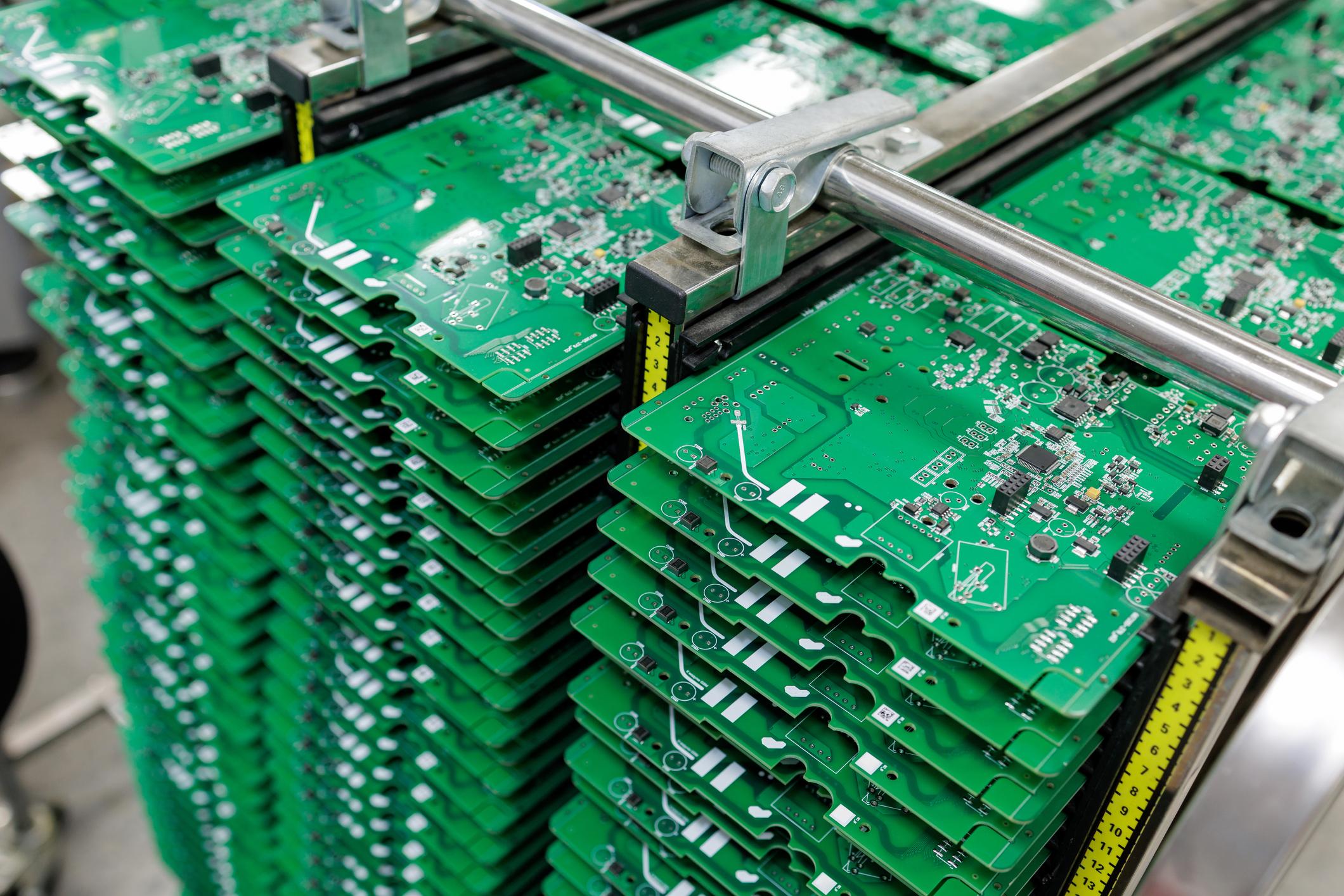
Scalable PCBA Production for Long-Term Manufacturing Stability and Growth
Many electronics products begin with stable prototypes and successful pilot runs, but problems emerge once production demand increases.
Boards that initially achieve strong yield may later experience rising defect rates, delayed delivery schedules, or inconsistent electrical performance as manufacturing expands.
This happens because scaling production is not simply about increasing machine utilization. It requires manufacturing systems that can maintain process consistency, material stability, and workflow coordination as production volume grows.
A structured scalable PCBA production strategy addresses these challenges by building repeatable manufacturing systems from the beginning. Our engineering and production teams focus on creating manufacturing environments where products can expand from low-volume builds to large-scale production without introducing instability or uncontrolled variation.
Why Production Scaling Creates Hidden Manufacturing Risks
Small-scale production environments are often easier to control because engineering teams remain closely involved in daily operations. As production expands, however, complexity increases rapidly.
For example:
- More operators and shifts introduce workflow variation
- Larger material volumes increase sourcing risk
- Higher throughput amplifies small process deviations
A defect that affects only a few units during pilot production can become a major yield issue once production reaches thousands of boards.
A reliable scalable PCBA production workflow therefore emphasizes:
- Standardized production parameters across all lines
- Controlled process transfer between shifts and factories
- Real-time monitoring of yield and defect trends
Factories implementing these controls often reduce scaling-related production issues by 20–35%.
Building Repeatable Manufacturing Systems
True scalability depends on repeatability. Production systems must deliver the same results regardless of quantity, shift, or production cycle.
This requires:
- Locked SMT machine parameters
- Stable reflow profiles across batches
- Standardized inspection criteria and testing methods
Without repeatable systems, manufacturing quality drifts as production grows.
For example, inconsistent feeder setup between shifts may create placement deviations that gradually affect yield stability.
A disciplined scalable PCBA production process improves:
- Cross-batch consistency
- Long-term yield predictability
- Reduced field failure risk
Manufacturers with mature repeatability systems commonly reduce recurring defects by 25–40%.
Supply Chain Coordination During Production Growth
Production scaling also places pressure on material sourcing. Components that are easy to obtain for prototypes may become difficult to secure consistently at larger volumes.
In scalable manufacturing environments:
- Long lead-time components are planned early
- Approved alternate suppliers are validated before shortages occur
- Procurement systems align directly with production forecasts
This reduces emergency sourcing and minimizes unexpected material variation.
A mature scalable PCBA production system often achieves:
- 5–15% improvement in sourcing stability
- Better on-time delivery performance across repeat orders
This level of coordination is especially important for OEM, industrial, and export-focused projects.
Maintaining Yield Stability Across Expanding Volumes
As throughput increases, maintaining stable yield becomes more difficult. High-speed production environments amplify even small process fluctuations.
For example:
- Minor solder paste inconsistency can affect thousands of joints
- Thermal profile drift may create large-scale reliability variation
- Inspection bottlenecks can slow production unexpectedly
A reliable scalable PCBA production workflow therefore integrates:
- SPI and AOI systems for early process monitoring
- Real-time production analytics
- Controlled corrective-action procedures
Factories using these methods commonly improve overall production efficiency by 10–20% while reducing rework and scrap rates.
Key Production Factors and Their Impact
| Manufacturing Factor | Control Method | Typical Result |
|---|---|---|
| SMT parameter control | Standardized machine setup | Reduced process variation |
| Material planning | Forecast-based sourcing | Improved supply stability |
| Thermal consistency | Fixed reflow profiles | Lower solder defects |
| AOI / SPI integration | Real-time defect monitoring | Faster issue response |
| Production analytics | Data-driven process tracking | Improved yield predictability |
These controls determine whether manufacturing expansion remains stable or becomes increasingly difficult to manage.
Production Flexibility and Future Expansion
Scalable production is not only about current volume—it is about future adaptability.
Products often evolve over time:
- Engineering revisions are introduced
- New variants are added
- Production forecasts change unexpectedly
A professional scalable PCBA production system supports these changes without requiring complete workflow redesign.
This includes:
- Flexible production scheduling
- Revision-controlled manufacturing documentation
- Modular production planning for future growth
Projects using these systems often achieve faster expansion with lower operational disruption.
Compliance and Quality Assurance
As production expands, compliance requirements become more important rather than less.
Key considerations include:
- RoHS material traceability
- ISO-based manufacturing workflows
- Batch-level production documentation
- EMC-related process stability
Integrating compliance into scalable manufacturing systems reduces long-term certification and customer-support risk.
Frequently Asked Questions
Q1: Why do yields often decrease during production expansion?
Because small process deviations become amplified at higher manufacturing volumes.
Q2: Can production scaling maintain the same quality as pilot runs?
Yes. Stable process control and repeatable workflows make scalable quality possible.
Q3: What is the biggest challenge in scalable manufacturing?
Maintaining consistency across sourcing, production, and process control as complexity increases.
Why Scalable Manufacturing Depends on Structured Systems
A reliable scalable PCBA production strategy ensures that manufacturing growth does not compromise product quality, delivery stability, or long-term reliability. When sourcing, assembly, inspection, and workflow control are aligned, production can expand smoothly without introducing hidden operational risks.
If you want to evaluate how scalable manufacturing capability affects your product development and long-term production goals, reviewing real factory systems and process management is the best starting point. You can learn more about our PCB and PCBA expertise here:
👉 https://www.hcdpcba.com
For projects involving production expansion, OEM manufacturing, or long-term electronics programs, early technical discussion can significantly improve scalability and operational stability. You are welcome to contact our engineering team here:
👉 https://www.hcdpcba.com/en/contact-us