Low Cost PCBA Manufacturing for Optimized Production and Controlled Expenses
Cost pressures are a common challenge in PCBA projects. Over time, small inefficiencies accumulate—yield losses, unexpected rework, and emergency sourcing all contribute to higher-than-expected total cost.
Many manufacturers attempt to reduce expense by negotiating lower unit prices, but this approach only addresses a fraction of the problem. True low cost PCBA manufacturing focuses on structural improvements in processes, material management, and quality control to reduce overall production cost while maintaining consistent output.
For early evaluation and comparison, you can refer to our PCB Assembly Service to understand how controlled assembly processes improve yield and reduce hidden costs.
Identifying Hidden Costs in PCBA Production
In PCBA manufacturing, cost is concentrated in a few predictable areas:
- Yield loss during assembly stages
- Manual rework and touch-up labor
- Emergency component substitutions
- Over-inspection and inefficient testing flows
For each, structured solutions can significantly reduce cost:
| Cost Driver | Practical Solution | Impact |
|---|---|---|
| Yield loss | Optimized stencil design, matched solder paste, closed-loop SPI | Improve first-pass yield by 3–6% |
| Rework labor | Placement accuracy, solder defect reduction | Reduce labor hours 20–35% |
| Component substitution | Early qualification, pilot-stage alternate selection | Avoid 8–15% cost increase per lot |
| Over-inspection | Depth-aligned inspection, functional sampling | Maintain quality with minimal cycle time |
Applying these measures reduces cost at its origin rather than compensating later.
Process Optimization to Reduce Waste and Rework
Process optimization is the foundation of cost control:
- Assembly parameter stabilization: Lock solder paste, stencil thickness, placement speed, and reflow profile after pilot validation.
- Line balancing and takt alignment: Prevent bottlenecks and idle labor, potentially reducing assembly cost 5–10%.
- Defect recurrence elimination: Address root causes, potentially lowering total defect rate 30–50%.
- Work instruction standardization: Reduce operator-dependent variation, especially in mixed-skill environments.
Consistent application of these measures can reduce per-unit assembly cost while maintaining output stability.
For further reference on structured manufacturing processes, see our Turnkey PCBA Service.
Material Sourcing and Procurement Strategies for Cost Control
Sourcing strategy directly impacts unit cost:
- Approved alternates qualified early
- Component packages chosen for long-term availability
- Order consolidation and forecast alignment to improve procurement leverage
With scaling under stable sourcing, manufacturers typically see:
- 5–10% reduction in component cost
- 10–18% reduction in total assembly cost
- 4–8 percentage points improvement in gross margin
Inspection and Quality Control Without Excess Overhead
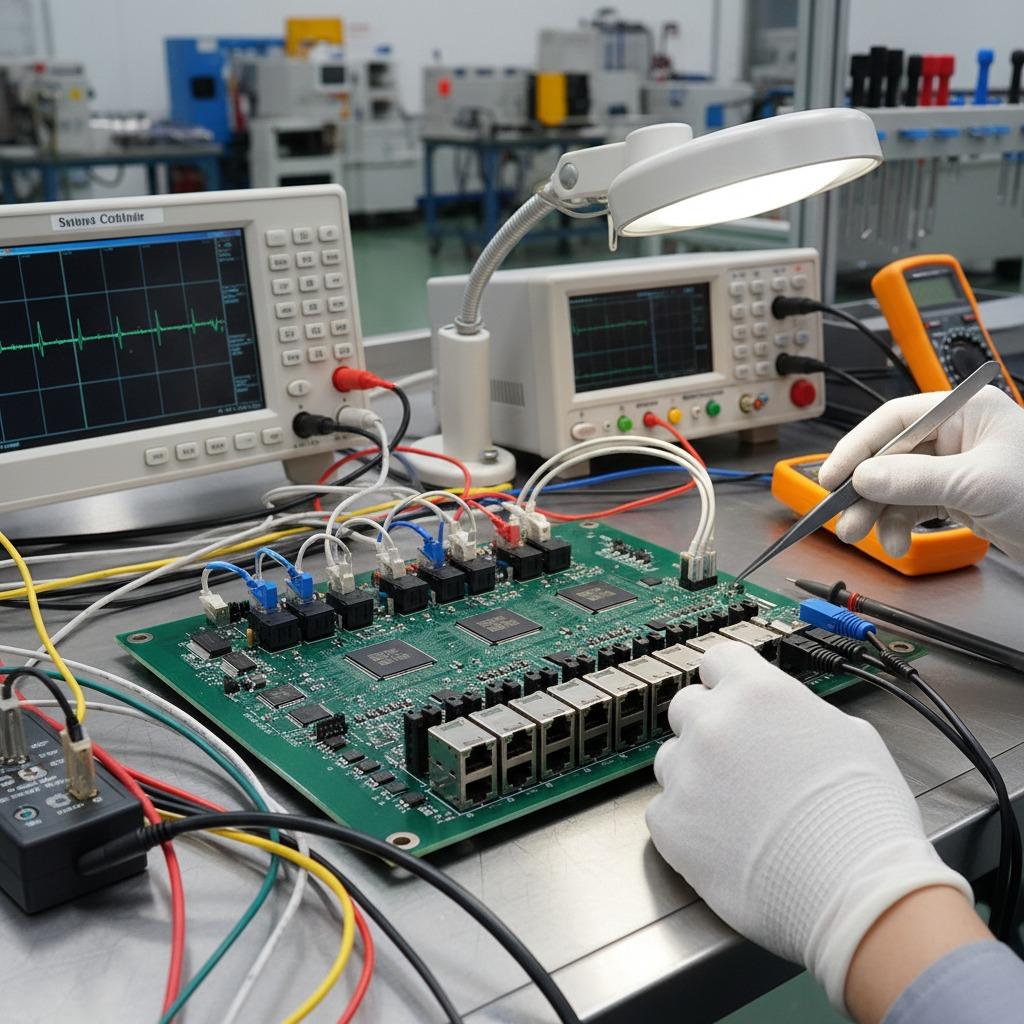
Inspection should prevent defects, not inflate cost. Example of cost-optimized inspection structure:
| Inspection Stage | Applied Scope | Measured Impact |
|---|---|---|
| SPI | Critical pads only | 20–30% reduction in solder rework |
| AOI | Post-reflow, defect-focused | 3–5% yield improvement |
| Electrical Test | Power & signal integrity | Eliminates functional escapes |
| Functional Sampling | 5–10% of batch | Maintains confidence with minimal cycle time |
| Trend Analysis | Batch-to-batch comparison | Prevents gradual process drift |
Aligning inspection depth with defect probability reduces test time without sacrificing product reliability.
Where Low Cost PCBA Manufacturing is Most Valuable
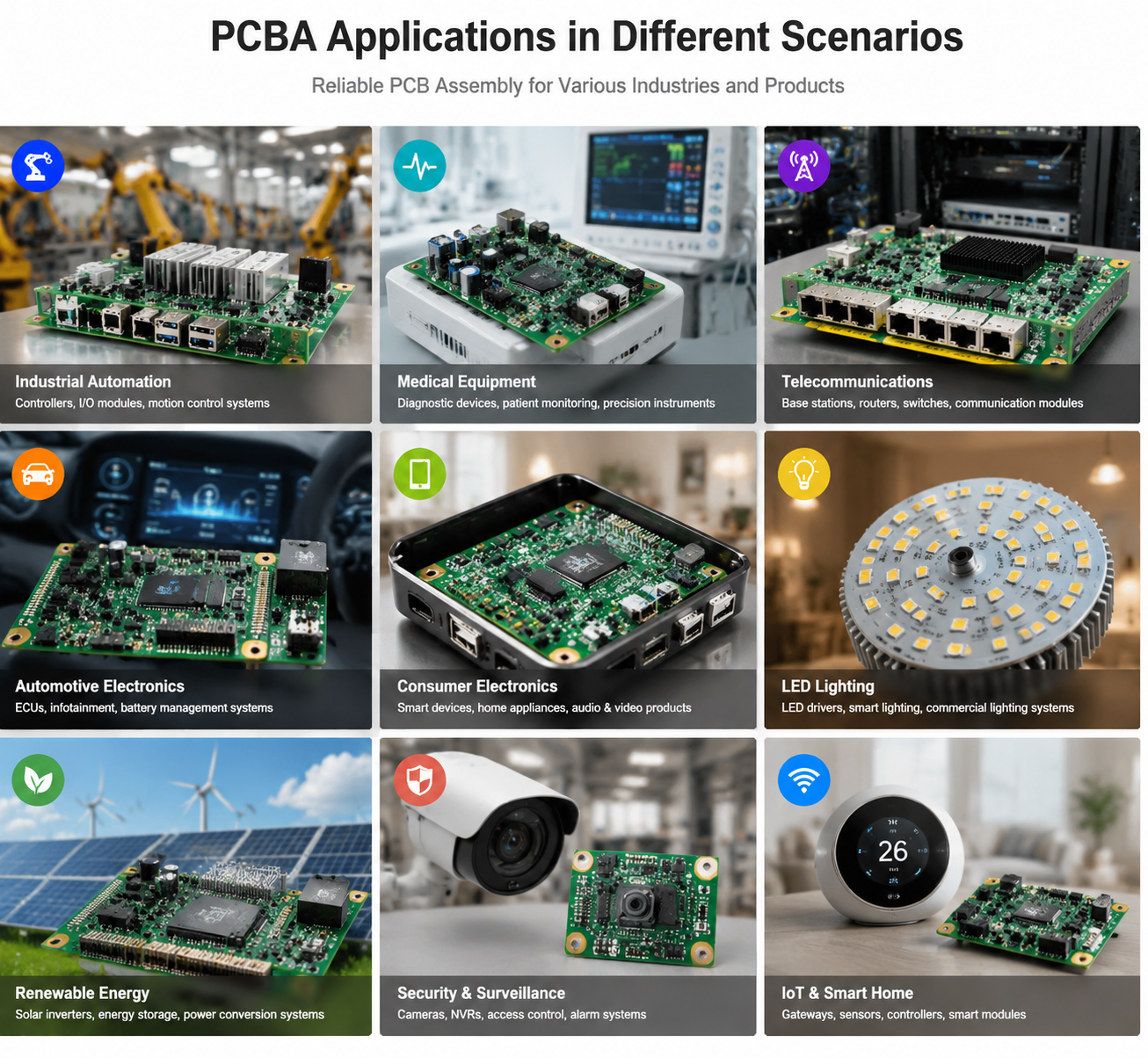
Industries benefiting most from this approach:
- Consumer electronics
- Smart home and IoT devices
- Power supply and energy products
- Imaging and communication equipment
Predictable cost structure often matters more than short-term price reductions.
Frequently Asked Questions
Q1: Can costs be reduced without redesigning the PCB?
Yes. Yield improvement, sourcing discipline, and inspection optimization often reduce total cost more than design changes.
Q2: How long to see cost improvement?
Most manufacturers observe measurable savings within 2–3 production cycles once processes stabilize.
Q3: Is low cost compatible with long-term reliability?
Yes. When cost reduction is process-driven rather than shortcut-driven, reliability often improves.
Why Sustainable Cost Reduction Requires Structure
Low cost PCBA manufacturing is not a pricing tactic. It is a structured production approach that lowers waste, stabilizes yield, and aligns sourcing with real demand. When cost control is built into processes rather than negotiated at the last minute, manufacturers gain predictable margins, stable delivery schedules, and long-term operational resilience.
For evaluating production partners, see our PCBA Prototype Service for understanding early-stage cost control and process stability.
For specific inquiries about optimizing PCBA production costs, you are welcome to contact our team here:
👉 https://www.hcdpcba.com/en/contact-us