Cost Effective PCBA for Stable Manufacturing and Long-Term Cost Control
Many electronics companies focus heavily on lowering unit price during supplier selection.
However, production cost is rarely determined by quotation alone. Yield loss, unstable sourcing, rework labor, delayed delivery, and inconsistent assembly quality often create hidden expenses far larger than the original price difference between suppliers.
In many projects, the lowest initial quote eventually leads to higher overall production cost because the manufacturing system lacks stability.
A structured cost effective PCBA strategy works differently. Instead of cutting cost through shortcuts, it reduces waste through process control, sourcing discipline, and manufacturing efficiency. Our engineering and production teams focus on lowering total operational cost while maintaining stable assembly quality and repeatable production output.
For projects still defining production scope, teams can also compare this approach with our PCB Assembly Service to understand how controlled assembly affects yield and long-term cost.
Why Cost Control Depends on Manufacturing Stability
In PCBA production, unstable processes create invisible cost accumulation.
For example:
- Poor solder consistency increases rework labor
- Inconsistent sourcing causes electrical variation
- Uncontrolled thermal profiles create hidden reliability risk
- Excessive inspection slows throughput without improving yield
These problems may seem manageable individually, but across large production programs they significantly increase total manufacturing expense.
A reliable cost effective PCBA workflow therefore prioritizes:
- Stable first-pass yield
- Reduced defect recurrence
- Controlled material sourcing
- Predictable production scheduling
Manufacturers applying these controls commonly reduce overall manufacturing waste by 15–30%.
Process Optimization as the Foundation of Cost Reduction
Real cost reduction begins at the process level rather than at the quotation level.
For example, optimizing stencil aperture geometry improves solder paste consistency, which directly lowers bridging and insufficient solder defects. Similarly, balancing SMT placement speed with placement accuracy reduces both downtime and alignment-related failures.
A disciplined cost effective PCBA process usually includes:
- Locked SMT placement parameters
- Controlled solder paste printing conditions
- Stable reflow temperature windows
- Data-driven defect analysis
Factories implementing these systems often improve first-pass yield by 3–8%, while reducing rework labor by 20–35%.
Material Planning and Supply Chain Efficiency
Material sourcing is one of the largest contributors to long-term manufacturing cost. Emergency procurement and unverified substitutions frequently increase both expense and risk.
In structured manufacturing environments:
- Approved alternate components are validated early
- Forecast planning aligns purchasing with production schedules
- Common inventory parts are prioritized where technically feasible
This reduces inventory waste and prevents sudden sourcing disruptions.
A mature cost effective PCBA workflow often achieves:
- 5–12% lower sourcing fluctuation
- Improved delivery predictability
- More stable electrical consistency across batches
When sourcing, assembly, and testing need to be managed under one workflow, our Turnkey PCBA Service explains how full-process control reduces coordination risk.
This approach is particularly important for OEM products and long-term manufacturing programs.
Reducing Waste Through Yield Control
Cost-effective manufacturing is not about minimizing inspection—it is about preventing defects before they happen.
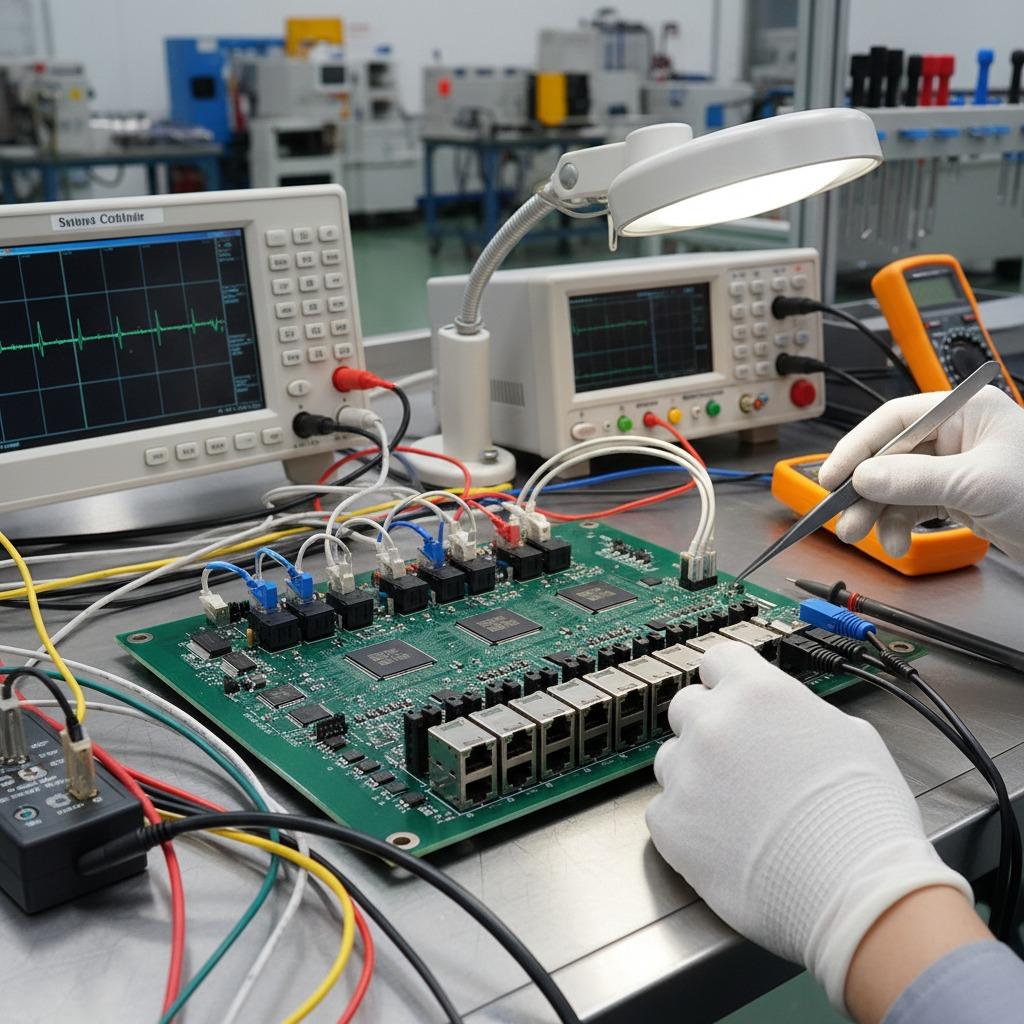
For example, AOI systems identify placement and solder issues immediately after reflow, while SPI systems detect solder paste variation before assembly defects appear.
Key Cost-Control Factors and Their Impact
| Manufacturing Factor | Control Method | Typical Result |
|---|---|---|
| Solder paste printing | Optimized stencil design | 20–30% fewer solder defects |
| SMT placement accuracy | Locked machine programs | Reduced alignment errors |
| Reflow soldering | Stable thermal profile | Lower rework frequency |
| AOI / SPI monitoring | Real-time process feedback | Faster defect correction |
| Production analytics | Yield trend analysis | Reduced recurring defects |
These controls allow cost effective PCBA production to improve efficiency without sacrificing assembly quality.
Balancing Production Speed and Cost Efficiency
Some manufacturers attempt to reduce cost by increasing production speed aggressively. However, excessive throughput often creates placement instability, thermal inconsistency, or inspection bottlenecks.
A balanced manufacturing strategy focuses on:
- Stable throughput instead of peak speed
- Predictable yield instead of reactive correction
- Continuous optimization rather than temporary shortcuts
Factories applying these principles commonly improve production efficiency by 10–20% while reducing hidden operational cost.
Long-Term Cost Stability for OEM Manufacturing
The true value of cost-effective manufacturing becomes visible over long production cycles.
OEM programs often remain active for years, meaning:
- Material consistency matters more than short-term pricing
- Stable yield affects long-term profitability
- Repeatable workflows reduce operational disruption
A reliable cost effective PCBA system supports:
- Repeat-order consistency
- Controlled engineering revisions
- Predictable manufacturing cost over time
For products moving toward larger and repeated production runs, this topic connects closely with Volume PCBA Manufacturing, where process locking and supply stability become more important.
This creates stronger long-term supply chain stability for both manufacturers and customers.
Compliance and Quality Assurance
Reducing cost should never mean lowering quality standards.
Professional manufacturing systems maintain:
- RoHS material compliance
- ISO-based process control
- ESD-safe assembly workflows
- Batch-level traceability
Integrating these controls directly into production prevents quality problems that create far greater downstream cost.
Frequently Asked Questions
Q1: Does lower unit price always reduce total production cost?
No. Yield loss, rework, and unstable sourcing often create higher hidden costs.
For early evaluation, see our PCBA Prototype Service for understanding prototype-to-production cost impacts.
Q2: Can cost-effective manufacturing maintain high quality?
Yes. Stable processes reduce waste without sacrificing reliability.
Q3: What creates the biggest hidden cost in PCBA production?
Recurring defects and unstable material sourcing are among the most common causes.
Why Sustainable Cost Reduction Requires Process Discipline
A reliable cost effective PCBA strategy reduces total manufacturing cost through stable processes, controlled sourcing, and predictable production performance. When yield management, material planning, and assembly discipline work together, manufacturing becomes more efficient without compromising long-term reliability.
If you want to evaluate how manufacturing systems affect your production cost and operational stability, reviewing real process control capability is the best starting point. You can learn more about our PCB and PCBA expertise here:
👉 https://www.hcdpcba.com
For projects involving OEM manufacturing, repeat production, or long-term cost optimization, early technical discussion can significantly reduce future production risk. You are welcome to contact our engineering team here:
👉 https://www.hcdpcba.com/en/contact-us