Mass Production PCBA for Consistent Quality and High-Volume Manufacturing Control
Mass production is where electronics manufacturing becomes unforgiving.
A board that performs well in prototype or pilot production can still create serious problems once output reaches thousands or tens of thousands of units. Minor solder variation, material inconsistency, or undocumented process changes may look small at first, but at scale they become cost, delay, and warranty risk.
The real challenge is not simply producing more boards. It is producing them with the same electrical behavior, mechanical stability, and inspection quality across every batch.
A structured mass production PCBA process addresses this challenge by locking validated parameters, controlling material flow, and monitoring yield trends continuously. Our production teams focus on repeatability, traceability, and process discipline so high-volume programs remain stable over time.
Why High-Volume Manufacturing Changes the Risk Profile
In early production, problems can often be corrected manually. In mass production, manual correction becomes expensive and inefficient.
For example, a 2% solder defect rate may be manageable in a 100-piece build, but in a 20,000-piece run, it means hundreds of boards require rework or replacement. That hidden cost can quickly exceed the savings from a low unit price.
A reliable mass production PCBA workflow therefore emphasizes defect prevention rather than defect correction. Stencil design, feeder setup, placement programs, and reflow profiles must be validated before ramp-up, not adjusted casually during production.
Manufacturers applying this discipline typically reduce recurring defect rates by 25–40%, especially in multilayer and high-density boards.
Process Locking and Production Repeatability
Mass production requires process locking. Once pilot parameters are validated, they must be documented, protected, and repeated across shifts and production cycles.
This includes solder paste type, stencil aperture design, placement speed, nozzle selection, and reflow temperature windows. If any of these parameters change without review, yield drift can appear even when the PCB design remains unchanged.
A disciplined mass production PCBA program usually includes standard operating instructions, line approval records, and batch-level process traceability. These controls reduce operator-dependent variation and make production results more predictable.
In long-term programs, stable process locking can improve first-pass yield by 3–8% and reduce rework labor by 20–35%.
Material Planning and Supplier Consistency at Scale
Material risk increases significantly when production volume grows. Component shortages, package variations, or supplier substitutions can affect not only delivery schedules, but also electrical performance.
In high-volume projects, sourcing must be connected directly to production planning. Approved alternates should be validated before shortages occur. Moisture-sensitive components require controlled storage. Critical parts should be tracked by lot and batch.
A mature mass production PCBA strategy often helps manufacturers achieve:
- 5–12% lower sourcing-related cost fluctuation
- Fewer emergency substitutions during production
- Better consistency across repeat manufacturing cycles
This is especially important for OEM electronics, industrial devices, smart hardware, and products with long market lifecycles.
Yield Control Through Data-Driven Manufacturing
At scale, yield cannot be managed by final inspection alone. It must be monitored through production data.
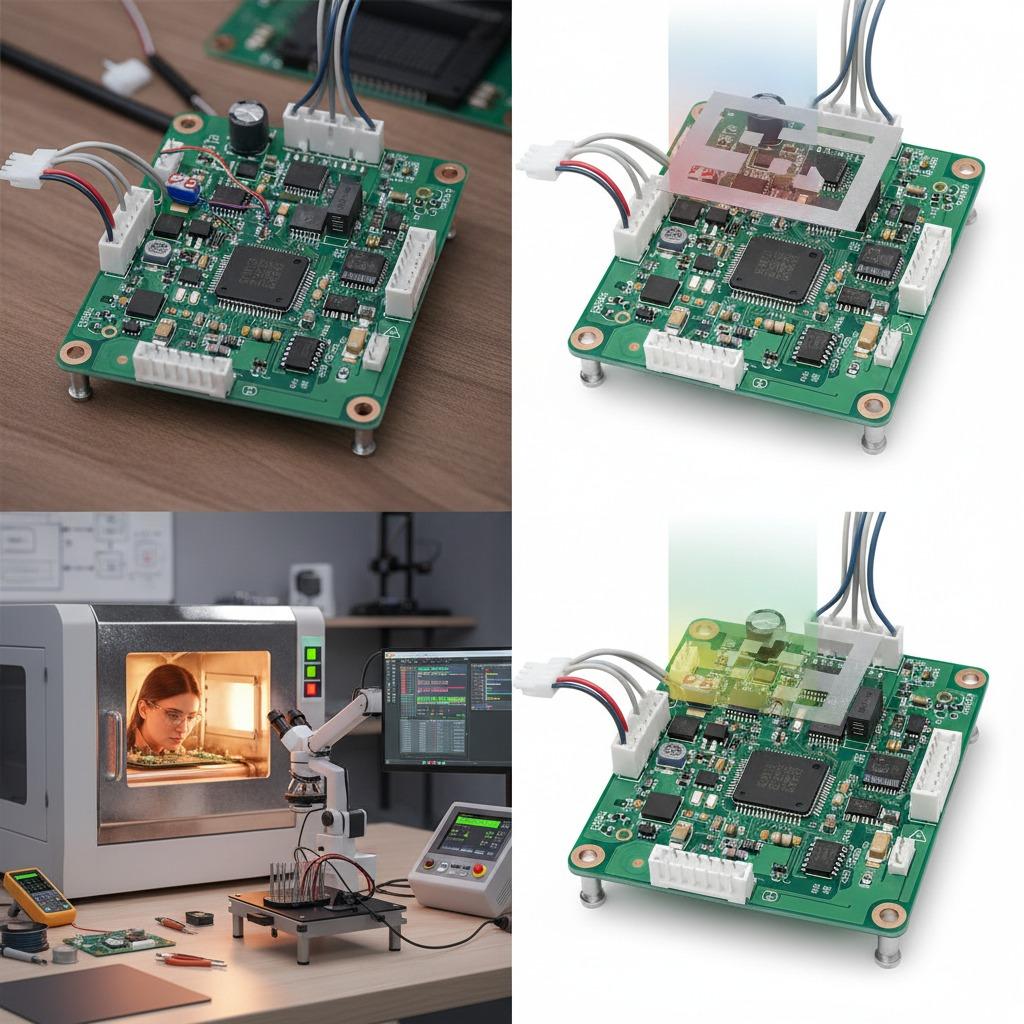
SPI detects solder paste variation before components are placed. AOI identifies placement and solder defects after reflow. Functional testing verifies whether the board behaves as intended under real operating conditions.
Mass Production PCBA Control Points
| Control Point | Production Method | Typical Result |
|---|---|---|
| Solder paste printing | SPI feedback + stencil optimization | 20–30% fewer solder defects |
| SMT placement | Locked machine programs | Improved batch consistency |
| Reflow soldering | Fixed thermal profile windows | Lower solder joint failure |
| AOI inspection | Defect trend monitoring | Faster root-cause correction |
| Functional testing | Batch-level validation | Reduced field failure risk |
Through these controls, mass production PCBA becomes measurable and repeatable rather than dependent on post-production sorting.
Scaling Output Without Quality Drift
High-volume production often runs across multiple shifts or repeated batches over months. Without strong documentation and process discipline, quality can slowly drift.
Common drift sources include worn stencils, inconsistent operator handling, uncontrolled component alternatives, and gradual equipment calibration changes. These issues may not cause immediate failure, but they can increase defect rates over time.
A strong mass production system addresses this through preventive maintenance, production audits, batch comparison, and controlled revision management. Factories using these practices often improve delivery reliability by 15–25% during long-term production programs.
Compliance and Quality Assurance in Mass Production
Large-batch manufacturing must maintain compliance from sourcing to shipment.
Important controls include RoHS material compliance, ISO-based quality workflows, ESD-safe handling, and traceability for critical components. For export-oriented electronics, CE or FCC-related manufacturing controls may also be required depending on the final application.
A structured mass production PCBA workflow integrates these requirements into daily production instead of treating compliance as a final review step.
Frequently Asked Questions
Q1: Why do defects increase during high-volume PCBA production?
Because small process deviations become amplified when production quantity increases.
Q2: Is final inspection enough for mass production quality?
No. Stable yield depends on controlling solder printing, placement, reflow, and materials before defects occur.
Q3: Can mass production maintain the same quality as pilot builds?
Yes, if pilot parameters are locked and repeated through documented production control.
Why High-Volume Success Depends on Process Discipline
A reliable mass production PCBA system is not defined only by factory capacity. It depends on validated processes, stable sourcing, real-time inspection, and traceable production control. When these elements work together, high-volume manufacturing becomes predictable, cost-efficient, and suitable for long-term OEM cooperation.
If you want to evaluate whether a manufacturing partner can support large-batch PCBA programs with stable quality, reviewing real production control systems is the best starting point. You can learn more about our PCB and PCBA expertise here:
👉 https://www.hcdpcba.com
For projects involving high-volume electronics, OEM production, or repeat manufacturing programs, early technical discussion can reduce risk before scale-up. You are welcome to contact our engineering team here:
👉 https://www.hcdpcba.com/en/contact-us