Why the Industrial Control Core Board PCBA matters
An Industrial Control Core Board PCBA is not just another assembled circuit board. In an automation cabinet, machine controller, or embedded instrument, it is often the piece that keeps the whole system coherent: processing logic, coordinating I/O, handling communication, and staying stable when the rest of the equipment is cycling hard. That is why engineers and sourcing teams look at this board differently from a consumer electronics assembly. The wrong board can slow a line, complicate integration, or create a maintenance headache that costs far more than the board itself.
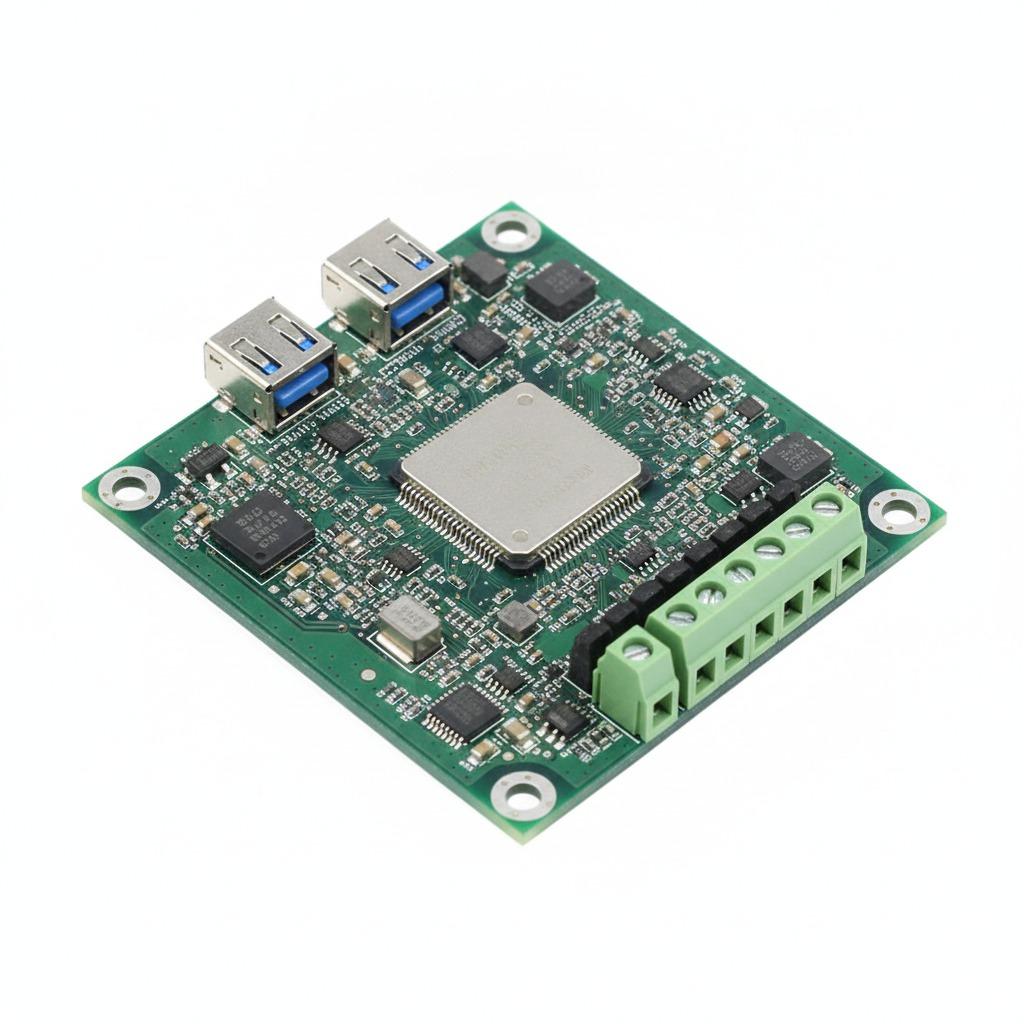
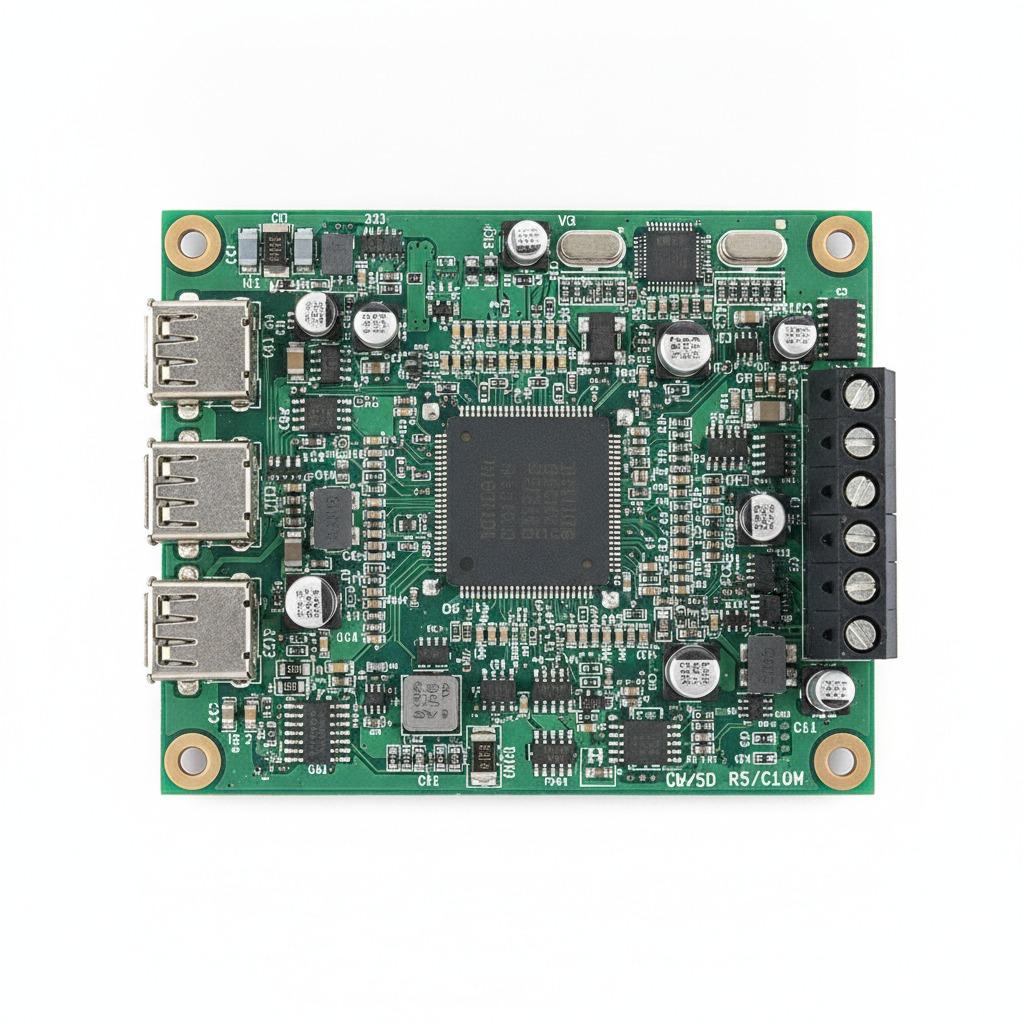
From the product details provided, the visible assembly is a compact green PCB with dense surface-mount components, a central high-integration chip, edge connectors, USB ports, an Ethernet-style port, and a terminal block. It looks like the kind of embedded control hardware used in industrial automation, motion control, data acquisition, and machine interfaces. The on-image text also points to processor core functions, memory expansion, communication interfaces, and industrial-grade protection, though those claims should be treated as promotional unless verified in a datasheet or test report.
What you are really buying
When buyers evaluate an Industrial Control Core Board PCBA, they are not only purchasing a populated board. They are buying a control platform. In practice, that means the board has to balance compute performance, interface availability, electrical robustness, and assembly quality. A core board may use an Embedded Core Board architecture or take the form of an Industrial Motherboard, but the buying logic is similar: will it integrate cleanly into the system, and will it survive day-to-day industrial use?
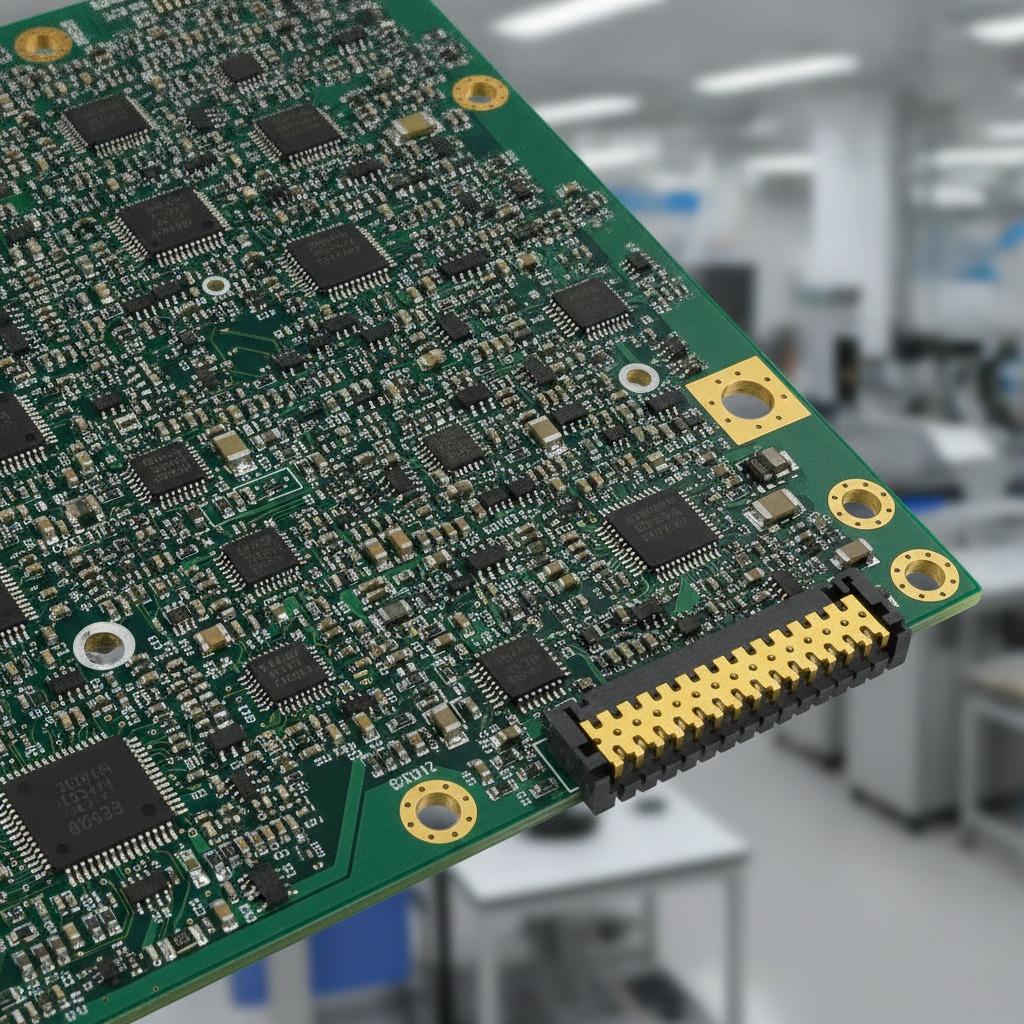
The pictured assembly appears to combine a main processing device with supporting ICs, clocking parts, power components, and multiple access points for peripherals or field wiring. That is a sensible layout for equipment builders because it reduces wiring complexity and keeps the control path compact. It also suggests that SMT Assembly quality matters here more than on many simpler boards. In industrial hardware, a neat bill of materials is only part of the story; placement accuracy, solder joint quality, and post-assembly testing usually decide whether the board becomes a dependable module or a recurring support issue.
Key features to notice on the board
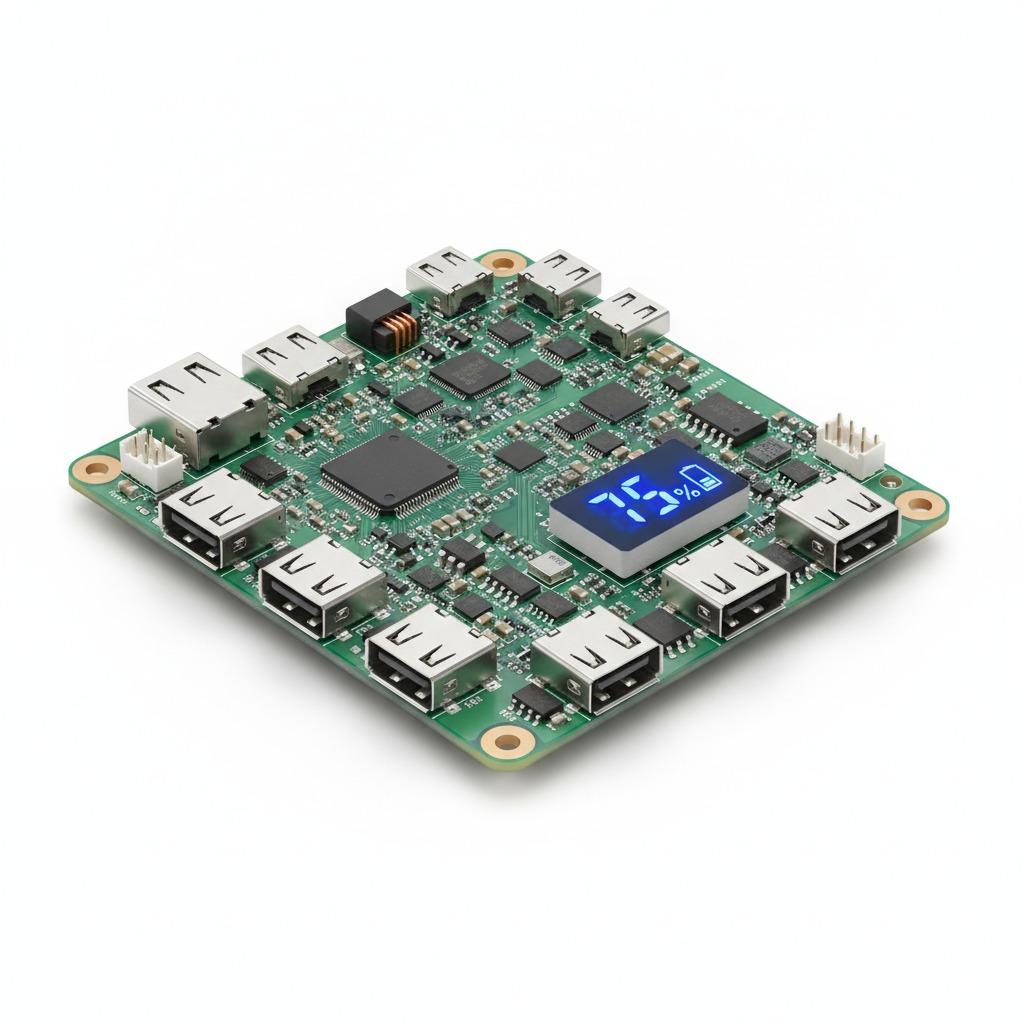
Several visible details matter from a buyer’s point of view. The board has mounting holes at the corners, which makes mechanical integration easier. It also has edge-accessible connectors, including USB Type-A ports and what appears to be an RJ45-style Ethernet interface, plus a green terminal block for field connections. That mix is practical: engineers often want a board that can talk to both higher-level systems and lower-level equipment without needing a maze of adapter cables.
The central chip package is large and leaded, and one version of the product notes labels it as FPGA-based. If that is the intended architecture, it can be attractive for motion control and multi-protocol coordination because logic can be adapted more flexibly than with a fixed-function controller. Still, buyers should confirm the exact device, memory arrangement, and supported interfaces before assuming it fits a project. A board that looks versatile can still be constrained by firmware, pin mapping, or thermal limits that are not obvious in a photo.
Industrial Control PCBA selection criteria
For sourcing managers, the first filter is fit. Does the board match the electrical and mechanical constraints of the machine? Check connector placement, mounting pattern, and enclosure clearance before you worry about price. A control board that forces a late-stage cabinet redesign becomes expensive very quickly.
Next comes manufacturing discipline. For an Industrial Control PCBA, consistent SMT Assembly is important, but so is the surrounding process: component sourcing, solder paste control, reflow profile discipline, inspection, and functional test. hcdpcba describes services that include PCB fabrication, SMT assembly, component sourcing, assembly, testing, and DFMA support. Those capabilities matter because control boards often sit at the intersection of hardware, manufacturability, and field reliability.
Buyers should also ask how the board is handled after assembly. Is there final test? Are interfaces checked individually? Is the firmware loaded and verified? These are mundane questions, but they separate a prototype build from production-ready hardware. If the board is intended for industrial automation, a good supplier should be able to discuss test coverage without hand-waving.
Common mistakes when sourcing this kind of board
One common mistake is treating all embedded boards as interchangeable. An Industrial Motherboard for a general embedded platform may not be suitable for motion control, even if the connectors look similar. Another mistake is underestimating power integrity. Dense boards with multiple interfaces can look stable on the bench and still misbehave once they are installed beside motors, drives, or noisy power lines.
A second mistake is assuming the visible interfaces tell the whole story. USB and Ethernet are useful, but what matters is protocol support, isolation strategy, signal conditioning, and the quality of the implementation. If your application lives in industrial control, ask about grounding, ESD handling, and whether any industrial-grade protection is actually built into the design or merely mentioned in marketing copy. That caution is worth repeating because many field failures start with small assumptions.
Where this board style fits best
This class of Industrial Control Core Board PCBA fits machine controllers, production line equipment, instrumentation, embedded gateways, and other systems that need a central board to manage logic and communication. It is especially relevant when the customer needs a compact control module that can be integrated into a larger enclosure rather than a standalone desktop-style computer.
For OEM and ODM projects, a board like this is often chosen because it can shorten development cycles. A well-executed custom board reduces wiring, simplifies enclosure design, and gives the product team more control over interface placement. Hcdpcba’s mix of PCB prototyping, SMT, testing, and DFMA support is aligned with that workflow, particularly when a customer needs both buildability and a path to volume production.
Practical buyer advice before you place an order
Ask for the things that are not visible in the photo: exact processor or FPGA model, memory configuration, board dimensions, layer count, operating voltage, interface pinout, and the test scope. If the supplier cannot provide them clearly, pause. A control board is only useful when the integration team can document it properly.
Also, confirm whether the assembly is a finished product, a prototype, or a promotional render. The image supplied here shows a plausible industrial controller board, but exact electrical ratings and compliance claims are not confirmed. In industrial sourcing, that distinction matters more than people like to admit.
Next step
If you are evaluating an Industrial Control Core Board PCBA for a new machine platform or a replacement design, start with the interface list and the mechanical envelope, then move to assembly quality and test coverage. If you need a custom build or production support, hcdpcba offers SMT Assembly, PCB prototyping, component sourcing, testing, DFMA services, and OEM/ODM support. For project discussions, their contact number is +86 18924624188.