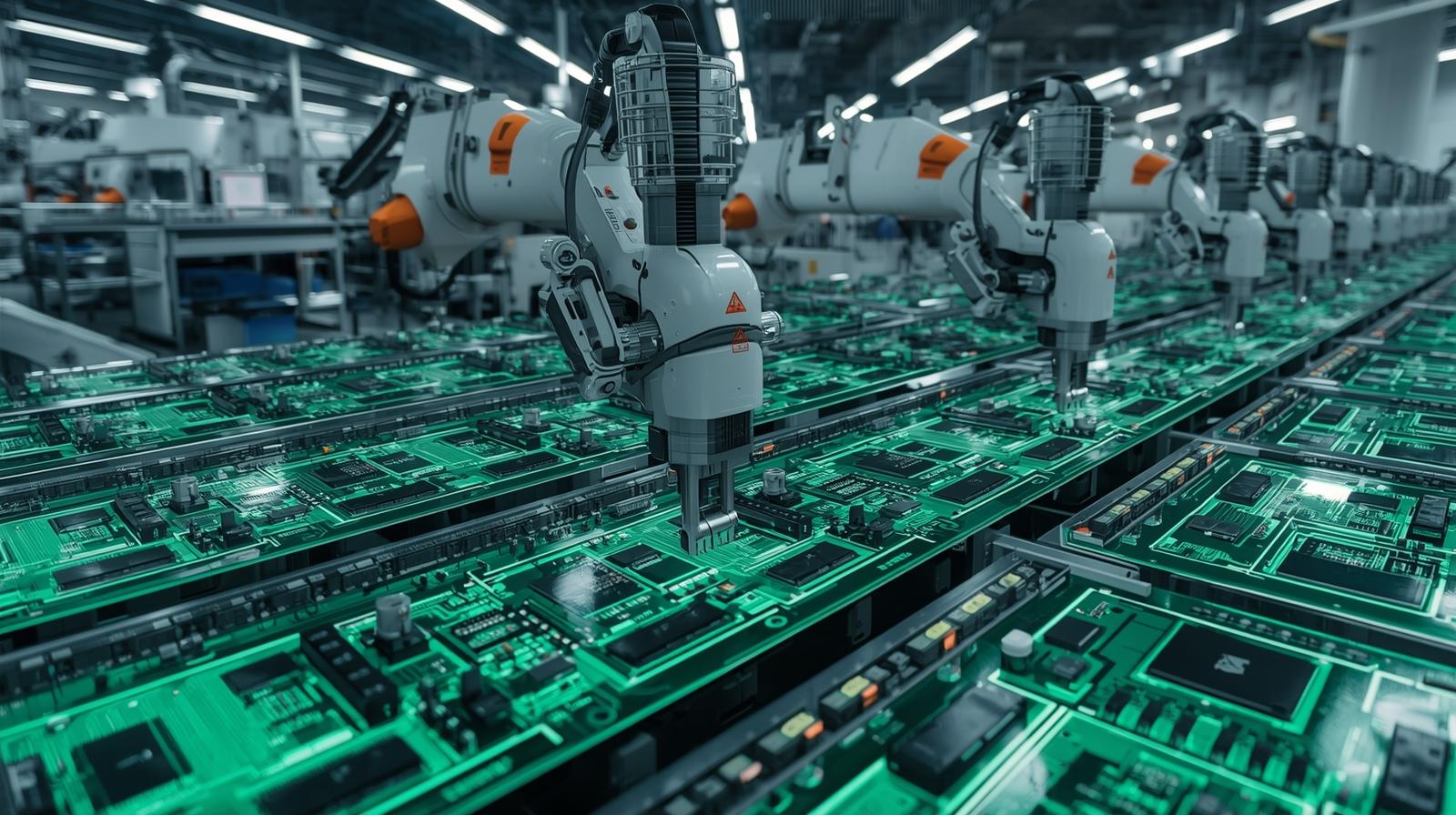
Volume PCBA Manufacturing for Stable Output and Predictable Long-Term Supply
As electronic products move beyond early adoption, manufacturing priorities change.
Speed and flexibility gradually give way to consistency, delivery rhythm, and cost stability. At this stage, the ability to produce at scale—without variation or disruption—becomes a competitive requirement rather than a capacity upgrade.
This is where volume PCBA manufacturing defines success. It is not simply about producing more boards, but about maintaining identical behavior across thousands of units over extended timeframes.
When Production Scale Becomes a Business Commitment
Scaling production is rarely a single decision. It is the result of stabilized demand, slower design change cycles, and increasing reliance on predictable supply.
At higher output levels, issues that were once tolerable become costly. Minor assembly variation can affect yield. Inconsistent sourcing can interrupt schedules. Loosely defined inspection criteria can allow defects to pass unnoticed until field failures appear.
A structured volume PCBA manufacturing model exists to eliminate these risks before they affect customers or downstream partners.
Process Locking as the Core of Large-Scale Manufacturing
At scale, manufacturing flexibility decreases by design. Processes must be defined, validated, and protected from uncontrolled change.
This typically includes:
-
Fixed assembly parameters proven through earlier runs
-
Locked bills of materials with approved alternatives
-
Standardized work instructions across shifts
-
Controlled handling of materials and subassemblies
These measures ensure that volume PCBA manufacturing produces consistent results regardless of batch size or production timing.
Yield Stability Across Extended Production Cycles
Yield management becomes increasingly important as output grows. A small loss percentage, insignificant at low volume, can translate into substantial cost impact over time.
Manufacturers operating at scale focus on trends rather than isolated defects. Yield data is reviewed across batches, shifts, and component lots to identify gradual drift. Corrections are introduced early, before deviations become systemic.
This proactive approach allows volume PCBA manufacturing to remain economically viable over long product lifecycles.
Testing and Inspection Designed for Continuous Output
Testing strategies at scale must balance confidence with efficiency. Over-testing slows throughput, while insufficient validation increases downstream risk.
Validation Focus in Large-Scale Production
| Area | Objective | Long-Term Benefit |
|---|---|---|
| In-line inspection | Detect placement or solder deviation | Early correction |
| Electrical testing | Verify core power and signals | Functional baseline |
| Functional sampling | Periodic feature verification | Consistency assurance |
| Trend analysis | Compare batch-level data | Drift prevention |
This layered structure supports reliability without constraining output.
Supply Chain Alignment for Sustained Production
Large-scale output is only possible when supply remains predictable. Component lead times, supplier consistency, and inventory planning directly influence production rhythm.
In a mature volume PCBA manufacturing environment, sourcing strategy is aligned with production planning. Approved alternatives are qualified in advance, inventory buffers are sized to demand volatility, and supplier performance is monitored continuously.
This coordination reduces last-minute changes that can destabilize production quality.
Industries That Depend on Large-Scale PCBA Output
Sustained production typically supports products with stable demand and long market presence, such as:
-
Consumer electronics platforms
-
Smart home and connected ecosystems
-
Power and energy-related devices
-
Imaging, sensing, and communication equipment
In these sectors, consistency at scale often determines brand trust.
Scaling Output Without Introducing Instability
The most resilient production environments scale deliberately. Processes validated at earlier stages are expanded methodically rather than replaced.
Changes, when necessary, are introduced through controlled revisions with clear traceability. Assembly parameters, inspection logic, and sourcing decisions remain documented throughout the product lifecycle.
This discipline is what allows volume PCBA manufacturing to support growth without compromising reliability.
Frequently Asked Questions
Q1: When is a product ready to enter large-scale production?
When demand stabilizes, design revisions slow significantly, and early runs demonstrate consistent yield under defined processes.
Q2: Does scaling production always reduce unit cost?
In most cases, yes. However, savings depend on stable yield and disciplined process control throughout production.
Q3: What is the most common challenge in long-term PCBA production?
Process drift. Without continuous monitoring, small variations can accumulate and affect quality or delivery performance.
Why Scale Demands More Than Capacity
Volume PCBA manufacturing is defined by repeatability, not output alone. When process stability, yield control, and supply alignment work together, large-scale production becomes predictable rather than fragile.
To discuss long-term production requirements or evaluate manufacturing support, visit www.hcdpcba.com or contact the team directly via:
👉 https://www.hcdpcba.com/en/contact-us