High Mix Low Volume PCBA Manufacturing for Complex and Diverse Electronics
Electronic products today rarely exist as a single fixed configuration. One platform may support multiple interfaces, regional standards, optional sensors, or customer-specific features. As a result, manufacturing complexity increasingly comes from variety, not quantity.
This is where high mix low volume PCBA manufacturing becomes essential. It enables companies to deliver multiple product variants in parallel, without treating each build as a one-off exception or sacrificing quality consistency.
Why Product Variety Redefines Manufacturing Complexity
In traditional production models, stability comes from repetition: one design, one BOM, long runs. High-mix environments reverse that assumption. Designs change frequently, batches are small, and complexity accumulates across variants rather than units.
Under high mix low volume PCBA conditions, the primary challenge is not throughput. It is coordination. Each variant introduces differences in components, placement programs, testing logic, and sometimes compliance requirements. Without structured control, these differences quickly turn into errors, delays, and rework.
Manufacturers that succeed in this environment treat diversity as a managed variable rather than a disruption.
BOM Diversity and Variant Control
One of the first pressure points in multi-variant production is the bill of materials. Even small deviations—different connectors, memory sizes, regulators, or optional modules—can ripple through sourcing and assembly.
A disciplined high mix low volume PCBA process addresses this by organizing BOMs around shared and variant-specific elements. Common components are standardized wherever possible, while differences are clearly isolated and documented. Approved alternatives are pre-qualified, not chosen reactively when shortages appear.
This approach reduces last-minute substitutions and helps maintain consistency across builds, even when variants change frequently.
Flexible Assembly Without Losing Repeatability
Handling multiple variants on the same production line requires more than fast changeovers. It requires repeatable transitions.
In a mature high mix low volume PCBA environment, SMT programs are validated and stored with defined parameters. Line setups are modular, allowing feeders and tooling to be adjusted quickly without introducing uncontrolled variation. Variant-specific steps—such as selective soldering or manual operations—are clearly separated from shared processes.
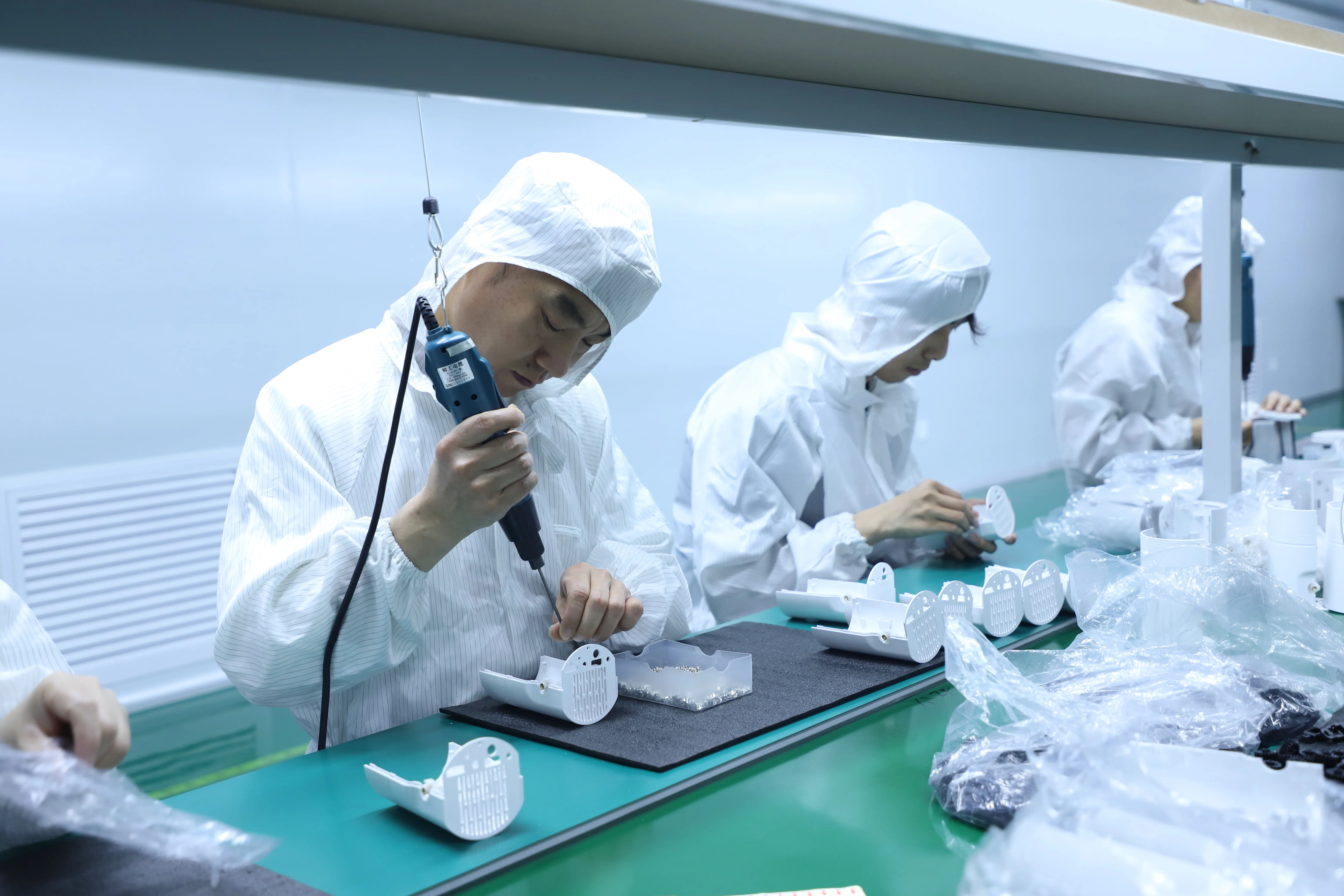
Skilled operators play a critical role here. Their ability to follow structured work instructions and recognize subtle differences between variants directly affects yield stability.
Testing Strategies for Multi-Variant Products
Testing in high-mix production cannot rely on a single generic procedure. Different variants may enable or disable features, use different interfaces, or operate under different power profiles.
Validation Focus in High-Mix Production
| Area | Focus | Benefit |
|---|---|---|
| Visual inspection | Variant-specific placement checks | Prevent configuration errors |
| Electrical testing | Core power and signal validation | Maintain baseline stability |
| Functional testing | Feature-level verification | Confirm variant differentiation |
| Cross-batch review | Compare results across variants | Detect process drift |
By tailoring validation to the level of variation, manufacturers avoid both over-testing and blind spots.
Managing Change Without Disrupting Production
Frequent change is a defining characteristic of high-mix manufacturing. New variants, revisions, or customer-specific requirements often appear mid-cycle.
Successful high mix low volume PCBA operations handle change through controlled processes rather than ad-hoc adjustments. Revision tracking, versioned work instructions, and traceable test results ensure that changes are intentional and reversible. This prevents confusion on the production floor and maintains confidence in output quality.
Industries Where High-Mix Capability Is Critical
Multi-variant assembly is common in sectors where customization, regulation, or rapid iteration drive product diversity, including:
-
Industrial automation and control systems
-
IoT platforms with regional or customer-specific configurations
-
Medical and measurement equipment with option sets
-
Imaging, sensing, and embedded devices with modular designs
In these markets, the ability to manage complexity is often a stronger differentiator than raw production capacity.
Preparing Selected Variants for Scaling
High-mix production does not exclude growth. In fact, it often accelerates it.
By observing which variants stabilize and which remain niche, manufacturers can identify candidates for larger runs. Because assembly parameters, sourcing logic, and testing methods are already established, scaling a selected configuration becomes an extension of an existing process rather than a restart.
This is one of the long-term advantages of disciplined high mix low volume PCBA manufacturing.
Frequently Asked Questions
Q1: How does high-mix production differ from standard small-batch manufacturing?
High-mix production focuses on managing multiple variants simultaneously, while standard small-batch manufacturing usually involves a single design built in limited quantities.
Q2: Does supporting many variants increase quality risk?
Only if processes are unstructured. With clear variant control, defined workflows, and appropriate testing, quality can remain consistent across diverse products.
Q3: Can high-mix production support future volume expansion?
Yes. Controlled high-mix environments help identify stable design elements, making it easier to scale specific variants when demand grows.
Why High-Mix Capability Strengthens Manufacturing Partnerships
High mix low volume PCBA manufacturing is not simply about handling complexity. It is about transforming product diversity into a controlled, repeatable operation. When BOM management, flexible assembly, and variant-aware testing work together, manufacturers can support innovation without sacrificing reliability.
To discuss multi-variant PCBA requirements or high-mix production support, visit Homepage or contact the team directly via:
Contact-us