AI hardware rarely fails in obvious ways.
Instead, performance degrades under load—data latency increases, heat builds unevenly, or processing becomes unstable during extended operation. These issues are often traced not to algorithms or chips, but to how the board was physically designed and assembled.
Typical problems seen in AI device projects include:
-
Data bottlenecks between processors and memory
-
Power instability under peak computation load
-
Localized overheating in high-density zones
-
Inconsistent behavior across production batches
A structured approach to PCBA for AI device addresses these risks at the hardware level. By aligning signal routing, power delivery, and thermal design with actual workload conditions, PCBA becomes a stabilizing factor rather than a limitation.
Why AI Device PCBA Differs from Conventional Electronics
AI boards operate under fundamentally different conditions compared to traditional embedded systems. Instead of predictable workloads, AI processing introduces dynamic, high-frequency data exchange and fluctuating power demand.
For example, during inference or training bursts, current draw can spike significantly within milliseconds. If the power delivery network is not designed to respond quickly, voltage drops can lead to processing errors or system resets.
In PCBA for AI device, design must accommodate:
-
High-speed data interfaces (DDR, PCIe, MIPI)
-
Rapid power fluctuations
-
Dense component placement around processors
Projects that address these factors at the PCBA level typically achieve more stable processing performance and fewer runtime anomalies.
Material and Structural Considerations in AI PCBA
Material selection becomes critical when both signal speed and thermal load increase.
In practical AI hardware:
-
Standard FR-4 may be sufficient for entry-level devices
-
Low-loss materials are required for high-speed signal integrity
-
Copper thickness must support both power delivery and thermal spreading
Stack-up design plays an equally important role. Multi-layer boards (often 6–12 layers) are used to:
-
Separate high-speed signals from power planes
-
Maintain controlled impedance
-
Reduce electromagnetic interference
In optimized PCBA for AI device, proper stack-up planning can:
-
Improve signal integrity by 10–20%
-
Reduce data error rates in high-speed transmission
Power Distribution and Thermal Density in AI Systems
AI devices are characterized by high power density within limited space. Managing this density is one of the most challenging aspects of PCBA design.
For instance, processors and accelerators generate concentrated heat that must be distributed efficiently. If thermal paths are uneven, hotspots can exceed safe operating limits even when average temperature appears acceptable.
Effective PCBA for AI device includes:
-
Short, low-resistance power paths
-
Balanced copper distribution for heat spreading
-
Placement strategies that prevent thermal stacking
In real-world applications, these adjustments can lead to:
-
10–25°C reduction in hotspot temperature
-
More stable performance under continuous load
Signal Integrity and Data Flow Stability
High-speed data communication is central to AI functionality. Poor routing can introduce latency, jitter, or signal loss.
In AI boards:
-
Trace length matching is critical for memory interfaces
-
Impedance control ensures signal consistency
-
Crosstalk must be minimized through spacing and shielding
Failure to control these factors often results in intermittent issues that are difficult to diagnose.
Signal and Power Performance Impact
| Design Factor | Optimization Strategy | Typical Improvement |
|---|---|---|
| Trace matching | Length-controlled routing | Reduced timing errors |
| Impedance control | Controlled stack-up | 10–20% signal stability gain |
| Power routing | Low-resistance paths | Lower voltage drop |
| Thermal design | Copper balancing | Reduced hotspot formation |
| Layer separation | Dedicated planes | Lower EMI interference |
These improvements collectively enhance system stability and performance.
Manufacturing Consistency for AI Hardware
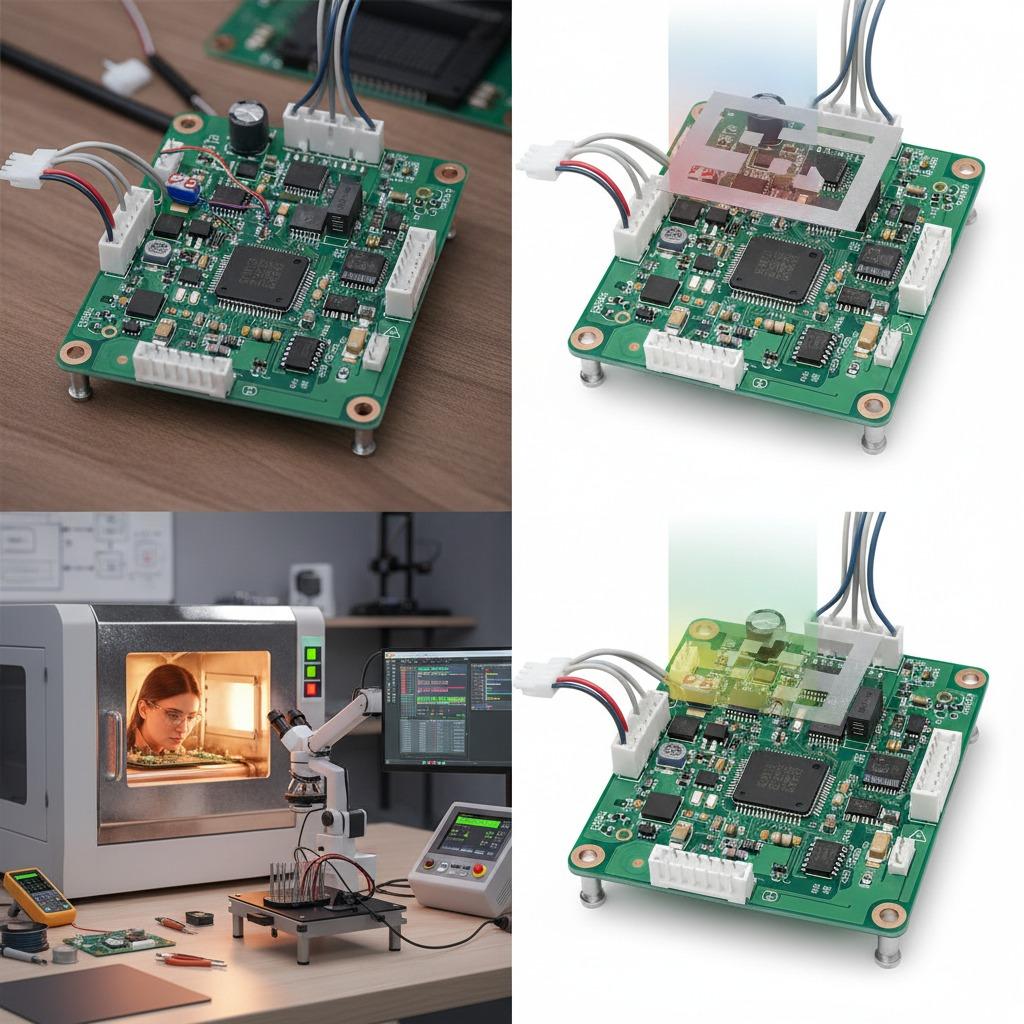
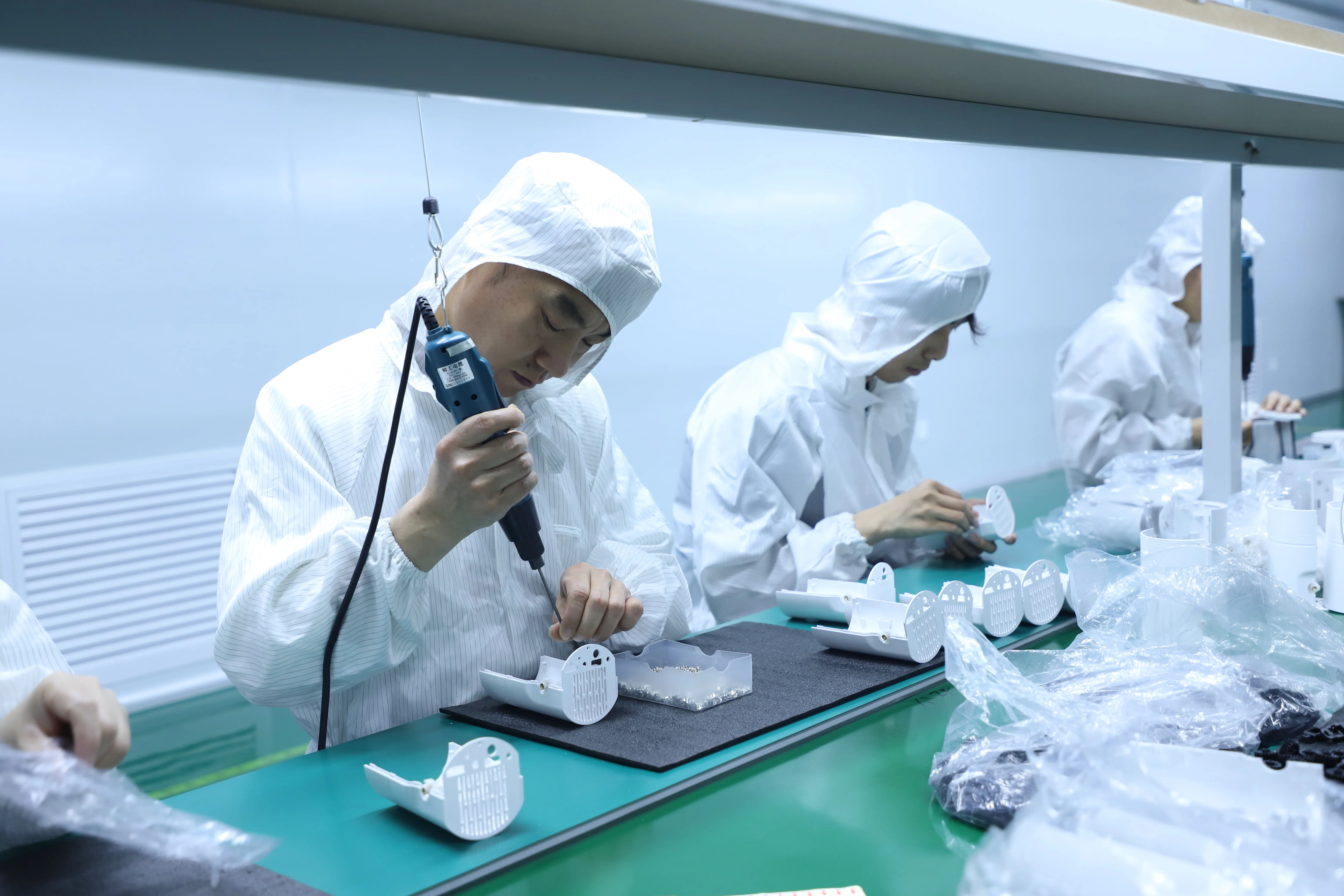
AI devices are sensitive to small variations in manufacturing. Minor differences in solder quality or component placement can affect thermal behavior and signal performance.
A disciplined PCBA for AI device process ensures:
-
Stable reflow profiles for high-density boards
-
Accurate placement of fine-pitch components
-
Consistent solder quality across batches
Manufacturers applying these controls typically observe:
-
15–25% reduction in performance variation between batches
-
Improved reliability in long-duration workloads
Compliance and Reliability Requirements
AI hardware must meet regulatory and operational standards, particularly when used in industrial or commercial applications.
Key considerations include:
-
EMI compliance for high-frequency operation
-
Thermal limits aligned with component specifications
-
Electrical safety for high-power systems
Designing these requirements into PCBA for AI device reduces the risk of late-stage redesign and certification delays.
Frequently Asked Questions
Q1: Why do AI devices become unstable under load?
Because power delivery and thermal design cannot handle dynamic processing demand.
Q2: Does PCB material affect AI performance?
Yes. Signal loss and thermal behavior are directly influenced by material selection.
Q3: Can PCBA design limit AI processing capability?
Yes. Poor layout can create bottlenecks even with high-performance chips.
Why AI Performance Starts at the PCBA Level
A well-executed PCBA for AI device ensures that data flow, power stability, and thermal behavior are aligned with real computational demands. When these elements are controlled from the design and manufacturing stage, AI systems operate more reliably, scale more smoothly, and maintain performance over time.
If you are evaluating whether your current hardware design can support stable AI operation, reviewing PCBA structure and manufacturing approach is a practical starting point. You can learn more about our PCBA capabilities here:
👉 https://www.hcdpcba.com
For projects involving high-performance computing, edge AI devices, or data-intensive systems, early technical discussion can significantly reduce risk. You are welcome to contact our team here:
👉 https://www.hcdpcba.com/en/contact-us