1. Why automotive PCBA work is a different game
Professional Automotive PCBA for LED Car Light Driver is not just another electronics assembly job with a different label on the drawing. In lighting, the board sits close to heat, vibration, moisture, and the kind of electrical noise that can ruin an otherwise decent design. For engineers and sourcing teams, the real issue is simple: a light driver board has to keep the LEDs stable, protect the circuit, and survive in a vehicle environment without becoming a field return.
That is why buying PCB & PCBA Manufacturing Service for automotive use is really a decision about process control, not just component placement. The board may look compact, but the consequences of poor soldering, weak thermal design, or inconsistent incoming parts are rarely compact at all.
2. A quick list of what buyers should look at first
Before you get deep into pricing or panel utilization, check the few things that usually separate a workable automotive board from an expensive retry.
1) Thermal behavior
LED car light driver boards often spend long periods running warm. That means copper balance, component spacing, and heat path planning matter more than a casual bench test might suggest.
2) Electrical robustness
Automotive systems see voltage fluctuation and transient stress. A clean schematic is only half the story; the assembly must support that design with reliable solder joints and consistent part placement.
3) Mechanical fit
Mounting holes, edge connectors, and board outline are not minor details. In vehicle lighting modules, the board must fit inside a housing that may leave little room for rework.
4) Manufacturing repeatability
If you are moving from prototype to pilot build, the question is whether the same result can be repeated when quantity rises. That is where a stable SMT line and disciplined testing process start to matter more than a polished sample photo.
3. What the board images and product context suggest
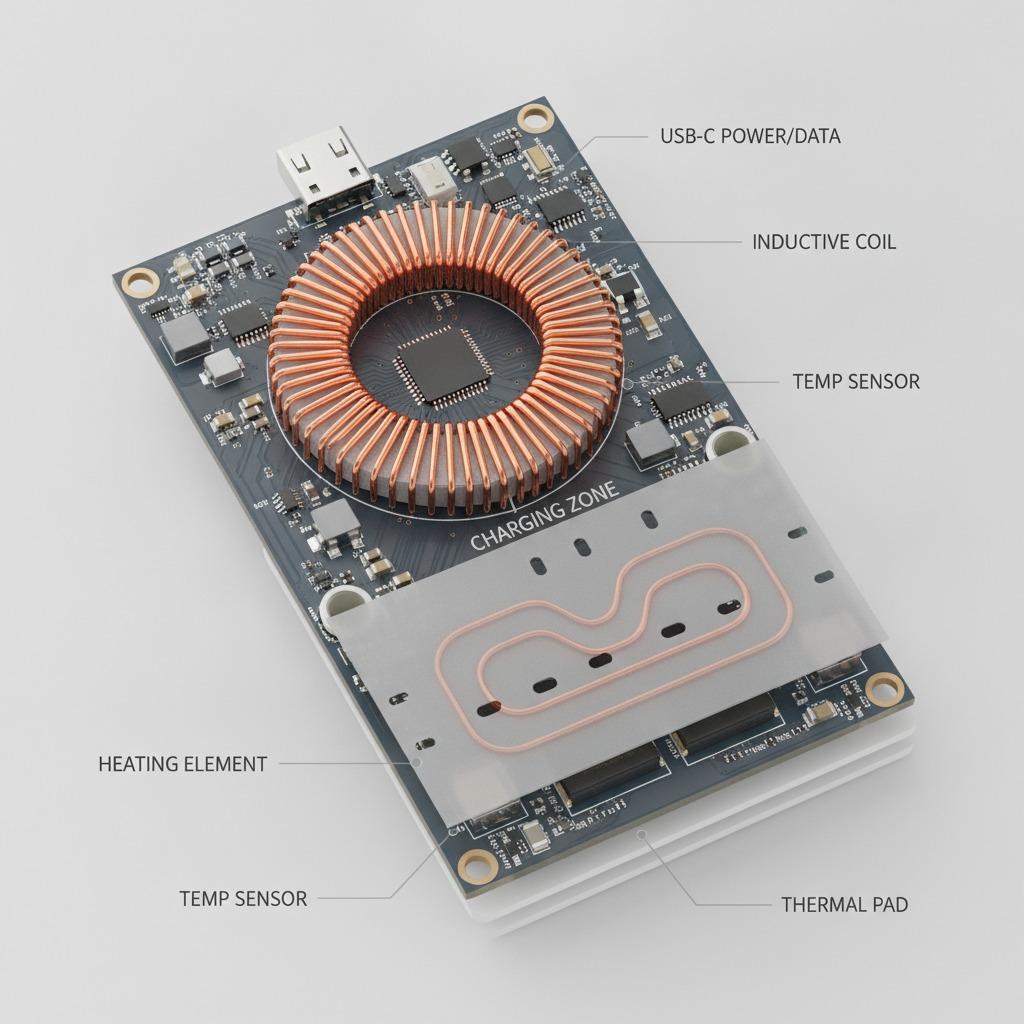
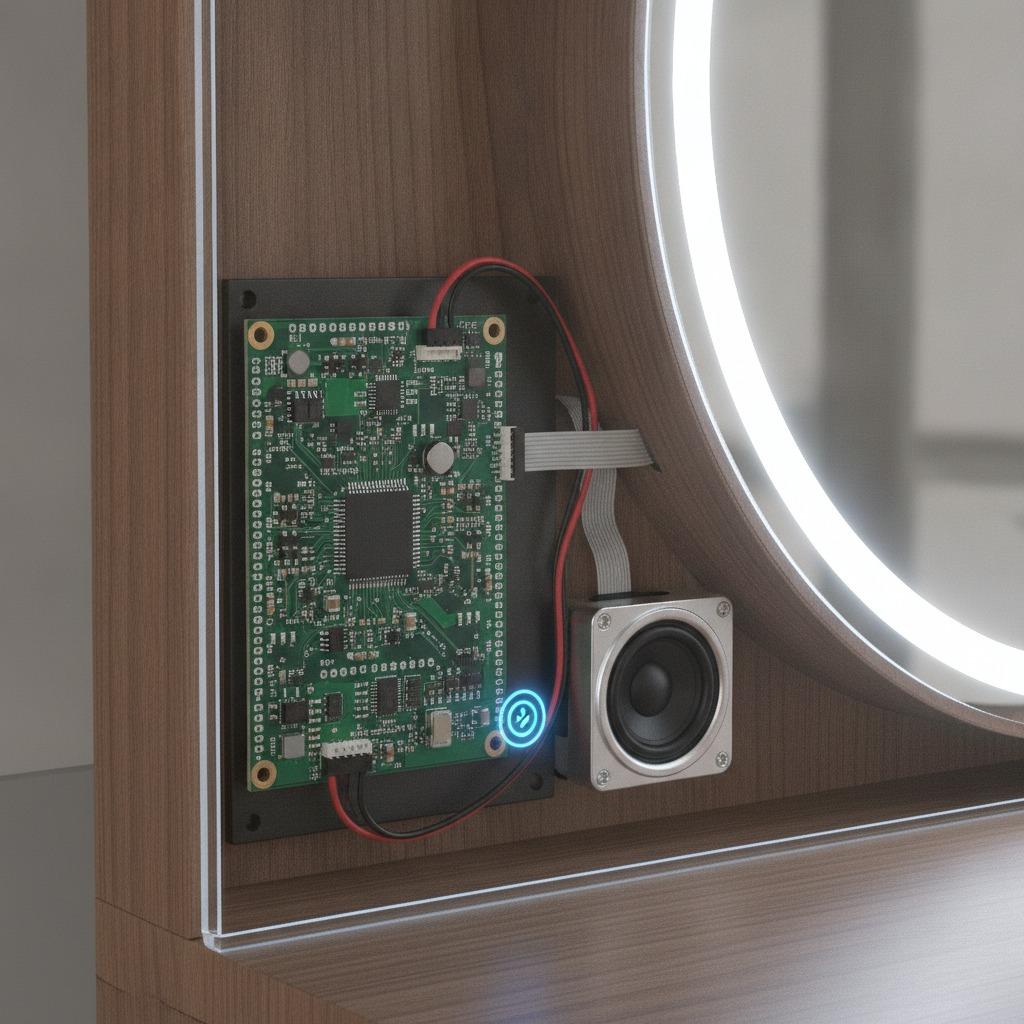
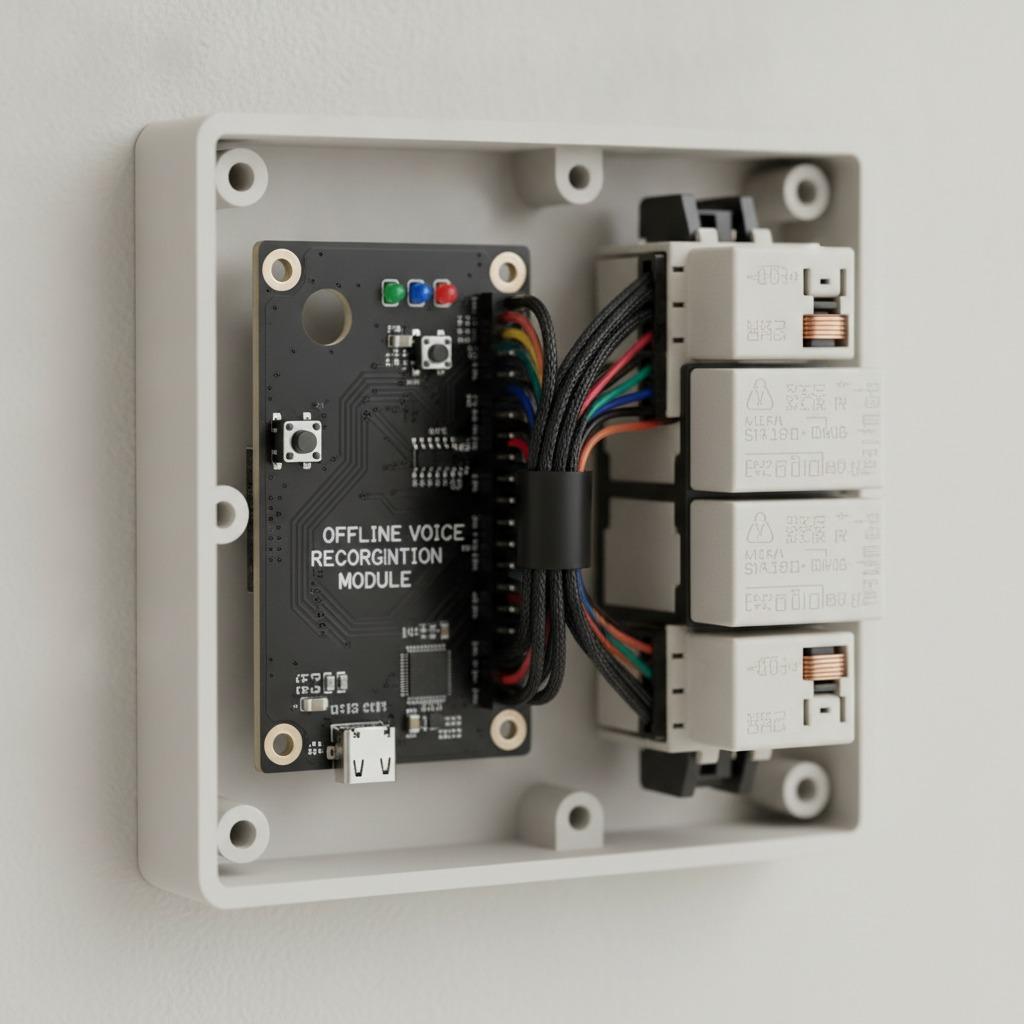
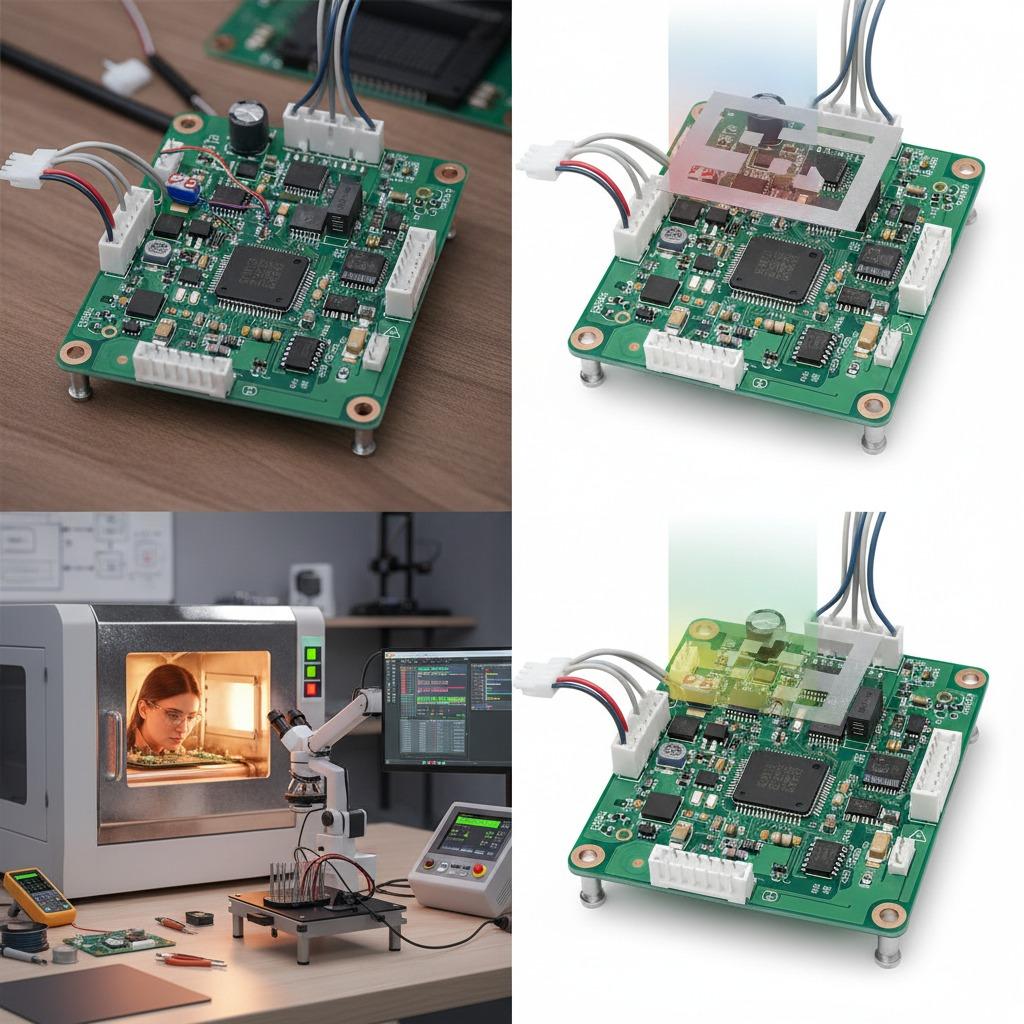
The product data points to automotive-grade electronics themes that are familiar to lighting and connected-vehicle programs. One illustrated PCB shows a green board with a central BMS-marked chip, modular battery sections underneath, and vehicle integration cues. Another image suggests robotics-based electronics manufacturing, where a multi-axis arm works at a PCB in an automated cell. A third board looks like an embedded controller or connectivity module with multiple I/O ports and a compact processor layout.
Taken together, the message is clear even if each image is illustrative rather than a final catalog photo: automotive electronics today are built around dense PCBs, controlled assembly, and integration into larger modules. For buyers, that means your supplier should be comfortable not only with SMT贴片, but also with assembly, testing, and the practical constraints of automotive electronics.
4. Common board types used in car lighting and related modules
Not every lighting project uses the same PCB structure. A driver board for LED headlights or signal lighting may need one approach, while a battery or telematics board needs another.
- Simple driver boards for current regulation and protection
- Multi-layer PCBs for tighter routing and better signal control
- HDI boards when the design density rises
- High-frequency boards where signal integrity becomes sensitive
- Integrated PCBA modules that combine control, sensing, and communication
If your project includes networking, diagnostics, or remote reporting, the board may move beyond pure lighting control and into broader vehicle electronics. That usually increases the importance of layout discipline and test coverage.
5. Selection criteria that matter more than brochure claims
A good supplier should be able to explain how they handle PCB打样, SMT贴片, component sourcing, assembly, and testing as one chain rather than separate tasks. hcdpcba, for example, positions itself around PCB prototype work, SMT production, OEM/ODM support, and DFMA service. That combination is useful because automotive buyers usually need design-for-manufacture feedback early, not after the first failed build.
A few practical questions are worth asking:
- Can the team support multilayer and HDI builds if the design evolves?
- How are sourced parts controlled when the bill of materials gets long?
- What testing is included before shipment?
- Can the supplier help reduce assembly risk through DFMA review?
- Is the line suited to both small-batch development and larger production runs?
Those questions usually reveal more than a generic capability sheet.
6. Mistakes that slow automotive lighting programs
The first mistake is treating the driver board as a commodity PCB. It is not. A lighting module may be electrically simple on paper, but the real-world package has thermal and mechanical constraints that ordinary consumer electronics often do not face.
The second mistake is leaving test planning too late. If the board cannot be checked in a repeatable way during assembly, then every downstream issue becomes harder to isolate.
The third mistake is assuming a prototype build proves readiness for production. A board can look fine on a workbench and still fail when installed in a cramped enclosure or subjected to vehicle vibration.
7. Practical buyer advice for sourcing teams
For sourcing managers, the safest path is to treat your supplier conversation as a manufacturing review, not a sales call. Ask how the board will be assembled, what components are sensitive, and where process risk sits. For engineers, push for early DFMA feedback so the layout, connectors, and mounting points are friendly to production.
If you are building an LED car light driver, it also helps to define what is non-negotiable: thermal margin, connector style, board shape, or inspection access. Those choices affect both cost and reliability, sometimes more than the headline component list.
8. A sensible next step
If your project is at the prototype, pilot, or redesign stage, a supplier that can handle PCB & PCBA Manufacturing Service, along with sourcing, assembly, and testing, will usually save time later. hcdpcba offers that kind of manufacturing support across automotive electronics, industrial control, medical, and IoT work.
For a lighting driver project, the next step is not to ask for a perfect brochure answer. It is to share the schematic, board outline, expected environment, and test priorities, then see whether the manufacturer can turn that into a build plan that looks realistic.