
J1 Smart Projector Overview
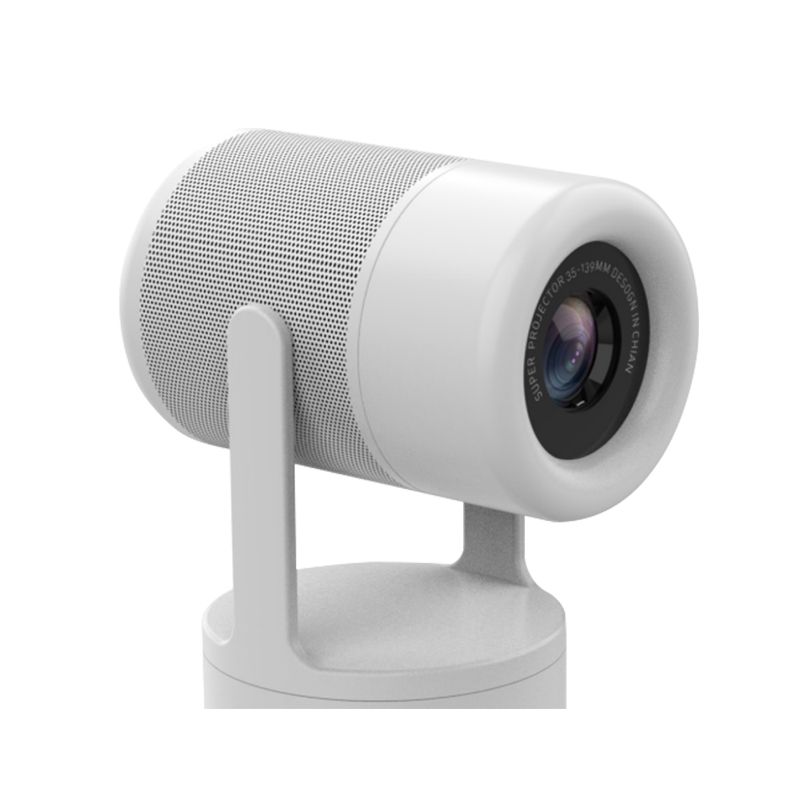
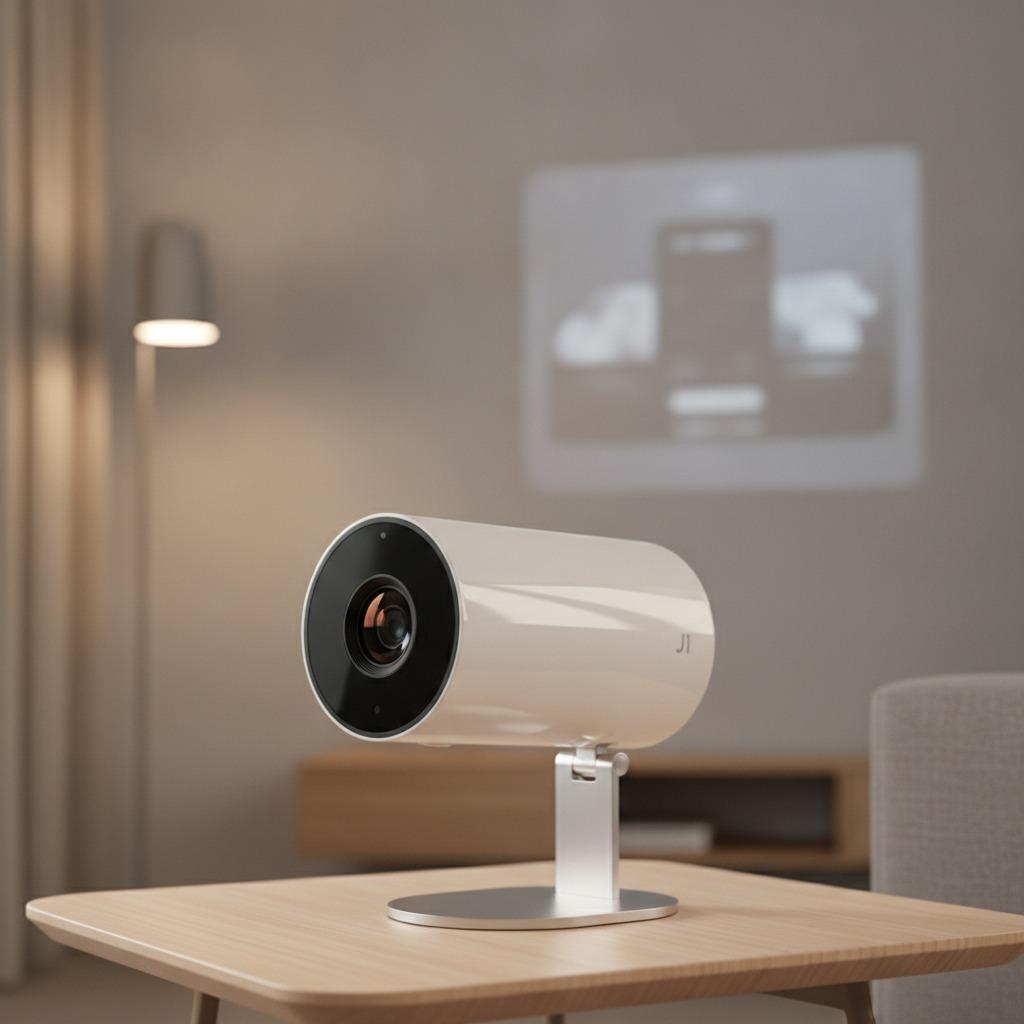
The J1 Smart Projector is designed for buyers who need a compact way to turn a blank wall or screen into a usable display area without committing to a large fixed installation. From the visible product structure, it solves a common problem in home entertainment and small presentation spaces: how to get projection capability in a small footprint while still allowing angle adjustment and stable placement. The cylindrical body, front lens assembly, and pedestal-style stand suggest a practical desktop format that can fit a bedroom, living room, meeting table, or portable media setup.
Because the visible product data does not confirm exact specifications, it is best to evaluate the J1 Smart Projector as a compact projector platform rather than assume brightness, resolution, lamp type, or software features. That approach is useful for procurement teams, integrators, and private-label buyers who want to understand the hardware form factor before discussing final configuration.
Product Structure and Visible Capabilities
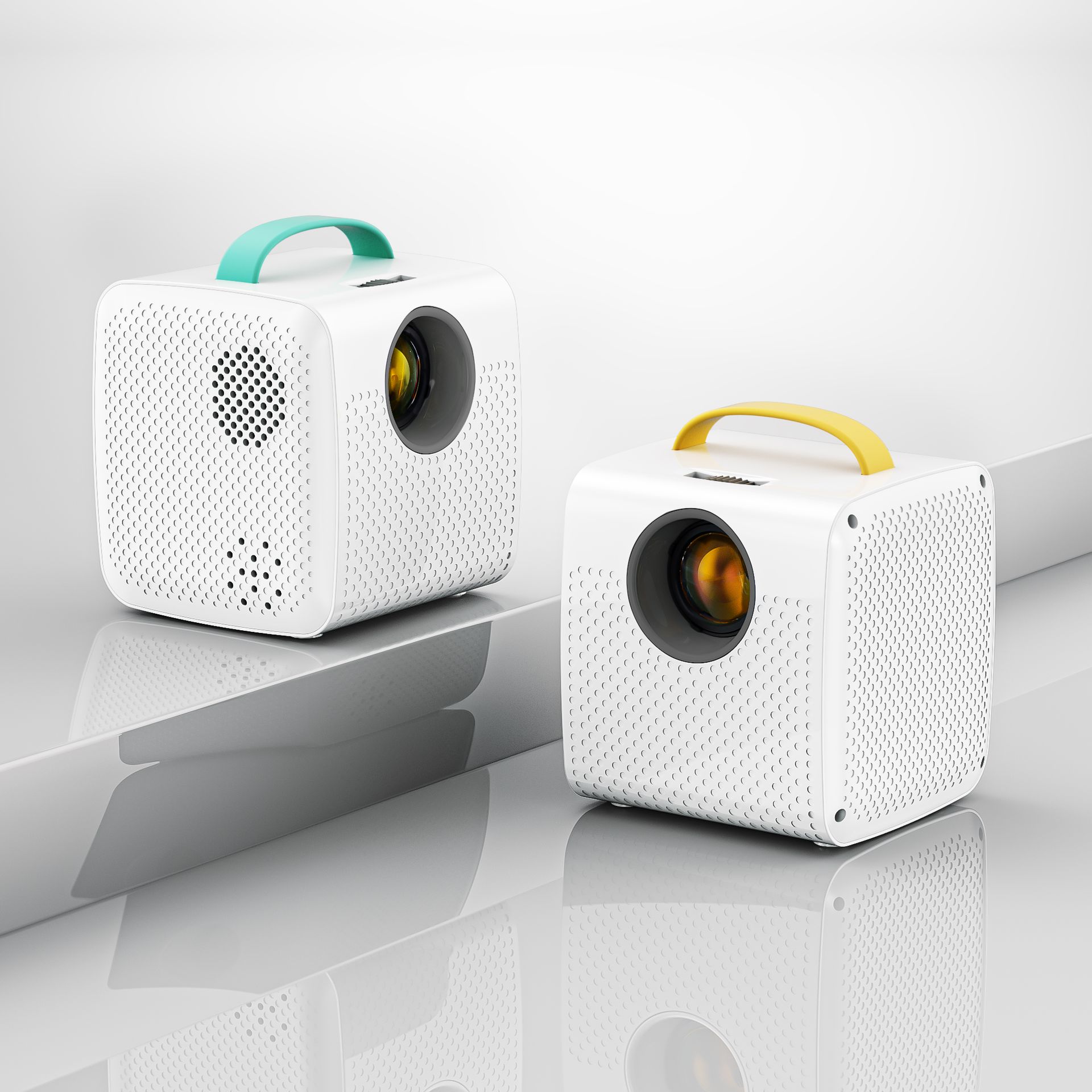
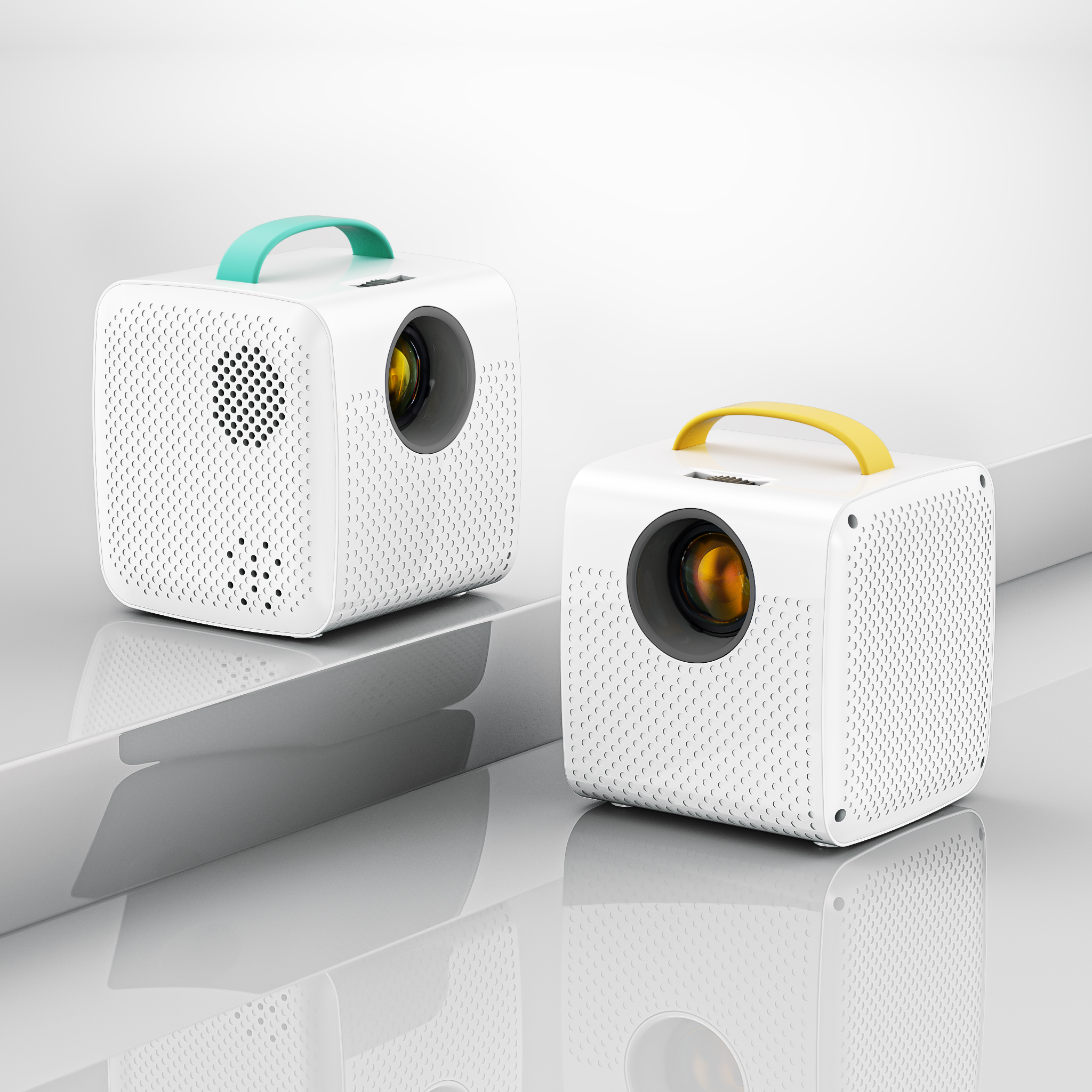
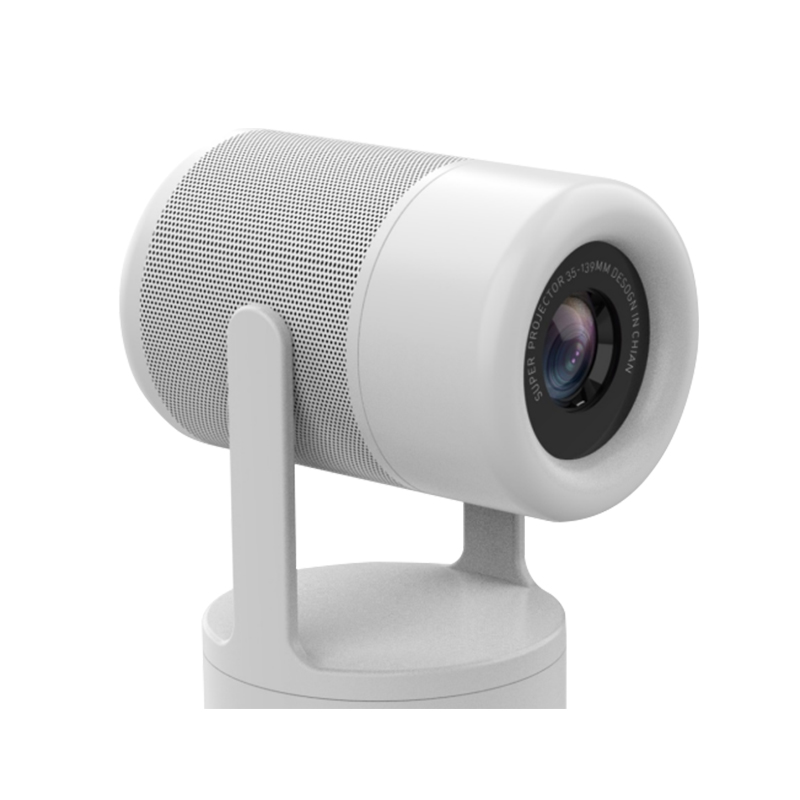
Several details can be verified from the appearance alone. The unit uses a horizontal cylindrical housing with a black circular bezel around the projection lens. A U-shaped support bracket connects the body to a round base, which indicates the projector can be tilted to change the projection angle. A perforated side section likely supports ventilation and may also serve as an acoustic opening if the device includes integrated audio. The matte white exterior gives the product a clean consumer-electronics look that fits modern home interiors.
These visible features point to a design optimized for practical use rather than bulky installation. The compact footprint makes shelf placement easier, and the stand reduces the need for improvised stacking or external mounts.
What the visible design suggests
From the outside, the device appears intended for stable desktop operation, with a focus on directional projection and airflow management. The vented shell is a useful indicator in electronics design because projection devices typically generate heat around the optical and electronic modules. The housing also appears smooth and molded, which is consistent with consumer electronics enclosures made from injection-molded plastic or similar materials.
Materials, Finish, and Industrial Design
The visible finish is matte white with a black lens ring, a common two-tone treatment in compact AV products. This choice helps the lens area stand out visually while keeping the rest of the body understated. The surface appears smooth rather than textured, which can make cleaning simpler in living spaces or office environments.
The grille area has a fine perforated pattern. In projector manufacturing, this kind of surface is often used to improve airflow, reduce thermal buildup, or allow sound passage. The exact internal structure cannot be confirmed from the image, but the exterior design clearly prioritizes ventilation and a neat appearance.
Manufacturing and Assembly Considerations
The J1 Smart Projector belongs to the electromechanical consumer electronics category. A unit like this is generally built through a combination of housing molding, optical module installation, PCB assembly, wiring, thermal management integration, and final enclosure assembly. For manufacturers and OEM/ODM buyers, the critical areas are not only appearance but also fit between the lens module, ventilation path, support bracket, and base.
hcdpcba supports SMT贴片, PCBA板, PCB打样, 元器件代采, 组装, 测试, DFMA services, and OEM/ODM work, which is relevant when developing a device of this type. A projector product needs disciplined PCB layout, reliable component sourcing, and assembly control to keep optical, power, and thermal functions aligned.
Typical Application Scenarios
The J1 Smart Projector is suitable for several use cases based on its visible form factor. In home entertainment, it can serve as a screen replacement for movies, streaming, or casual gaming when connected to external devices. In a small office, it may be used for short presentations or shared visuals. It also fits portable media viewing where a compact projector is preferred over a full-size unit.
For buyers comparing smart projector reviews, the most important first question is usually not the exterior design but whether the device matches the intended environment. A small room, low ambient light, and a stable viewing distance often matter more than a long list of features.
Customization and Buyer Decision Factors
When evaluating or customizing a portable projector like this, decision makers usually look at several points: projection technology, brightness, throw distance, resolution, connectivity, audio integration, thermal design, and control layout. None of those exact specifications are confirmed here, so they should be verified before purchase or production lock-in.
For OEM and ODM projects, the most useful customization areas often include housing color, branding, lens trim, stand geometry, packaging, interface layout, and internal board configuration. If the product is being developed for a specific market, DFMA review can help reduce assembly complexity and improve serviceability.
Quality Control Focus Areas
Projector products require more than visual inspection. Key quality checks typically include enclosure fit, lens alignment, thermal behavior, cable routing, mounting stability, and power/board reliability. If the unit includes audio, speaker output and grille consistency should also be tested. For buyers, this is especially important because a compact projector has limited room for tolerance stack-up. Small misalignments can affect focus, airflow, or angle stability.
hcdpcba’s testing and assembly services are relevant here because consumer electronics quality depends on repeatable process control, not just individual components. For a projector platform, that means balancing electrical performance with mechanical consistency.
How to Evaluate the J1 Smart Projector
Before final selection, compare the intended usage environment against the actual specification sheet. Check whether the device is truly a portable projector or a desktop unit meant for fixed room placement. Confirm the projection system, supported inputs, noise level, power method, and whether any smart functions are built in. If you are sourcing for a project, ask for drawings, sample units, and a clear BOM before approving volume production.
The visible design shows a thoughtful compact format, but the real buying decision depends on verified performance data. That is the most reliable way to avoid mismatch between expectation and delivered function.
Request OEM/ODM Support
If you are developing a projector product or a related electronic assembly, hcdpcba can support PCB fabrication, SMT贴片, component sourcing, assembly, testing, and OEM/ODM customization. Share your target housing, interface needs, and production volume so the design can be reviewed for manufacturability and assembly efficiency. For inquiries, contact +86 18924624188 to discuss your project requirements and next-step engineering support.