
Kids AI Art Generator Overview
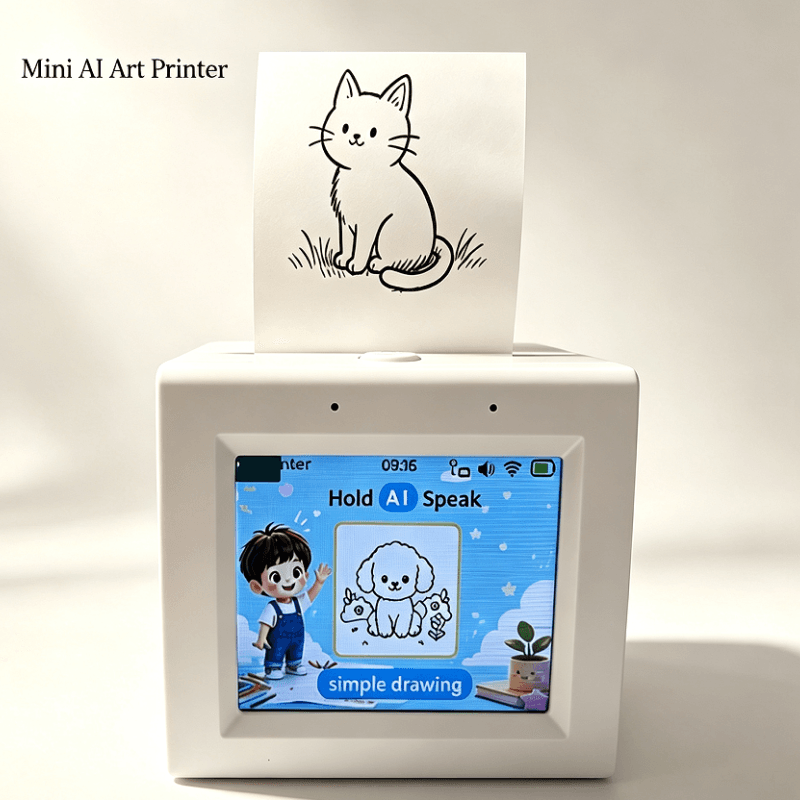
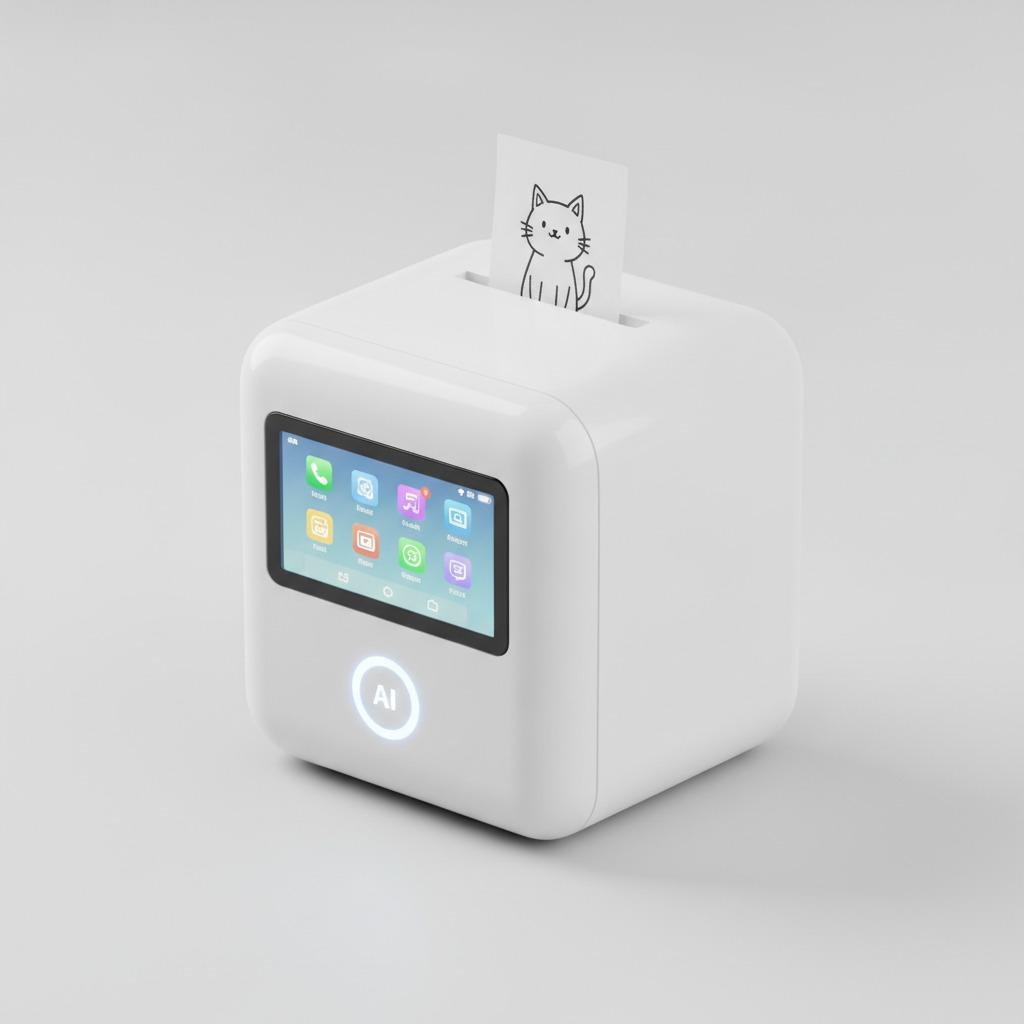
A kids AI art generator is designed to solve a simple problem: turning a child’s idea, sketch, or prompt into a quick printable image without requiring drawing skills, design software, or a full-size printer. For homes, classrooms, and creative corners, this kind of compact device gives children a faster way to see their ideas on paper. Based on the visible product structure, the unit combines a desktop printer form factor, a front touchscreen, and a top paper خروج/exit slot, making it suitable for small-format monochrome art and simple creative prints.
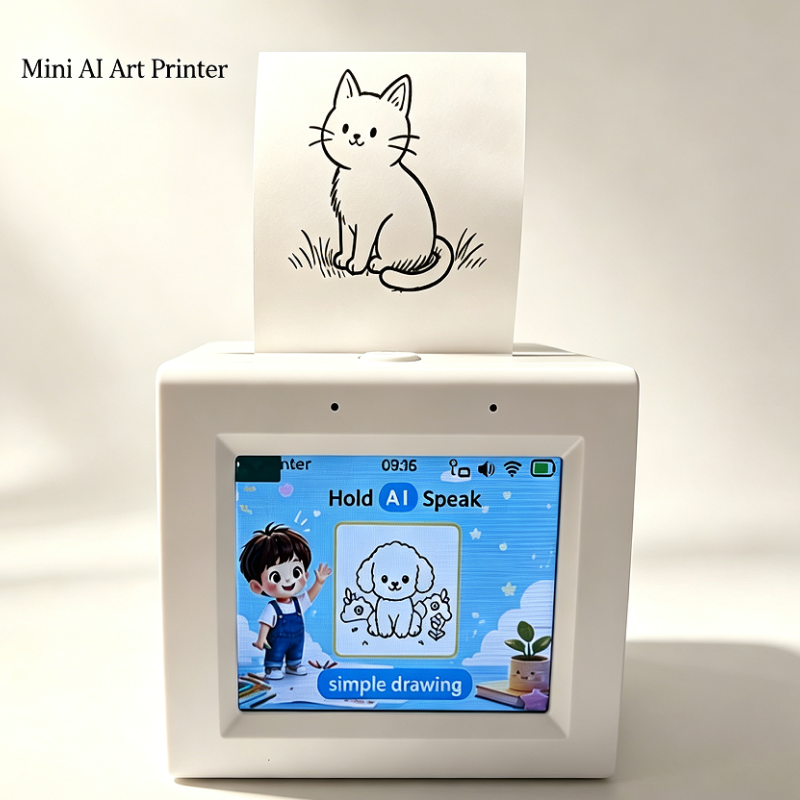
The product shown appears to be a compact tabletop mini printer with a white plastic housing and rounded edges. It is built for countertop or desk use, where space is limited but regular printing or creative activity is still needed. The screen interface suggests AI-assisted drawing functions such as “AI Speak” and “simple drawing,” although the exact software workflow is not identifiable from the image. That means the device should be understood as an AI-enabled creative print tool, not as a fully specified imaging system with confirmed app support or confirmed print technology.
Product Structure and Visible Features
The unit has a small rectangular body, a front-facing color display, and a top output path where paper feeds upward. A printed sample page shows a simple black line cat drawing, which suggests the device is aimed at line art, cartoons, labels, notes, or playful illustrations. Two small front-facing openings or indicators are visible above the screen, and one version of the product image shows a round front button marked “AI.” Those details point to a consumer electronics device with a simple user interface rather than a complex industrial printer.
Accessories shown with the printer include paper rolls, a USB cable, and an instruction manual. The manual text indicates a printer product with operating instructions, which is helpful for buyers who want a ready-to-use desktop device rather than a custom-built system. Since the visible output is monochrome, buyers should plan for black-and-white printing unless the final product specification states otherwise.
Key Capabilities Buyers Usually Look For
Small-format printing
This type of thermal printer art toy or mini printer is suited to compact prints. That makes it practical for notes, stickers, memo graphics, learning cards, and quick sketches. The visible paper path suggests vertical output, which is common in desktop mini printers.
Interactive creative use
As an AI drawing toy for children, the device can support playful workflows where a child speaks, draws, or selects a simple idea and receives a printed result. This helps reduce the barrier between imagination and output. Instead of needing an advanced computer setup, the child can use a simpler interface and focus on creativity.
Desktop-friendly footprint
The compact enclosure makes it easier to place in a bedroom, study desk, classroom shelf, or hobby table. For families who do not want a large printer, the small form factor is a strong practical advantage.
Materials, Finish, and Build Style
Visible surfaces are molded plastic with a smooth matte or satin finish. The color is white, which gives the product a clean consumer-electronics appearance and helps it fit into home or education environments. The rounded corners reduce the boxy feel and make the device look less like office equipment and more like a children’s creative accessory.
The exact internal materials are not visible, so it is not appropriate to claim more than the exterior shell. The print mechanism, electronics, and power system are also not fully identifiable from the image alone. If you are evaluating this for procurement, the critical points to confirm are housing durability, paper compatibility, charging method, and the supported operating environment.
Manufacturing and Assembly Considerations
From a production standpoint, this type of device belongs to consumer electronics assembly, likely involving PCB assembly, printer mechanism integration, screen installation, enclosure molding, and functional testing. A manufacturer with OEM and ODM capability can usually support product customization, branding, and device integration for different markets. For buyers, the important issue is not just appearance, but whether the electronics, firmware, and print path are assembled consistently and tested before shipment.
hcdpcba supports SMT assembly, PCBA boards, OEM, ODM, component sourcing, assembly, and testing. That kind of service scope is relevant for companies developing or sourcing smart printer products because it can help streamline the transition from concept to production.
Application Scenarios
This kids art learning machine fits several use cases. In homes, it can be used for creative play, simple educational printing, and keeping children engaged with drawing-based activities. In classrooms or after-school spaces, it can support art learning, quick prompts, or small reward labels. In hobby settings, it may be used for journals, notes, and small graphics. If the final specification supports label or sticker media, the device could also serve light organization needs.
For gift and novelty channels, a compact AI voice drawing generator can be positioned as an interactive learning device that feels more engaging than a standard mini printer. The appeal comes from combining visual output with a simple interface and child-friendly use cases.
Customization and Buyer Decision Factors
When evaluating a product like this, buyers should confirm print width, paper type, connectivity, software requirements, and whether the device supports image capture, text prompts, or voice-guided input. If the device is being sourced for private label or OEM use, enclosure color, logo placement, interface language, packaging, and accessory bundle are typical customization points. The visible hardware suggests there may be room for brand-level differentiation without changing the core desktop printer format.
Because the image does not confirm the underlying print technology, buyers should also verify whether the device is direct thermal, ink-based, or another method entirely. That choice affects consumables, long-term operating cost, and media availability. For many purchasing teams, those practical details matter more than the marketing label.
Quality Control and Procurement Guidance
Before placing an order, ask for sample testing of the print mechanism, screen responsiveness, and paper feed stability. Confirm whether the output remains consistent across repeated prints and whether the device is suitable for the target age group or classroom environment. If you need a thermal printer art toy for retail, inspect packaging protection, accessory completeness, and user manual clarity. If you need a product for OEM/ODM launch, request assembly documentation and testing standards from the supplier.
For sourcing support, hcdpcba can be contacted at +86 18924624188 for OEM, ODM, SMT, PCB prototyping, assembly, and testing discussions. If your project involves a compact smart printer or kids-oriented AI print device, the right manufacturing partner can help translate a concept into a stable, repeatable product line.
Conclusion
A kids AI art generator is best understood as a space-saving creative printer that helps children turn simple ideas into printed line art. Its value comes from the combination of compact design, visual interface, and easy desktop use. For families, schools, and product buyers, it offers a practical bridge between play, learning, and quick paper output. If you are planning a custom version or a branded launch, confirming the printing method, paper format, and software features should be the first step.