
Medical Grade PCB for Controlled, Reliable Electronic Modules
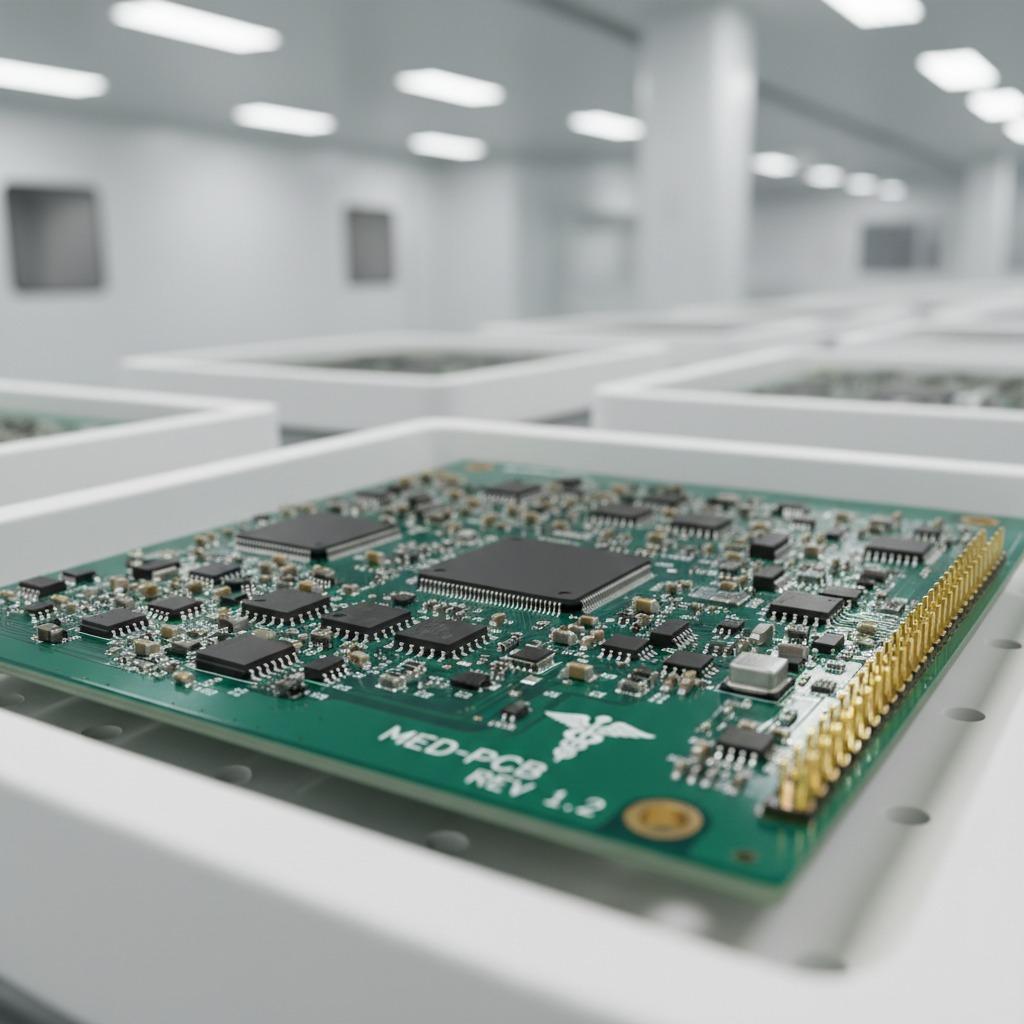
A medical grade pcb is used when a compact electronic board must support dependable signal handling, stable assembly quality, and repeatable production in a regulated product environment. Buyers in medical device and related electronics programs usually need more than a bare board: they need consistent SMT pcb assembly, clean routing, reliable solder joints, and a manufacturing process that can hold up through prototype, pilot, and batch builds. The board type shown here reflects that kind of need well—small, densely populated, and suited to control or interface functions inside a larger device.
Product Overview
This PCB assembly is a rigid, rectangular board with a green solder mask, white silkscreen markings, and a dense surface-mount layout. Visible parts include an IC in the center area, smaller support chips, passive components, a crystal oscillator, test pads, and edge contact features. The board appears designed for embedded signal processing, control, or communication tasks rather than for simple power distribution. In medical and lab equipment, boards with this structure are often used as subassemblies inside monitors, controllers, interface modules, or sensor systems.
The visible tray packaging also suggests organized handling for production or inspection. That matters in electronics manufacturing because component orientation, solder integrity, and part-to-part consistency are easier to preserve when boards are processed in controlled batches.
Key Features and Capabilities
Compact, high-density layout
The board uses a compact footprint with closely arranged parts, which is typical for functional modules that need to fit inside constrained device housings. The layout supports a mix of logic, timing, and passive circuitry.
SMT-built component population
Visible soldered packages indicate standard surface mount assembly. For buyers, this points to compatibility with precision smt processing and repeatable automated placement.
Edge contacts and mounting points
Gold-colored contact areas and corner holes show that the board is intended for stable mechanical integration and electrical connection in a larger assembly.
Materials and Finish Options
Based on the visible features, the board appears to use a fiberglass-based rigid substrate with a green solder mask, likely FR-4. That is a common platform for control electronics because it balances mechanical strength, manufacturability, and cost. White silkscreen markings support assembly identification and service work. The visible finish on the pads and contacts cannot be verified beyond what is shown, so exact surface finish should be confirmed during quotation.
For medical or diagnostic projects, buyers often request additional material or finish choices depending on electrical performance, assembly constraints, or downstream reliability needs. Those choices are normally aligned with the end product specification rather than the board image alone.
Manufacturing Process
This type of board is typically produced through PCB fabrication followed by pcb solder assembly. The process generally includes solder paste printing, automated component placement, reflow soldering, and inspection. For a medical grade pcb, the production flow may also include electrical checks, visual inspection, and functional verification where the customer provides a test plan.
hcdpcba supports pcb assembly workflows that combine PCB prototyping, SMT placement, component sourcing, assembly, and testing. That is useful for buyers moving from engineering samples to stable production, especially when the design is still being optimized for manufacturability.
Where These Boards Are Used
Boards with this structure are commonly used in OEM electronics, industrial control units, instrumentation, automation systems, embedded devices, and test equipment. In medical electronics, they may fit into monitoring, sensing, interface, or controller roles, though the exact end-use of the image shown cannot be confirmed. The design style also matches development and validation hardware used during firmware bring-up or lab testing.
Quality Control Considerations
For medical and high-reliability projects, quality control is not just a final step. It starts at incoming material control and continues through assembly, inspection, and test. Important checks usually include component placement accuracy, solder joint quality, connector alignment, and basic electrical verification. A tray-packed batch also helps reduce handling damage and keeps boards organized for traceability.
The company information provided notes testing services and a focus on quality control. The image also contains claims such as “15 Years Manufacturing Experience,” “CE Certified,” and “ISO Standard.” These are visible claims in the graphic, but the specific certification scope should be verified directly with the manufacturer before use in a regulated project.
Customization Guidance for Buyers
When sourcing a medical grade pcb or a related control module, it helps to define the mechanical envelope, connector style, component preferences, inspection level, and test requirements early. If the board is part of a larger device, share the target enclosure, mating connectors, and expected operating environment. For new designs, DFMA review can reduce layout issues, simplify assembly, and lower rework risk.
Buyers should also clarify whether they need prototype build support, low-volume pilot assembly, or full OEM production. If the project involves a wireless interface, sensor front end, or display-driven controller, the documentation should include expected interfaces and any constraints on component sourcing.
Decision Factors Before Ordering
Before placing an order, confirm the board stack-up, copper requirements, component availability, inspection method, and test coverage. For a medical grade pcb, consistency across lots is often more important than a single sample’s appearance. It is also worth checking whether the supplier can manage pcb fabrication, smt pcb assembly, sourcing, and functional test within one workflow, because that reduces handoff risk.
Another practical factor is communication. A board like this can look simple from the outside, but the internal requirements may be specific. Clear drawings, BOM data, and acceptance criteria will usually save time during quoting and first-article review.
Request PCB Assembly Support
If you are developing a control board, embedded module, or medical-related subassembly, hcdpcba can support PCB prototype runs, SMT assembly, component sourcing, and testing under one manufacturing workflow. Share your Gerber files, BOM, and test needs to review the most suitable build path for your project.