
Industrial Lighting Control PCBA for Reliable Embedded Control
An industrial lighting control PCBA helps solve a common production problem: how to integrate stable signal processing, connector routing, and board-level control into a compact module that can survive repeated installation inside equipment. For OEMs building lighting systems, automation hardware, or control cabinets, the right industrial lighting control PCBA reduces wiring complexity, improves assembly consistency, and gives the final product a more repeatable electronic core.
Product Overview
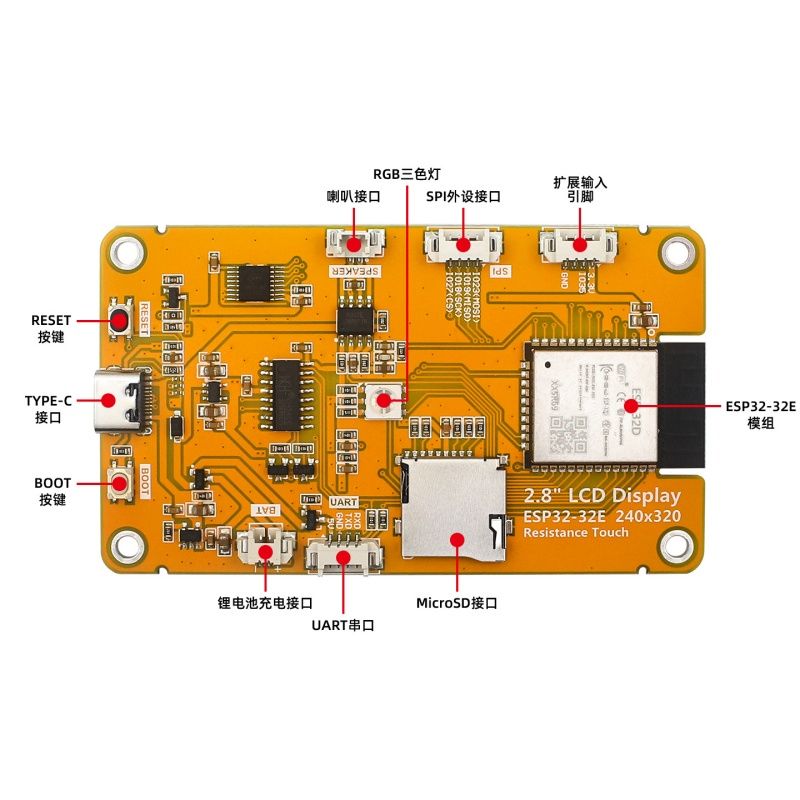
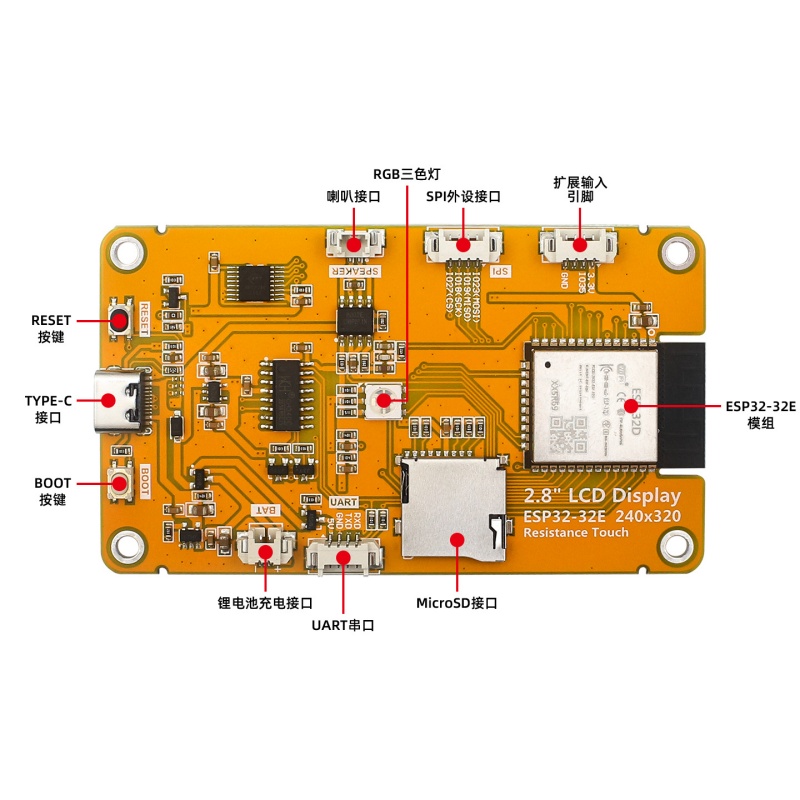
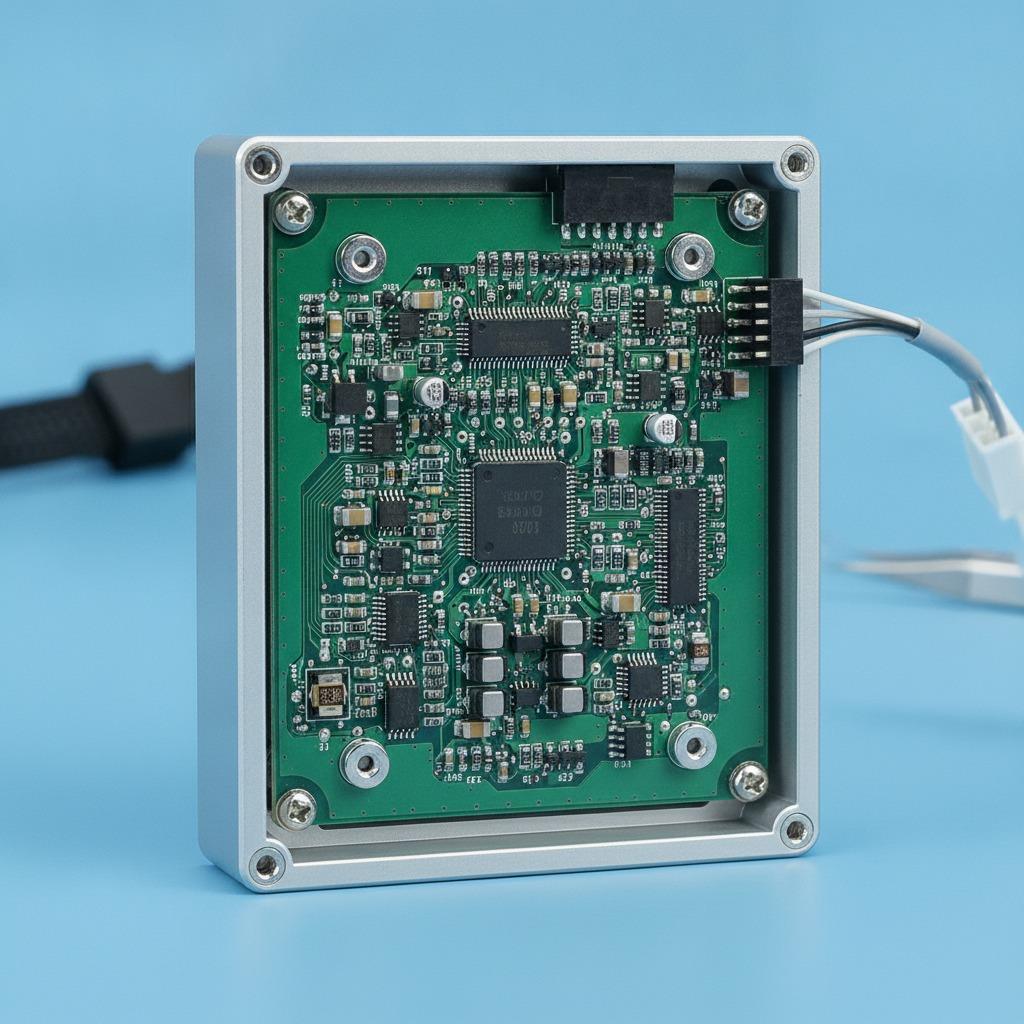
This type of PCBA is a printed circuit board assembly built around a rigid rectangular PCB with a green solder mask, visible traces, multiple integrated circuits, passive components, and several connectors. The visible structure shows a practical embedded electronics layout rather than an empty prototype board. Four plated mounting holes also indicate that the assembly is designed to be fixed inside an enclosure or machine frame.
Because the image does not reveal the exact model, chip part numbers, or firmware role, the board should be understood as a general industrial control or signal-processing module. It may be used in lighting control, automation, instrumentation, or other embedded systems where compact control logic and board-level interconnect are needed.
Key Capabilities and Design Features
Compact board architecture
The board uses a dense component arrangement with a central controller IC and supporting chips around it. This kind of layout is often chosen when designers need control logic, interface handling, and board communication in a limited footprint.
Connector-based integration
Multiple white connectors and edge headers make the assembly suitable for linking power, sensors, outputs, or external modules. That is useful when a customer wants a control board that can be integrated quickly during final equipment assembly.
Mechanical mounting support
Visible corner mounting holes make enclosure installation easier and help keep the board stable under vibration or repeated handling. For industrial equipment, this is a practical detail that often matters as much as the circuit design itself.
Materials and Finish Options
The visible board appears to use a standard rigid PCB substrate with green solder mask and exposed copper pads. That finish is widely used in industrial electronics because it balances assembly visibility, solderability, and cost control. Depending on the project, buyers may also specify options such as different PCB materials, copper thickness, surface finish, and connector styles. The exact specification should be confirmed during RFQ and design review.
Manufacturing Process
A board like this is usually produced through PCB fabrication, SMT assembly, and where needed, through-hole assembly for connectors or headers. The process may also include reflow soldering, cleaning, inspection, and final electrical test. HCDPCBA provides SMT贴片, PCB打样, 元器件代采, 组装, 测试, DFMA服务, and OEM/ODM support, which is useful for buyers who need a complete production path rather than only board assembly.
For industrial buyers, DFMA review is often valuable before mass production. It can reduce hidden assembly issues, improve component placement, and help avoid rework after the first build.
Typical Application Scenarios
This kind of PCBA can fit industrial control systems, lighting modules, sensor interface units, test equipment, IoT hardware, communication subassemblies, and other embedded electronics. In lighting-related projects, a board may function as a control backbone, interface module, or driver-side logic board. It may also be used alongside an LED Driver PCB Assembly or a High Bay Light Control Board when the system needs distributed control or cabinet-level integration.
In equipment that includes timers or scheduling functions, a control board may support LCD Digital Timing interfaces or other user-facing logic, although that specific function is not confirmed for the pictured assembly.
Quality Control Considerations
For boards used in industrial environments, quality control should cover component placement accuracy, solder joint integrity, connector alignment, continuity checks, and functional testing. A reliable supplier should also verify that the board matches the approved BOM and assembly drawing. Since exact test status is not visible from the image, buyers should ask for inspection and test coverage details before committing to production.
Customization Guidance for Buyers
When specifying a control PCBA, the most important decision factors are board size, connector arrangement, power requirements, interface protocol, component sourcing strategy, and test scope. Buyers should also clarify whether the board will be used as a finished control module, a subassembly, or part of a larger lighting electronics platform. If the board needs to fit inside an existing enclosure, mounting hole location and connector height become critical.
For custom projects, it is useful to prepare schematic files, Gerber data, BOM, assembly notes, and any special test requirements. If the design is still at an early stage, PCB prototyping and small-batch SMT can help validate fit and function before moving into volume production.
Why Buyers Choose a Board-Level Solution
Compared with loose components or hand-built wiring, a finished PCBA improves consistency and makes assembly faster on the factory line. It also lowers the chance of wiring mistakes and gives procurement teams a clearer part to source, inspect, and store. For OEM and ODM projects, that can shorten the path from engineering sample to repeatable production.
Contact for Custom PCBA Projects
If you need an industrial lighting control PCBA or another custom embedded board, hcdpcba supports PCB fabrication, SMT assembly, sourcing, testing, and contract manufacturing services. Share your design files, required quantity, and application needs to start a review and production plan.
Phone: +86 18924624188