Why Short-Throw Projector Module Selection Is More Than an Optics Purchase
A short-throw projector module supplier affects far more than the distance between a projector and the screen.
For OEM brands developing smart projectors, portable projection products, interactive displays, commercial systems, education equipment, or embedded projection devices, the module must work together with the mainboard, illumination source, power architecture, thermal system, enclosure, firmware, and final optical alignment.
A module that produces a large image during an engineering demonstration may still create problems later if the finished product suffers from:
- poor corner focus
- insufficient brightness
- optical distortion
- thermal drift
- unstable mechanical alignment
- excessive enclosure size
- incompatible control electronics
- high production variance
- difficult calibration
- inconsistent module supply
This is why buyers should evaluate a short-throw module as a system component, not as an isolated lens specification.
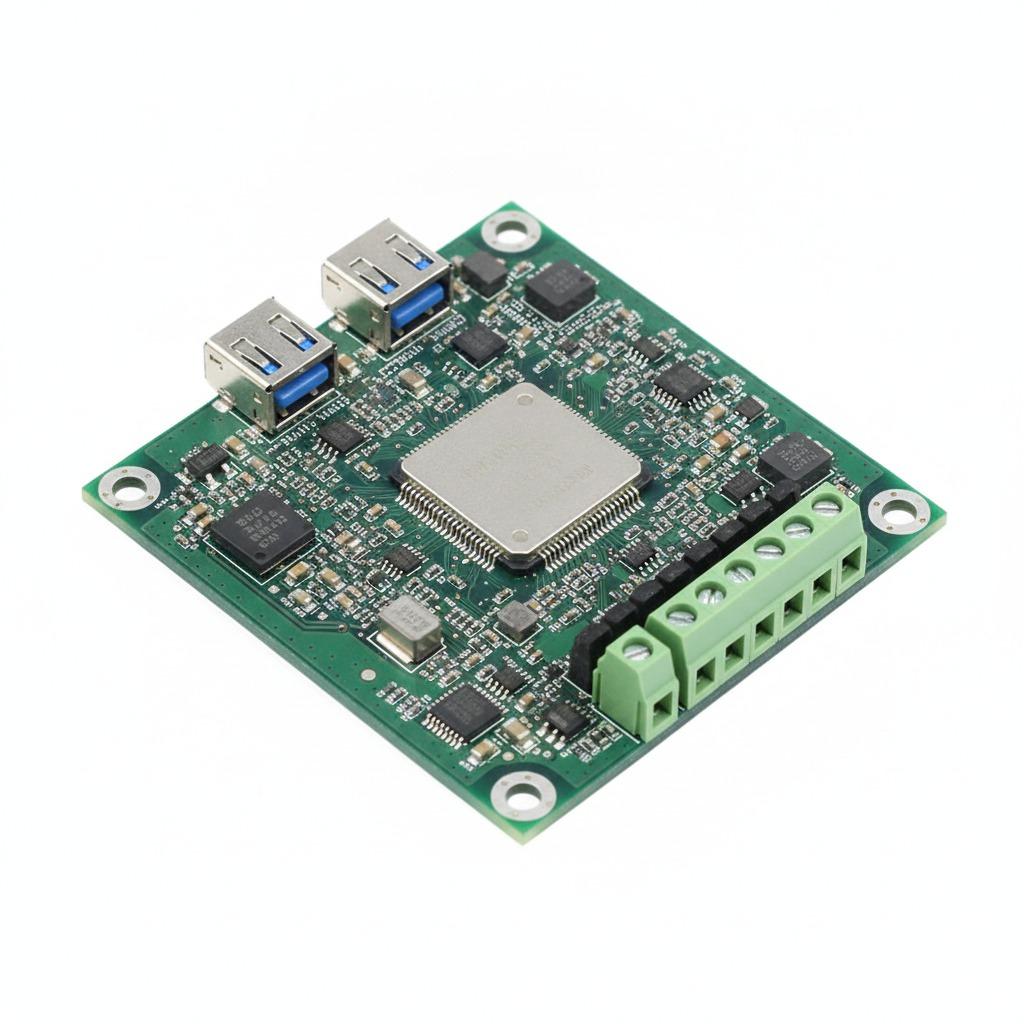
HCDPCBA currently supports projector-related electronics alongside PCB prototyping, SMT assembly, customized PCBA, component sourcing, DFMA, testing, and OEM/ODM manufacturing. Its existing Projector Series provides additional context for projector development, while custom short-throw requirements should still be reviewed on a project-specific basis.
What Is a Short-Throw Projector Module?
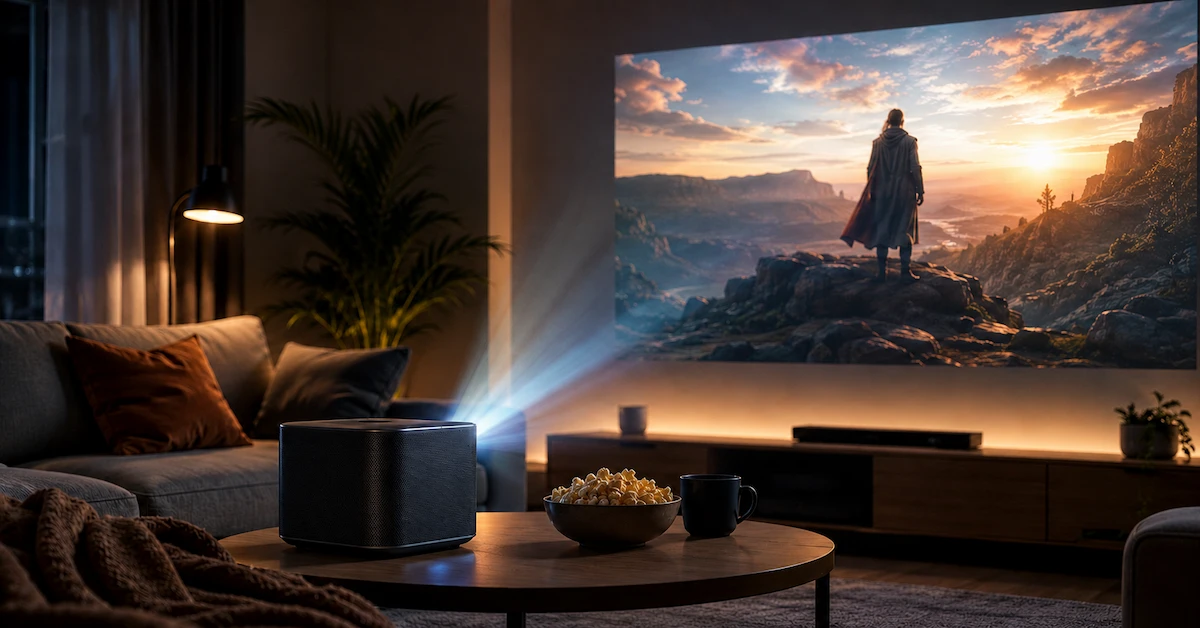
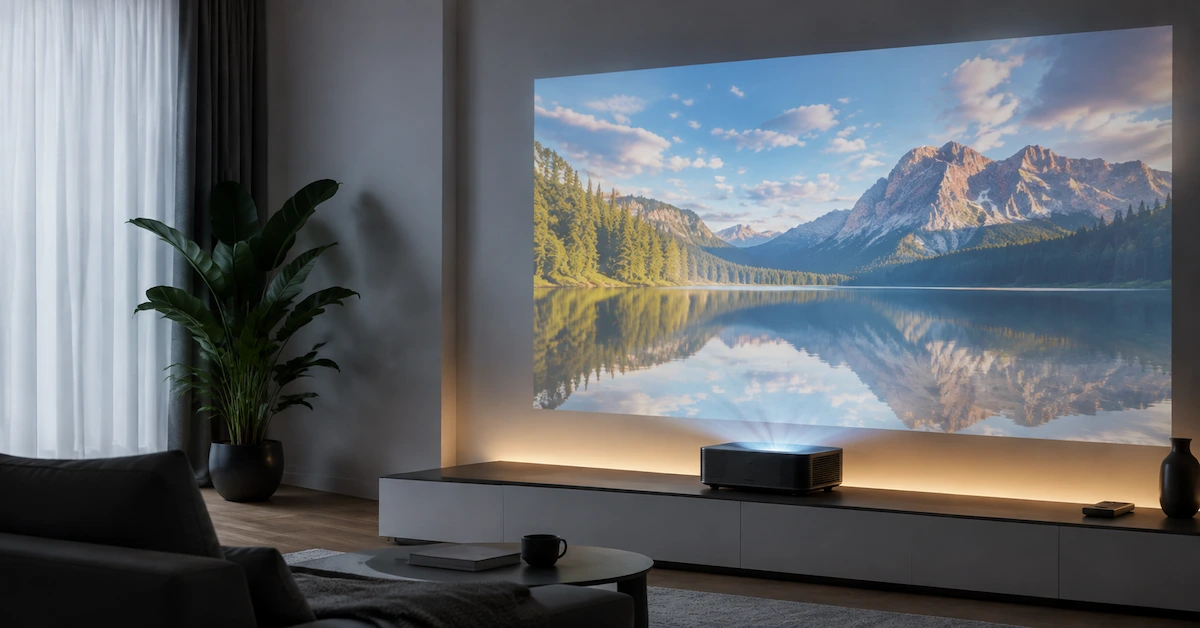
A short-throw projector module is an optical projection subsystem designed to create a relatively large image while positioned closer to the projection surface than a conventional long-throw system.
The most important specification is throw ratio.
Texas Instruments defines throw ratio as the distance from the final optical element to the projection surface divided by the width of the projected image. A lower throw ratio allows a larger image from a shorter distance.
For example, a technical article from TI describes short-throw optics as typically around 0.8:1 to 1:1, while ultra-short-throw optics may use ratios below 0.5:1.
However, OEM buyers should not rely only on terms such as:
- short throw
- ultra-short throw
- standard throw
The safer purchasing method is to define an exact numerical requirement.
For example:
Required throw ratio: 0.8:1
Target image width: 1,800 mm
Required operating distance: approximately 1,440 mm
This gives both the optical supplier and the projector engineering team a measurable target.
Short Throw and Ultra-Short Throw Are Not the Same Requirement
These two categories are often grouped together in marketing, but they create different engineering challenges.
| Item | Short Throw | Ultra-Short Throw |
|---|---|---|
| Typical placement | Close to screen | Very close to screen |
| Optical complexity | High | Very high |
| Lens/mirror size | Larger than standard throw | Often significantly larger |
| Alignment sensitivity | High | Very high |
| Enclosure constraints | Important | Critical |
| Geometry correction | Often required | Frequently critical |
| Manufacturing tolerance | Tight | Very tight |
| Typical integration risk | Moderate to high | High |
TI notes that shorter throw ratios generally require larger projection lenses and mirrors, increasing optical-module size.
This creates an important sourcing tradeoff:
A shorter throw ratio does not automatically mean a smaller projector.
The finished product may sit closer to the wall, but the internal optical path can become larger or more complex.
For compact OEM products, mechanical volume therefore needs to be evaluated together with throw ratio rather than after the optical module has already been selected.
What Does a Projector Module Supplier Actually Supply?
One of the first questions buyers should resolve is what the word module means in the quotation.
Different suppliers may use the same term for very different levels of integration.
Optical Engine
An optical engine generally contains the core optical path needed to generate and project an image.
Depending on architecture, this may involve:
- imaging device
- illumination optics
- projection lens
- mirrors
- mechanical optical housing
- light-source components
Optical Module With Drive Electronics
A more integrated solution may also include:
- display controller
- LED or laser driver
- power-management circuitry
- interface board
- firmware support
Complete Projector Electronics Platform
A higher-level solution may combine the optical module with:
- Android or multimedia mainboard
- wireless connectivity
- HDMI/USB interfaces
- audio
- fan control
- power input
- operating firmware
Therefore, before comparing two quotations from different short-throw projector module suppliers, buyers should verify whether they are actually comparing the same scope.
Start Supplier Evaluation With the Target Projection Geometry
A good sourcing project should begin with the final application rather than a supplier's available catalog.
Define:
- desired image diagonal
- image width
- projection distance
- projector mounting position
- projection angle
- screen or wall position
- required optical offset
- enclosure dimensions
Throw ratio alone does not fully define the mechanical relationship between the projector and the image.
TI's optical module guidance also identifies offset, focus, keystone correction, projection-surface geometry, operating temperature, brightness, resolution, and BOM cost as variables that should be communicated during optical-module selection.
A practical RFQ should say more than:
We need a short-throw projector module.
It should say something closer to:
We need a projector optical module for an 80-inch image at the specified mounting distance, with defined resolution, brightness target, enclosure envelope, operating temperature, control interface, and production volume.
That allows suppliers to evaluate feasibility instead of guessing.
Resolution Must Match the Imaging Architecture
Resolution is another critical module specification.
In DLP-based systems, TI explains that optical-module resolution is determined by the DMD architecture used in the system, with different chipset sizes and architectures creating tradeoffs between resolution, physical size, brightness, and cost.
OEM buyers should define whether the product requires:
- 720p
- 1080p
- 4K-class output
- another application-specific resolution
But nominal resolution should not be evaluated alone.
A module may meet the target pixel count while still producing unacceptable results because of:
- poor edge focus
- optical distortion
- inadequate illumination
- insufficient contrast
- alignment error
- unstable thermal behavior
The specification sheet and projected-image quality therefore need to be evaluated together.
Brightness Should Be Defined Under Real Operating Conditions
Brightness is frequently one of the first numbers buyers compare.
It is also one of the easiest specifications to misunderstand when suppliers use different measurement methods or test conditions.
A proper module evaluation should define:
- illumination source
- operating power
- image size
- measurement method
- thermal state
- color mode
- optical configuration
The illumination source can also affect:
- electrical power consumption
- thermal load
- color performance
- optical efficiency
- module size
TI's optical-system guidance notes that illumination power is a major contributor to projector power consumption and that LED operating current and temperature affect overall system behavior.
For OEM procurement, the important question is therefore not only:
How bright is the module?
It is:
What brightness can the module maintain under the electrical and thermal conditions of our finished projector?
Focus Uniformity Matters More in Short-Throw Systems
A projector can appear sharp in the center while remaining visibly soft near the corners.
This becomes particularly important in applications involving:
- text
- presentations
- user interfaces
- education
- interactive displays
- digital signage
TI describes focus uniformity as the ability of the optical module to maintain focus across the projected image and notes that poor optical alignment can create visibly out-of-focus regions at the edges or corners.
Buyers should evaluate:
- center focus
- corner focus
- edge focus
- focus consistency after warm-up
- focus consistency between samples
- focus stability after transport
- focus performance at the intended throw distance
For B2B sourcing, one excellent sample is not enough.
Production consistency is the real objective.
Optical Offset and Keystone Must Be Defined Early
Short-throw products often operate from a tabletop, wall-mounted position, ceiling mount, or another location where the projection lens is not centered directly in front of the screen.
This makes optical offset important.
TI explains that offset determines how the projected image is positioned relative to the optical axis.
If offset is poorly matched to the final mechanical layout, the OEM may become heavily dependent on digital keystone correction.
Digital correction can help compensate for geometry, but it should not be used as a substitute for fundamentally unsuitable optical positioning.
Before tooling the enclosure, confirm:
- optical centerline
- projected-image position
- module mounting angle
- screen height
- mechanical datum points
- expected keystone range
Short-Throw Modules Create Tight Mechanical Tolerance Requirements
Optical performance depends on mechanical precision.
Small changes in the relationship between the lens, imaging device, mirrors, housing, and projection surface may create visible changes in:
- focus
- image geometry
- image position
- uniformity
For OEM production, buyers should therefore ask how the supplier controls:
- optical alignment
- lens positioning
- housing tolerances
- module assembly
- adhesive or fastener processes
- final optical inspection
- calibration
This becomes particularly important when a module is installed inside a customer-designed enclosure.
A mechanical design that applies stress to the optical housing or provides unstable mounting points can reduce consistency even if the module itself was properly calibrated before shipment.
Thermal Design Must Be Reviewed With the Finished Projector
Projection modules combine optical, electronic, and illumination components inside a constrained product volume.
Heat can come from:
- illumination source
- display chipset
- controller electronics
- power conversion
- application processor
- wireless circuitry
Temperature can affect component life, brightness, focus stability, and overall projector reliability.
A short-throw projector module supplier should therefore provide enough information for the OEM to design an appropriate thermal path.
Useful thermal information includes:
- module power consumption
- allowable operating temperature
- heat-source locations
- recommended airflow
- heatsink requirements
- fan requirements
- thermal-interface locations
- temperature-monitoring points
HCDPCBA's existing projector content already emphasizes that projector electronics, enclosure layout, and heat dissipation need to be considered together rather than independently. Its J1 Smart Projector is presented with heat-dissipation considerations as part of the product architecture.
Exact thermal requirements for a custom short-throw design, however, must be validated for the selected optical engine and electronics.
The Optical Module Must Match the Projector PCBA
Optics and electronics cannot be sourced independently and simply connected at the end of development.
A projection platform may require coordination between:
- display controller
- DMD or imaging device
- LED/laser driver
- PMIC
- application processor
- video interface
- power sequencing
- temperature monitoring
- fan control
- firmware
TI's smart-display documentation, for example, describes DLP systems in which a controller on the PCB receives video from the main processor and works with the DMD and illumination system to create the projected image.
This means OEM buyers should verify the electrical interface before approving the optical module.
If you are also developing Android-based projector electronics, see HCDPCBA's Android Projector PCBA Manufacturer Guide for a deeper discussion of mainboard, component sourcing, SMT, and functional testing.
What Should Be Verified During Prototype Testing?
A prototype should evaluate the complete projection system rather than simply confirm that an image appears.
Optical Testing
Check:
- throw ratio
- target image size
- center focus
- corner focus
- image geometry
- brightness
- brightness uniformity
- contrast
- color performance
- stray-light behavior
Mechanical Testing
Check:
- module fit
- connector clearance
- enclosure alignment
- mounting stability
- vibration sensitivity
- lens opening position
Electrical Testing
Check:
- power-up sequence
- input voltage
- video interface
- controller communication
- illumination control
- fan behavior
- temperature sensing
System Testing
Check:
- cold start
- warm start
- extended operation
- power cycling
- image stability after warm-up
- firmware interaction
- interface switching
A prototype that passes these checks provides much more useful information than a basic demonstration unit.
Prototype, Pilot Build, and Mass Production Should Be Separate Gates
For a custom short-throw projector, moving directly from one successful prototype to mass production creates unnecessary risk.
Engineering Prototype
Used to validate:
- optical feasibility
- throw distance
- electronics
- image quality
- basic thermal behavior
EVT / Engineering Validation
Used to refine:
- PCBA
- module interface
- mechanical structure
- firmware
- thermal solution
Pilot Production
Used to verify:
- assembly consistency
- optical alignment
- calibration
- supplier quality
- testing procedures
- manufacturing yield
Mass Production
Should begin only after:
- module specification is frozen
- PCBA revision is approved
- firmware is controlled
- optical acceptance limits are defined
- production tests are established
- approved samples are available
- engineering change control is active
This staged approach helps prevent engineering changes from becoming large-volume quality problems.
What Determines Short-Throw Projector Module Cost?
The lowest module quotation is not always the lowest total project cost.
Several factors influence pricing.
Throw Ratio
Shorter throw requirements can increase optical complexity and physical lens or mirror requirements. TI specifically notes the relationship between shorter throw ratio and larger projection optics.
Resolution
Higher resolution can change:
- imaging chipset
- controller
- optical architecture
- module cost
Brightness
Higher brightness may require:
- higher-power illumination
- larger thermal systems
- different optics
- additional power electronics
Optical Performance
Tighter requirements for:
- focus uniformity
- contrast
- distortion
- brightness uniformity
can require better optics and tighter manufacturing tolerances.
Electronics Integration
A bare optical engine and a module that includes controller electronics are not equivalent quotations.
Volume
Prototype pricing, pilot quantities, and annual mass-production volumes can have very different cost structures.
OEM buyers should therefore compare total integration cost, not only module price.
How to Compare Short-Throw Projector Module Suppliers
A practical supplier evaluation can use the following matrix.
| Evaluation Area | What to Confirm |
| Throw Ratio | Exact numerical ratio and tolerance |
| Resolution | Native optical architecture |
| Brightness | Measurement method and operating conditions |
| Focus | Center-to-corner uniformity |
| Contrast | Measurement method |
| Offset | Image position relative to optical axis |
| Module Size | Exact mechanical envelope |
| Thermal | Power, airflow and heatsink requirements |
| Electronics | Controller and driver scope |
| Interfaces | Video, power and control interfaces |
| Calibration | Factory alignment process |
| Testing | Optical and electrical acceptance criteria |
| Prototype | Sample and engineering support |
| Supply | Lifecycle and mass-production capacity |
| Customization | Optics, PCB, firmware or enclosure support |
This provides a much more meaningful comparison than placing three supplier prices side by side.
When a Standard Module Is Better Than Full Customization
Not every OEM project needs custom optics.
A production-ready module can make sense when:
- required throw ratio is already available
- enclosure can adapt to the module
- target brightness is standard
- development time is limited
- forecast volume does not justify custom tooling
- existing electronics are compatible
A more customized solution becomes relevant when:
- mechanical volume is highly constrained
- throw ratio is unusual
- optical offset is specialized
- brightness requirements are unique
- product design requires specific mounting geometry
- PCBA and optical engine must be tightly integrated
The correct choice is the one that minimizes overall project risk, cost, and time to market.
Where HCDPCBA Fits Into a Short-Throw Projector Project
HCDPCBA should not be presented as having a specific standardized short-throw optical-module specification unless that configuration has been confirmed for the project.
What the current website does verify is broader projector and electronics manufacturing capability.
HCDPCBA provides:
- PCB prototyping
- SMT assembly
- customized PCBA
- component sourcing
- DFMA
- AOI and X-Ray inspection
- assembly
- testing
- OEM/ODM support
and currently lists both Q2 and J1 products under its Projector Series.
This makes HCDPCBA relevant when a projector project requires coordination between an optical module and:
- projector mainboard
- controller PCB
- power electronics
- Android electronics
- wireless interfaces
- thermal control
- enclosure integration
- prototype assembly
- production testing
For buyers already developing a custom projector PCBA, the PCB & PCBA manufacturing services can support the electronics side of the project.
The exact short-throw optics, DMD platform, throw ratio, brightness, resolution, and module sourcing requirements should be reviewed before quotation.
What to Send a Short-Throw Projector Module Supplier
A strong RFQ should include enough technical information for the supplier to evaluate the full application.
Prepare:
- target throw ratio
- target image size
- projection distance
- resolution
- brightness target
- projection orientation
- module size limitation
- available power
- operating temperature
- mainboard platform
- video interface
- optical offset requirement
- focus method
- keystone requirement
- enclosure drawing
- prototype quantity
- forecast annual volume
- target production date
If a custom PCBA is also required, include:
- schematic
- Gerber
- BOM
- CPL
- interface definitions
- firmware requirements
- functional test requirements
This reduces quotation uncertainty and allows technical problems to be identified earlier.
Frequently Asked Questions
What is the most important specification when selecting a short-throw projector module?
Throw ratio is one of the first specifications to define because it determines the relationship between projection distance and image width. Buyers should also evaluate resolution, brightness, focus uniformity, module dimensions, offset, thermal requirements, and electrical interfaces.
What throw ratio is considered short throw?
Definitions vary by product category. TI has described short-throw projection lenses as typically around 0.8:1 to 1:1 in smart-display applications, with ultra-short-throw systems below 0.5:1. OEM specifications should use a numerical throw ratio rather than relying only on the category name.
How is projector throw ratio calculated?
Throw ratio is the projection distance divided by the width of the projected image. TI defines the distance from the final optical element to the projection surface as the distance used in the calculation.
Is a shorter throw ratio always better?
No. A shorter ratio can reduce installation distance, but it may require larger or more complex lenses and mirrors and can increase optical, mechanical, alignment, and cost challenges.
Is a projector optical engine the same as a complete projector module?
Not always. Supplier terminology varies. An optical engine may focus mainly on image-generation optics, while a more integrated module can include control and driver electronics. Buyers should define exactly what hardware is included in the quotation.
What should OEM buyers test before approving a short-throw module?
Test the actual throw ratio, image size, brightness, center and corner focus, geometry, offset, thermal stability, electrical compatibility, mechanical fit, and extended-operation performance in the intended enclosure.
Can a short-throw optical module be connected to an Android projector mainboard?
Potentially, but the video interface, display controller, power rails, timing, firmware, control signals, and thermal architecture must be compatible. Integration should be reviewed before PCB and enclosure designs are finalized.
Can HCDPCBA support custom projector electronics?
HCDPCBA currently provides PCB prototyping, SMT assembly, customized PCBA, component sourcing, DFMA, testing, and OEM/ODM support, and the company also maintains a projector product category. Exact optical-module and short-throw requirements must be confirmed for each project.
What information is needed for a short-throw projector module quotation?
At minimum, provide target throw ratio, image size, resolution, brightness, module size limits, operating environment, electrical interface, prototype quantity, and expected production volume.
Should OEM buyers choose a standard or customized projector module?
A standard module can reduce development time when its optical and mechanical specifications already fit the product. Customization is more appropriate when throw ratio, enclosure dimensions, offset, brightness, interfaces, or system architecture cannot be met by existing modules.
Conclusion
Choosing a short-throw projector module supplier is ultimately an optical-system and manufacturing decision, not simply a search for a lens with a lower throw ratio.
OEM buyers need to evaluate how the module performs across:
throw ratio → resolution → brightness → focus → offset → mechanical integration → thermal control → electronics → calibration → testing → production consistency.
The best sourcing decision is usually the solution that can deliver the required image geometry while creating the fewest downstream problems for PCBA design, enclosure development, thermal management, firmware integration, and mass production.
HCDPCBA combines projector-related product experience with PCB prototyping, SMT assembly, PCBA manufacturing, DFMA, component sourcing, testing, and OEM/ODM support. For a custom short-throw projector project, buyers should first define the optical target and system architecture, then contact HCDPCBA with the required projection geometry, electronics platform, mechanical constraints, prototype quantity, and production forecast for technical evaluation.