PCBA for Power Supply Board: Reliability, Thermal Management, and High-Current Design
Every device, from medical equipment to servers, depends on one invisible but essential component—a reliable power supply board.
The performance of that board depends entirely on the quality of its PCBA.
Designing and manufacturing PCBA for power supply boards requires expertise in high-current routing, thermal balance, and electrical isolation.
This isn’t just about soldering—it’s about keeping power stable, efficient, and safe for thousands of continuous hours.
Core Functions of Power Supply PCB Assembly
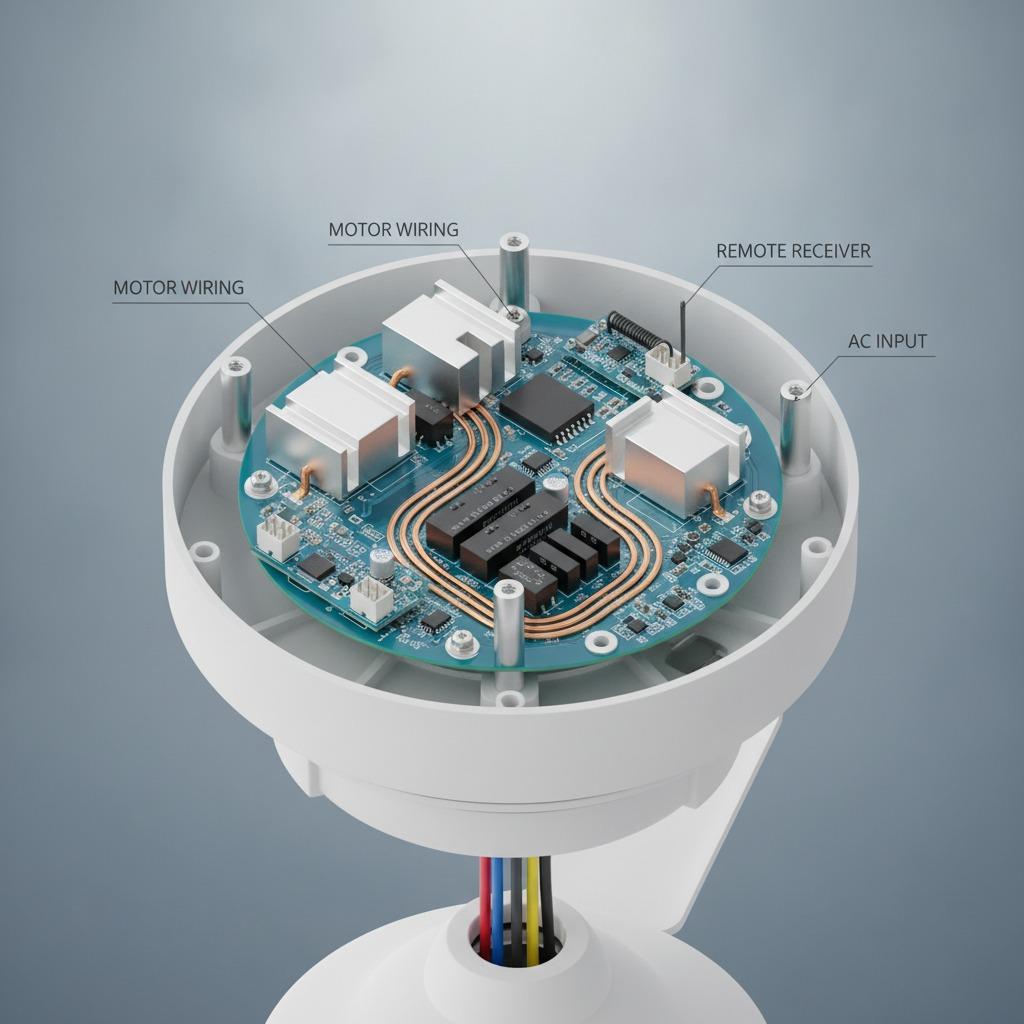
The power supply board is not just another PCB. It’s the system’s energy gateway, converting and distributing power safely across different voltage domains.
In power control PCB assembly, attention must focus on current flow management, EMI suppression, and heat dissipation.
| Subsystem | Typical Function | PCBA Engineering Focus |
|---|---|---|
| AC-DC Converter | Converts input AC to regulated DC output | Transformer design, EMI filter stability |
| DC-DC Module | Steps voltage up or down for different loads | Switching frequency optimization |
| Protection Circuit | Overcurrent, overvoltage, short circuit safety | Fuses, varistors, surge diodes |
| Control Logic Section | Feedback regulation for voltage control | Isolation routing and signal filtering |
| Heat Sink Integration | Manages high thermal load zones | Solder pad spacing and via heat transfer |
In short, a power supply board’s reliability is a function of both electrical layout and mechanical thermal design.
Design Challenges in High-Current PCBA
Unlike logic boards or IoT devices, high current circuit boards handle power, not data.
That means wider traces, thicker copper, and strict control of temperature rise.
Manufacturers must address these key design and production factors:
-
Copper thickness between 2–4 oz for primary current layers.
-
Trace width calculation based on IPC-2221 thermal limits.
-
Controlled impedance in high-frequency switching converters.
-
Through-hole reinforcement for high-current terminal connections.
-
Solder mask clearance to prevent carbonization at hot zones.
Each element contributes to long-term performance stability, especially in high-demand environments such as LED drivers, power tools, or industrial machinery.
Thermal Management: The Hidden Performance Factor
Heat is the enemy of power electronics.
A well-designed heat dissipation design in PCBA can extend product life by 30–50%.
Effective thermal control combines:
-
Thick copper planes for uniform heat spreading.
-
Thermal vias connecting component pads to internal copper layers.
-
Aluminum substrate or metal-core PCBs for high-wattage applications.
-
Conformal coating to prevent moisture and oxidation under heat cycles.
-
Active cooling zones coordinated with case ventilation.
Advanced industrial power module assembly often integrates temperature sensors and feedback loops into the PCB itself—allowing real-time thermal protection.
Manufacturing Process for Power PCBA Stability
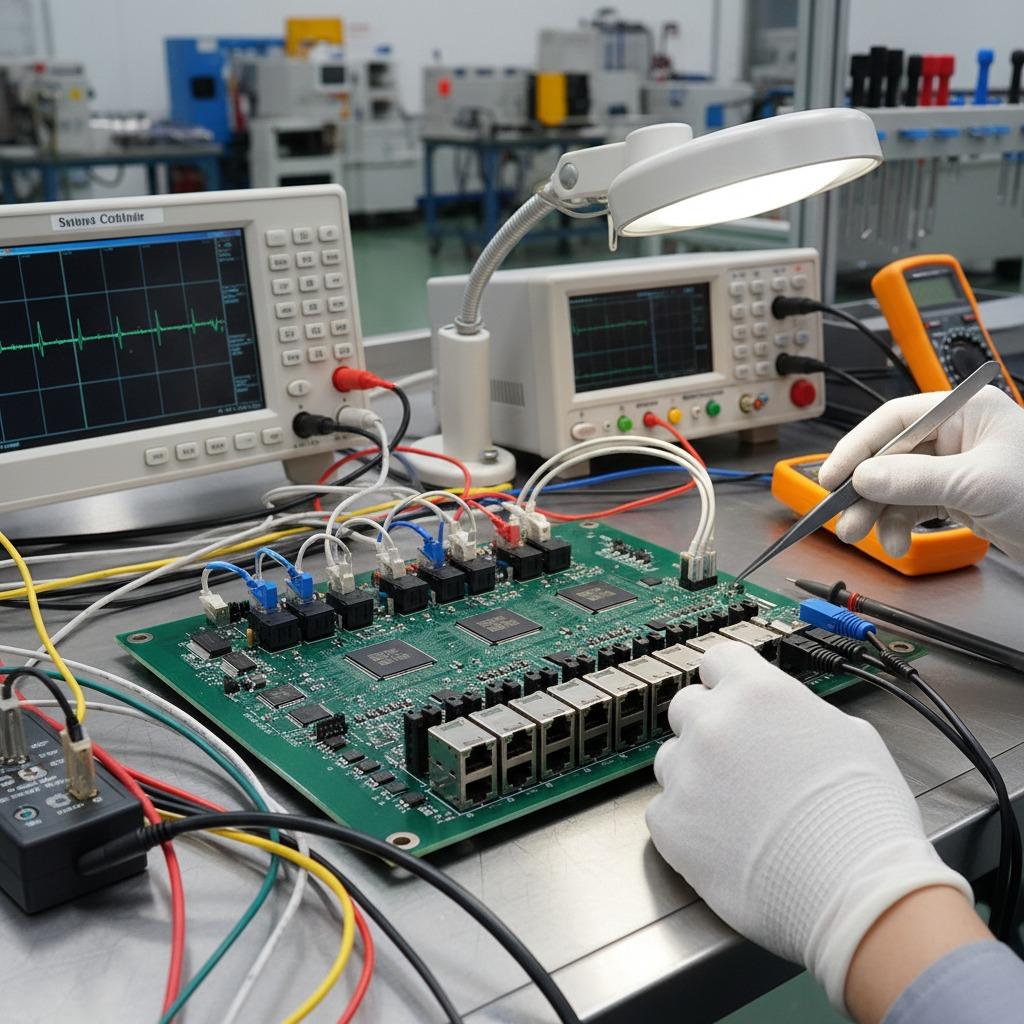
A reliable PCBA for power supply board depends on precision during every manufacturing stage.
The goal is not only to assemble but to control all variables that influence conductivity and safety.
| Process Step | Key Control Parameter | Impact on Quality |
|---|---|---|
| Solder Paste Printing | Uniform thickness ±10µm | Prevents shorts under high current |
| Component Placement | ±25µm accuracy | Ensures isolation gaps for HV parts |
| Reflow Soldering | Controlled temperature zones | Prevents cold joints on large components |
| AOI + X-ray Inspection | Layer and joint verification | Detects hidden solder voids |
| Electrical Testing (Hi-Pot / Burn-in) | 100% output validation | Confirms insulation and thermal reliability |
By combining these controls with traceable process data, power boards achieve consistent electrical and thermal performance across all batches.
Ensuring Long-Term Reliability and Compliance
In power electronics, reliability isn’t optional—it’s the product.
Manufacturers that specialize in reliable power electronics manufacturing apply international standards such as:
-
IPC-A-610 Class 2/3 for workmanship
-
ISO 9001 for quality control systems
-
IEC 60950 / 62368 for safety and insulation
-
UL and RoHS compliance for environmental standards
The result is a PCBA that delivers stable current, minimal energy loss, and protection against voltage spikes over thousands of operating hours.
Power Stability Starts with Smart Manufacturing
Power supply boards are the foundation of every electronic system, and their performance begins at the PCBA level.
A dependable manufacturer ensures precision in every trace, every solder joint, and every degree of heat transfer.
If your next power electronics project demands consistency, safety, and verified reliability, explore our professional PCBA capabilities at www.hcdpcba.com.
For direct consultation or technical evaluation, contact our team through the contact page.
Because when power must stay stable—so must your manufacturing partner.