What an AI Camera PCBA is really for
An AI Camera PCBA is not just a camera board with a fashionable label on the silkscreen. In practical terms, it is the electronic core that handles video capture, image processing, and in some designs part of the inference workload needed for modern vision products. That matters because buyers are no longer choosing only a lens and a sensor; they are choosing a board that has to fit a product architecture, survive production, and talk to the rest of the system without creating surprises on the line.
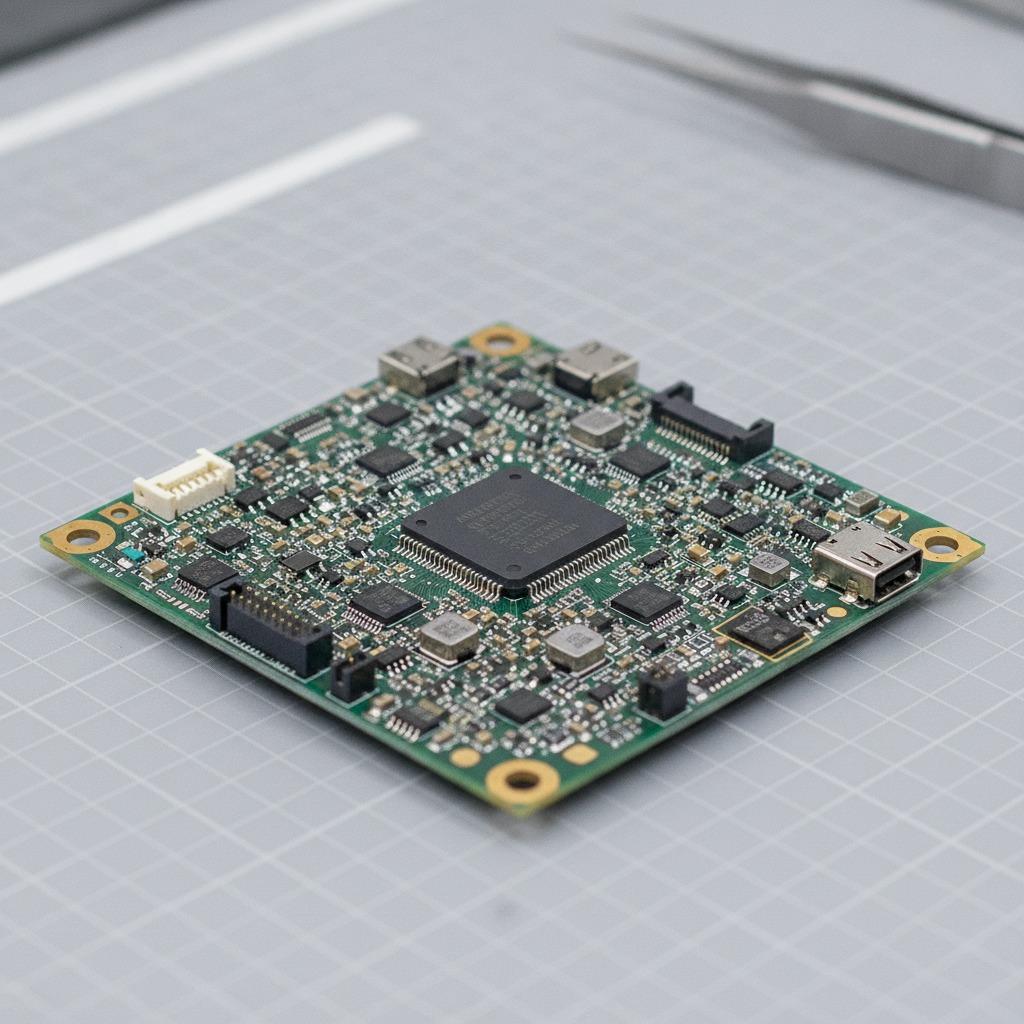
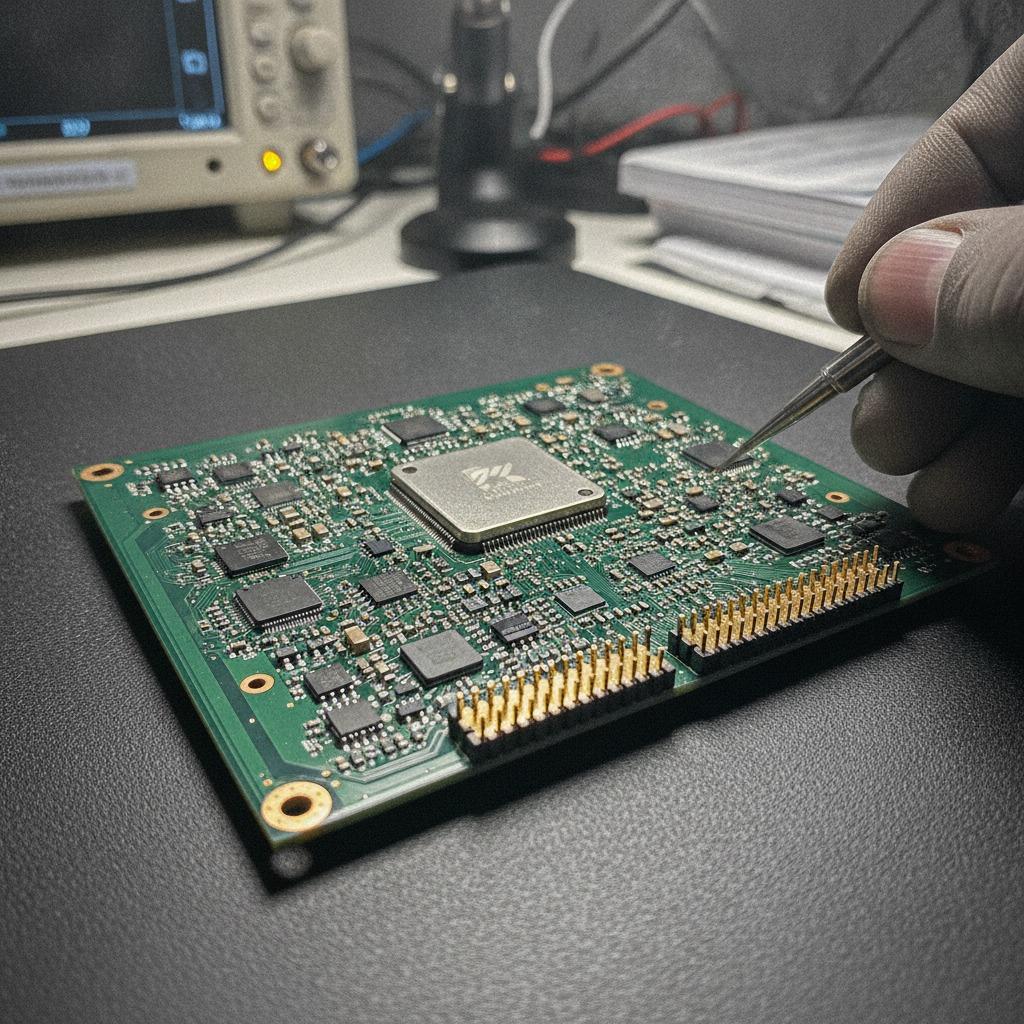
The kind of board shown in the preparation data is a populated PCB with a central AI-marked processor, multiple surface-mount components, edge connectors, and mounting features. The same hardware family can sit inside a bullet camera, PT camera, dome camera, or an industrial vision unit. The use case changes, but the buying question stays similar: can this board support the image pipeline, interface requirements, and manufacturing route your product actually needs?
Why this board category matters to engineers and sourcing teams
Vision hardware has become a board-level decision as much as a camera decision. In security and smart home devices, the PCB must support compact layouts and stable connectivity. In industrial inspection, it must tolerate integration into a larger system where reliability, signal integrity, and repeatable assembly matter more than visual marketing claims. That is why the distinction between a simple camera board and an AI Camera Motherboard is worth making early.
For sourcing managers, the risk is usually not that the board cannot be built. The risk is that the wrong board spec gets locked in too soon: the interface is awkward, the firmware path is unclear, or the assembly house is not prepared for component sourcing and functional test. A board that looks fine in a product photo can become costly once it reaches DFM review.
Quick takeaways before you compare options
If you are evaluating an AI vision board or working with an OEM/ODM supplier, a few points deserve attention first:
The board should be matched to the product category, not just the marketing term “AI.” Some boards are intended for security monitoring, others for smart home products, and others for machine vision or industrial inspection. Those application targets usually imply different priorities in power, interface, enclosure, and software integration.
Look for evidence of SMT assembly and functional test capability. The image data explicitly points to SMT Assembly & Functional Test, which is a useful sign for buyers who need board-level manufacturing rather than only concept design support. It does not prove performance, of course, but it does show the service scope.
Finally, do not treat compliance badges as a substitute for verification. RoHS, CE, and FCC marks may be shown on marketing material, yet a buyer still needs to confirm what is certified, for which assembly, and under which documentation set.
Typical board structure and what it tells you
The visible board architecture in the provided data is fairly representative of mixed-signal embedded electronics. There is a green solder-mask PCB, a central processor or AI chip, smaller ICs around it, and connector hardware along the edge. Mounting holes suggest the board is intended to be integrated into a larger mechanical assembly. Gold-finish edge contacts indicate a board-to-board or edge-connection strategy in some configurations.
That structure matters because it gives buyers clues about manufacturability. A compact board with a central processor may be suitable for a camera module or control board, but it also concentrates heat, routing complexity, and assembly risk. If the final product needs a tight enclosure or a lens stack, even a small change in component height can become a mechanical issue.
Where the board family is usually used
Based on the supplied information, this kind of PCBA is aimed at surveillance systems, home security cameras, machine vision inspection, industrial monitoring, and smart-home imaging devices. The related keywords point in the same direction: WiFi AI Camera PCBA, Smart Home Camera Board, and edge-deployed vision hardware.
That range is broad, but the engineering needs are not identical. WiFi-connected products tend to care about wireless integration and enclosure fit. Industrial systems care more about deterministic behavior, interface robustness, and serviceability. Edge AI inference adds another layer: the processing burden may move partly onto the board, which affects thermal design and firmware expectations.
Selection criteria that actually help in procurement
When comparing suppliers, the most useful questions are practical ones:
Can the supplier handle PCB design, SMT assembly, component sourcing, and testing under one roof? The company information for hcdpcba indicates exactly that kind of scope, including PCB prototyping, SMT placement, component procurement, assembly, testing, DFMA support, and OEM/ODM service. That matters because splitting those tasks across several vendors can slow down debugging and create blame-shifting when a board fails in pilot build.
Does the supplier understand customization? The preparation data specifically mentions custom size, interface, and algorithm SDK support. Those are not decorative claims. For a buyer, they may determine whether the board can fit an existing housing, connect to the host system, or support the software stack already chosen by the product team.
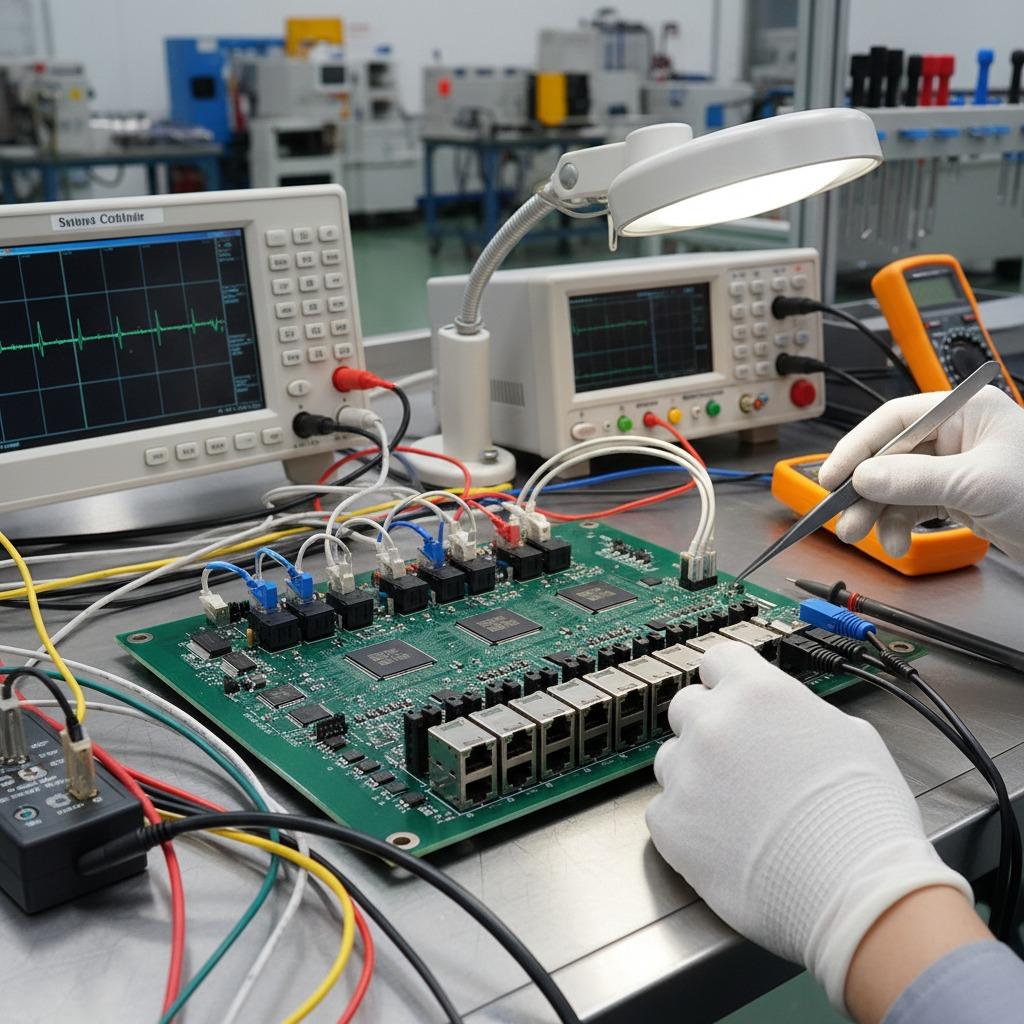
Can the supplier discuss functional test honestly? A lot of board failures are not dramatic. They show up as intermittent boot issues, connector instability, or awkward assembly tolerances. A supplier that can describe test coverage in plain language is usually more useful than one that only repeats the words “high quality.”
Common mistakes when buying AI vision boards
The most common mistake is overfocusing on the AI label itself. A marked processor does not automatically mean the board can run your intended model, handle your frame pipeline, or support the camera interface you need. Another mistake is assuming a good-looking prototype photo translates directly into a production-ready design. It often does not.
Buyers also get caught by the mechanical side. Camera products are not only electronics; they are stack-ups of board, lens, housing, bracket, cable, and firmware. If the board is even slightly off in connector placement or mounting-hole layout, the assembly team pays for it later.
A more subtle issue is compliance drift. If a supplier shows ROHS, CE, and FCC icons, ask what the claim covers. A general marketing badge is not the same thing as verified documentation for your exact build.
Practical advice for engineering and sourcing teams
If you are in early development, ask for the board-level deliverables first: schematic support, BOM control, PCB layout rules, assembly process notes, and test strategy. For AI camera products, firmware and SDK integration can be as important as the hardware itself. If the board will support edge AI inference, make sure software ownership and update responsibility are clear before pilot production starts.
For volume buyers, the better question is whether the supplier can remain stable through build changes. Component substitutions, connector revisions, or even a small re-layout can alter the final behavior of a vision board. A good OEM/ODM partner will flag those changes early rather than after a failed build.
FAQ: short answers buyers usually want
Is an AI Camera PCBA a finished camera?
No. It is a board-level assembly, usually one part of the final camera or vision device.
Can it be used in smart home products?
Yes, if the board, interfaces, software, and mechanical package match the product requirements.
Does the presence of AI on the board guarantee edge inference?
Not by itself. It suggests processing capability, but the actual software and model support still need confirmation.
What should a buyer ask a supplier first?
Ask about PCB design support, SMT assembly, component sourcing, functional testing, customization scope, and firmware or ODM capability.
Next step for product teams
If you are building or sourcing an AI vision product, start with a board review, not a brochure review. Share your interface needs, mechanical constraints, target application, and software expectations early. A supplier such as hcdpcba, with PCB prototyping, SMT assembly, testing, DFMA, and OEM/ODM support, is the kind of partner that can help turn a concept into a buildable board—provided the specifications are discussed clearly and the limits are respected.
For engineering teams, that is usually the difference between a prototype that merely powers on and a camera board that can survive into production.