Why Choosing the Right WiFi/Bluetooth Projector Mainboard Supplier Matters
Smart projectors are becoming more connected and feature-rich. Modern projector products are no longer only display devices; they often combine wireless connectivity, digital entertainment, smart operating systems, audio functions, and external device compatibility.
For projector brands, the mainboard is one of the most important electronic components because it controls communication between different systems.
A reliable WiFi/Bluetooth projector mainboard supplier should understand how to integrate:
- Wireless communication
- Video processing
- Audio output
- Power management
- External interfaces
- Display control
- Component sourcing
- Manufacturing requirements
Many projector companies face challenges when developing new products because the mainboard affects:
- Product stability
- User experience
- Manufacturing cost
- Development timeline
- Long-term supply capability
Choosing a supplier only based on PCB assembly price may create problems later.
A suitable manufacturing partner should be able to support the complete process from engineering review and prototype production to stable mass manufacturing.
HCDPCBA provides PCB prototyping, PCBA manufacturing, SMT assembly, component sourcing, DFMA, inspection, testing, and OEM/ODM electronics manufacturing support. The company also provides projector-related products through its Projector Series.
Who Needs a WiFi/Bluetooth Projector Mainboard Supplier?
Different businesses require projector mainboard solutions for different reasons.
Projector Brands
Established projector companies often need customized mainboards for:
- New projector models
- Product upgrades
- Wireless function integration
- Cost optimization
- Supply-chain stability
Their requirements usually include:
- Stable hardware design
- Reliable production quality
- Long-term component availability
- Consistent manufacturing
A professional supplier can help reduce the engineering burden while maintaining product control.
Consumer Electronics Companies
Many consumer electronics brands are expanding into smart entertainment products.
Examples include:
- Portable projectors
- Home theater projectors
- Smart display products
- Entertainment devices
These companies usually focus on:
- Compact design
- Wireless connectivity
- User experience
- Production scalability
The mainboard needs to balance performance, cost, and power consumption.
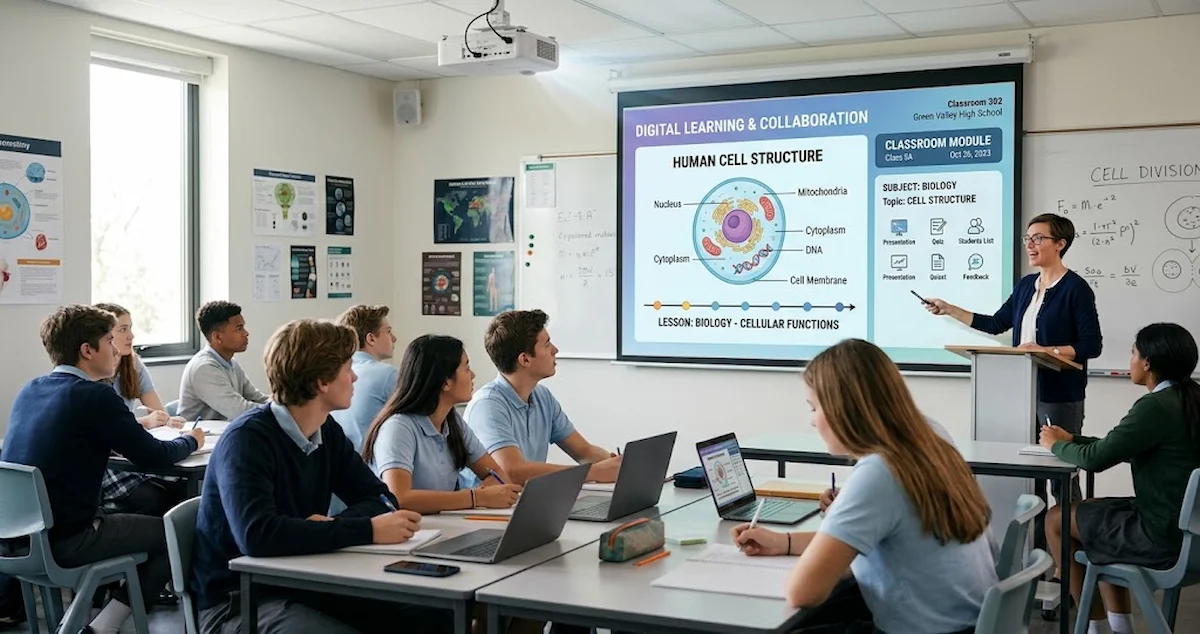
Education Technology Companies
Smart classrooms increasingly use digital projection systems.
Education-related projector products may require:
- Stable operation
- Multiple input interfaces
- Long working hours
- Reliable wireless connection
For these applications, hardware reliability is often more important than simply adding more features.
OEM and Private Label Projector Companies
Some companies have strong sales channels but do not have internal electronics manufacturing capabilities.
They may need support with:
- Customized projector boards
- PCB assembly
- Component sourcing
- Prototype development
- Production management
An experienced OEM partner helps simplify supplier coordination.
Hardware Startups
For startups, developing a projector product internally can require expertise across:
- Electronics engineering
- PCB design
- Manufacturing
- Testing
- Supply chain management
Working with a projector mainboard supplier can reduce initial investment and shorten the path from concept to production.
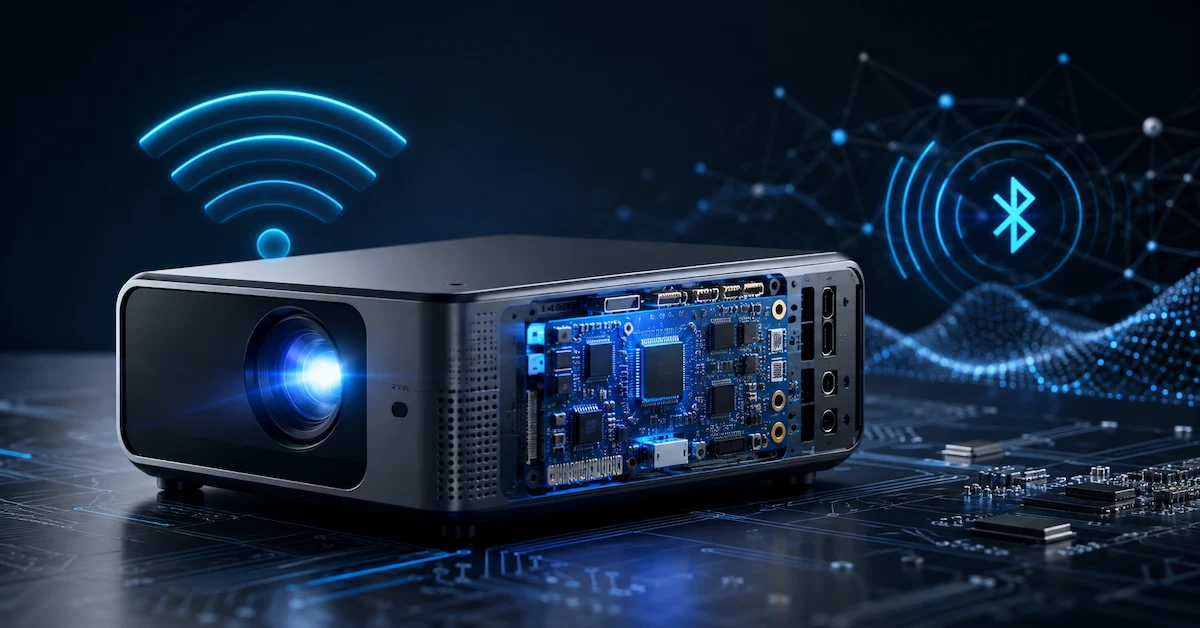
What Does a WiFi/Bluetooth Projector Mainboard Control?
A projector mainboard is the electronic control center of the projector system.
Depending on product requirements,it may manage:
| Function | Mainboard Responsibility |
|---|---|
| Video processing | Receives and processes image signals |
| Display control | Communicates with projection system |
| WiFi connection | Enables wireless network functions |
| Bluetooth | Supports wireless accessories |
| Audio | Controls speakers and audio output |
| USB/HDMI | Provides external device connection |
| Power management | Controls power distribution |
| System operation | Supports device functions |
A well-designed projector mainboard needs to balance:
- Performance
- Reliability
- Cost
- Size
- Power consumption
The correct design depends on the final product positioning.
A portable mini projector and a commercial classroom projector may require completely different hardware approaches.
Key Requirements When Selecting a Projector Mainboard Supplier
Hardware Compatibility
One of the first questions buyers should ask is:
Can this supplier develop a mainboard that matches my projector architecture?
Important considerations include:
- Processor compatibility
- Display interface
- Memory requirements
- Wireless module selection
- Power input
- Mechanical dimensions
A mainboard that works independently may still fail when integrated into the complete projector system.
WiFi and Bluetooth Integration Capability
Wireless functions are now common requirements for smart projectors.
However, adding WiFi and Bluetooth is not only about installing a wireless module.
Engineers must consider:
- Antenna placement
- Signal interference
- Power consumption
- Firmware communication
- Heat generation
- Product enclosure design
Poor wireless integration can lead to:
- Unstable connections
- Reduced user experience
- Higher customer returns
A professional supplier should review wireless requirements during the design stage.
PCB Design and Manufacturing Capability
The mainboard design directly affects production quality.
A capable supplier should understand:
- PCB layer structure
- Component placement
- Signal routing
- Power design
- Thermal considerations
- Manufacturing limitations
For projector applications, PCB design must support both electronic performance and mechanical integration.
HCDPCBA provides PCBA manufacturing services including PCB prototyping, SMT assembly, component sourcing, testing, and OEM/ODM support.
https://www.hcdpcba.com/products/pcba
Component Sourcing and Supply Chain Management
Projector mainboards typically include:
- Processor chips
- Memory components
- Wireless modules
- Power components
- Connectors
- Passive components
Component selection affects:
- Product cost
- Production schedule
- Long-term availability
A reliable supplier should have a controlled sourcing process.
Important questions include:
- Are components traceable?
- Are alternatives approved before replacement?
- Are lifecycle risks evaluated?
- Are critical parts managed separately?
Uncontrolled substitutions can affect:
- Firmware compatibility
- Electrical performance
- Product reliability
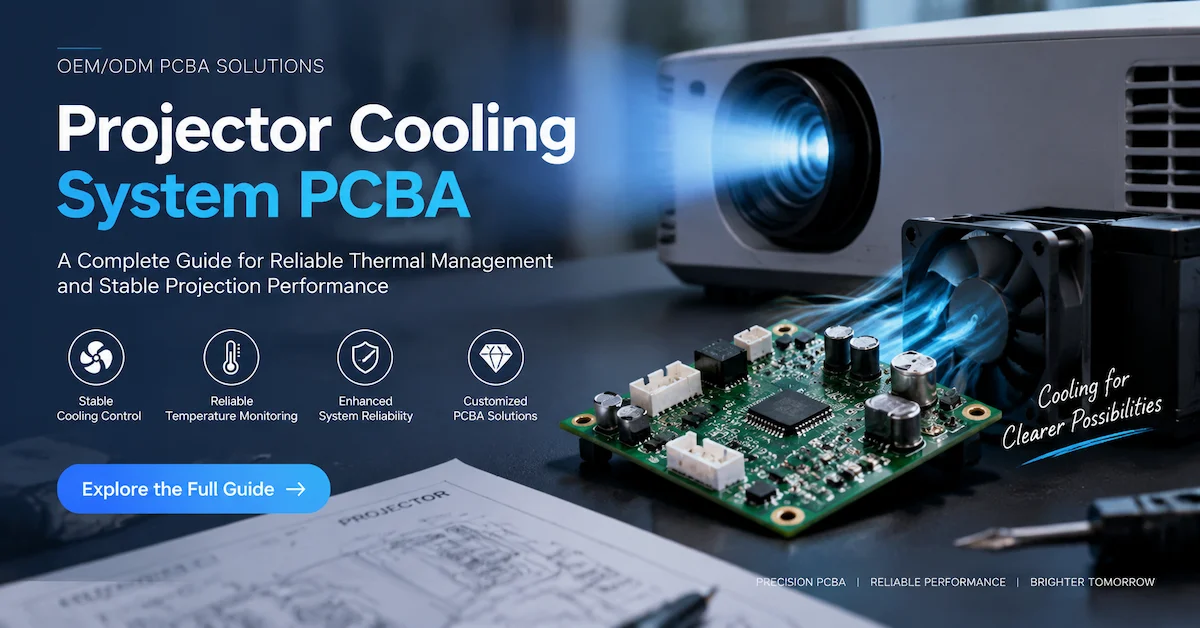
Thermal Management for Projector Mainboards
Projectors often operate for extended periods, making thermal design important.
The mainboard must work together with:
- Cooling system
- Fan control
- Enclosure design
- Power system
Thermal issues may cause:
- Reduced performance
- Component aging
- System instability
During development, suppliers should consider:
- Component temperature
- Heat-generating parts
- Airflow requirements
- Operating environment
Projector Mainboard OEM Development Process
A reliable supplier should have a clear development process.
Typical stages include:
Requirement Analysis
The supplier reviews:
- Product specifications
- Wireless requirements
- Interface needs
- Production expectations
- Cost targets
Engineering Review
The team evaluates:
- PCB design
- Component selection
- Manufacturing feasibility
- Testing requirements
Prototype Production
Prototype boards are manufactured to verify:
- Hardware functions
- Wireless communication
- System compatibility
- Mechanical fit
Testing and Optimization
The product is evaluated for:
- Stability
- Performance
- Power consumption
- Connection reliability
Pilot Production
Pilot production verifies:
- Manufacturing consistency
- Assembly process
- Testing procedures
- Supply-chain readiness
Mass Production
After validation, the product moves into controlled production.
The supplier should maintain:
- Approved BOM
- Controlled revisions
- Production testing
- Quality standards
Projector Mainboard Technical Specifications Buyers Should Evaluate
When selecting a WiFi/Bluetooth projector mainboard supplier, buyers should evaluate the complete hardware architecture instead of focusing on only one specification.
A suitable mainboard should match the projector's:
- performance requirements
- product positioning
- connectivity needs
- manufacturing plan
- cost target
The following specifications are commonly considered during projector mainboard evaluation.
| Specification Area | Key Considerations |
|---|---|
| Processor / SoC | Processing capability, system compatibility, application requirements |
| Memory | RAM and storage requirements for stable operation |
| WiFi Module | Wireless stability, frequency support, integration requirements |
| Bluetooth Module | Peripheral connection capability and compatibility |
| Video Interface | HDMI, USB,display communication |
| Audio Support | Speaker output and audio processing |
| Power Design | Voltage stability and power efficiency |
| PCB Structure | Layer count, size,signal integrity |
| Thermal Design | Heat control during long operation |
| Testing | Functional validation and reliability verification |
The final configuration depends on whether the projector is designed for:
- home entertainment
- portable projection
- education
- commercial display
- industrial applications
A supplier should help customers balance technical requirements and manufacturing feasibility.
Common Challenges in WiFi/Bluetooth Projector Mainboard Development
Developing a wireless projector mainboard involves multiple engineering considerations.
Wireless Signal Performance
WiFi and Bluetooth performance can be affected by:
- antenna location
- enclosure materials
- internal component placement
- electromagnetic interference
- power design
A design that works well during laboratory testing may experience issues after final assembly.
Therefore, wireless validation should be performed with the complete projector structure.
Power Management Challenges
Projectors contain multiple power-consuming components:
- processor
- memory
- display system
- wireless modules
- audio system
- cooling components
The mainboard needs to distribute power efficiently while maintaining stable operation.
Poor power design may result in:
- unstable startup
- wireless interruptions
- overheating
- reduced component lifetime
Firmware and Hardware Compatibility
The projector mainboard is not independent from software.
Hardware selection should consider:
- operating system requirements
- driver compatibility
- interface communication
- update capability
A mismatch between hardware and software can create delays during development.
Size and Mechanical Integration
Many modern projectors require compact designs.
The mainboard must fit within:
- projector housing
- cooling structure
- optical system
- connector layout
Engineering teams should review:
- PCB dimensions
- mounting holes
- connector positions
- cable routing
before moving into production.
Projector Mainboard Supplier Comparison: What Should Buyers Look For?
Not every PCB assembly company can provide the same value.
| Evaluation Factor | Basic PCB Assembly Supplier | Projector Electronics Manufacturing Partner |
|---|---|---|
| PCB assembly | Yes | Yes |
| Component sourcing | Limited | Supported |
| Project-specific review | Limited | Available |
| Wireless integration support | Depends | Considered during development |
| DFMA review | Limited | Supported |
| Prototype support | Depends | Available |
| Functional testing | Basic | Customized testing |
| Mass production planning | Depends | Structured process |
| OEM/ODM support | Limited | Available |
For projector brands,choosing a supplier with electronics development experience can reduce communication between multiple vendors.
Quality Control for Projector Mainboard Manufacturing
A reliable projector mainboard supplier should have a clear quality-control process.
Incoming Component Inspection
Before production, components should be checked for:
- specification accuracy
- supplier reliability
- visible damage
- storage conditions
This reduces the risk of incorrect or unreliable materials entering production.
SMT Assembly Inspection
Modern projector boards often contain compact components requiring controlled SMT processes.
Inspection may include:
- component placement verification
- solder quality inspection
- assembly consistency
AOI Inspection
Automatic Optical Inspection helps detect visible assembly issues such as:
- missing components
- incorrect placement
- solder appearance problems
X-Ray Inspection
For hidden solder joints, X-Ray inspection can provide additional verification.
This is useful for assemblies containing:
- BGA packages
- hidden solder connections
- high-density components
Functional Testing
A projector mainboard should be tested according to product requirements.
Possible tests include:
| Test | Purpose |
|---|---|
| Power test | Verify stable startup |
| Interface test | Check HDMI, USB,and communication ports |
| Wireless test | Verify WiFi/Bluetooth connection |
| Display test | Confirm image output |
| Audio test | Check sound functions |
| Long operation test | Evaluate stability |
The exact testing plan should be defined according to the final product requirements.
Cost Factors of WiFi/Bluetooth Projector Mainboards
The price of a projector mainboard depends on several factors.
Component Selection
Major cost drivers include:
- processor
- memory
- wireless modules
- connectors
- power components
Higher-performance components generally increase cost but may improve product capability.
PCB Complexity
PCB cost depends on:
- board size
- layer count
- material
- manufacturing requirements
- surface finish
Wireless Requirements
WiFi and Bluetooth integration may affect cost through:
- module selection
- antenna design
- testing requirements
Production Quantity
Prototype and mass production have different cost structures.
Large-volume production usually improves:
- material purchasing efficiency
- manufacturing utilization
- unit cost
Testing Requirements
Additional testing may increase initial manufacturing cost but helps reduce:
- product returns
- field failures
- quality risks
Customization Level
Customized mainboards may require additional engineering work for:
- PCB modification
- interface changes
- component selection
- testing fixtures
How to Choose a WiFi/Bluetooth Projector Mainboard Supplier in 2026
Before selecting a supplier,buyers should evaluate several areas.
1. Manufacturing Capability
Confirm whether the supplier can support:
- PCB production
- SMT assembly
- component sourcing
- inspection
- testing
2. Engineering Support
A good supplier should help review:
- manufacturability
- component selection
- production risks
- design optimization
3.Prototype-to-Production Capability
The supplier should support the complete transition:
Prototype
↓
Engineering Validation
↓
Pilot Production
↓
Mass Production
4. Quality Management
Ask about:
- inspection methods
- testing procedures
- production control
- traceability
5. Communication Efficiency
Project delays often come from unclear communication.
A reliable partner should provide:
- clear technical feedback
- production updates
- engineering communication
- change management
Why Choose HCDPCBA for Projector Mainboard Manufacturing?
HCDPCBA supports electronics manufacturing projects through:
- PCB prototyping
- PCBA manufacturing
- SMT assembly
- component sourcing
- DFMA review
- inspection
- testing
- OEM/ODM support
The company provides projector-related products through its:
Projector Series
https://www.hcdpcba.com/products/projector-series
and PCBA manufacturing services:
PCBA Manufacturing
https://www.hcdpcba.com/products/pcba
For projector brands developing WiFi/Bluetooth-enabled products, HCDPCBA can support the electronics manufacturing side, including:
- customized PCB assembly
- component management
- prototype production
- manufacturing preparation
- quality verification
The exact processor platform, wireless module selection, operating system, firmware requirements, and finished product functions should be confirmed based on each customer's project specifications.
Questions to Ask Before Working With a Projector Mainboard Supplier
What does a WiFi/Bluetooth projector mainboard supplier provide?
A projector mainboard supplier provides electronic boards that control projector functions, including display communication, wireless connectivity, power management, and system control.
Can projector mainboards be customized?
Yes. Customization may include PCB design changes, interface requirements, component selection, and product-specific configurations.
Why are WiFi and Bluetooth integration important for projectors?
Wireless connectivity allows projectors to support modern functions such as wireless content sharing, Bluetooth audio devices, and smart device connections.
What information is needed for projector mainboard quotation?
Typical requirements include:
- product specifications
- PCB files if available
- BOM
- interface requirements
- production quantity
- testing requirements
Can suppliers support prototype production?
Many electronics manufacturers support prototype builds before mass production. The exact capability depends on project requirements.
How does a supplier ensure projector mainboard quality?
Quality control may include component inspection, SMT inspection, AOI, X-Ray inspection, and functional testing.
What affects projector mainboard production cost?
Main factors include processor selection, memory, wireless modules, PCB complexity, production volume, customization, and testing requirements.
What is the difference between OEM and ODM projector mainboard services?
OEM usually means manufacturing according to customer requirements, while ODM involves deeper supplier participation in product development and optimization.
How long does projector mainboard development take?
The timeline depends on customization level, prototype cycles, testing requirements, and production preparation.
How can brands reduce projector development risks?
Brands can reduce risk through early engineering review, prototype validation, DFMA analysis, and selecting a supplier with manufacturing experience.
Conclusion
Selecting the right WiFi/Bluetooth projector mainboard supplier is an important decision for companies developing smart projection products.
A reliable supplier should provide more than PCB assembly.The ideal partner should understand:
- wireless integration
- projector electronics
- PCBA manufacturing
- component sourcing
- quality control
- prototype validation
- mass production requirements
For projector brands, consumer electronics companies, and OEM buyers, working with an experienced electronics manufacturing partner can reduce development complexity and improve production reliability.
HCDPCBA provides PCB, PCBA, SMT, component sourcing, DFMA, testing, and OEM/ODM manufacturing support for customized electronics projects.
Companies preparing a projector product should provide their technical requirements, target specifications, BOM, and production goals to receive a more accurate manufacturing evaluation.