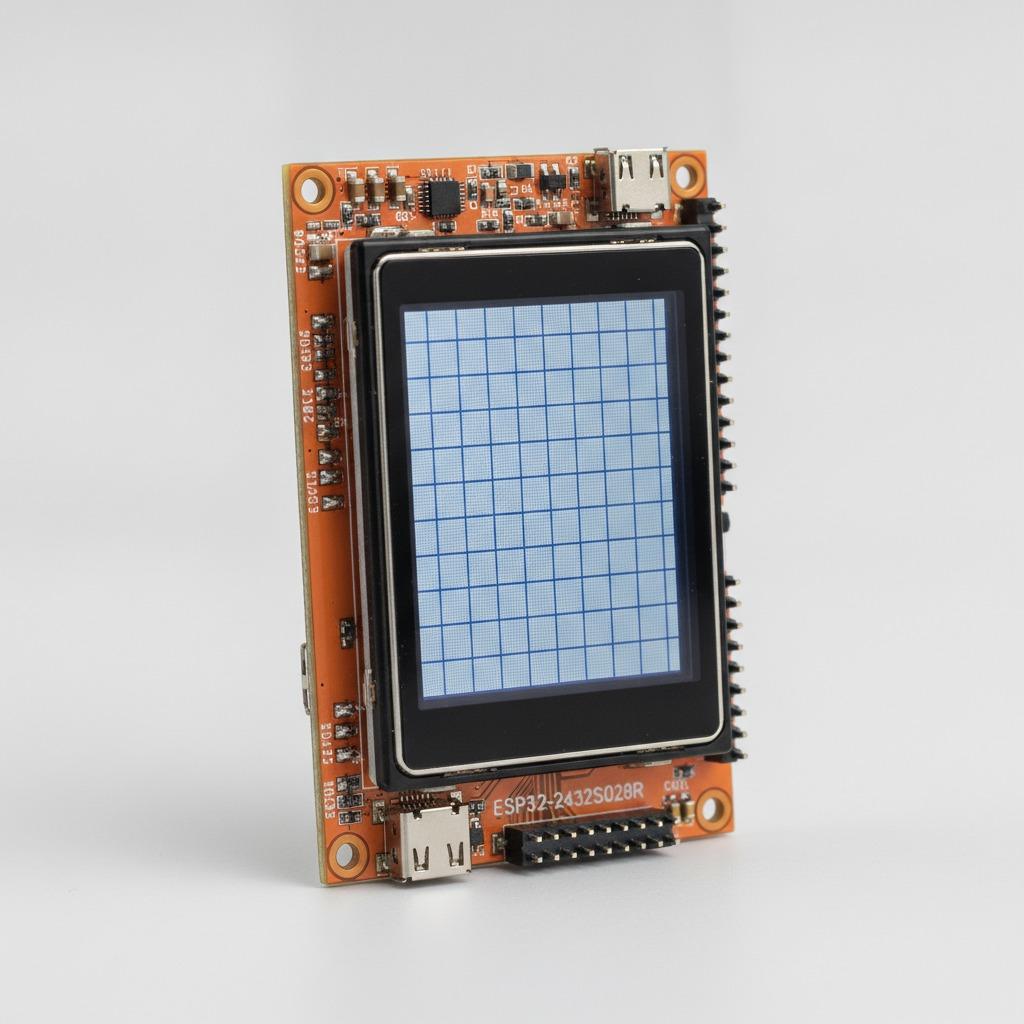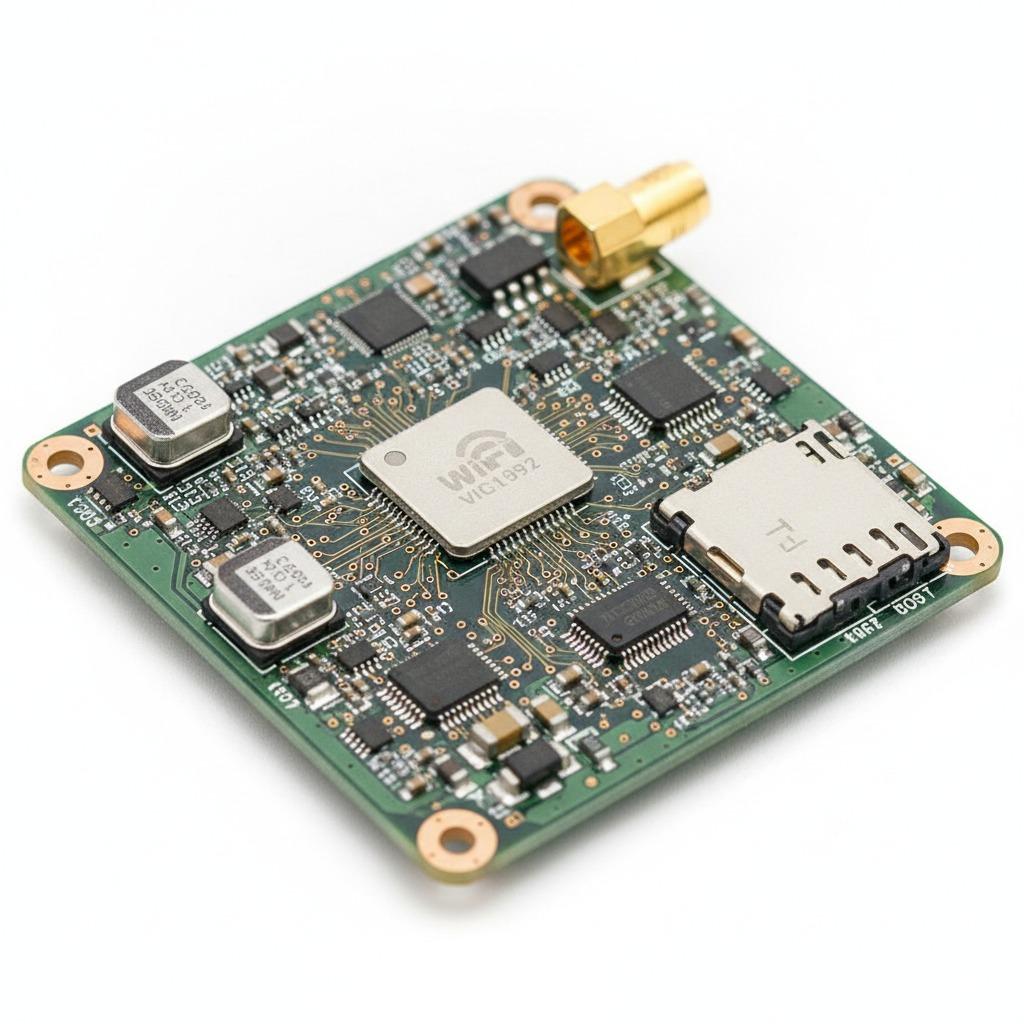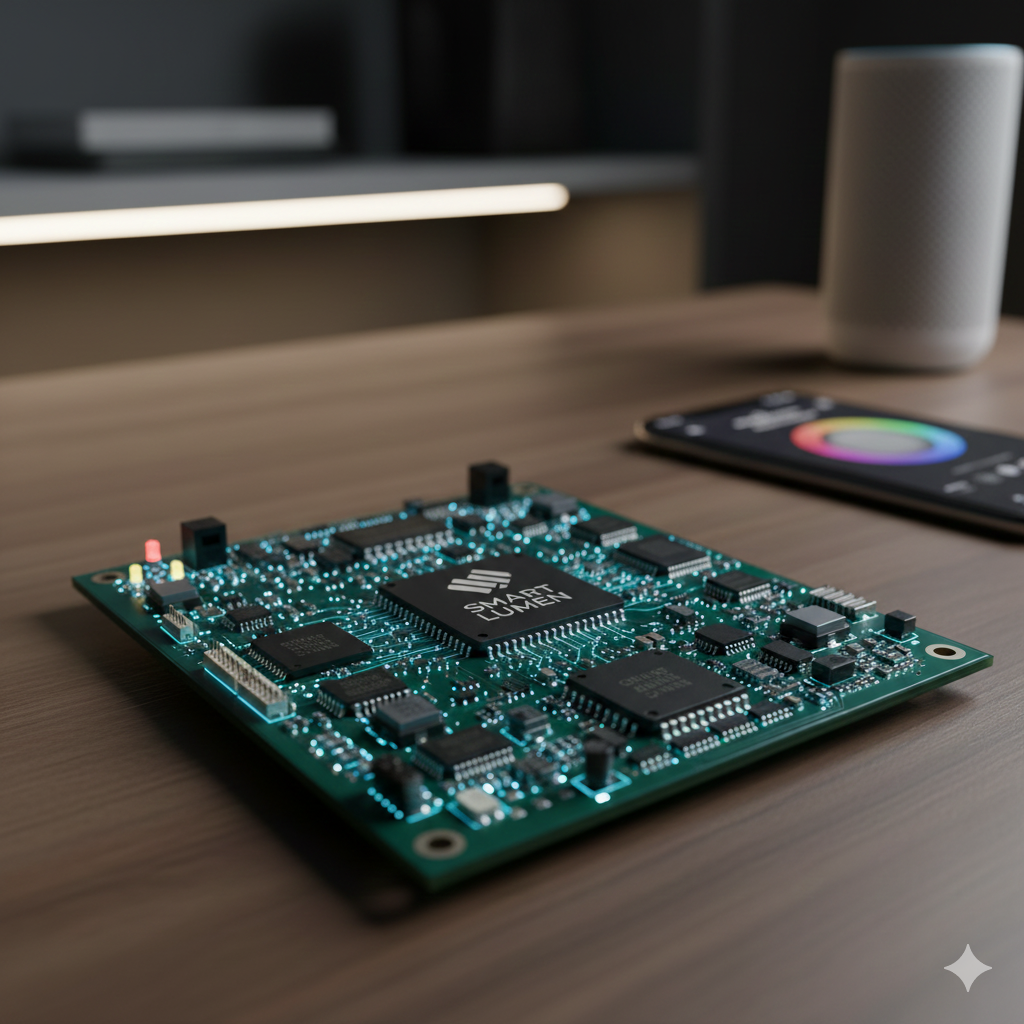
Smart Home PCBA: The Core Electronic Platform Driving Home Automation Systems
Every connected device that simplifies home life—from voice assistants to thermostats and smart lighting—relies on one silent component: the smart home PCBA.
This circuit board is the physical bridge between digital intelligence and human comfort.
Its design determines how seamlessly your devices communicate, how efficiently they consume power, and how long they last in real environments filled with humidity, dust, and variable loads.
Behind every intuitive “Hey Google” command lies thousands of precisely engineered solder joints.
Design Logic for Smart Home Electronics
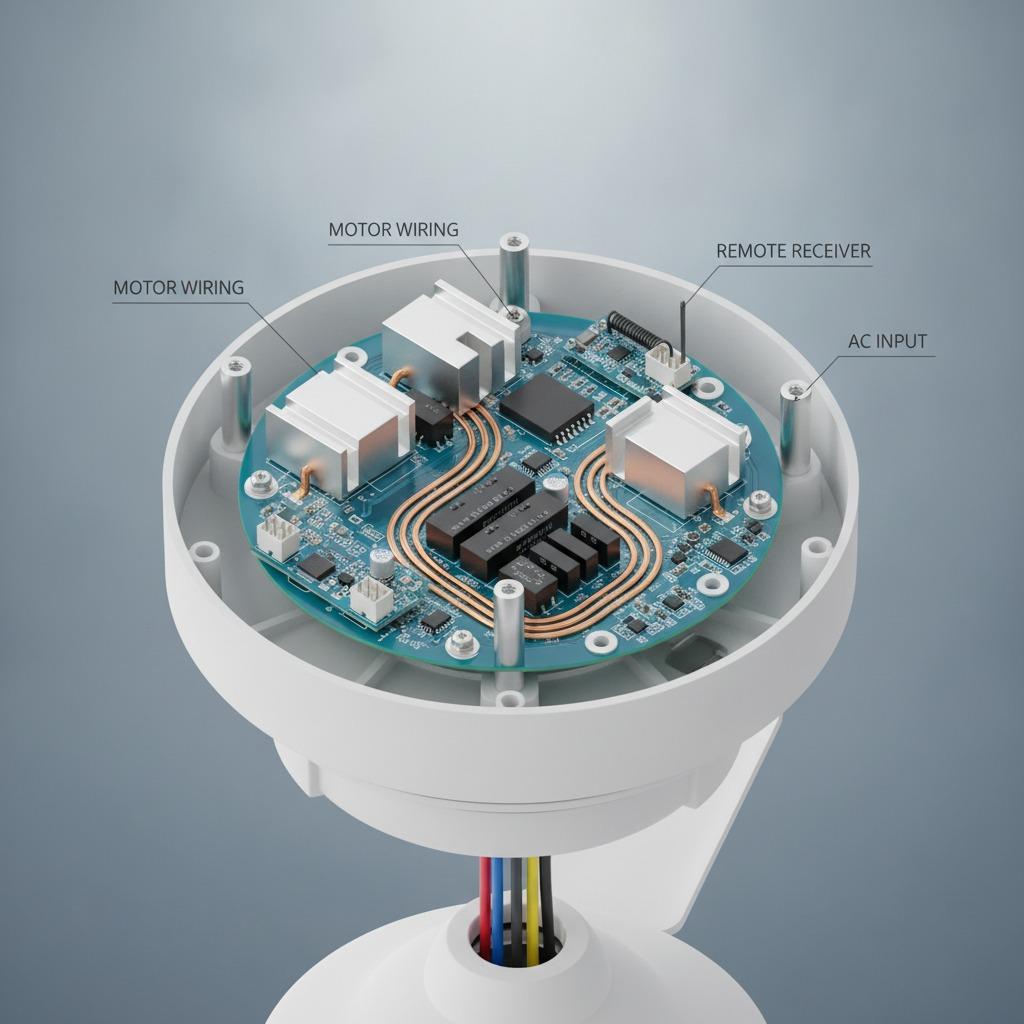
Unlike general consumer devices, smart home boards must be versatile: they handle low-voltage sensors, Wi-Fi and Zigbee modules, relays for switching, and LED drivers—all on the same board.
The complexity demands a layout that balances safety, performance, and manufacturability.
| Design Element | Engineering Purpose |
|---|---|
| Multi-Zone Power Design | Separates high- and low-voltage circuits for noise isolation and safety. |
| RF Antenna Placement | Ensures strong connectivity through walls and interference zones. |
| Thermal Management | Prevents overheating in enclosed wall sockets or control panels. |
| High-Voltage Clearance | Complies with UL and CE insulation requirements for relay circuits. |
| Compact Form Factor | Fits into small enclosures like light switches or outlet hubs. |
A capable IoT smart home PCB assembly team optimizes trace width, clearance, and copper pour zones before manufacturing even begins.
Wireless Connectivity and Signal Integrity
In smart home systems, wireless reliability is non-negotiable.
Wi-Fi, Zigbee, Z-Wave, and Bluetooth coexist in one ecosystem, often competing for space and frequency.
To achieve stable performance, a professional wireless connectivity PCBA integrates electromagnetic modeling and firmware-assisted tuning.
-
Impedance-Controlled RF Traces minimize signal reflection and data loss.
-
Shielded Ground Planes protect radio modules from switching noise.
-
Antenna Diversity Design improves range and multi-device coverage.
-
Pre-Certified RF Modules shorten compliance and testing cycles.
The difference between a device that works perfectly and one that randomly disconnects often lies within a millimeter of copper geometry.
Assembly and Quality Assurance in Turnkey PCBA Solutions
In a turnkey PCBA solution, every phase—from material sourcing to functional test—is orchestrated within the same system.
This integration prevents communication gaps and reduces defect risk.
| Production Stage | Role in Smart Home Manufacturing |
|---|---|
| Component Sourcing | Guarantees original Wi-Fi/Bluetooth chips with proper certifications. |
| High-Speed SMT Assembly | Places fine-pitch MCUs and RF components with micron precision. |
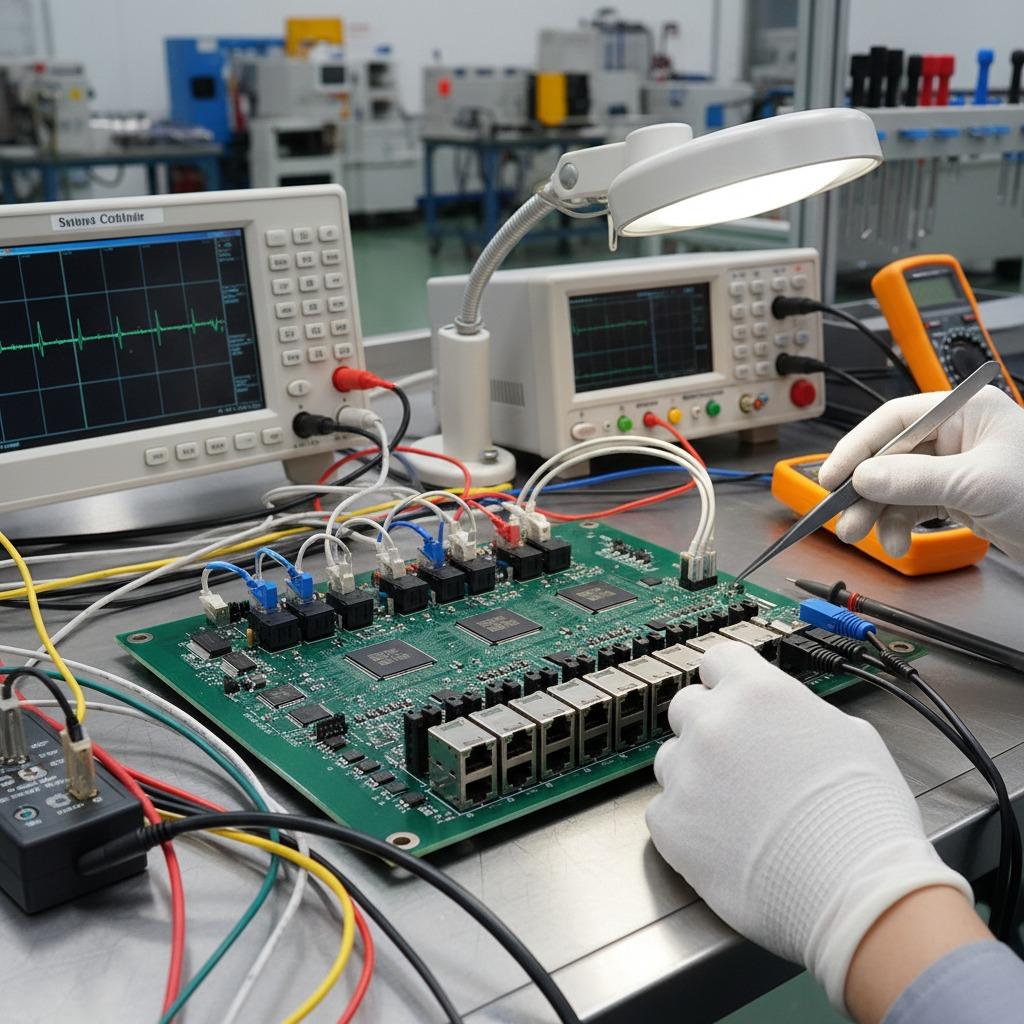
| In-Circuit and Functional Testing | Confirms logic stability, relay switching, and LED driver performance. |
| Coating and Insulation | Protects circuits from humidity and dust exposure in home environments. |
| Aging & Reliability Testing | Validates continuous operation for 500+ hours under full load. |
Each step is documented, traceable, and repeatable—critical for scaling to tens of thousands of units per month.
Reliability Testing: Beyond Functionality
Smart home devices operate 24/7, often in sealed plastic housings without airflow.
That’s why reliability testing PCBA is more than functional validation—it’s predictive endurance analysis.
Testing protocols include:
-
Thermal Shock Cycles from 0°C to 70°C to assess solder fatigue.
-
Humidity Tests (up to 95% RH) to evaluate corrosion resistance.
-
High-Voltage Withstand Tests for relay and power zones.
-
Long-Term Burn-In simulating constant Wi-Fi connectivity.
These ensure your products don’t just pass QA—they survive years of real-world use.
Choosing the Right PCBA Partner for Smart Home Innovation
Smart home innovation isn’t only about design creativity—it’s about finding a manufacturing partner that translates ideas into stable, certifiable hardware.
Here’s how to match your project requirements with the right smart home PCBA supplier:
| Project Focus | Essential Capability of Factory |
|---|---|
| Smart Lighting & Switches | High-voltage relay design, optical isolation, flame-retardant materials. |
| Home Security Systems | RF shielding, backup power management, and tamper-proof coating. |
| Voice-Control Devices | Multi-layer EMI suppression, low-noise audio circuit design. |
| Energy Monitoring Units | Precision current sensing and calibration under real load. |
| Smart Gateways / Hubs | Multi-protocol RF integration and firmware pre-programming. |
A reliable manufacturer doesn’t just meet your spec—it anticipates where your product might fail and fixes it before it ships.
Building the Foundation of Connected Living
The future of home automation isn’t built on marketing—it’s built on consistent, measurable quality.
A professional smart home PCBA transforms complex electronic ecosystems into effortless daily experiences.
If you’re designing connected devices or home automation systems, explore how our PCBA manufacturing expertise supports scalable, RF-stable, and energy-efficient production at our homepage.
For detailed engineering consultation or prototyping discussion, reach our team directly via the contact page.
Let’s turn your smart home concepts into durable, production-ready reality.