Smart Home Camera Module: Enabling Intelligent Vision for Connected Living
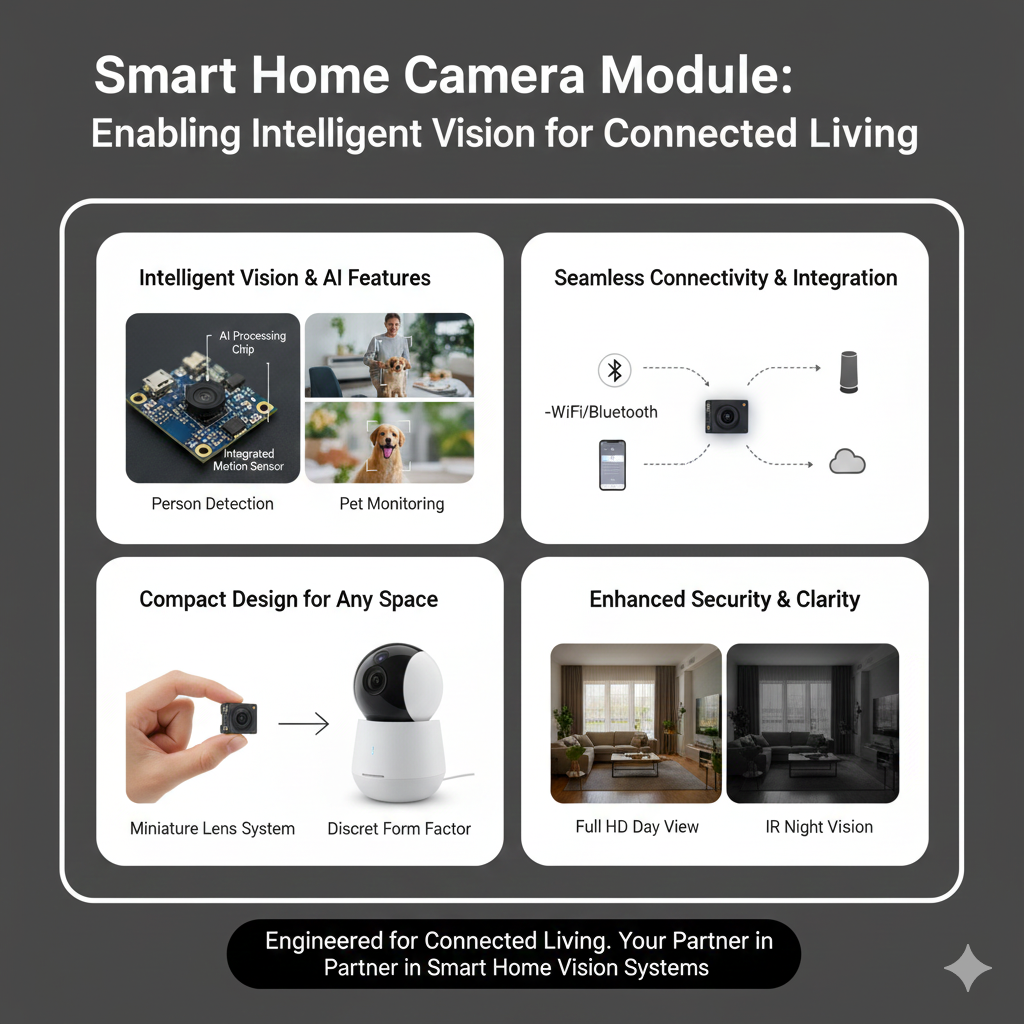
In today’s connected homes, cameras are no longer just passive observers — they are intelligent sentinels.
The smart home camera module sits at the intersection of optical precision and AI-driven analytics, empowering devices to recognize faces, detect movement, and make decisions in real time.
From doorbell cameras to home hubs, these compact modules integrate sensors, processors, and wireless connectivity into one intelligent vision system that never sleeps.
Architecture of a Smart Home Camera Module
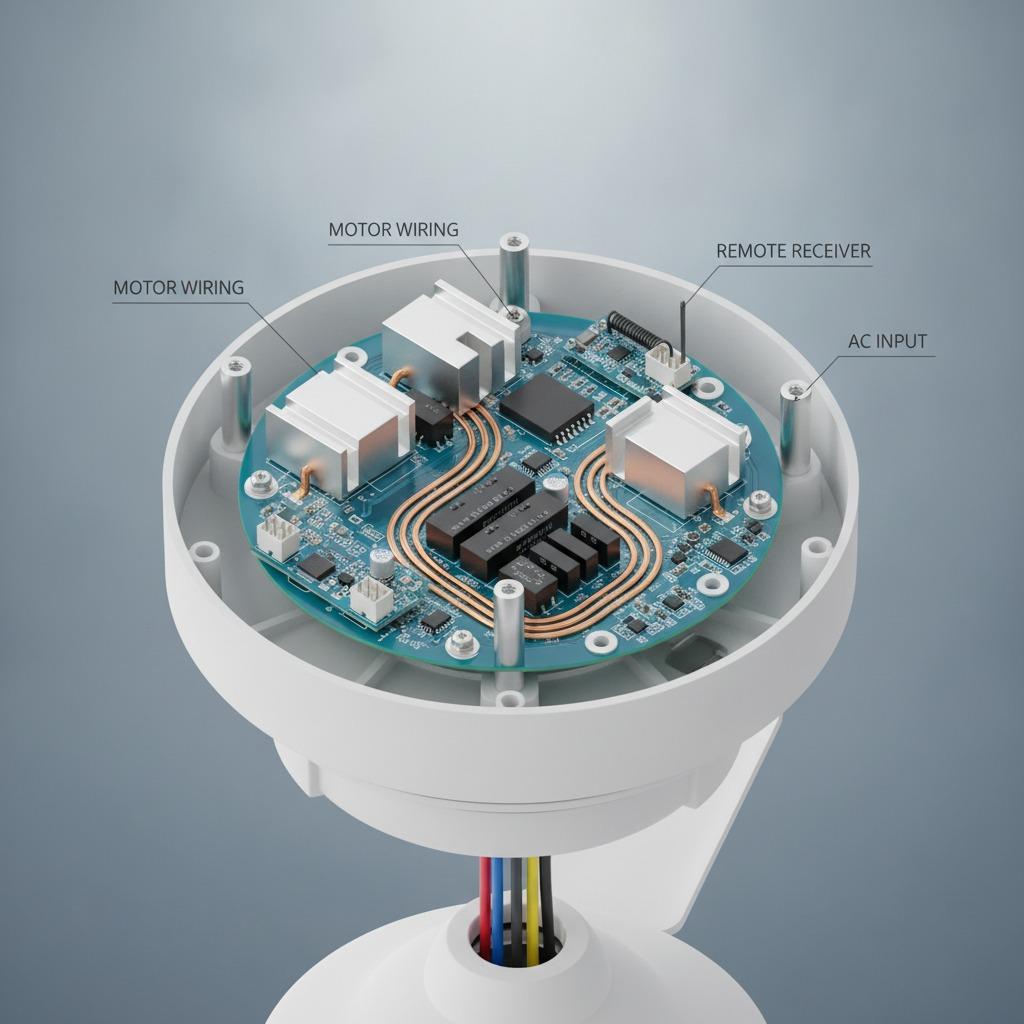
A typical smart home camera module blends optical, electronic, and AI components into a compact form factor designed for efficiency and connectivity.
| Core Component | Function | Design Focus |
|---|---|---|
| CMOS Sensor | Captures image data | Low noise, wide dynamic range |
| AI Processor (NPU/ISP) | Performs image recognition and compression | Edge AI computation, low latency |
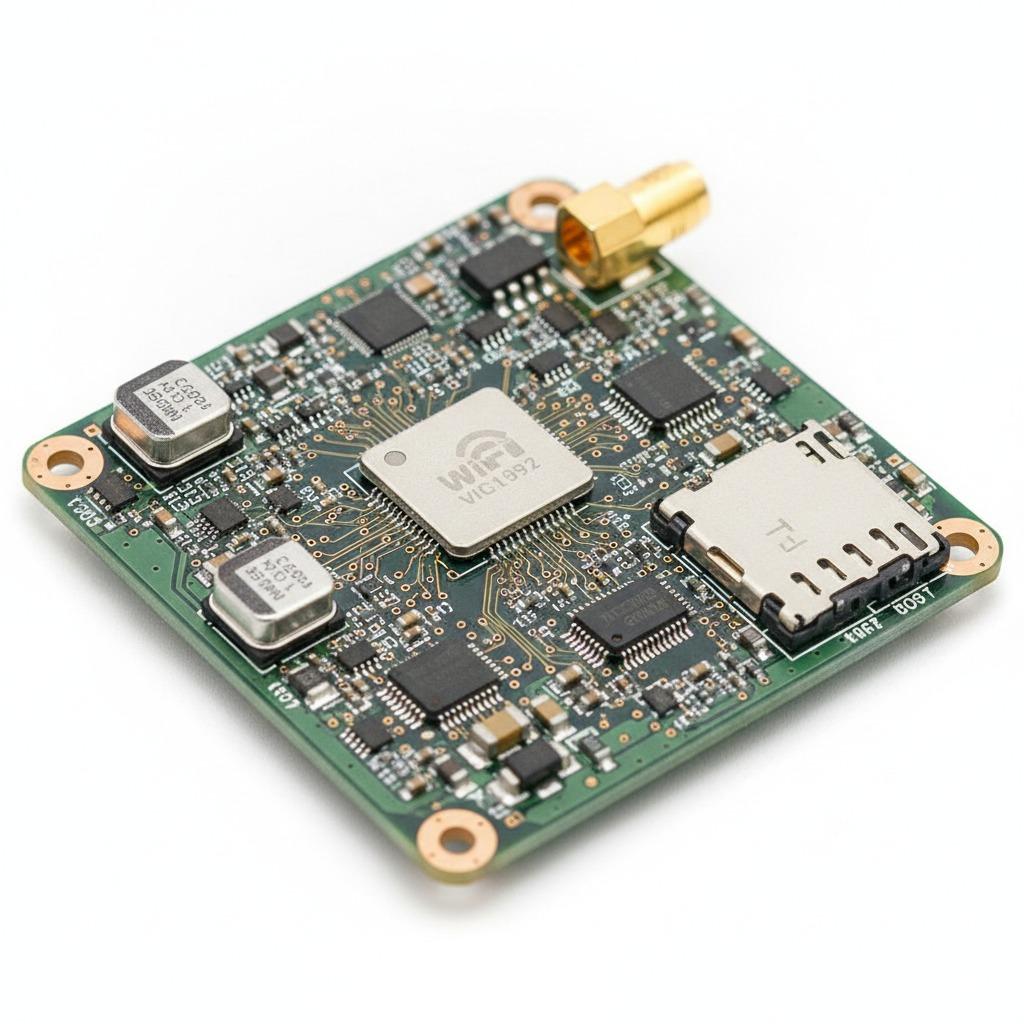
| Wi-Fi/Bluetooth Module | Enables IoT connectivity | Stable transmission, low power |
| Driver PCBA | Manages power, exposure, and motion control | Compact multilayer design |
| Lens Assembly | Provides optical clarity | Wide-angle precision, distortion control |
| Housing and Heat Sink | Ensures structural and thermal stability | Lightweight, efficient cooling |
This architecture enables seamless real-time processing without relying on cloud servers — improving privacy and reducing network load.
Low-Power PCBA Design for Continuous Monitoring
Smart home cameras must remain active 24/7 while consuming minimal power.
To achieve this, factories implement advanced Wi-Fi camera PCBA designs focused on efficiency and reliability:
-
Ultra-low-power chipsets for continuous background monitoring.
-
Dynamic voltage regulation to adjust processing load automatically.
-
Embedded MCU for motion wake-up control — camera activates only when movement is detected.
-
Multi-layer board design separating high-frequency RF zones from sensor circuits.
-
Power management ICs (PMIC) to stabilize performance under varying conditions.
These optimizations extend battery life in wireless devices and reduce heat in wired models, making the module suitable for compact, always-on home security systems.
AI-Powered Image Processing at the Edge
Modern smart cameras no longer depend solely on cloud computing.
The latest AI camera modules integrate edge AI processors or neural processing units (NPUs) directly into their PCBAs.
This enables:
-
Real-time facial recognition without data upload latency.
-
Object and motion detection powered by on-device AI models.
-
Dynamic exposure adjustment for complex indoor lighting.
-
Local data encryption for enhanced privacy protection.
-
Voice-triggered video response integrated with smart home ecosystems like Alexa or Google Home.
By bringing intelligence to the edge, smart home cameras offer both responsiveness and security — key advantages for next-generation IoT systems.
Optical Assembly and Image Calibration
In a smart home camera module, optical precision defines AI accuracy.
Poor lens alignment can lead to misidentification or image blur, compromising detection algorithms.
Factories utilize:
-
Vision-guided active alignment systems for sub-micron sensor positioning.
-
Wide dynamic range (WDR) calibration to maintain color accuracy under variable lighting.
-
Infrared-cut (IR-Cut) filters for seamless day-night switching.
-
AI-assisted focus adjustment to optimize sharpness across depth fields.
-
Auto white balance and color mapping via firmware tuning.
Every detail in the optical path contributes to the clarity of image data feeding into AI analytics.
Connectivity and Integration for Smart IoT Ecosystems
For smart homes, connectivity defines intelligence.
Each camera module must integrate smoothly with home networks, mobile apps, and voice assistants.
Key integration technologies include:
-
Wi-Fi 6 and Bluetooth 5.3 for low-latency streaming and pairing.
-
MQTT and RTSP protocols for secure data transfer.
-
OTA (Over-the-Air) firmware updates for continuous improvement.
-
Edge caching systems for temporary local storage during network loss.
-
AES data encryption to protect private home video feeds.
This ensures that every smart home camera functions not just as a device — but as part of a cohesive, intelligent environment.
Reliability and Safety in Smart Home Applications
Smart home camera modules operate in diverse indoor conditions and must maintain consistent performance over years of use.
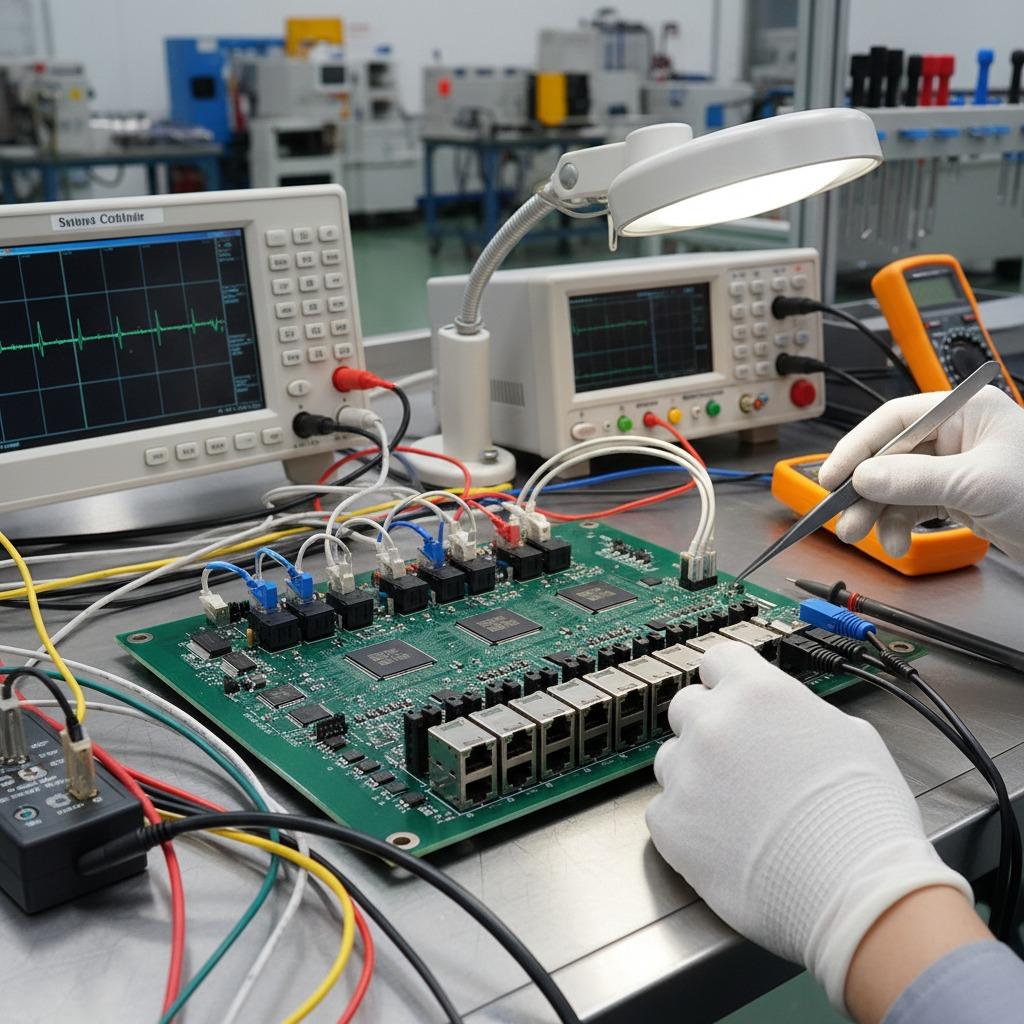
Factories perform rigorous reliability testing to ensure quality and safety:
| Test Type | Purpose | Condition |
|---|---|---|
| Thermal Aging Test | Evaluate long-term heat resistance | 70°C, 72 hours |
| Drop & Vibration Test | Confirm mechanical stability | 3-axis, 0.5g–2g |
| Connectivity Stress Test | Check wireless performance | Continuous transmission 48h |
| Low-Light Sensitivity Test | Validate night imaging | <5 lux environment |
| EMI/EMC Test | Ensure signal integrity | IEC/EN compliance |
With these verifications, smart home camera modules maintain both visual performance and wireless reliability under real-world household conditions.
Advantages of Working with a Professional Smart Home Camera Module Manufacturer
Partnering with an experienced smart home camera module manufacturer offers significant advantages:
-
Integrated Optical and AI Design – Merging precision optics with embedded AI computation.
-
Low-Power PCBA Expertise – Enabling always-on monitoring with minimal energy consumption.
-
Custom Connectivity Solutions – Supporting Wi-Fi, Zigbee, or Bluetooth integration.
-
Full-Process Cleanroom Assembly – Ensuring dust-free optical and electronic performance.
-
Scalable Production Capacity – Supporting OEM/ODM smart home device brands.
This combination ensures consistent manufacturing quality, technical scalability, and shorter time-to-market for smart home solutions.
Redefining Vision for the Modern Home
In a connected world, the smart home camera module is not just a component — it’s the intelligent eye of modern living spaces.
By combining advanced PCBA design, edge AI processing, and optical precision, it transforms everyday monitoring into proactive home intelligence.
For OEMs and developers seeking reliable, high-performance imaging modules for smart home devices, explore our solutions at www.hcdpcba.com or connect with our engineers through the contact page.
Because in every smart home, vision begins with precision.