Why Projector + Camera Combined ODM Solution Is Becoming Important
The consumer electronics market is moving from traditional display products toward intelligent imaging devices that combine projection, sensing, communication, and interactive functions.
A projector + camera combined ODM solution enables brands to develop products that integrate projection capabilities with camera-based visual functions, creating new possibilities in areas such as smart entertainment, education, collaboration, security, interactive displays, and intelligent home devices.
Instead of developing the projector system, camera module, electronic hardware, software interface, and manufacturing supply chain separately, OEM brands can work with an ODM partner that understands how these systems interact.
For product companies, this approach can help reduce:
- hardware integration complexity
- supplier coordination costs
- development time
- prototype risks
- manufacturing communication issues
However, combining a projector and camera into one product is not simply adding a camera module next to a projector.
The engineering team needs to consider:
- optical interference
- camera positioning
- image processing
- electronic compatibility
- thermal management
- mechanical structure
- PCBA design
- firmware communication
- production testing
A successful product requires coordination between optical design, electronics manufacturing, software integration, and final assembly.
HCDPCBA provides PCB prototyping, PCBA manufacturing, SMT assembly, component sourcing, DFMA, testing, and OEM/ODM support. The company also has separate projector and camera product categories, which are relevant foundations for customized electronics projects combining projection and imaging functions.
Who Needs a Projector + Camera Combined ODM Solution?
A combined projector and camera platform is mainly suitable for companies that want to create differentiated smart hardware products rather than standard projection equipment.
Smart Projector Brands
Projector companies increasingly add camera-based functions to improve user interaction.
Potential applications include:
- gesture recognition
- interactive projection
- automatic calibration
- smart control
- user positioning
- visual assistance
For projector brands, an ODM partner can help integrate camera hardware with the projector mainboard and control system.
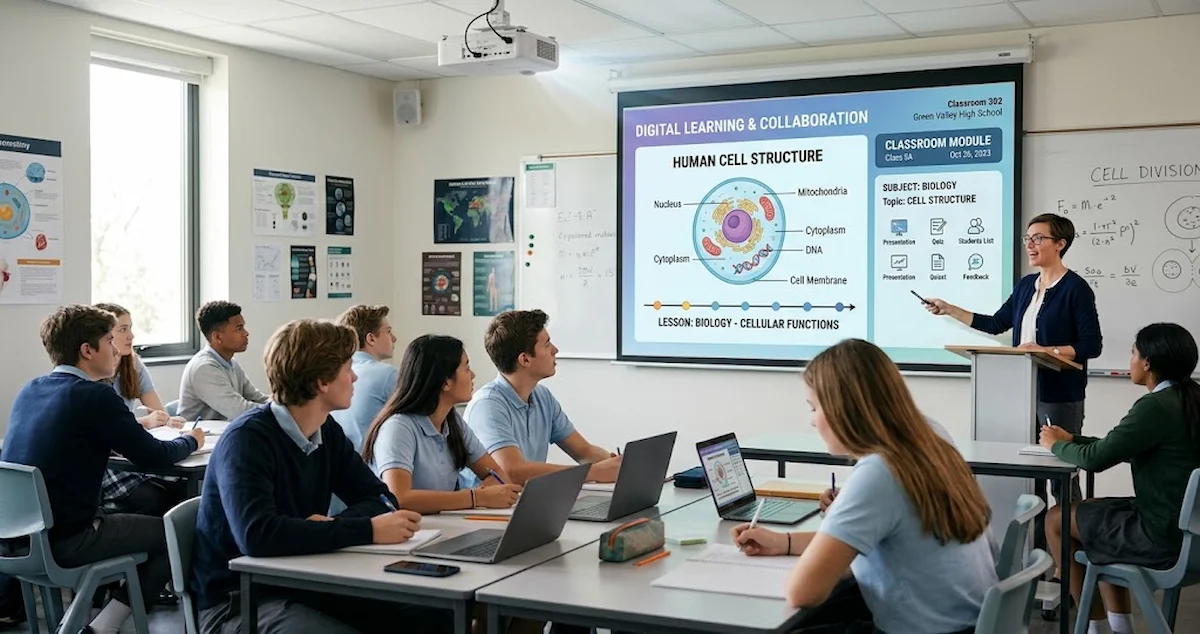
Education Technology Companies
Interactive classroom equipment often combines:
- large-format projection
- cameras
- touch or gesture interaction
- wireless connectivity
- digital learning functions
These products require reliable hardware integration because the device may operate continuously in schools, training centers, and meeting environments.
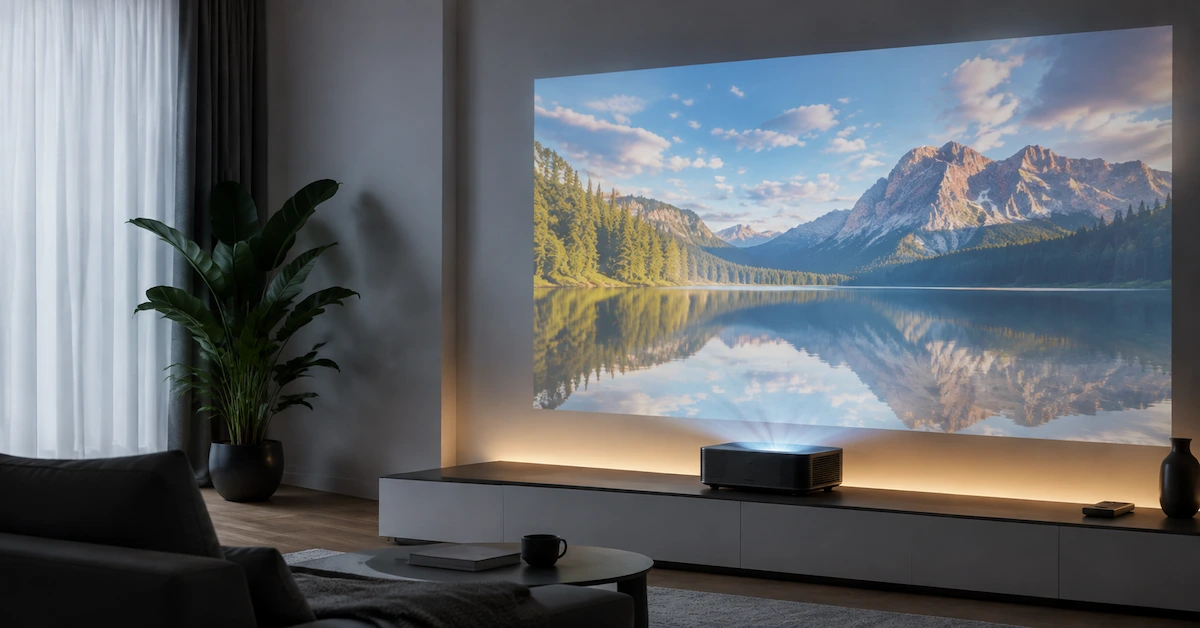
Home Entertainment Brands
Smart home entertainment products may combine:
- portable projection
- camera communication
- video calling
- streaming functions
- wireless connectivity
For consumer electronics brands, compact design and stable mass production are often more important than simply achieving the highest specification.
Security and Monitoring Companies
Some smart projection or display products require camera capabilities for:
- monitoring
- recording
- remote interaction
- environmental awareness
These applications require attention to camera reliability, data processing, and long-term operation.
Hardware Startups
For startups developing new products, building separate supplier relationships for:
- projector module
- camera module
- PCB assembly
- firmware
- testing
- production
can create significant management pressure.
An ODM approach can simplify communication by allowing one partner to coordinate multiple manufacturing stages.
Common Applications of Projector and Camera Integrated Devices
A projector + camera combined ODM solution can support different product categories.
| Application | Projector Function | Camera Function |
|---|---|---|
| Interactive education system | Large display projection | User interaction and visual detection |
| Smart home projector | Entertainment display | Video communication or sensing |
| Portable smart projector | Mobile projection | Camera-based control features |
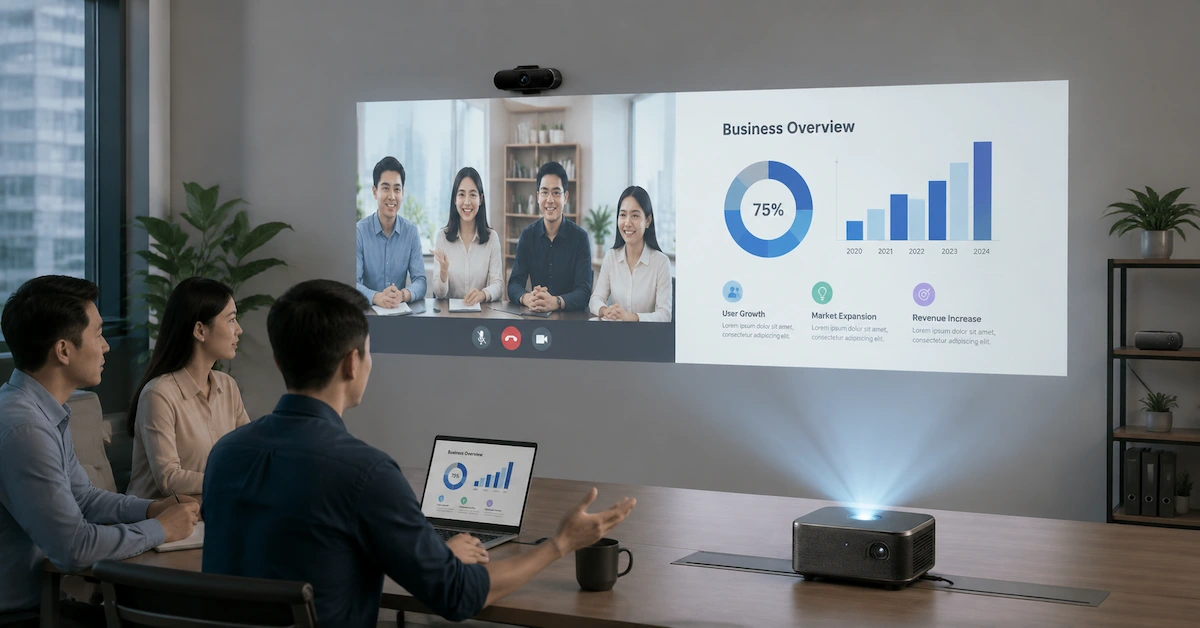
| Business presentation device | Meeting display | Collaboration and communication |
| Interactive advertising display | Content projection | Audience interaction |
| Training equipment | Visual instruction | Participant monitoring |
| Smart retail display | Product presentation | Customer interaction |
| Embedded vision device | Image projection | Machine vision input |
The final architecture depends on product positioning, required functions, cost target, and production volume.
What Makes Projector and Camera Integration Difficult?
A combined imaging device has two systems that must work together:
- The projector creates visual output.
- The camera captures visual information.
Although both involve image-related technology, their engineering requirements are different.
Optical Interference Management
The projector produces strong light output while the camera needs accurate image capture.
Potential challenges include:
- reflected projection light
- camera exposure adjustment
- lens positioning
- image quality reduction
- unwanted optical interference
The camera position must be carefully designed relative to:
- projector lens
- screen surface
- enclosure structure
- viewing angle
A poor layout can affect both projection quality and camera performance.
Mechanical Integration
A combined projector camera product usually has limited internal space.
The engineering team must consider:
- camera module location
- projector optical engine position
- PCB placement
- speaker location
- battery or power system
- cooling airflow
- external appearance
Mechanical conflicts discovered late in development can create expensive redesigns.
This is why DFMA review should happen before mass production.
PCBA Requirements for Combined Projector Camera Products
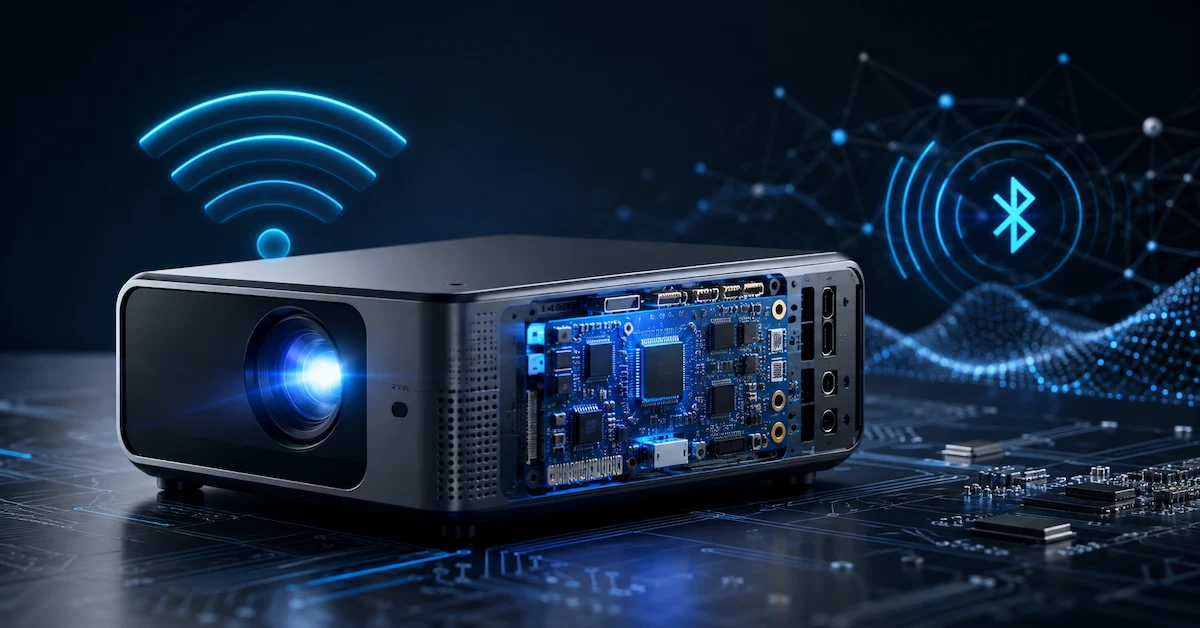
The PCBA is the connection point between projection, camera, processing, and communication systems.
A typical combined device may require support for:
| Function | PCBA Requirement |
|---|---|
| Main processing | Processor and memory support |
| Camera input | Camera interface and data processing |
| Projection control | Display and projection communication |
| Wireless | Wi-Fi/Bluetooth connectivity |
| Power management | Stable power distribution |
| Storage | Firmware and application storage |
| Audio | Speaker and microphone control |
| Thermal | Fan or temperature monitoring |
| External ports | HDMI, USB, charging interfaces |
For OEM projects, the PCB design must consider not only whether individual components work, but whether the complete system operates reliably after assembly.
Camera Module Integration Considerations
Choosing a camera module involves more than selecting resolution.
Important evaluation factors include:
Resolution
The required resolution depends on the application.
Examples:
- basic interaction
- video communication
- monitoring
- machine vision
- AI-related applications
Higher resolution usually increases:
- processing requirements
- data bandwidth
- storage requirements
- power consumption
Interface Compatibility
The camera module must match the mainboard architecture.
Common considerations include:
- interface type
- connector specification
- voltage requirement
- driver compatibility
- firmware support
Physical Design
Camera placement affects:
- viewing angle
- appearance
- mechanical structure
- product usability
For compact projector designs, the camera opening, lens protection, and assembly tolerance require careful planning.
Projector Electronics Integration Challenges
A projector camera device requires cooperation between multiple electronic subsystems.
The design team needs to consider:
- processor performance
- memory requirements
- camera data processing
- video output
- wireless communication
- power consumption
- thermal management
A supplier that only provides PCB assembly may not understand the complete product interaction.
For OEM buyers, the preferred partner should understand:
- PCB manufacturing
- PCBA assembly
- component sourcing
- testing requirements
- product-level integration
HCDPCBA's electronics manufacturing services include PCB prototyping, SMT assembly, DFMA, component sourcing, testing, and OEM/ODM support, which can support the electronics manufacturing side of projector and camera-related projects.
ODM Development Process for Projector + Camera Combined Products
Developing a projector + camera combined ODM solution requires coordination between product planning, optical integration, electronic engineering, manufacturing validation, and production management.
A reliable ODM process should not start with mass production. It should gradually reduce technical and manufacturing risks through several development stages.
Stage 1: Product Requirement Analysis
Before hardware development begins, the ODM partner should understand the complete product goal.
Key information includes:
| Requirement Area | Details to Confirm |
|---|---|
| Product Type | Smart projector, interactive projector, portable projector, commercial device |
| Projection Requirement | Resolution, brightness, throw distance, screen size |
| Camera Requirement | Resolution, viewing angle, application purpose |
| Connectivity | Wi-Fi, Bluetooth, HDMI, USB, network functions |
| Software Platform | Android system, embedded system, custom software |
| Mechanical Design | Product size, mounting structure, appearance |
| Target Market | Consumer, education, enterprise, industrial |
| Production Plan | Prototype quantity and expected annual volume |
A clear product definition helps prevent later changes that may affect PCB layout, component selection, optical design, and manufacturing cost.
Stage 2: Engineering Review and DFMA Optimization
After requirements are confirmed, engineering teams should review whether the product design is suitable for manufacturing.
DFMA (Design for Manufacturing and Assembly) is especially important for combined projector and camera products because multiple systems need to fit into limited space.
A DFMA review may include:
PCB Design Review
- PCB size and layer structure
- component placement
- high-speed signal routing
- power distribution
- connector position
- thermal areas
- manufacturing limitations
Camera Integration Review
- camera position
- lens clearance
- connector accessibility
- image angle
- mechanical tolerance
Projector Integration Review
- optical engine position
- lens opening
- heat dissipation
- fan location
- internal space utilization
Early engineering review can help reduce:
- redesign costs
- production delays
- assembly difficulties
- unexpected quality problems
HCDPCBA includes DFMA as part of its electronics manufacturing services, together with PCB prototyping, SMT assembly, component sourcing, testing, and OEM/ODM support. (hcdpcba.com)
Stage 3: Prototype Development
Prototype production is used to verify whether the product concept works before larger investment.
During prototype validation, OEM teams should evaluate:
Projection Performance
- image quality
- brightness
- focus
- projection distance
- image stability
Camera Performance
- image clarity
- viewing angle
- exposure performance
- communication stability
Electronics Performance
- system startup
- wireless connection
- video processing
- camera communication
- power consumption
Mechanical Performance
- component fit
- enclosure assembly
- connector position
- thermal behavior
A prototype should not only demonstrate functionality but also identify problems that may affect future production.
Stage 4: Pilot Production Validation
After prototype approval, pilot production verifies whether the design can move from engineering samples to repeatable manufacturing.
Pilot production focuses on:
- assembly consistency
- supplier stability
- production process optimization
- testing procedure validation
- manufacturing yield
- packaging requirements
This stage is especially important for products combining optical, electronic, and mechanical components.
A product may work correctly in a laboratory environment but still experience issues during manufacturing because of:
- assembly tolerance variation
- connector alignment problems
- thermal differences
- component supply changes
Stage 5: Mass Production
Before mass production begins, the project should have:
- approved BOM
- approved PCB files
- finalized mechanical design
- validated test procedures
- controlled firmware version
- approved production samples
- defined quality standards
The manufacturing partner should maintain consistency across:
- component sourcing
- PCB fabrication
- SMT assembly
- inspection
- testing
- final assembly
This is where selecting an experienced ODM partner becomes important.
Technical Requirements for Projector + Camera ODM Solutions
A combined projector and camera product requires cooperation between optical, electronic, and software systems.
| Technical Area | Key Considerations |
|---|---|
| Projection Module | Throw ratio, brightness, resolution, optical alignment |
| Camera Module | Resolution, lens, field of view, interface compatibility |
| Main Processor | Image processing capability, system performance |
| Memory | Operating system and application requirements |
| Wireless | Wi-Fi/Bluetooth connectivity |
| PCBA | Component placement, signal integrity, manufacturing |
| Power System | Voltage stability, power consumption |
| Thermal Design | Heat dissipation and operating temperature |
| Firmware | Camera control, display control, device functions |
| Testing | Functional validation and reliability |
Projector + Camera Combined ODM Solution Comparison
When selecting an ODM partner, buyers should compare technical capability rather than only quotation price.
| Evaluation Factor | Basic Electronics Supplier | Projector + Camera ODM Partner |
|---|---|---|
| PCB Assembly | ✓ | ✓ |
| SMT Manufacturing | ✓ | ✓ |
| Component Sourcing | Limited | Integrated support |
| DFMA Review | Limited | Engineering optimization |
| Camera Integration | May require external support | Product-level coordination |
| Projector Understanding | Limited | Optical/electronic collaboration |
| Prototype Support | Depends on supplier | Structured development process |
| Testing | Basic inspection | Customized functional testing |
| OEM/ODM Capability | Limited | Full project support |
| Mass Production Support | Depends on capacity | Production planning |
For brands developing smart imaging products, the right supplier should reduce integration complexity instead of becoming another independent component vendor.
Cost Factors of Projector + Camera ODM Development
The cost of a combined projector and camera ODM solution depends on multiple technical and commercial factors.
Optical System Cost
Affected by:
- projection technology
- throw ratio
- brightness requirement
- resolution
- optical precision
- calibration requirements
Camera System Cost
Affected by:
- sensor selection
- lens specification
- image-processing requirements
- interface type
- software requirements
Electronics Manufacturing Cost
Affected by:
- PCB complexity
- component quantity
- SMT process
- BGA/QFN packages
- testing requirements
- production volume
Development Cost
Affected by:
- engineering involvement
- prototype quantity
- tooling requirements
- firmware integration
- validation cycles
OEM buyers should evaluate total project cost instead of only the unit price of one module.
A cheaper component may create additional costs if it causes:
- redesign
- supply problems
- unstable production
- poor product reliability
Common Risks in Projector + Camera ODM Projects
Risk 1: Optical and Mechanical Conflict
The camera and projector share limited internal space.
Solution:
- complete mechanical planning early
- validate module dimensions
- perform prototype testing
Risk 2: Poor Camera Performance After Final Assembly
A camera module may perform well alone but differently after integration.
Possible causes:
- enclosure reflection
- lens position changes
- heat influence
- electromagnetic interference
Solution:
- validate the complete product instead of individual components only
Risk 3: Component Supply Risk
Smart electronics products often rely on specialized components.
Potential problems:
- chip shortages
- lifecycle changes
- unexpected substitutions
Solution:
- define approved components
- review alternatives
- maintain supply-chain visibility
Risk 4: Manufacturing Quality Variation
Optical products are sensitive to assembly differences.
Important controls include:
- process control
- inspection
- calibration
- functional testing
- production validation
Why OEM Brands Choose ODM Instead of Independent Development
Building a projector camera product internally requires expertise across:
- optical engineering
- electronic design
- embedded systems
- firmware
- mechanical design
- manufacturing
- supply chain
- quality control
For many brands, an ODM partnership provides:
- faster product development
- lower engineering burden
- reduced manufacturing risk
- easier supply-chain management
- scalable production capability
The ODM model allows companies to focus more on:
- product positioning
- market development
- customer relationships
while the manufacturing partner manages technical execution.
How HCDPCBA Supports Projector and Camera Electronics Projects
HCDPCBA provides electronics manufacturing capabilities including:
- PCB prototyping
- PCBA manufacturing
- SMT assembly
- component sourcing
- DFMA
- inspection
- testing
- OEM/ODM support
The company also has dedicated projector and camera product categories:
For projector and camera combined ODM projects, HCDPCBA can support the electronics manufacturing side, including PCB development, assembly, sourcing coordination, and production preparation.
However, the exact optical module, camera specification, processor platform, firmware requirements, and finished-product functions should be confirmed separately for each project.
Questions to Ask Before Choosing a Projector + Camera ODM Partner
What experience does the supplier have with projector-related electronics?
A supplier should understand the relationship between projector hardware, PCBA, power systems, interfaces, and testing requirements.
Can the supplier support prototype-to-mass production?
A strong partner should support multiple development stages instead of only final assembly.
Can the supplier handle BOM sourcing?
Component sourcing capability can reduce communication complexity and supply risks.
How does the supplier control manufacturing quality?
Ask about:
- inspection process
- testing methods
- production control
- traceability
Can the supplier support customized designs?
ODM projects often require customization of:
- PCB
- interfaces
- mechanical structure
- product functions
How does the supplier protect customer information?
OEM buyers should confirm how design files, BOM data, firmware, and project information are protected.
What information is needed for quotation?
Usually required:
- product requirements
- technical specifications
- PCB files
- BOM
- prototype quantity
- target production volume
- testing requirements
Can projector and camera systems be customized together?
Yes, but successful integration requires coordination between optical, electronic, mechanical, and software requirements.
What is the difference between OEM and ODM projector development?
OEM usually focuses on manufacturing according to customer designs, while ODM includes deeper involvement in product development and engineering optimization.
How early should manufacturers be involved?
The earlier an ODM partner joins the project, the easier it is to identify manufacturing risks, optimize design, and control production costs.
FAQ
What is a projector + camera combined ODM solution?
It is a product development approach where an ODM partner helps integrate projection hardware, camera modules, electronics, manufacturing, and testing into a complete smart imaging device.
What products use projector and camera integration?
Common applications include interactive projectors, smart home projectors, education systems, business collaboration devices, and intelligent display products.
Why choose ODM instead of developing everything internally?
ODM reduces the need to manage multiple suppliers and allows brands to use existing manufacturing and engineering capabilities.
Does a projector camera product require custom PCBA?
Many integrated products require customized PCBA because the board must coordinate the projector system, camera module, power supply, and communication functions.
What affects the cost of a projector camera ODM project?
Main factors include optical requirements, camera specification, PCB complexity, component selection, testing requirements, customization level, and production volume.
Can HCDPCBA provide complete projector camera products?
HCDPCBA provides electronics manufacturing, PCBA, SMT, testing, and OEM/ODM support. Specific complete product development requirements should be evaluated based on project specifications.
What files are required for an ODM quotation?
Typical information includes product requirements, technical specifications, BOM, PCB files, mechanical information, prototype quantity, and production expectations.
How can companies reduce development risks?
Early engineering review, DFMA, prototype validation, supplier evaluation, and production testing planning can reduce risks.
What industries need projector camera solutions?
Industries include education technology, consumer electronics, smart home, commercial display, and interactive equipment.
How long does projector camera ODM development take?
The timeline depends on product complexity, customization level, prototype requirements, testing cycles, and production planning.
Conclusion
A projector + camera combined ODM solution requires much more than combining a projector module with a camera module.
Successful products depend on coordination between:
- optical design
- camera integration
- PCBA engineering
- component sourcing
- thermal management
- firmware
- testing
- manufacturing scalability
For OEM brands, choosing the right ODM partner can significantly reduce development risks and improve the transition from prototype to mass production.
HCDPCBA provides PCB, PCBA, SMT, DFMA, component sourcing, testing, and OEM/ODM manufacturing support for electronics projects. Companies developing smart projectors, camera-enabled devices, or integrated imaging products can evaluate HCDPCBA as an electronics manufacturing partner.