PCB Assembly Manufacturer for Stable Quality and Scalable Electronics Production
Many electronic products perform well during prototype testing but begin to show problems once production starts.
The issue is often not circuit design, but assembly execution. Small differences in solder quality, placement precision, or component consistency can create field failures that appear weeks or months later.
This is why choosing a reliable PCB assembly manufacturer matters far more than simply comparing quotations. A strong manufacturer controls not only SMT assembly, but also material sourcing, process repeatability, and long-term batch consistency.
Our engineering team focuses on building stable manufacturing systems rather than isolated production runs. From BOM validation to final testing, every stage is structured to ensure that boards perform consistently across prototypes, repeat orders, and mass production.
Why Assembly Quality Determines Product Reliability
PCB assembly is the point where design becomes physical reality. Even a perfectly designed board can fail if solder joints are unstable or placement tolerances are inconsistent.
For example, insufficient solder wetting on power components may pass functional testing but later create intermittent failures under thermal cycling. Similarly, poor connector alignment can reduce long-term mechanical stability.
A professional PCB assembly manufacturer controls these risks through:
- Stable solder paste application
- Precision placement for fine-pitch and power devices
- Controlled thermal profiles during reflow
Projects using disciplined assembly systems often reduce defect rates by 20–30%, especially in medium and high-complexity boards.
Material Control and Supplier Consistency
Assembly quality begins before SMT production starts. Component sourcing directly affects yield, electrical stability, and long-term reliability.
In real manufacturing environments:
- Approved component alternatives are validated before use
- Moisture-sensitive devices are stored under controlled conditions
- Supplier consistency is monitored across repeat orders
Without this discipline, even identical BOMs may produce different electrical behavior across batches.
A structured PCB assembly manufacturer usually helps customers achieve:
- 5–12% lower sourcing-related variation
- More stable performance across repeat production cycles
This is especially important for industrial, automotive, and OEM projects with long lifecycle requirements.
From Prototype to Mass Production Without Process Drift
Prototype success does not guarantee production success. Many problems only appear when volume increases.
For example, a board that performs well in a 30-piece pilot run may show rising solder defects in a 3,000-piece order because stencil parameters were never fully standardized.
A reliable PCB assembly manufacturer ensures:
- Pilot-build parameters are locked before scale-up
- SMT programs remain standardized across lines
- Engineering changes follow controlled review instead of informal adjustment
Manufacturers applying these controls commonly reduce recurring production defects by 25–45%, especially in multilayer and high-density PCB assemblies.
Yield Stability and Inspection Strategy
Yield improvement is not created by adding more inspection. It comes from preventing defects before they happen.
Stencil design, solder paste control, placement accuracy, and reflow consistency determine whether defects occur at all.
Key Assembly Factors and Their Impact
| Assembly Factor | Control Method | Typical Result |
|---|---|---|
| Solder paste printing | Optimized stencil design | 20–30% fewer solder defects |
| Component placement | Precision SMT alignment | Improved assembly consistency |
| Reflow profile | Controlled temperature curves | Lower solder joint failure |
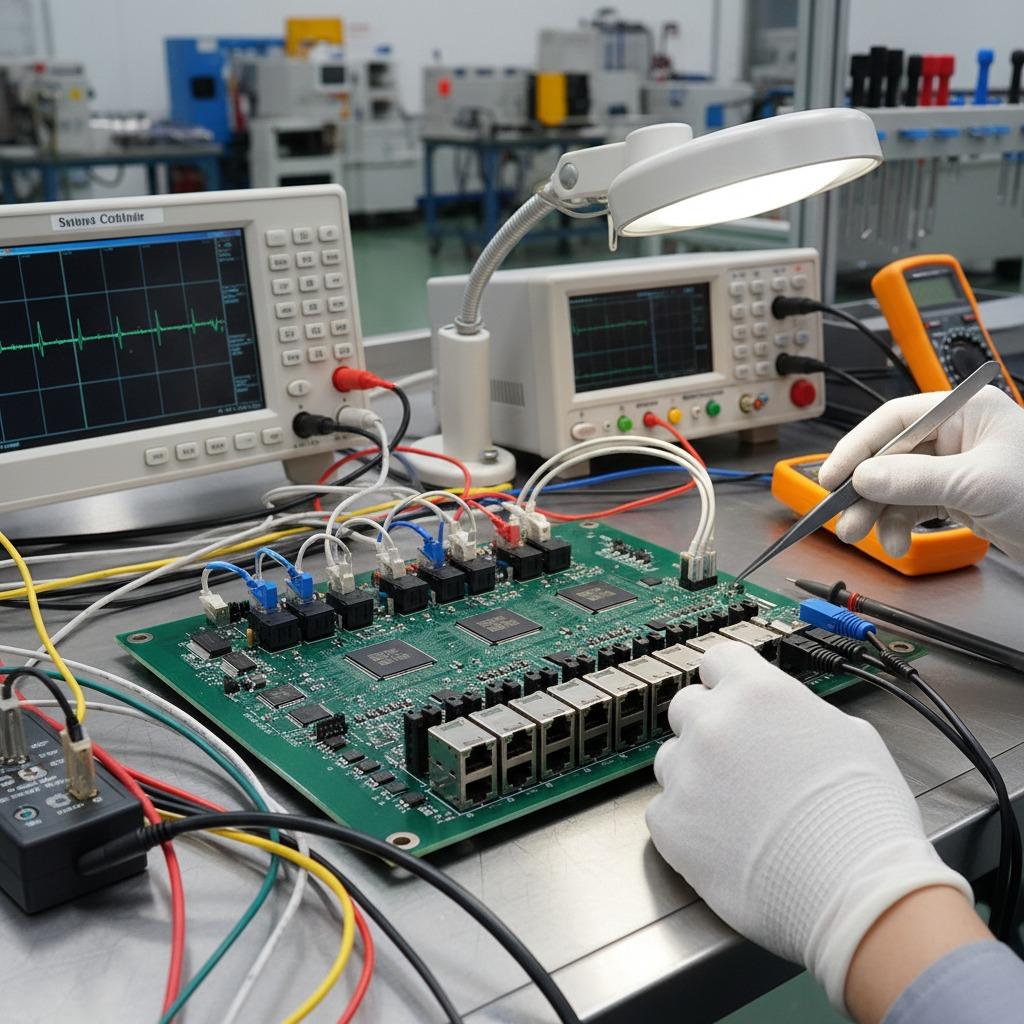
| AOI + functional testing | Targeted inspection flow | Early defect containment |
| Process monitoring | Data-driven feedback | Prevents defect recurrence |
Through these controls, a production-ready PCB assembly manufacturer maintains high yield while reducing hidden cost from rework and delays.
Scalable Production for OEM and Repeat Orders
Many customers do not need a one-time assembly run—they need a partner who can maintain consistency across years of repeat production.
This requires:
- Stable production documentation
- Batch-level traceability
- Standardized workflows across multiple orders
A mature PCB assembly manufacturer supports both low-volume customization and high-volume repeat production without quality drift.
Factories with strong repeatability systems often improve on-time delivery by 15–25%, especially for long-term OEM cooperation.
Compliance and Quality Assurance
Assembly manufacturing must support regulatory compliance from the beginning, not after production problems appear.
Key requirements include:
- RoHS material compliance
- ISO-based quality workflows
- CE / FCC support depending on final application
- Full traceability for industrial and export projects
Integrating compliance into the manufacturing system reduces certification delays and customer-side risk.
Frequently Asked Questions
Q1: Why do defects increase when production volume grows?
Because prototype processes were never fully standardized for scale production.
Q2: Can assembly quality affect long-term product lifespan?
Yes. Solder quality, placement accuracy, and thermal stability directly affect reliability.
Q3: Is AOI inspection enough to guarantee quality?
No. Inspection finds problems, but controlled processes prevent them.
Why the Right Manufacturer Changes Production Results
A strong PCB assembly manufacturer does more than assemble boards—it creates a stable manufacturing system where sourcing, engineering, SMT production, and testing work together. This reduces production risk, improves repeatability, and supports long-term product success.
If you want to evaluate how manufacturing capability affects your product quality and delivery stability, reviewing real assembly processes is the best starting point. You can learn more about our PCB and PCBA expertise here:
👉 https://www.hcdpcba.com
For projects involving OEM production, repeat manufacturing, or complex PCB assemblies, early technical discussion can significantly improve outcomes. You are welcome to contact our engineering team here:
👉 https://www.hcdpcba.com/en/contact-us