High Mix Low Volume PCBA for Complex Production and Flexible Manufacturing Control
Modern electronics manufacturing is no longer defined only by large-volume standardized products.
Many industries now require multiple product variants, rapid engineering updates, and smaller production quantities delivered within shorter timelines. Industrial control systems, AI hardware, medical electronics, and OEM platforms frequently operate under these conditions.
However, managing many product variations simultaneously creates manufacturing complexity that standard production systems are not designed to handle. Frequent line changes, different BOM structures, and varying assembly requirements can quickly introduce process instability.
A structured high mix low volume PCBA workflow addresses these challenges by combining flexible scheduling, controlled process management, and stable engineering coordination. Our manufacturing and engineering teams focus on ensuring that multiple product variants can move through production without sacrificing consistency or traceability.
Why High-Mix Manufacturing Creates Unique Challenges
In high-volume manufacturing, repetition creates efficiency. In high-mix production, constant change becomes the main operational challenge.
For example:
- Different boards may require different SMT setups
- Component sourcing changes between projects
- Thermal profiles and assembly sequences vary across products
Without a structured control system, these constant adjustments create setup errors, material confusion, and unstable production output.
A reliable high mix low volume PCBA process therefore emphasizes:
- Rapid but controlled production changeovers
- Clear revision and BOM management
- Flexible workflows without sacrificing assembly discipline
Manufacturers implementing these controls often reduce setup-related production errors by 20–35%.
Material Coordination Across Multiple Product Variants
Managing materials becomes significantly more complex in high-mix environments. Different projects may share some components while requiring entirely different connectors, processors, or passive devices.
Without centralized coordination, inventory confusion and sourcing inconsistency quickly become major risks.
In practical manufacturing operations:
- BOMs are reviewed individually before each build
- Approved substitute components are tracked per project
- Inventory systems monitor shared component usage across product lines
A disciplined high mix low volume PCBA workflow improves:
- Material traceability across multiple projects
- Supplier consistency for recurring builds
- Faster response to engineering revisions
This level of control is especially important in OEM and industrial manufacturing where product configurations change frequently.
Process Stability During Frequent Line Changes
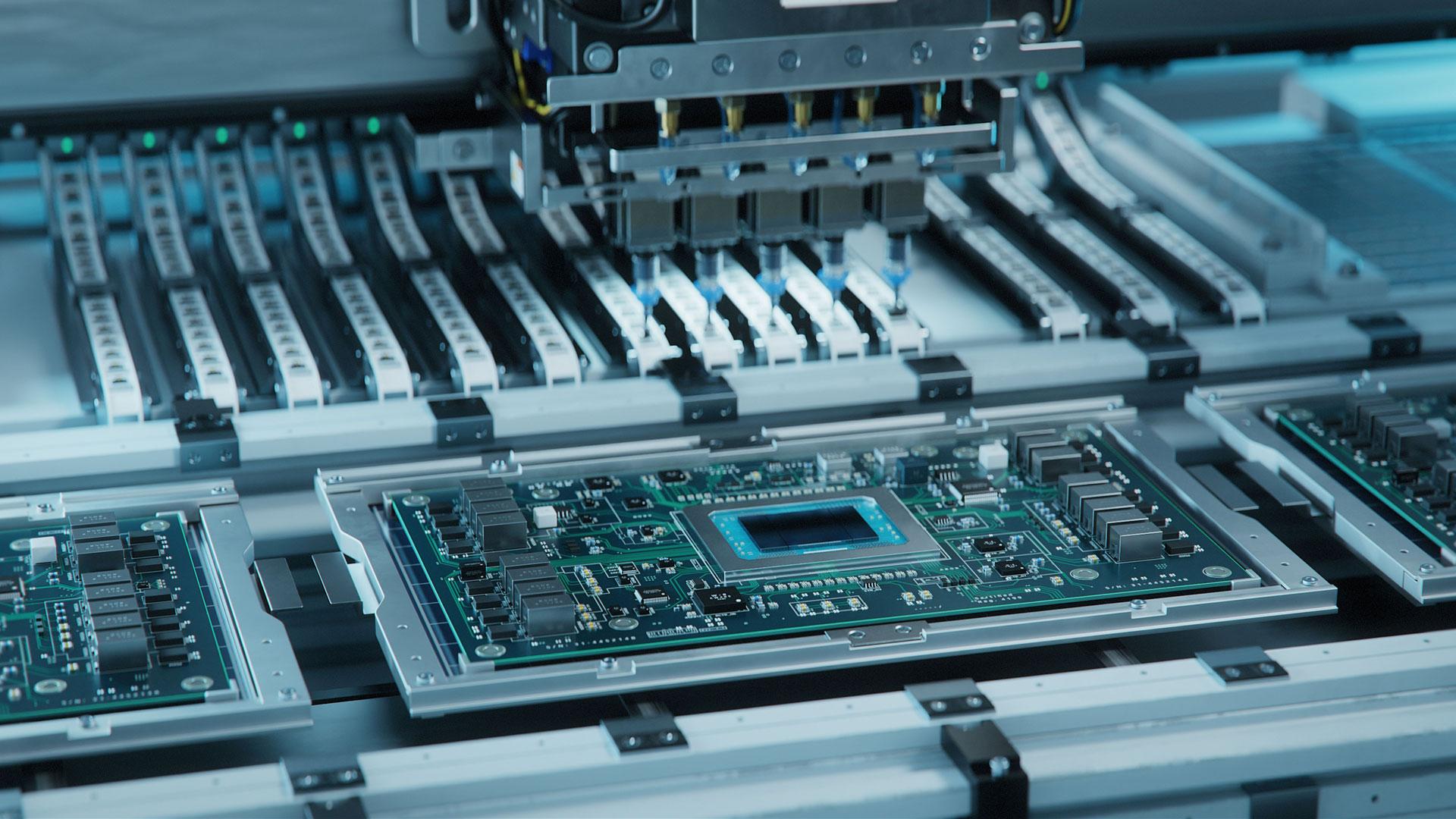
Frequent production switching introduces more risk than continuous high-volume assembly. Every line change creates opportunities for incorrect feeder setup, profile mismatch, or operator confusion.
For example, changing from a fine-pitch multilayer board to a power-focused industrial board may require different:
- SMT feeder configurations
- Reflow temperature profiles
- Inspection criteria
A structured high mix low volume PCBA process controls these transitions by:
- Standardizing setup verification procedures
- Maintaining documented process libraries for each product
- Using traceable production workflows between builds
Factories applying these controls commonly reduce line-change-related defects by 25–40%.
Balancing Flexibility and Yield Performance
One of the biggest challenges in high-mix production is maintaining stable yield while preserving manufacturing flexibility.
In low-volume projects, even a small number of defects can significantly affect overall production efficiency. At the same time, excessive inspection slows production and reduces responsiveness.
A mature high mix low volume PCBA workflow balances these priorities by:
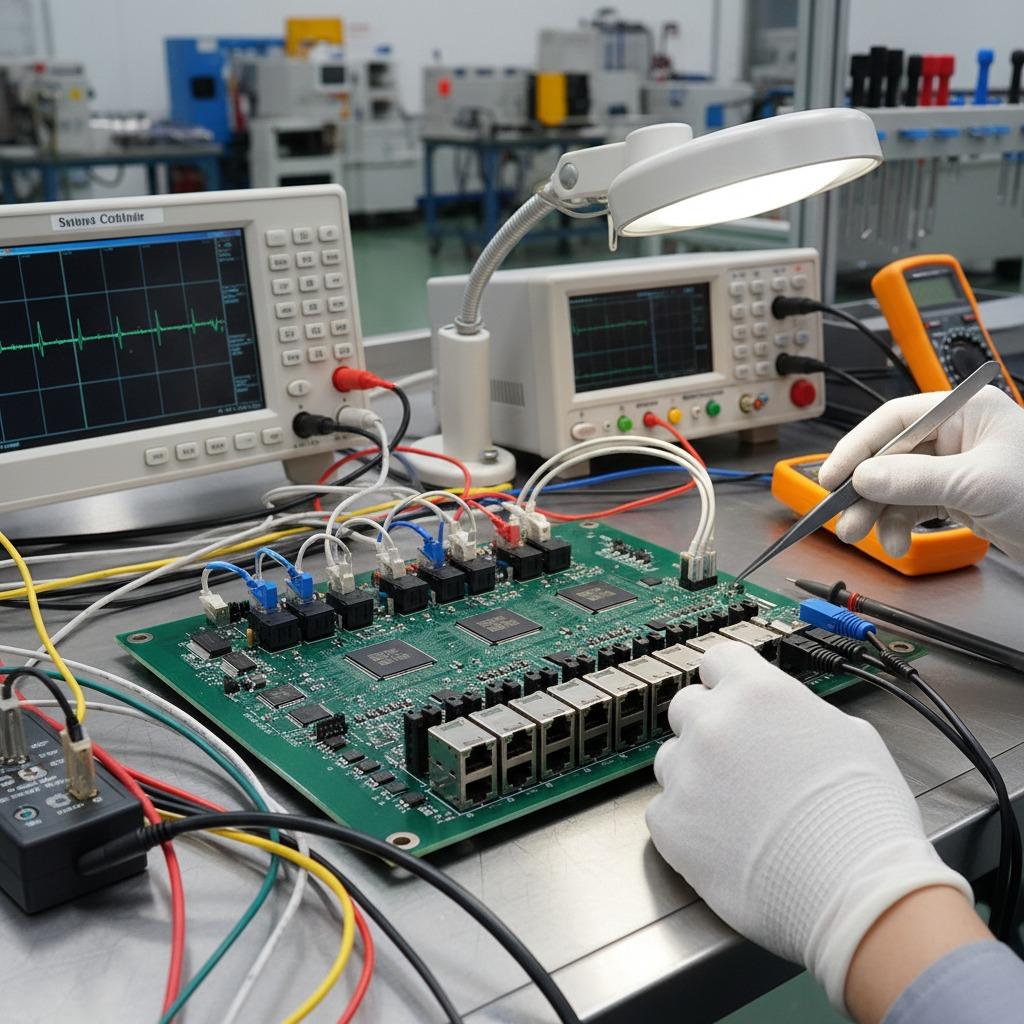
- Applying targeted AOI and functional testing
- Using real-time production feedback to detect recurring issues
- Optimizing setup validation before assembly begins
This approach allows manufacturers to maintain:
- Stable yield performance
- Faster engineering response cycles
- Reduced rework and debugging time
Key Manufacturing Factors and Their Impact
| Manufacturing Factor | Control Method | Typical Result |
|---|---|---|
| Product changeover | Standardized setup verification | Reduced setup errors |
| BOM management | Project-specific material tracking | Improved traceability |
| Reflow configuration | Stored profile libraries | Stable solder quality |
| Inspection strategy | Product-based AOI & testing | Faster issue detection |
| Workflow coordination | Integrated production scheduling | Reduced line downtime |
These controls determine whether complex production remains manageable or becomes unstable.
Engineering Collaboration and Revision Control
High-mix manufacturing often overlaps directly with ongoing engineering development. Product revisions may occur frequently, requiring production systems to adapt without losing traceability.
A reliable high mix low volume PCBA system therefore integrates:
- Revision-controlled documentation
- Real-time engineering communication
- Batch-level tracking for every product version
Projects using structured revision management often reduce redesign-related manufacturing delays by 15–30%.
Compliance and Quality Assurance
Even in flexible production environments, quality and compliance requirements remain essential.
Key considerations include:
- RoHS material compliance
- ESD-controlled assembly environments
- Batch traceability for multiple product variants
- ISO-based quality management processes
Integrating these requirements into daily operations helps maintain stability despite production complexity.
Frequently Asked Questions
Q1: Why is high-mix production more difficult than high-volume production?
Because frequent product changes create more opportunities for setup and material variation.
Q2: Can low-volume projects maintain stable assembly quality?
Yes. Stable process control is more important than production quantity.
Q3: Is high-mix manufacturing suitable for OEM projects?
Absolutely. Many OEM projects require multiple variants and frequent revisions.
Why Flexible Manufacturing Requires Structured Systems
A reliable high mix low volume PCBA workflow allows manufacturers to handle multiple product variants, rapid engineering changes, and limited production quantities without sacrificing quality or traceability. When process control, material coordination, and engineering communication work together, complex manufacturing becomes scalable and manageable.
If you want to evaluate how high-mix production capability affects your hardware projects and OEM programs, reviewing real manufacturing systems and workflow control is the best starting point. You can learn more about our PCB and PCBA expertise here:
👉 https://www.hcdpcba.com
For projects involving multiple product variants, rapid revisions, or flexible production requirements, early technical discussion can significantly improve manufacturing efficiency and long-term stability. You are welcome to contact our engineering team here:
👉 https://www.hcdpcba.com/en/contact-us