Fixed-Focus Camera Module Factory: Stable Imaging Performance for Cost-Effective Visual Systems
Fixed-focus camera modules are the silent workhorses of the imaging world.
They do not rely on moving actuators, complex focusing algorithms, or high-power drivers. Instead, they offer predictable clarity, low maintenance, and exceptional durability, making them ideal for devices where stability and lifecycle cost matter more than optical flexibility.
Today’s factories combine automated optical alignment, optimized PCBA architecture, and consistent process control to deliver modules that remain sharp across a designed focal range — whether for smart home devices, industrial sensors, wearables, or embedded IoT systems.
1. Fixed-Focus Optics: Why They Remain Reliable Across Devices
A fixed-focus camera relies on a permanently aligned lens-to-sensor distance.
Because there are no moving parts, each module maintains clarity within a pre-defined Depth of Field (DoF).
Core optical characteristics include:
-
Preset focal range tuned for typical viewing distances (0.5 m → infinity)
-
Multi-element fixed lens stack for stable image formation
-
Aspheric glass lenses to reduce distortion
-
Low-dispersion materials improving clarity in varying light conditions
-
Anti-reflective coatings minimizing stray light and flare
This optical architecture offers reliability that auto-focus systems cannot always guarantee in high-vibration or long-operation environments.
2. Automated Optical Alignment: Achieving Consistency at Scale
The heart of a fixed-focus module’s performance is accurate lens placement over the sensor.
Factories use automated alignment stations to achieve micron-level positioning.
Alignment parameters typically include:
-
Optical axis positioning within ±5 µm
-
Sensor-lens tilt correction ensuring edge-to-edge sharpness
-
Focal height locking via UV-curable adhesive
-
MTF (Modulation Transfer Function) testing during alignment
-
Automated reject filters to remove off-target optical units
Because the focus distance is permanently set, the alignment precision directly determines image quality throughout the product’s life.
3. PCBA Design for Stable Image Output
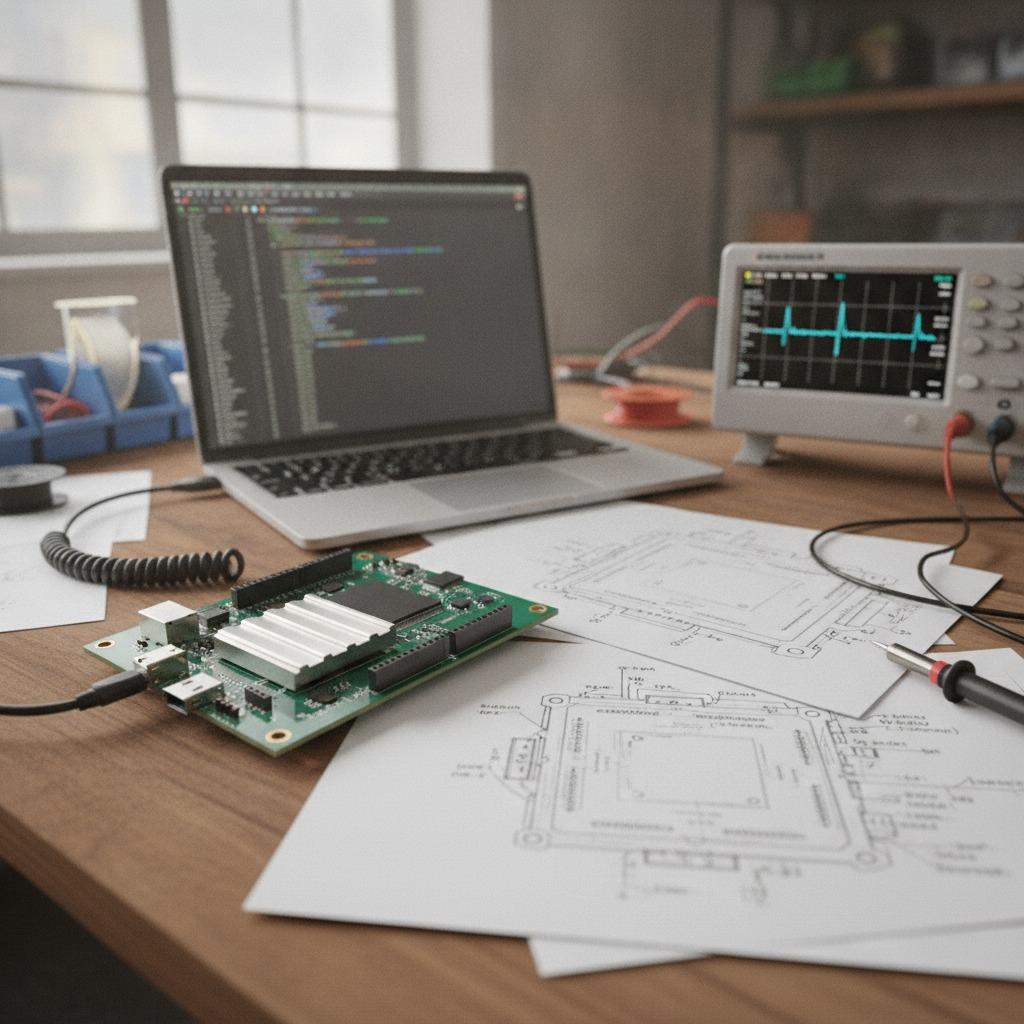
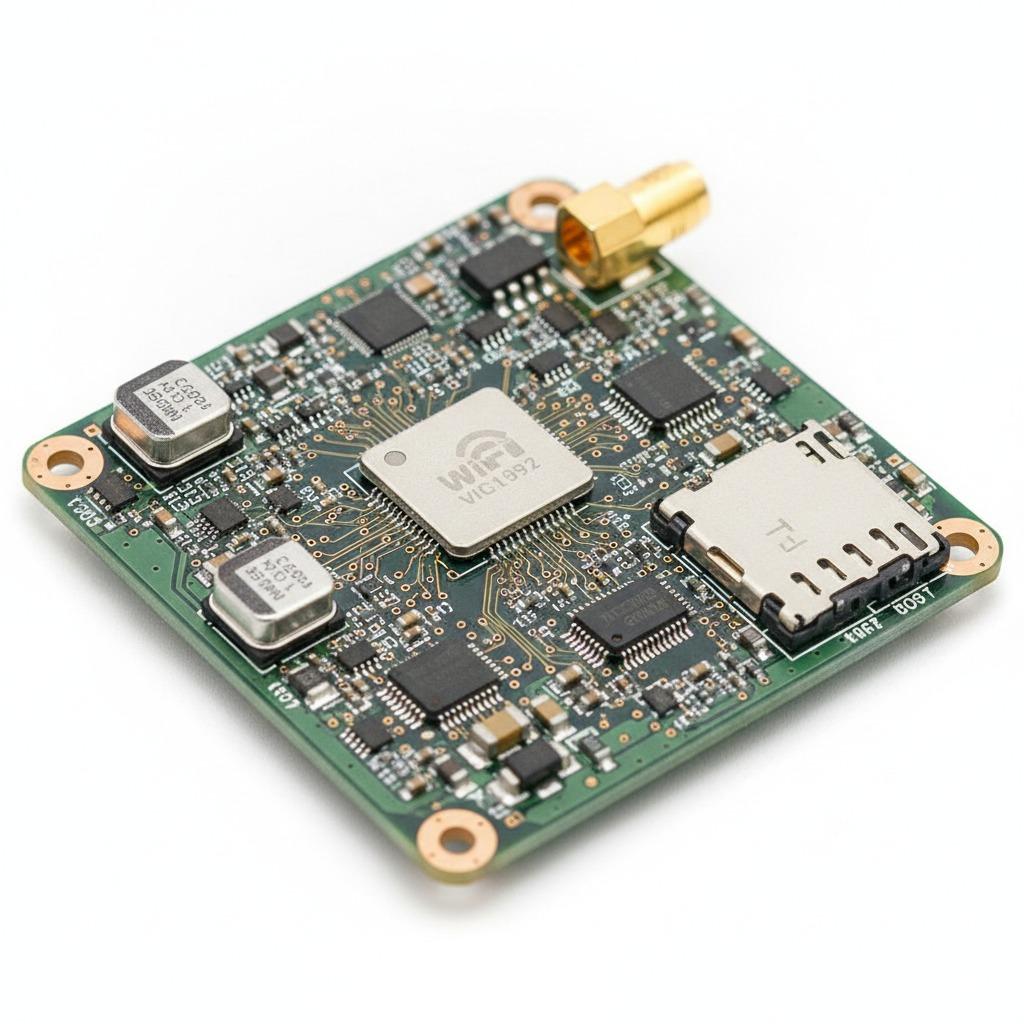
A fixed-focus camera module depends on a well-designed PCBA that ensures clean signal output and stable power supply.
Critical PCBA features:
-
Noise-controlled power rails for clean sensor operation
-
High-speed differential routing for MIPI, DVP, or LVDS output
-
EMI shielding layers preventing signal interference
-
Thermal-dissipation pathways to maintain sensor stability
-
Automated SMT placement ensuring consistent solder quality
Because the module lacks a focusing actuator, the PCBA’s job centers on signal integrity and long-term reliability.
4. Fixed-Focus vs. Auto-Focus: Choosing the Right Approach
| Feature | Fixed-Focus Module | Auto-Focus Module |
|---|---|---|
| Moving Parts | None | Yes (VCM or PDAF system) |
| Durability | High | Medium |
| Cost | Lower | Higher |
| Clarity Range | Fixed | Dynamic |
| Maintenance | Very low | Moderate |
| Applications | IoT, smart home, industrial sensors | Smartphones, AI cameras |
Fixed-focus remains the preferred choice when the device’s shooting distance is predictable and durability matters more than optical flexibility.
5. Application Scenarios: Where Fixed-Focus Modules Thrive
Because of their reliability and predictable focusing behavior, fixed-focus modules integrate well into systems requiring continuous or unattended operation.
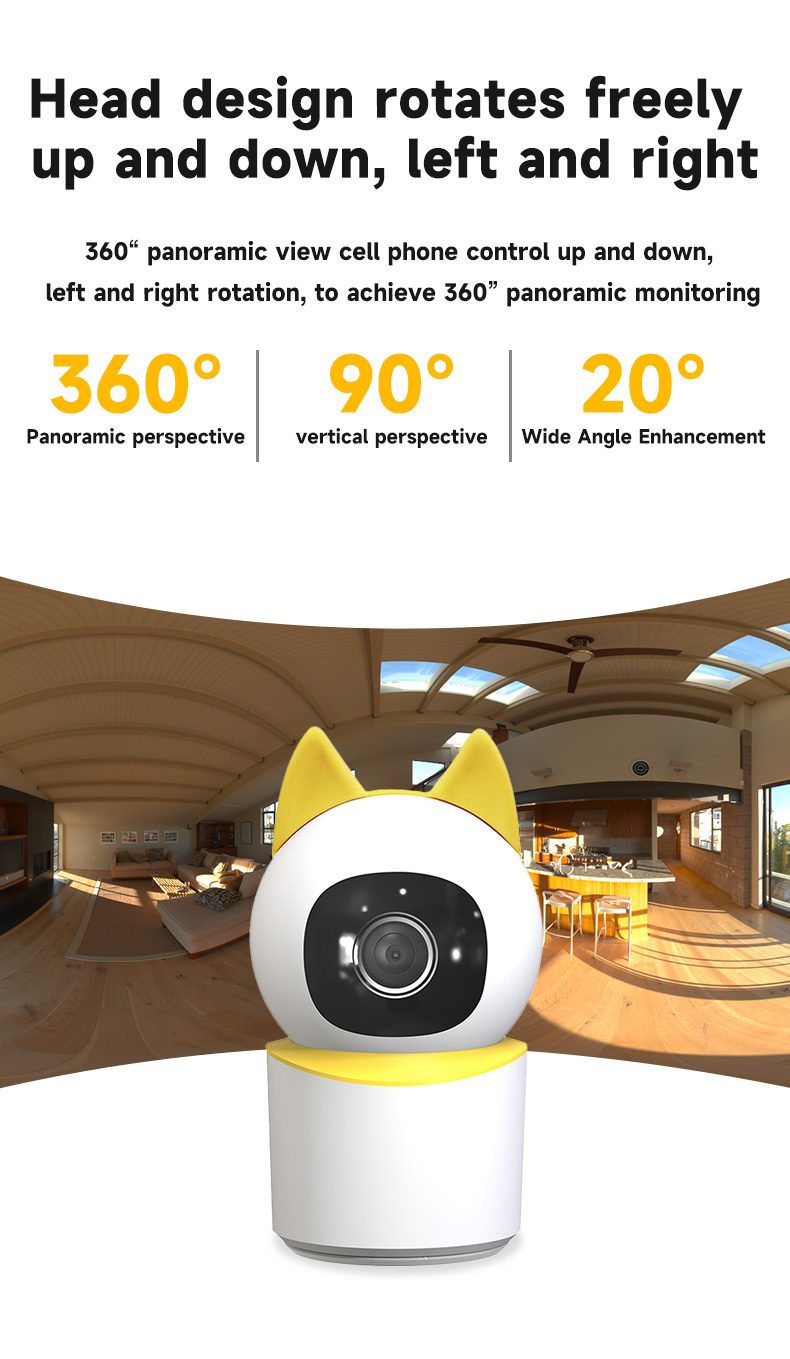
Smart Home Devices
-
Doorbell cameras
-
Indoor monitoring units
-
Motion-activated sensors
Industrial and Automation Systems
-
Barcode scanners
-
Conveyor vision sensors
-
Machine presence detection
Wearables and Compact Electronics
-
Fitness trackers
-
Body cameras
-
Smart assistants
Embedded IoT Vision
-
Meters
-
Parking systems
-
Smart agriculture devices
These environments benefit from fixed-focus modules’ low power consumption, durability, and ease of integration.
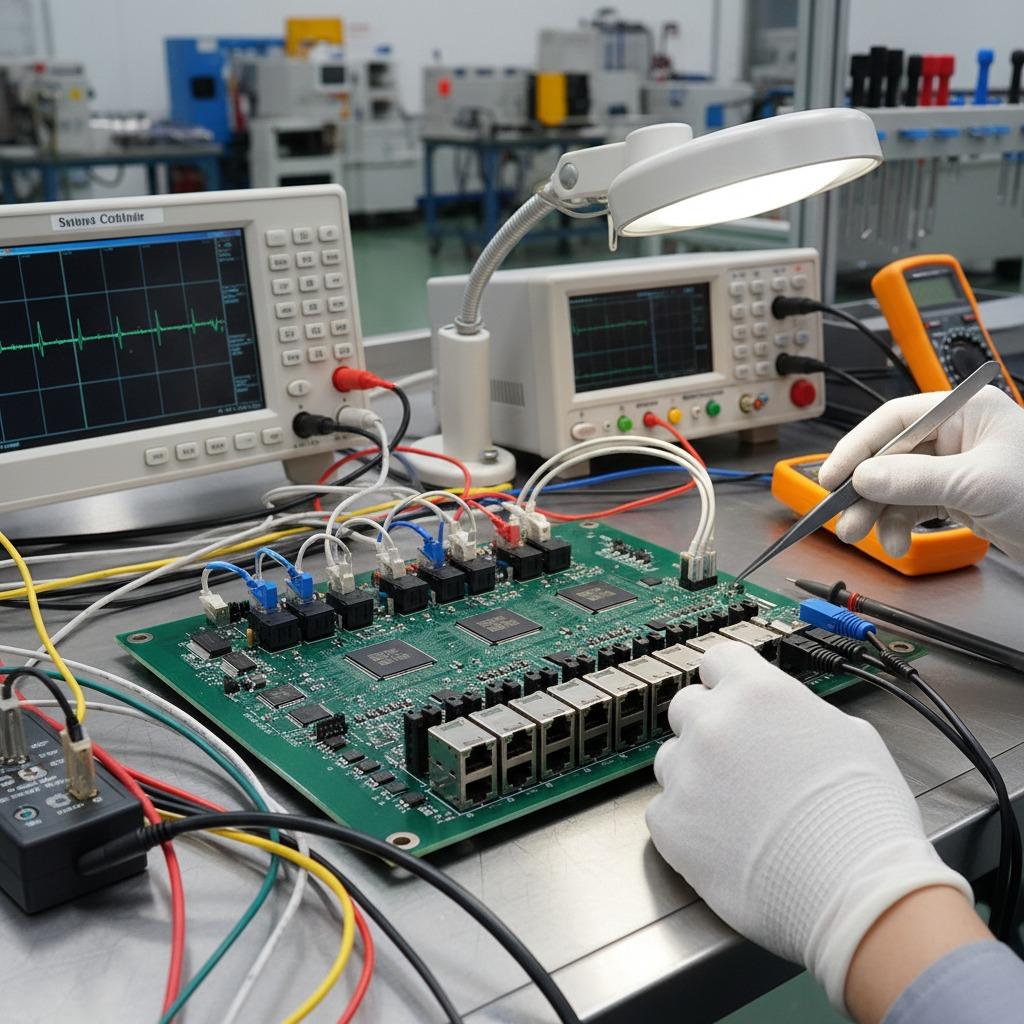
6. Quality and Reliability Testing in a Fixed-Focus Camera Module Factory
To ensure long-term performance, factories apply strict validation procedures.
| Test Type | Purpose | Typical Range |
|---|---|---|
| MTF & Resolution Test | Validate sharpness | Center & four-corner assessment |
| Temperature Cycle Test | Ensure adhesive and lens stability | -30°C to +80°C |
| Vibration/Drop Test | Confirm resistance to shock | 1.0 m–1.5 m drop tests |
| Aging Test | Stable performance over time | 72–120 hours runtime |
| Focus Stability Test | Verify permanent focal precision | <±3 µm deviation |
These tests guarantee that once the module is deployed, its clarity will remain consistent throughout its service life.
7. Advantages of Working With a Professional Fixed-Focus Camera Module Factory
A specialized manufacturing partner delivers several benefits:
-
High-volume consistency via automated alignment and bonding
-
Full production chain integration — optics, PCBA, SMT, testing
-
Reliable supply for long-lifecycle industries
-
Customization options for focal distance, FOV, housing, and communication interface
-
Competitive cost structure suitable for large IoT and smart home deployments
For OEMs, these advantages translate into predictable quality and reduced deployment risks.
Clarity Without Complexity: The Value of Fixed-Focus Imaging
A fixed-focus camera module thrives in environments where reliability, stability, and lifecycle cost matter most.
By combining accurate optical alignment, stable PCBA architecture, and thorough reliability testing, manufacturers deliver imaging hardware that performs consistently across millions of units.
To explore custom fixed-focus module solutions, visit www.hcdpcba.com or reach our team through the contact page for tailored recommendations based on your device requirements.