ESP32-2432S028R resistive touch TFT boar: what buyers actually need to know
If you are evaluating an ESP32-2432S028R resistive touch TFT boar for a control panel, prototype instrument, or connected device interface, the real question is not whether it looks capable. It does. The question is whether a compact 2.8-inch board with an ESP32 module, a 240 × 320 LCD, resistive touch, and onboard connectors will fit the product you are trying to build without forcing a second redesign later.
That matters because display modules are easy to underestimate. They sit at the intersection of electronics, enclosure design, software, user interaction, and production assembly. A board that is convenient in a lab can become awkward in volume if the mounting, connector access, or touch behavior does not suit the final product.
What is visible on the board
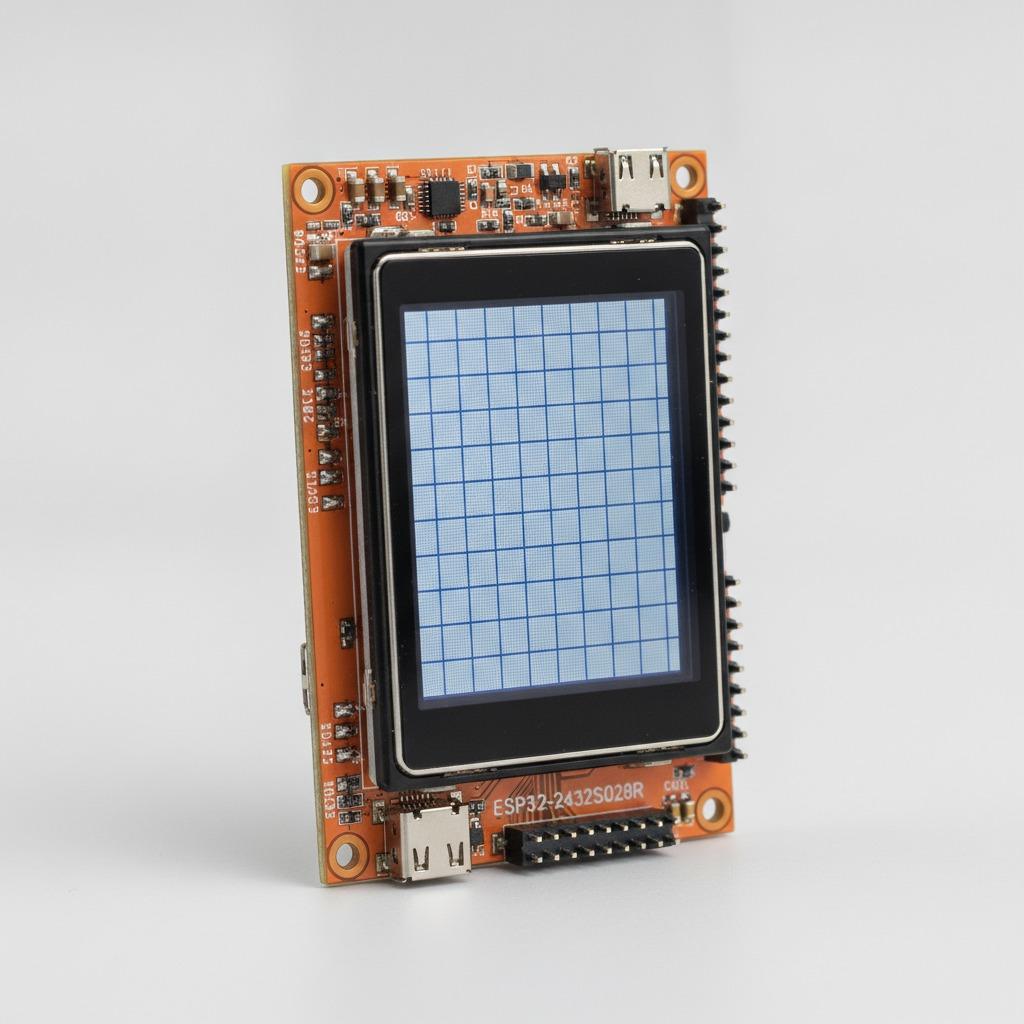
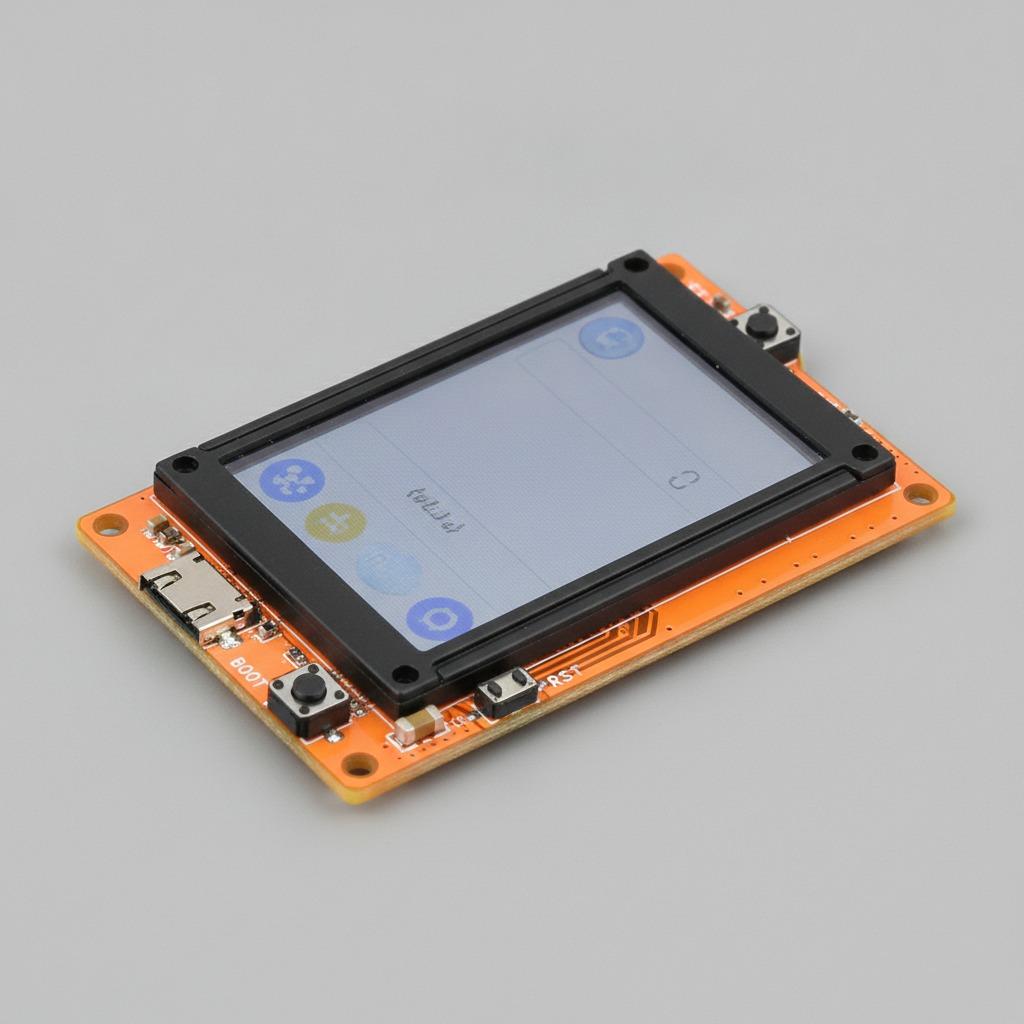
The unit shown is a small rectangular embedded display module with an orange PCB carrier and a black bezel around the screen. The image labels point to a 2.8-inch LCD display, ESP32-32E, 240 × 320 resolution, and resistance touch. That combination places it squarely in the category of an IoT ESP32 HMI display module rather than a simple passive screen.
Several details are useful from a sourcing standpoint. The board has four mounting holes at the corners, which is a practical clue that it is meant for fixed installation. It also includes a microSD slot and multiple headers or connectors, plus onboard buttons such as RESET and BOOT. Those features usually matter later, after the first prototype is already wired into a panel or enclosure.
Why this type of module is popular in embedded products
A board like this sits in a useful middle ground. It is more integrated than a loose TFT panel, yet less restrictive than a fully enclosed finished HMI device. Engineers can use it for menus, temperature readouts, status pages, simple icons, and other device UI elements without building a display stack from scratch.
For many teams, the appeal is the mix of visual output and wireless connectivity. An ESP32 WiFi Bluetooth Module can handle local control, cloud messaging, and handheld provisioning tasks while the screen provides immediate feedback to the user. In a smart home interface, lab instrument, or machine control panel, that combination reduces the need for external controllers.
Quick buyer comparison: when this format fits and when it does not
This board is a good fit when the product needs a compact graphical interface, limited-space mounting, and enough compute for basic local interaction. It is also attractive for prototype-to-production paths because the PCB already includes several practical integration features.
It is less suitable when the application needs a large viewing area, glove-heavy industrial operation with a hard-touch interface requirement, or a very rugged front panel with known sealing performance. The image does not support assumptions about waterproofing, brightness, or environmental rating, so those points should be checked directly with the supplier before design freeze.
Resistive touch versus other input methods
The printed “Resistance Touch” label is important. Resistive touch is often valued for direct stylus input, controlled menu selection, and use in settings where fine finger placement matters more than multi-touch gestures. That makes it familiar territory for many industrial control panel and instrumentation applications.
The trade-off is equally familiar: resistive systems are typically chosen for practicality rather than the sleek feel associated with capacitive panels. If your end user expects smartphone-like gestures, this is probably the wrong direction. If the user wants a dependable menu interface and will interact with a stylus or gloved hand, it may be the more grounded choice.
Manufacturing and assembly considerations
From a production perspective, the board appears to be an assembled electronic display module, likely combining display, driver circuitry, and the ESP32-based control section on a rigid PCB. That means the quality conversation is not just about the panel itself. It also includes SMT assembly quality, connector soldering, board cleanliness, and the mechanical stability of the mounting points.
This is where a company such as hcdpcba is relevant. Its stated capabilities in SMT贴片, PCBA板, PCB打样, 元器件代采, 组装, 测试, DFMA服务, and OEM/ODM support line up with the kinds of services often needed for display controller boards and embedded interface products. For buyers, that matters because display modules tend to expose both electrical and mechanical issues early. A loose connector or poor board-to-panel alignment can become a field failure, not a cosmetic defect.
Common mistakes buyers make
The first mistake is assuming the visible screen size tells the whole story. It does not. The enclosure opening, cable exit path, and mounting depth are often the real design constraints.
The second mistake is treating the ESP32 as if software compatibility is automatic. The microcontroller is well known, but the UI stack, display driver, and touch implementation still need confirmation.
The third mistake is buying on sample convenience and ignoring production assembly. A module that works on a bench with jumper wires and a USB cable can behave differently once it is moved into a fixed panel and tied to a real power harness.
Practical selection advice for engineers and sourcing teams
Ask for the exact interface details, power requirements, and display controller information before you commit. Confirm whether the resistive touch layer is supported in the firmware environment you plan to use. Check connector accessibility once the board is mounted, not just while it is sitting on a desk.
If you are building a commercial product, ask for DFMA review early. It is far cheaper to revise a mounting hole position or header orientation before tooling than after an enclosure has already been cut.
For sourcing teams, the useful question is not “Can this board display a menu?” It is “Can this board be assembled, integrated, tested, and serviced at the scale and reliability level our product needs?” That is the decision that keeps a prototype from becoming a headache.
What to do next
If you are shortlisting a 2.8-inch ESP32-based HMI board for an industrial, IoT, or OEM project, start with the mechanical drawing, interface pinout, and production test plan. If those items are unclear, ask for them before you finalize the enclosure.
If you need PCB assembly, component sourcing, or ODM support for a related display product, a provider with SMT, PCBA, and testing capability such as hcdpcba can help turn the concept into a buildable module rather than just a sample on the bench.