Industrial Control Core Board PCBA Overview
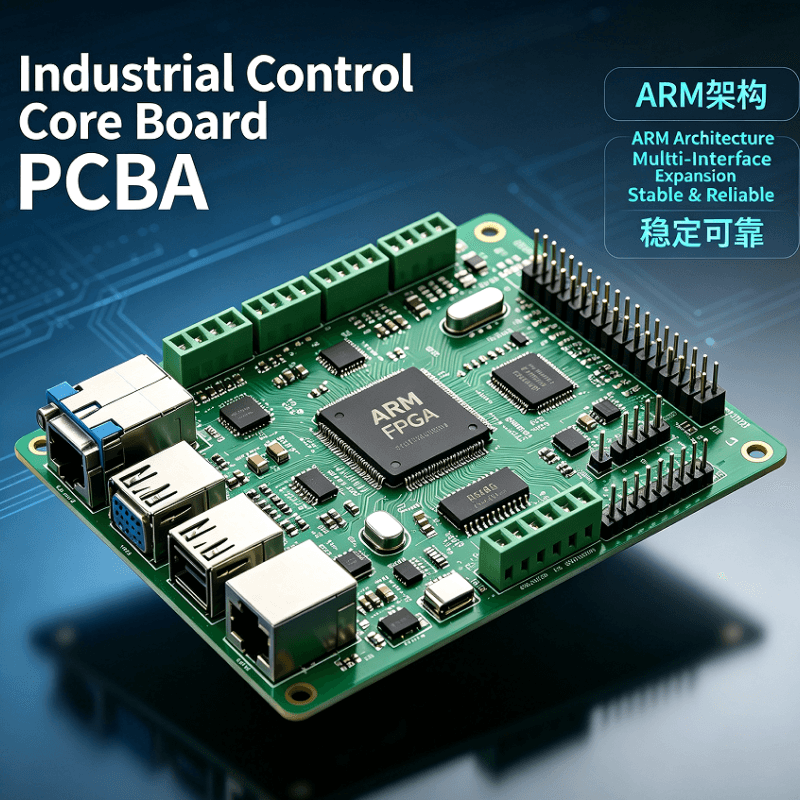
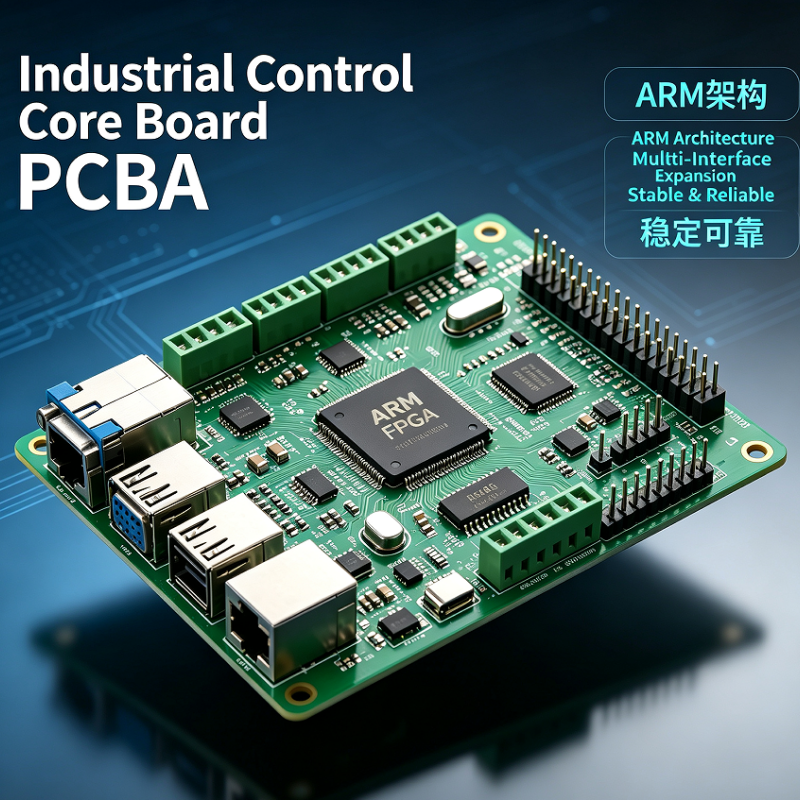
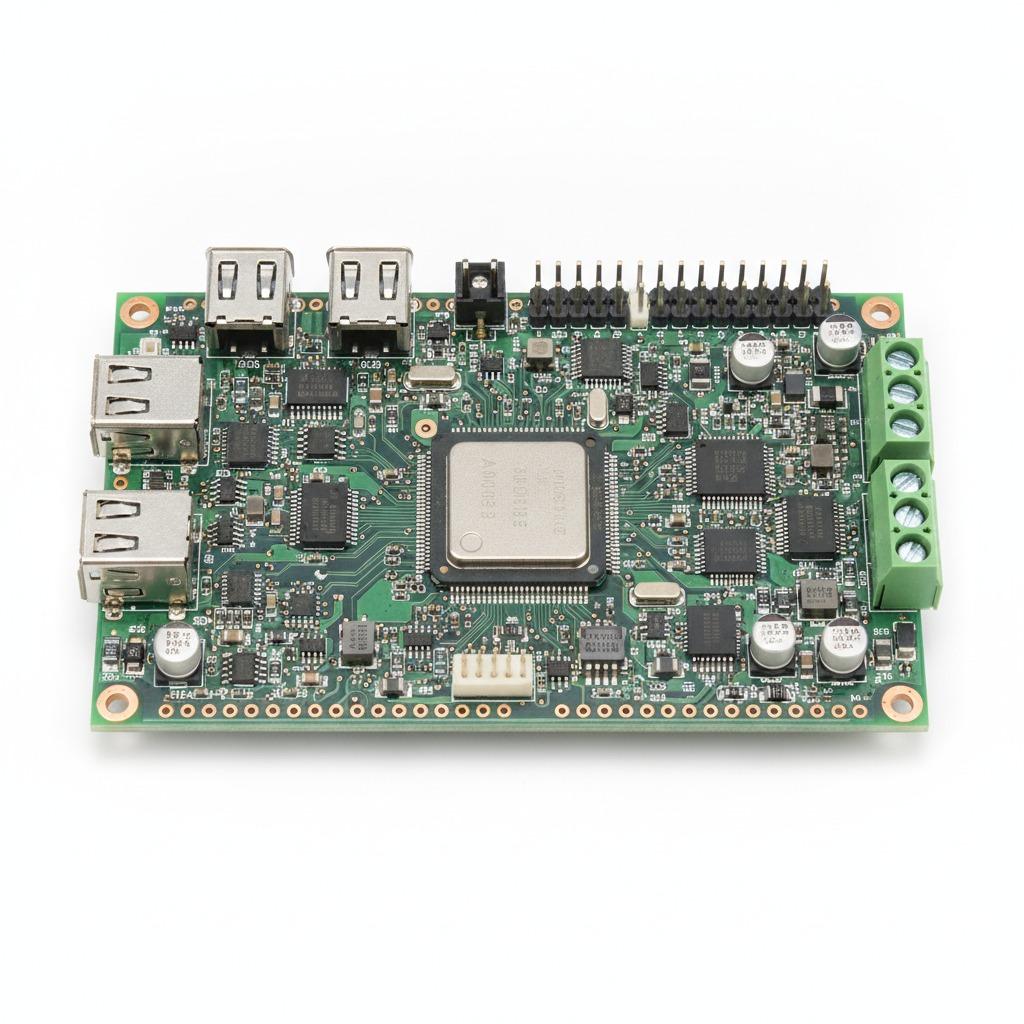
An Industrial Control Core Board PCBA is used when a machine or automation system needs a compact control center that can process signals, manage communication, and connect to multiple external devices. Instead of designing a board from scratch around each individual subsystem, buyers often choose an Industrial Control Core Board PCBA to shorten development time and reduce integration risk. The populated board shown here reflects that role clearly: it combines a central ARM/FPGA-type processing section with several interface ports, pin headers, and terminal blocks for control wiring.
For OEMs, integrators, and industrial equipment builders, the main problem this type of board solves is interface complexity. A single embedded controller must often handle sensors, actuators, serial links, network communication, and expansion requirements at the same time. A well-built embedded control board helps consolidate those functions into one assembly, making cabinet wiring, prototyping, and system debugging more manageable.
Product Structure and Visible Features
This board appears to be a rigid FR-4 style PCBA with a green solder mask, white silkscreen, and mixed SMT and through-hole construction. The central device is a large IC marked as ARM FPGA on the image, indicating a hybrid processing platform suited to control and logic tasks. Around it are smaller integrated circuits, passive components, oscillator cans, and several connector types that suggest a multi-interface design.
Visible interfaces include USB-style metal ports, an RJ45-like network port, rows of pin headers, and green pluggable terminal blocks. The board also includes multiple mounting holes and edge-accessible connectors, which are useful for installation in control cabinets, test rigs, and embedded enclosures. As shown, this is a fully populated Embedded PCBA, not a bare PCB.
Key Capabilities Buyers Usually Look For
Central control and I/O coordination
The board is designed to work as a control hub, handling real-time input and output coordination between sensors, actuators, and external equipment. That makes it suitable for systems where timing, signal routing, and communication must stay organized on one platform.
Multi-interface expansion
Because the board exposes multiple headers and ports, it can support peripheral expansion and wiring flexibility. In industrial projects, this is often more important than raw board size. Engineers need room for serial communication, Ethernet-style networking, USB service ports, and terminal-based field wiring.
Embedded processing platform
The ARM/FPGA architecture suggested by the visible marking is commonly used in control applications that need both processing capability and configurable logic. In practical terms, that can support tasks such as protocol handling, signal timing, edge control, and gateway functions, depending on the final design.
Materials, Finish, and Assembly Style
The visible board construction shows standard electronics manufacturing practices: rigid PCB substrate, solder mask protection, plated through-holes, and connector housings suitable for industrial wiring. The green finish is typical for control boards because it is familiar in production environments and supports readable silkscreen labeling.
Because exact material grade, layer count, component ratings, and compliance status are not provided, those details should be confirmed during quotation or engineering review. Still, the visible structure suggests a conventional industrial electronics build rather than a consumer-style board.
Manufacturing and PCBA Workflow
Boards like this are generally produced through PCB fabrication, SMT placement, reflow soldering, and through-hole assembly for larger connectors. Depending on the project, the manufacturing flow may also include AOI inspection, electrical testing, functional validation, and program loading. Hcdpcba supports SMT贴片, PCB打样, 元器件代采, 组装, 测试, and DFMA services, which are all relevant when developing an industrial motherboard or embedded control platform.
For custom builds, DFMA review is particularly useful. It helps reduce soldering issues, connector placement problems, and assembly costs before mass production begins.
Typical Application Scenarios
This type of Industrial Control PCBA is commonly used in automation equipment, machine controllers, communication gateway units, and embedded monitoring systems. It is also a practical choice for prototype development where multiple I/O channels and board-level expansion are required.
In OEM equipment, an Embedded Core Board can serve as the main control module inside a cabinet or device enclosure. In test environments, it can act as a flexible evaluation platform for firmware development, communication verification, and hardware bring-up. When the application needs cabling convenience, the terminal blocks and port layout are especially valuable.
Quality Control and Buyer Decision Factors
When selecting an industrial board assembly, buyers usually evaluate interface completeness, assembly quality, component sourcing, test coverage, and the ability to support customization. For this board category, a clear requirement list matters more than a general product description. Engineers should confirm processor architecture, supported interfaces, power input range, firmware needs, and mechanical constraints before moving into production.
Visible quality indicators on this board include the organized component placement, multiple mounting points, and industrial-style connector mix. Final acceptance, however, should still rely on test data and engineering documentation provided during the project stage.
Customization Options and Engineering Support
For buyers developing a custom Industrial Motherboard, useful customization points may include connector arrangement, board dimensions, interface selection, component sourcing strategy, and assembly/test requirements. hcdpcba offers OEM and ODM support, which can help with prototype-to-production transitions, especially when the design needs both manufacturing readiness and supply chain control.
If you need an Embedded PCBA for industrial control, communication, or multi-port expansion, the next step is usually to define the required interfaces, operating conditions, and test expectations. That allows the assembly partner to match the board architecture to the actual use case instead of overbuilding the design.
Request a Custom Quote
Share your schematic, BOM, target application, or sample board requirement to discuss the right Industrial Control Core Board PCBA solution. For SMT assembly, PCB prototyping, component sourcing, and custom control board production, contact hcdpcba at +86 18924624188.