
Flexible PCB FPC for Compact and Moving Electronics
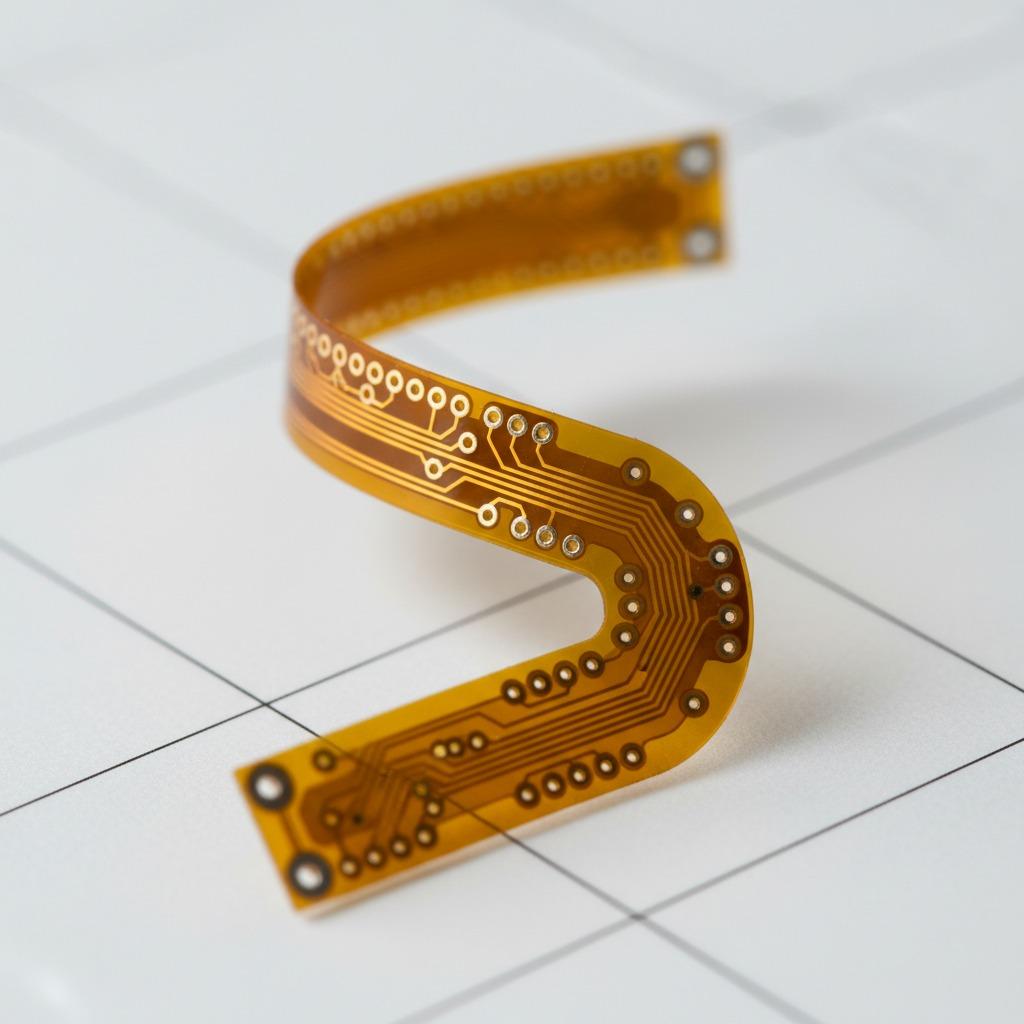
Flexible PCB FPC solves a common design problem in modern electronics: how to carry signals and power through tight spaces, curved layouts, and parts that move without relying on bulky wiring. In wearable devices, compact consumer products, and sensor modules, a flex circuit can replace rigid cables while keeping the assembly thin, light, and easier to route. The amber polyimide strip shown here reflects that role well, with visible etched copper traces and a bendable form that supports interconnects inside space-constrained products.
Product Overview
This type of flexible printed circuit is built on polyimide film with copper circuitry patterned into long, narrow routes. The visible finish is the typical translucent amber color associated with flex materials, and the ribbon-like geometry suggests use as an internal connection path rather than a standalone structural part. Because the design can remain electrically continuous while bent, it is well suited for assemblies where components sit on different planes or must survive repeated motion.
The image also shows smartwatch or fitness band products in the background. That context points to wearable electronics, but the exact relationship is not confirmed. What can be stated safely is that this kind of flex circuit is commonly used where designers need routing density, controlled folding, and a slim profile.
Key Specifications and Visible Capabilities
What can be observed
The panel appears long and narrow, with precision copper trace routing, small round registration holes, and a continuous bend that demonstrates flexibility. The conductor pattern looks dense enough for signal interconnect use in compact electronics. The surface remains flat through the main span, which helps reduce assembly height in tight housings.
What should be confirmed during sourcing
Exact layer count, copper thickness, finished dimensions, coverlay structure, impedance needs, and thermal rating are not visible and should be confirmed in the fabrication file. Buyers should also verify bend radius requirements, connector style, and whether the circuit is intended for static folding or dynamic flexing.
Materials and Finish Options
For a Flexible PCB FPC, the core material is typically polyimide film because it handles bending better than standard rigid board materials. Copper can be selected according to the electrical load and routing density, while surface finish, coverlay, and stiffener choices depend on assembly needs. In real projects, designers may specify exposed pad areas, reinforcement at connector ends, or localized stiffeners to support soldering and insertion cycles.
Finish selection affects both manufacturability and reliability. A clean, flat surface supports SMT attachment, while proper edge definition and protection over the traces help maintain circuit integrity during folding and assembly.
Manufacturing Process
Flexible circuits are usually made through photo-etching, lamination, drilling or punching, and finishing steps that create fine conductor patterns on a thin base film. Precision is important because a flex circuit must keep trace geometry stable even as the board bends. For assemblies that combine flex circuits with mounted parts, downstream SMT and PCBA capability also matters. That is where an Expert FPC PCB PCBA Factory becomes valuable: one source can manage board fabrication, assembly, component sourcing, and testing in a coordinated workflow.
hcdpcba supports PCB prototyping, SMT assembly, component sourcing, assembly, testing, and DFMA services. For buyers, that integrated approach can reduce communication gaps and help move from sample stage to volume production with fewer handoffs.
Application Scenarios
Flexible PCB FPC designs are used in smartwatches, fitness bands, portable consumer devices, camera modules, medical instruments, sensor assemblies, and other products that need compact interconnects. They are also a practical choice for hinged sections, foldable product layouts, and electronics that must fit around housings, batteries, or mechanical parts. A Flexible PCB FPC for Smartwatch use case is especially common because wearables demand thin construction, curved fitment, and reliable routing in a very limited footprint.
Quality Control and Buyer Considerations
When evaluating a flex circuit supplier, focus on trace reliability, process consistency, and assembly compatibility. Ask whether the factory can support incoming file review, DFMA feedback, SMT matching, testing, and packaging suitable for delicate flexible parts. For wearable electronics, small defects in alignment or copper patterning can affect fit and function, so visual inspection and electrical testing are important. If the circuit must bend repeatedly, confirm that the design and material stack are appropriate for the intended motion profile.
It is also wise to review communication speed, confidentiality, and customization support. hcdpcba highlights rapid response, quality control, cost optimization, and one-to-one service, which can be useful when schedules are tight and the design is still evolving.
Customization Guidance
Before placing an order, prepare the outline drawing, stack-up requirements, connector locations, bending zones, and any stiffener or coverlay needs. If the product will be integrated into a smartwatch or another wearable, share the mechanical envelope early so the flex circuit can be matched to the housing and assembly sequence. Clarify whether the circuit is for signal transmission, power distribution, sensor connection, or a combination of these functions.
For teams that need PCB prototype support, SMT assembly, and a coordinated build process, working with a factory experienced in flexible electronics can shorten development cycles and reduce rework.
Request a Quote
If you are developing compact electronics and need a Flexible PCB FPC that balances thinness, bendability, and precise routing, hcdpcba can support your project from prototype through assembly. Share your Gerber files, stack-up notes, and application requirements to start the review process and get a practical manufacturing recommendation.