Why a multi-function home appliance PCB board can make or break the product
A multi-function home appliance PCB board does more than route power and signals. In a modern appliance, it is often the control center for sensing, user interaction, display handling, motor drive, communications, and safety logic. That is why sourcing teams and product engineers tend to feel pressure at the board stage: if the PCB is underbuilt, the appliance becomes noisy, unstable, or difficult to certify later; if it is overdesigned, cost and assembly complexity creep up fast.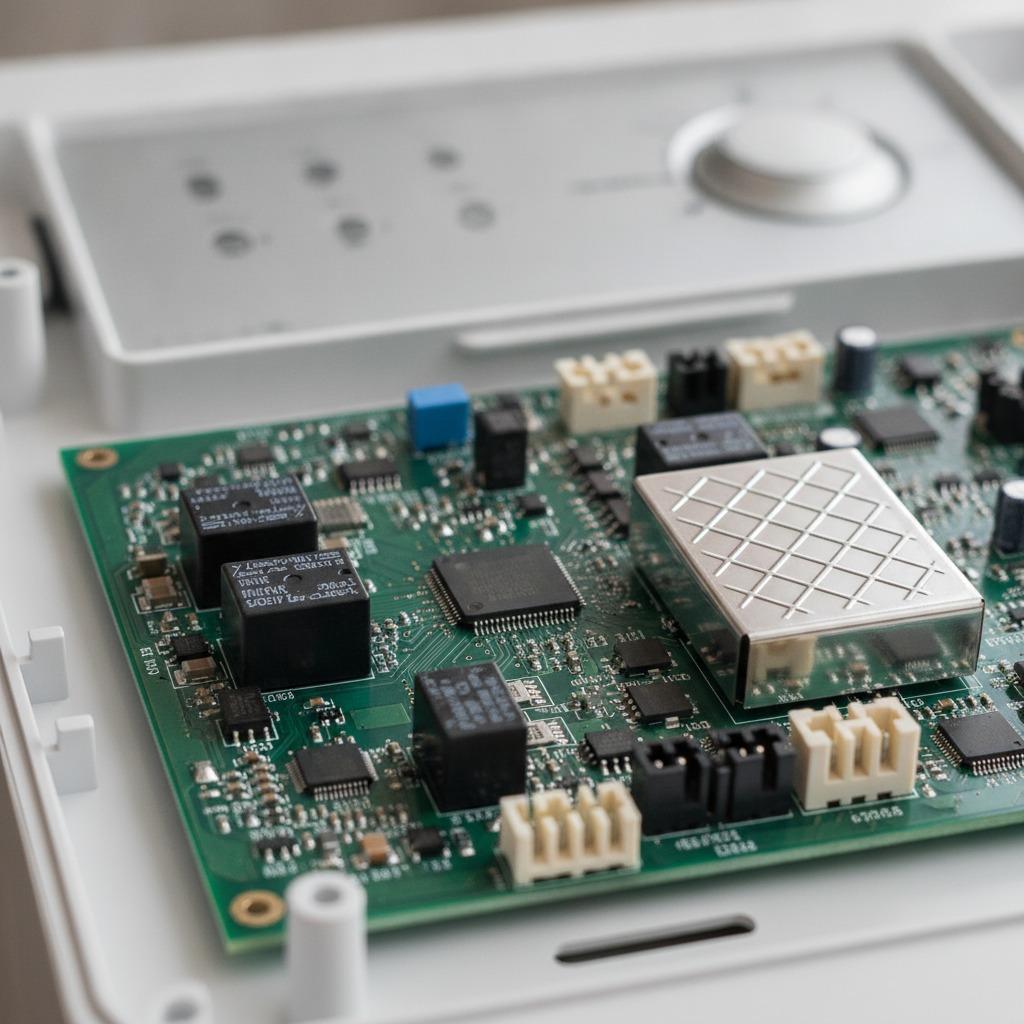
For buyers evaluating a multi-function home appliance PCB board, the real question is not simply “Can this board be made?” It is “Can it be made consistently, tested properly, and scaled without surprises?” That decision usually depends on the right factory PCBA manufacturer, the board architecture, and how early the design is prepared for assembly.
What usually goes wrong in appliance electronics
Home appliances live in an awkward middle ground. They need consumer-friendly cost targets, but they also have to survive heat, vibration, repeated switching, and long service life. A smart device PCB board used in a washer, cooker, purifier, or HVAC controller may need to manage mixed voltages, interface boards, and compact enclosures with limited airflow. That is where trouble starts.
Common issues include excessive board size, poor thermal planning, weak connector placement, and layouts that are difficult to inspect or rework. In multifunction products, a single small board problem can affect the whole appliance. A display glitch, for example, may not be a display problem at all; it can come from power integrity or noise on the control side.
Key board types and where they fit
A multi-function home appliance PCB board is usually built around a control core, but the architecture changes by product. Some designs use a main control board with separate interface or power boards. Others integrate more into one assembly to reduce wiring and improve packaging.
Control and power integration
This is often the heart of the product. It handles switches, sensors, relays, power regulation, and external communication. The board must be laid out with enough separation between high-voltage and low-voltage zones, and that separation should be checked early rather than patched later.
Display and interface sections
Many home appliances now use visual menus, touch buttons, or status indicators. If a design includes a TFT screen driver board or related TFT display PCBA, the display section needs careful attention to signal integrity, connector robustness, and EMI risk. Displays add convenience, but they also add failure points if the interface is not cleanly engineered.
What to ask a manufacturer before you commit
Choosing a factory PCBA manufacturer is partly a technical decision and partly a process decision. The board may look straightforward on paper, yet appliance production often fails in the gaps between sourcing, assembly, and test.
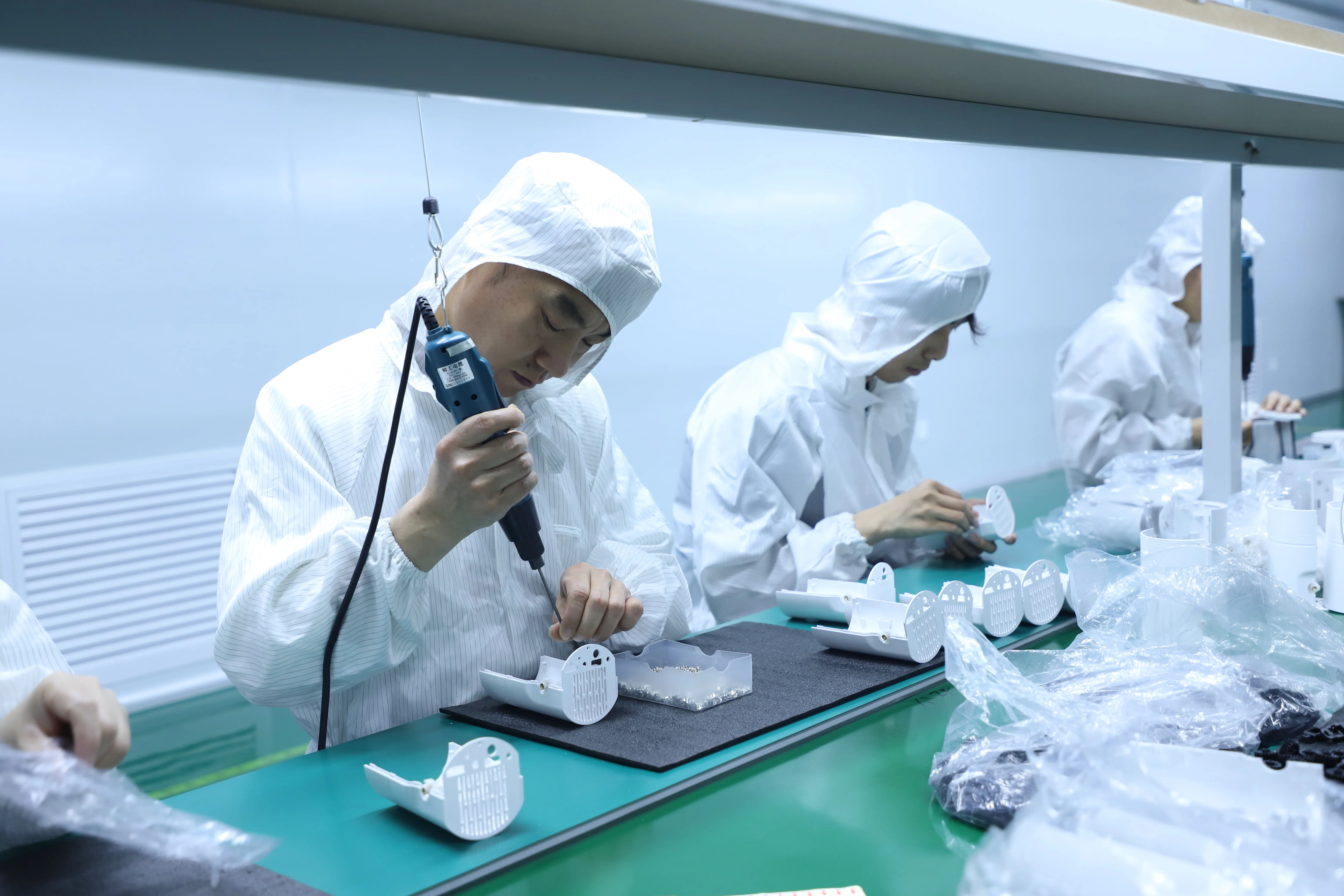
A practical buyer should ask whether the supplier can support PCB prototyping, SMT assembly, component sourcing, assembly, and test as a connected workflow. hcdpcba, for example, lists SMT贴片, PCB打样, 元器件代采, 组装, 测试, DFMA services, and OEM/ODM support. That combination matters because appliance programs often need fast design feedback, not just bare assembly.
The useful question is whether the factory can spot manufacturability issues before tooling or mass production. DFMA review can reduce avoidable rework, especially when the product includes fine-pitch parts, dense connectors, or mixed board functions.
Selection criteria that actually matter
Forget the brochure language for a moment and look at the things that affect field performance.
Board stack-up and spacing should match voltage and thermal needs.
Component sourcing should be traceable enough to avoid mixed-quality parts.
SMT capability should suit both prototypes and volume builds without forcing a process change halfway through the program.
Test coverage should reflect the product’s real failure modes, not just a power-on check.
For a smart device PCB board used in the home, the assembly partner should also understand cosmetic constraints. Consumer products often hide nothing: crooked indicators, loose connectors, or inconsistent solder finish can become customer complaints very quickly.
Common mistakes buyers still make
One frequent mistake is treating the board as a late-stage detail. By the time enclosure constraints and cable routing are frozen, the PCB may already be boxed into an awkward shape. Another is assuming a lower-cost build is automatically cheaper. In practice, a poorly prepared assembly can raise the total cost through troubleshooting, delays, and repair.
A smaller but important warning: do not overcomplicate the design simply because the product is “smart.” Many home appliances do not need a crowded board. They need a reliable one.
Practical buyer guidance
If you are sourcing a multi-function home appliance PCB board, start with a clear functional split: what belongs on the main board, what should live on a display or interface board, and what must be isolated for power or safety reasons. Then validate that the manufacturer can support that architecture from prototype through production.
Ask for assembly and test flow details. Ask how component sourcing is handled. Ask what parts of the design are most likely to create yield problems. A capable supplier will usually answer those questions directly, and often point out a few issues you had not considered.
FAQ
Is one board always better than multiple boards?
Not always. Fewer boards can reduce wiring and assembly time, but separation sometimes improves serviceability, thermal behavior, and noise control.
Do home appliance boards need special testing?
Usually, yes. At minimum, they should be tested for power stability, function, and key interfaces. More complex products often need more targeted test coverage.
When should display electronics be separated from the main control board?
When signal integrity, layout space, or serviceability starts to suffer. A TFT display PCBA can be cleanly separated if the product architecture supports it.
Next step
If you are planning a new appliance platform or revising an existing one, the best move is to review the board architecture before release, not after pilot failures. A manufacturer like hcdpcba, with PCB prototyping, SMT, sourcing, assembly, and test services under one roof, can help turn a complicated multifunction design into a buildable program. That is often the difference between a board that merely works in the lab and one that survives production.