Why buyers ask for an IATF 16949 Certified Car Circuit Board in the first place
When an engineering team starts comparing suppliers for an IATF 16949 Certified Car Circuit Board, the real question is usually not about the label alone. It is about risk. In Automotive programs, a small board-level defect can turn into a field failure, a delayed launch, or a painful round of containment actions that nobody wants on a Monday morning.
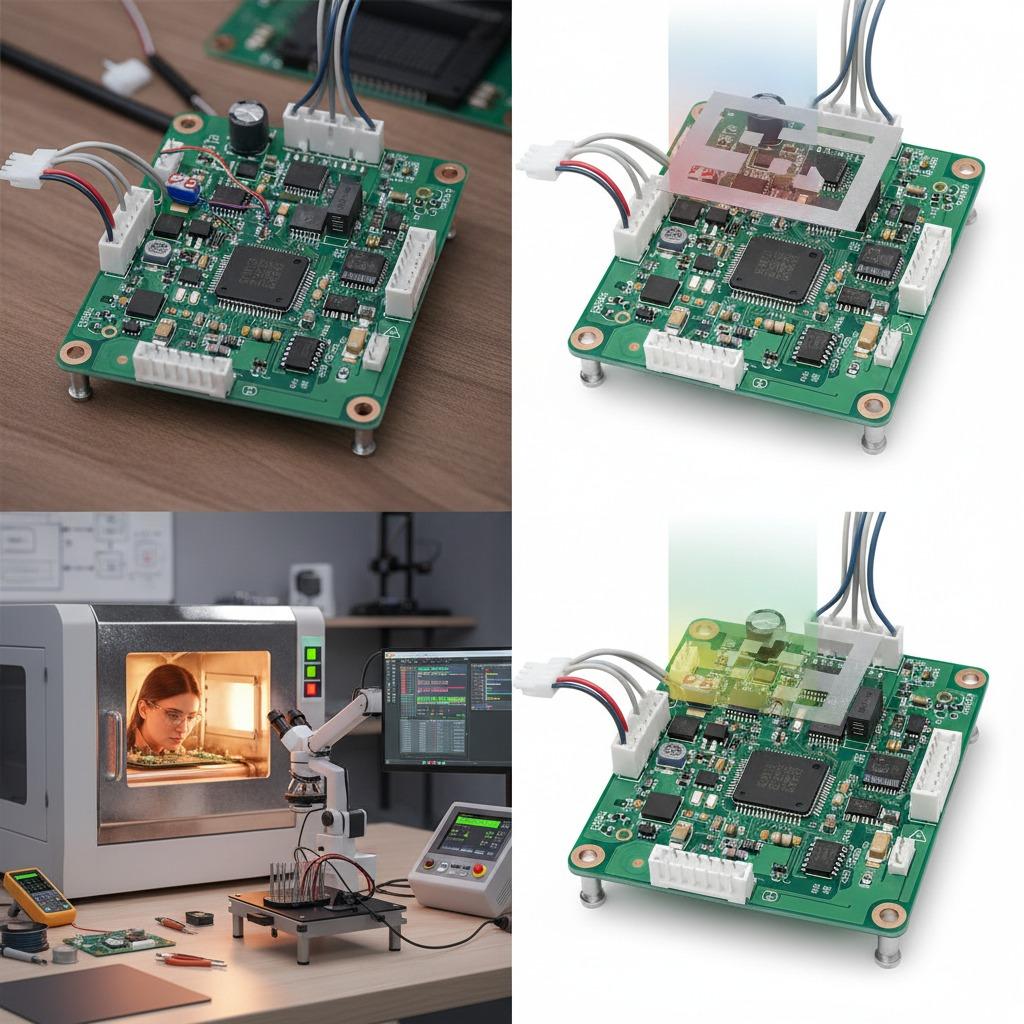
The board in front of you may look like a compact Car PCBA or embedded control module: blue solder mask, fine-pitch ICs, edge connectors, mounting holes, and dense routing packed into a flat rectangular layout. That kind of assembly tells a familiar story. It is not just a piece of electronics; it is a control point, an interface point, and often a decision point inside the vehicle or in a vehicle-adjacent system. Buyers care because the assembly has to survive real manufacturing pressure and real use, not just pass a bench demo.
hcdpcba supports PCB fabrication, SMT贴片, assembly, testing, and one-stop PCBA Service for sectors that include automotive electronics, industrial control, medical, IoT, and communications. That matters because buyers of automotive electronics rarely want a bare board supplier on one side and an assembly house on the other. They want one accountable workflow.
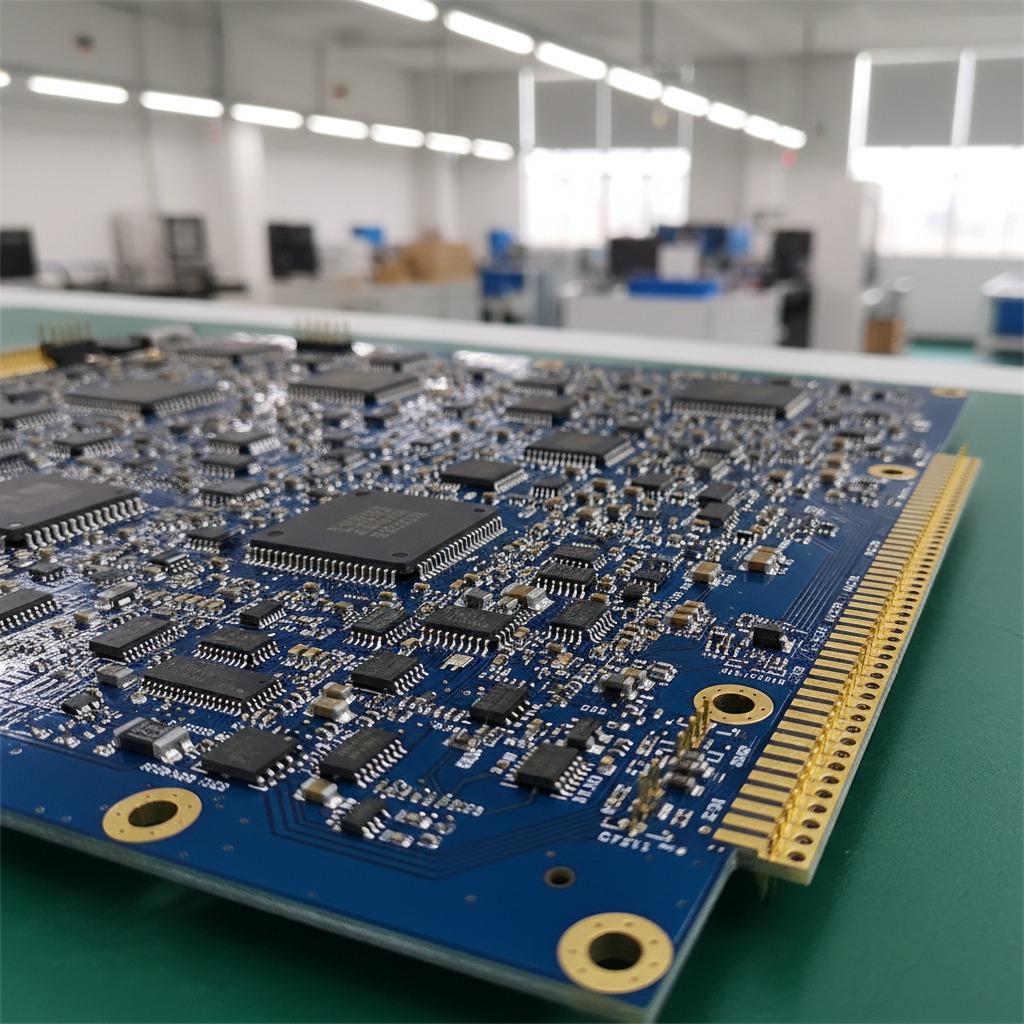
What the board image suggests, and what it does not
From the visible features alone, this looks like a compact PCB assembly with a central square IC, smaller support chips, passive components, and several connectors along the edge. The structure suggests SMT assembly and reflow soldering, with possible through-hole or press-fit connector work depending on the final design. The board also shows mounting holes, which is a practical detail that often gets overlooked until the enclosure team tries to fit the assembly into a cramped housing.
What you should not assume is just as important. The exact layer count, copper weight, operating voltage, current rating, firmware function, and certification status are not visible. The image can hint at complexity, but it cannot prove automotive compliance by itself. That is where process control and documentation come in.
Why automotive buyers care about manufacturing discipline
Automotive electronics live under tighter expectations than many consumer builds. Even when a board is small, it may need to handle vibration, thermal cycling, moisture exposure, connector wear, or long service life. A board that looks fine after assembly may still fail later if the solder joints were inconsistent, the component sourcing was loose, or the design did not account for manufacturability.
This is why companies like hcdpcba emphasize DFMA service, component sourcing, assembly, and testing under one roof. In practice, that kind of flow reduces handoff mistakes. The design team, procurement team, and production team are all looking at the same board, the same BOM, and the same assembly constraints. In automotive work, that alignment is often more valuable than a flashy brochure claim.
Key selection points for a Car PCBA supplier
1. Assembly capability, not just PCB fabrication
A circuit board can be fabricated well and still fail in assembly. For a dense module like this, you want evidence of stable SMT贴片 capability, consistent soldering, and inspection discipline. If connectors are involved, ask how the supplier handles mechanical retention and solder reliability. It is a small point until a connector loosens on the line.
2. Component sourcing control
Car electronics are no place for vague sourcing habits. Buyers should ask whether the supplier can support component procurement, traceability, and substitution control. hcdpcba offers 元器件代采 as part of its service stack, which can be useful when a program needs fewer moving parts.
3. Test coverage that fits the build
Not every board needs the same test plan, but every board needs one. Electrical test, functional test, and basic visual inspection are usually the starting point. For vehicle-related assemblies, buyers often need stronger documentation than they first expect. That is a practical reality, not paperwork theatre.
Common mistakes buyers still make
One recurring mistake is treating a compact board as if it were simple just because it is small. Dense routing, fine-pitch packages, and multiple interfaces usually mean the opposite. Another mistake is buying only on quote price without checking whether the supplier can support the full path from prototype to production. A third is underestimating enclosure and connector alignment. If the board has mounting holes and edge interfaces, those details must line up with the mechanical design early.
Buyers also sometimes forget that a supplier serving industrial control or medical work may bring useful discipline to automotive-adjacent projects, but the program still needs its own requirements review. No sensible editor would tell you otherwise.
When a one-stop PCBA Service makes sense
A one-stop PCBA Service is most useful when speed, coordination, and accountability matter more than juggling multiple vendors. That can be especially true for OEM and ODM builds, pilot runs, replacement modules, or development-stage automotive electronics. hcdpcba lists PCB打样, SMT贴片, assembly, testing, OEM, and ODM support, which points toward that consolidated model.
For sourcing managers, the attraction is straightforward: fewer vendor handoffs, simpler problem solving, and a cleaner path from sample to production. For engineers, the attraction is just as clear: fewer surprises when the first build comes back from the line.
Practical buyer advice before you send an RFQ
Start with the board’s role in the system. Is it a control module, an interface board, a sensor board, or a communications subassembly? Then define what the supplier must handle: fabrication only, SMT assembly, sourcing, testing, or a full OEM package. If the design is still changing, ask for DFMA feedback early. That step often saves more time than any late-stage debug session.
And if the project is automotive-related, ask directly about traceability, process documentation, and how the supplier handles quality escalation. Those questions are not adversarial. They are normal.
FAQ: what buyers usually want to know
Is the board in the image definitely automotive?
No. It appears suitable for automotive or industrial control use, but the exact end use is not identifiable from the image alone.
Does IATF 16949 certification matter for all PCBA work?
Not for every project, but it matters when the supply chain or customer requirements call for automotive-grade quality systems.
Can a one-stop supplier help with prototypes and production?
Yes, especially when the same supplier can support PCB打样, SMT贴片, assembly, and testing from the start.
Next step
If you are comparing suppliers for an IATF 16949 Certified Car Circuit Board or a related Car PCBA build, send the schematic, BOM, Gerbers, and test expectations together. That gives a supplier a real basis for feedback instead of a guess. For teams that want design support, assembly, and test under one roof, hcdpcba’s one-stop PCBA Service is positioned for that kind of work. A phone call at +86 18924624188 is a practical place to start.