What a Hybrid Inverter Control Board Actually Does
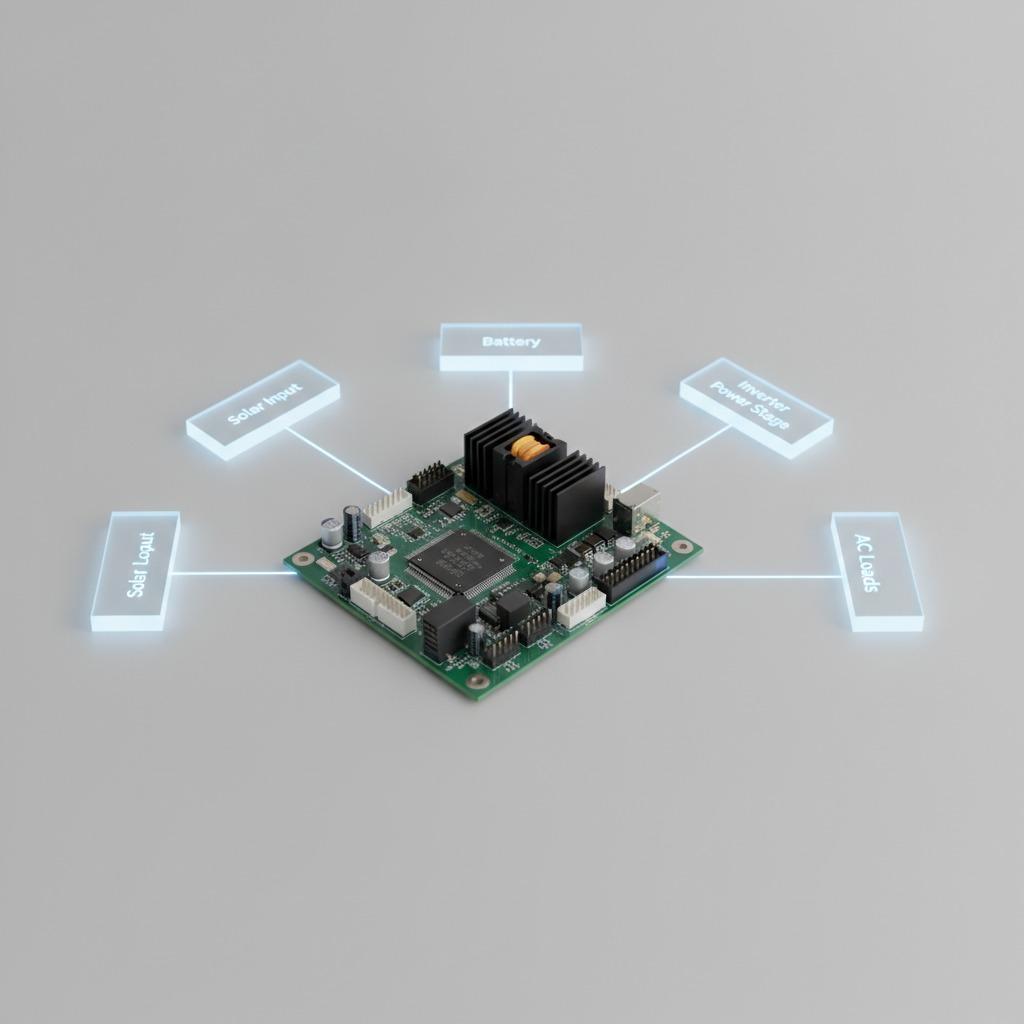
A Hybrid Inverter Control Board sits at the center of a system that has to juggle solar input, battery charging, grid interaction, and load output without making a scene. In practice, it is the logic and control layer that decides when power should come from the panels, when the battery should charge or discharge, and when the inverter should switch behavior to protect the system. For engineers and buyers, that means the board is not just another PCB; it is the part that can determine whether the whole inverter feels stable, efficient, and serviceable in the field.
This matters because hybrid systems are rarely forgiving. A small control error can show up as poor conversion efficiency, nuisance shutdowns, battery stress, or unstable switching under changing sunlight and load conditions. If you are evaluating a Solar Hybrid Inverter Control Board, you are really deciding how much control, protection, and integration you want at the heart of the product.
Why Buyers Care About the Control Board
Most sourcing conversations focus on the power stage, battery pack, or enclosure. That is understandable, but the control board often defines the user experience. It governs monitoring, fault handling, communication with battery systems, and the timing behind switching events. In a residential or small commercial unit, those functions can influence everything from reliability to warranty claims.
An Off Grid Hybrid Inverter Board adds another layer of complexity. Off-grid systems usually need to behave gracefully when conditions change fast: battery state of charge is low, solar output drops under cloud cover, or a load starts harder than expected. The board has to interpret inputs and enforce limits without creating instability. That is where embedded firmware, PCB layout discipline, and test coverage matter as much as component choice.
Key Functions to Check Before You Source
Power management and protection
The board should support stable control of charging and discharging paths, with protection logic for overvoltage, undervoltage, overcurrent, temperature events, and abnormal operating states. These are basic functions, but they are also where poorly designed boards tend to fail in the field.
Battery coordination
Battery compatibility is no longer a side note. A board that can communicate cleanly with BMS Battery Management systems is easier to integrate and usually easier to support later. Even when exact protocols vary by product, the core idea is the same: the inverter should respect battery limits instead of fighting them.
Scalable power range
Many buyers look for a 1KW-12KW Inverter Board family because product platforms often need to cover several market segments. A smaller unit may serve home backup or light commercial loads, while higher-power versions demand stronger thermal planning and firmer control architecture. Reusing a common board concept across that range can reduce development burden, but only if the design is genuinely scalable.
What Separates a Good Board From a Problematic One
The most reliable designs usually show the same habits: clear partitioning between control and power sections, sensible grounding strategy, protection against electrical noise, and firmware that does not assume ideal conditions. That last point is easy to miss. Real systems live in the messy middle, where load surges, cable losses, and battery aging all show up at once.
Another useful indicator is manufacturability. A board that is difficult to assemble, test, or rework will cost more than the BOM suggests. That is one reason many teams value DFMA service during development. A design that looks elegant on paper can become expensive if the layout is awkward or if critical components are hard to source consistently.
For OEM and ODM projects, the best control board is usually the one that balances performance with repeatable production. It should be buildable at scale, testable on the line, and adaptable enough to support revisions without forcing a full redesign.
Manufacturing Considerations That Affect Field Reliability
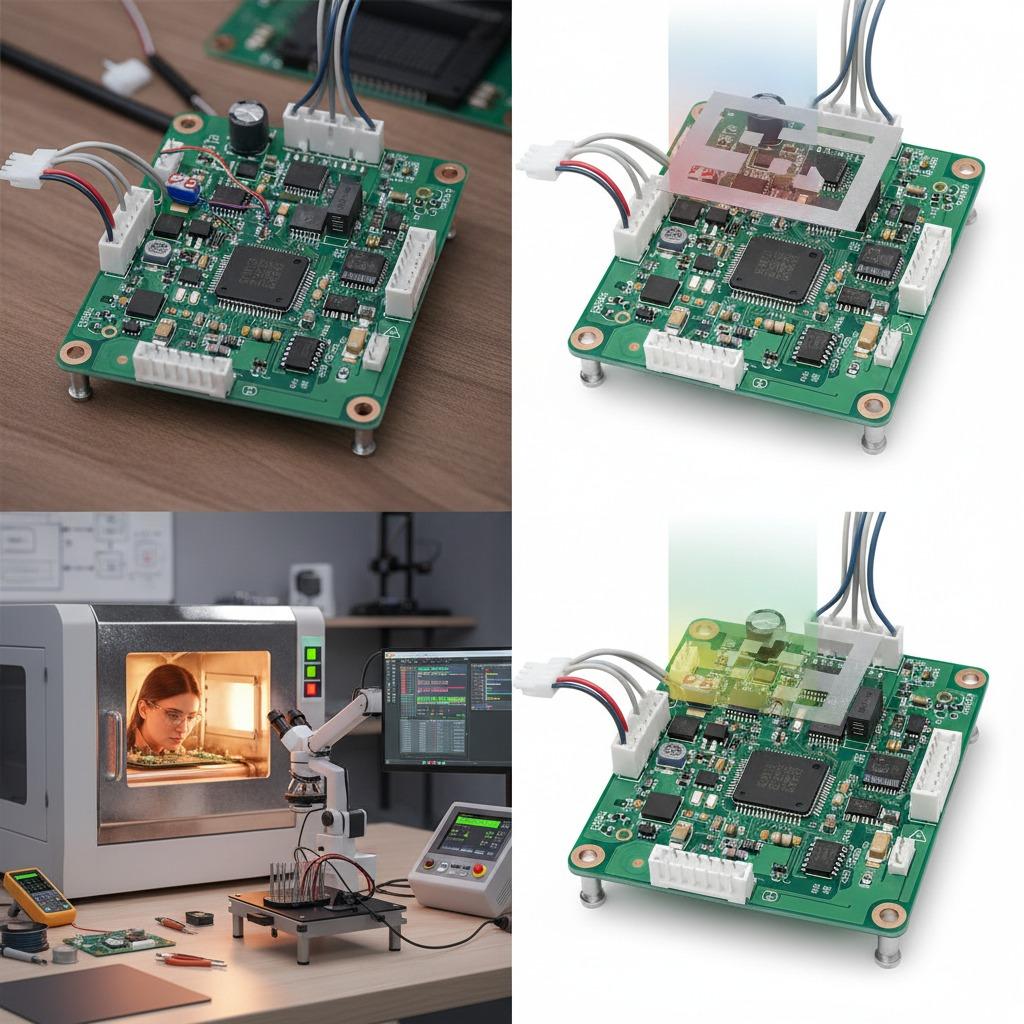
Control boards for inverters are not casual assemblies. They often need careful SMT process control, inspection, and functional testing. When the board is part of a product that will sit in homes, workshops, telecom sites, or industrial cabinets, the cost of one bad assembly can be higher than the cost of a better process.
hcdpcba supports PCB prototyping, SMT assembly, component sourcing, assembly, testing, and OEM/ODM services. That mix is relevant for inverter projects because development teams often need more than a bare PCB vendor. They need a partner that can move from prototype to stable production while keeping attention on quality and traceability. The company also notes support for multi-layer boards, HDI boards, and high-frequency boards, which can matter when control density and signal integrity become more demanding than expected.
A practical caution: do not let the project get locked into board layout too early if the battery interface or thermal limits are still moving. Hybrid inverter projects often change during testing, and late changes are easier to absorb when the manufacturing path is already organized.
Common Mistakes Buyers Make
One common mistake is treating the board as a commodity part. In reality, the control logic and the surrounding protection scheme are closely tied to the end product’s reputation. Another mistake is underestimating integration work with batteries, displays, communications, and protection devices. Even a well-built board can struggle if the system architecture is vague.
Buyers also sometimes compare options only by power rating. That can be misleading. Two boards may both be labeled for similar output levels, but one may handle thermal stress, fault recovery, and communication much better than the other. In the field, those differences matter more than a headline number.
How to Evaluate a Supplier
For sourcing teams, the useful questions are practical. Can the supplier support prototype builds as well as volume production? Can they help with component sourcing? Do they offer testing and assembly under one roof, or is the project going to move through several handoffs? Those handoffs are where delays and quality drift tend to appear.
hcdpcba emphasizes quick quotation, production responsiveness, quality control, cost optimization, and confidentiality. That profile fits buyers who need a manufacturing partner for a custom inverter board rather than a catalog-only transaction. If your project has a clear electrical brief but still needs help with DFM, test strategy, or production readiness, that kind of support can shorten the path to a stable product.
FAQ
Is a Solar Hybrid Inverter Control Board the same as the whole inverter?
No. It is the control and logic section, not the full power conversion system. It works with the rest of the inverter hardware.
Can one board cover several power levels?
Sometimes, yes. A 1KW-12KW Inverter Board platform can be designed as a family, but thermal, electrical, and firmware requirements still need separate validation.
Why does BMS Battery Management integration matter?
Because the inverter should align with battery limits and status signals. Good coordination helps protect the battery and improves system stability.
What to Do Next
If you are planning a new inverter platform or revising an existing one, start with the control requirements, battery interface, and test plan before you lock the layout. Then compare suppliers not just by price, but by their ability to support PCB fabrication, SMT, assembly, component sourcing, and testing in one workflow. For teams building a Hybrid Inverter Control Board for residential, industrial, or energy-storage use, that is usually the difference between a prototype that works once and a product that can actually ship.