Why a Smart Home Voice Module matters before you commit to a design
A Smart Home Voice Module sounds simple on a product page, but in the field it decides whether a device feels genuinely usable or merely gimmicky. Engineers and sourcing teams are usually weighing the same question from different angles: can the hardware recognize spoken commands reliably enough, stay local when the network is down, and fit cleanly into a switch, panel, or appliance without turning the enclosure into a mess of patch wires?
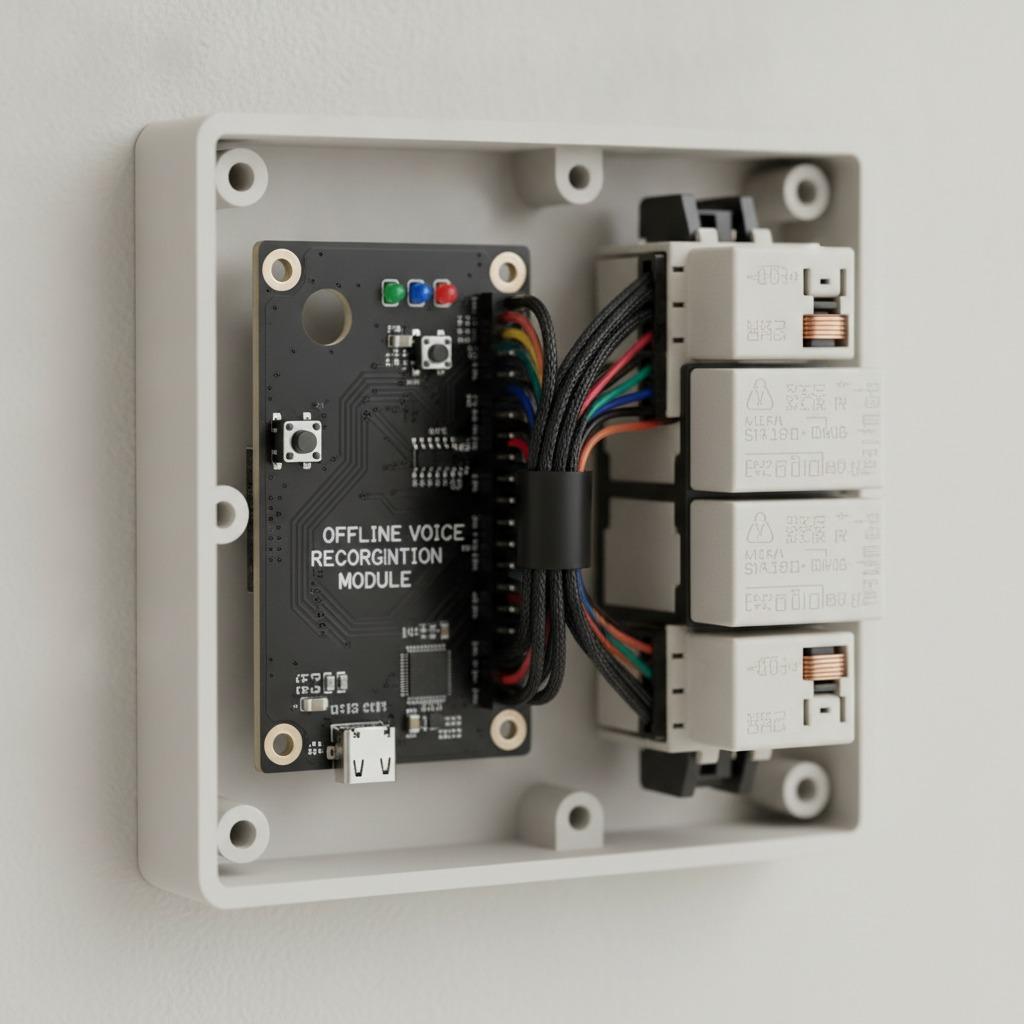
The board shown here sits in that practical middle ground. It is presented as an offline voice recognition PCBA for voice control, with no network required and multi-channel switching implied by the artwork. That combination matters because many smart home products still need a fallback when Wi-Fi is unstable, cloud services are unavailable, or the buyer simply does not want every command sent off-device.
What the module is trying to solve
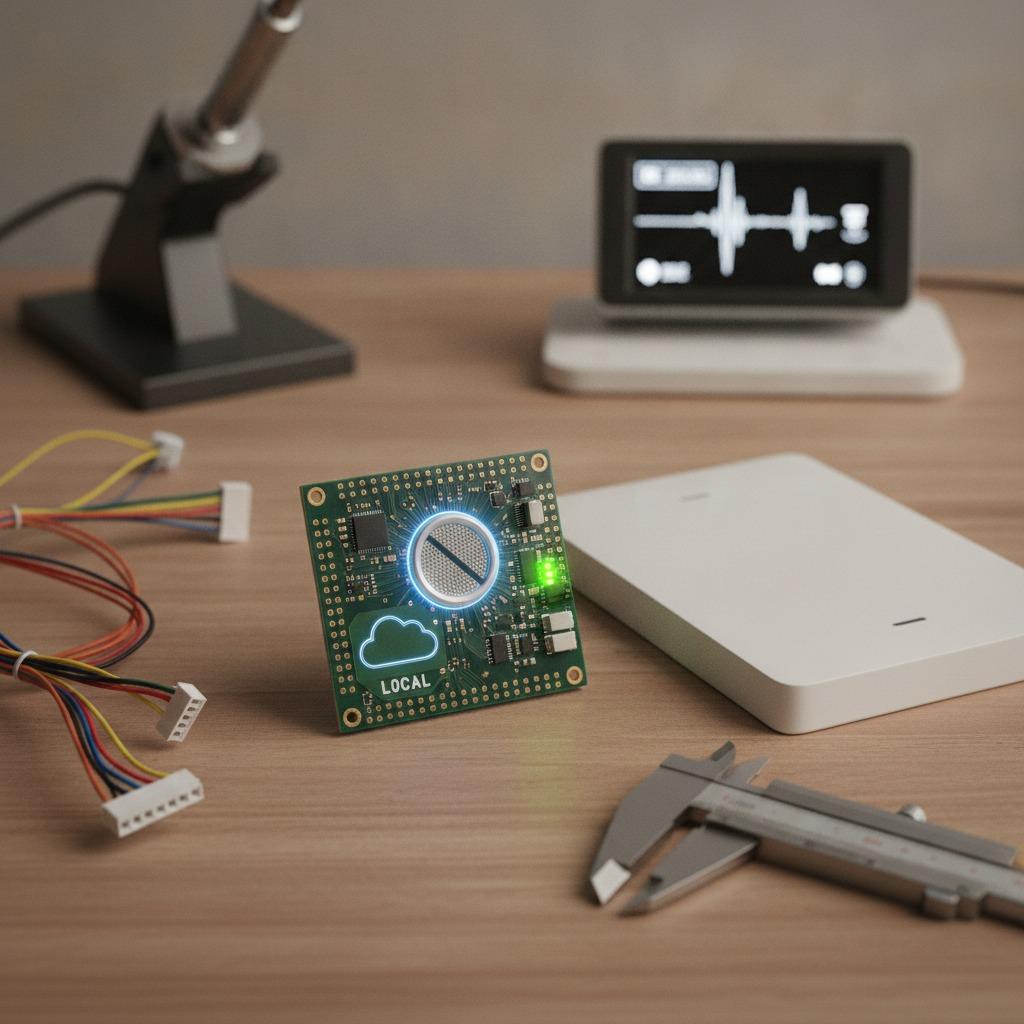
Voice control in consumer hardware is no longer limited to cloud assistants. A local board-level solution can be more appealing for wall switches, lighting controls, retrofit panels, and embedded appliances where latency and privacy are part of the buying decision. A Local voice control IC for smart home may be the heart of the system, but the real value comes from the full assembly: PCB layout, connectors, audio I/O, power handling, and firmware that makes the command path work without a server dependency.
From the visible design, this is a black FR-4 PCB assembly with surface-mounted components, mounting holes at the corners, tactile buttons, indicator LEDs, and a top-edge USB-C connector. The board also shows multiple side connectors, which suggests the module is built to interface with external wiring rather than sit as a sealed black box. A separate acoustic component is shown in the render as well, though the image does not prove whether it is a microphone, speaker, or another audio element. That uncertainty is worth noting; buyers should not assume more than the image actually shows.
Quick buyer takeaways
If you are comparing an offline voice board against a cloud-based voice platform, the decision usually turns on four points.
First, offline recognition reduces dependence on internet connectivity. Second, local processing can simplify privacy discussions with end customers. Third, an embedded module can shorten development time if the command set and switching logic already fit the product concept. Fourth, the physical integration details matter as much as the voice engine itself. A well-placed connector, clear LED indication, and accessible programming or test interface can save hours on the production line.
That said, offline systems are not magic. Recognition quality, wake-word behavior, supported languages, and response time are the details that separate a polished product from a frustrating one, and none of those figures are visible here. A buyer should ask for real sample testing, not just a demo video.
How a voice control development board is typically used
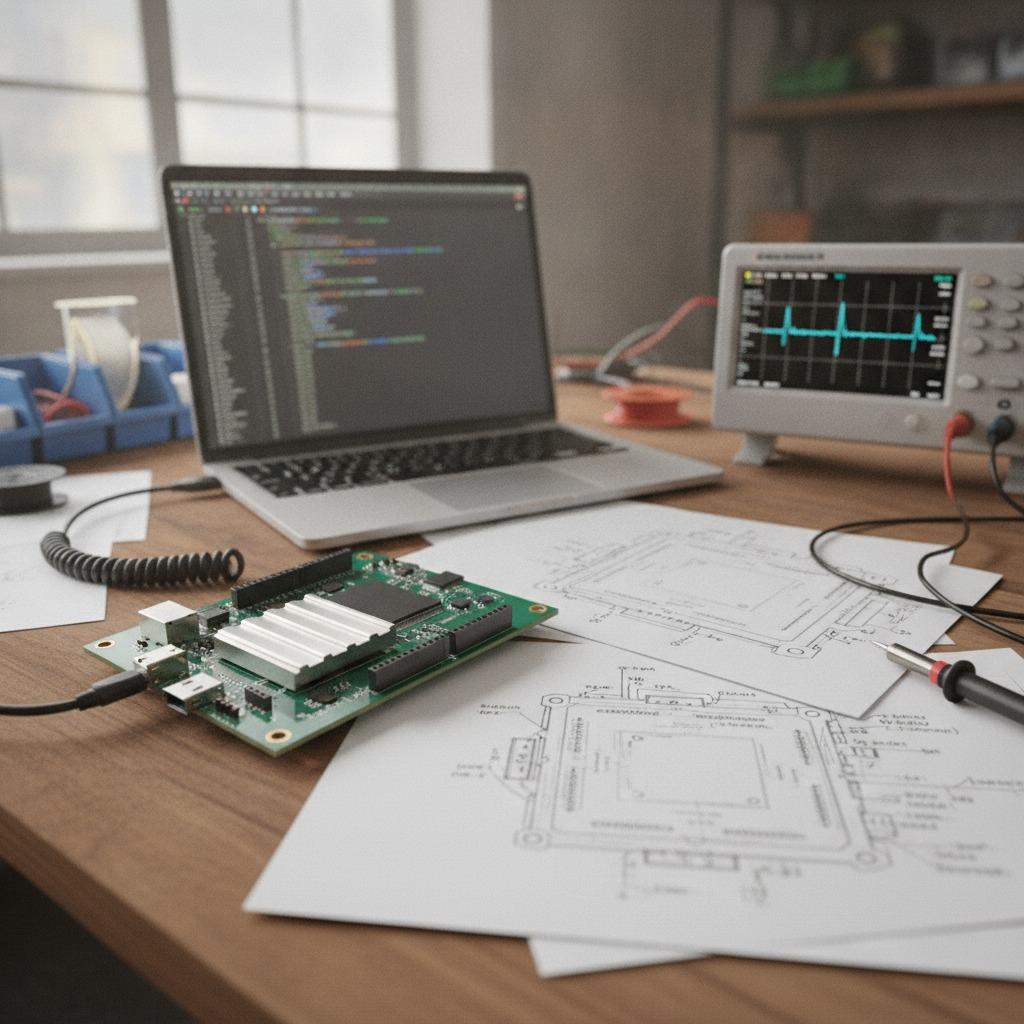
A Voice Control Development Board for smart home work is usually evaluated in two stages. The first is bench testing: can it recognize the intended command set, trigger the expected output channel, and recover gracefully after power cycling? The second is integration: does the board fit the target enclosure, align with the switch mechanism, and survive the wiring route inside a crowded housing?
The product image points toward multi-channel switching, which makes sense for wall switch applications. A single panel may need to toggle light circuits, fan control, or other small loads. In that kind of product, a compact board with mounting holes and connectorized I/O is more useful than a loose development kit with flying leads everywhere. The latter may be fine for prototyping, but it is not how most product teams want to ship.
Where custom PCB assembly becomes the real project
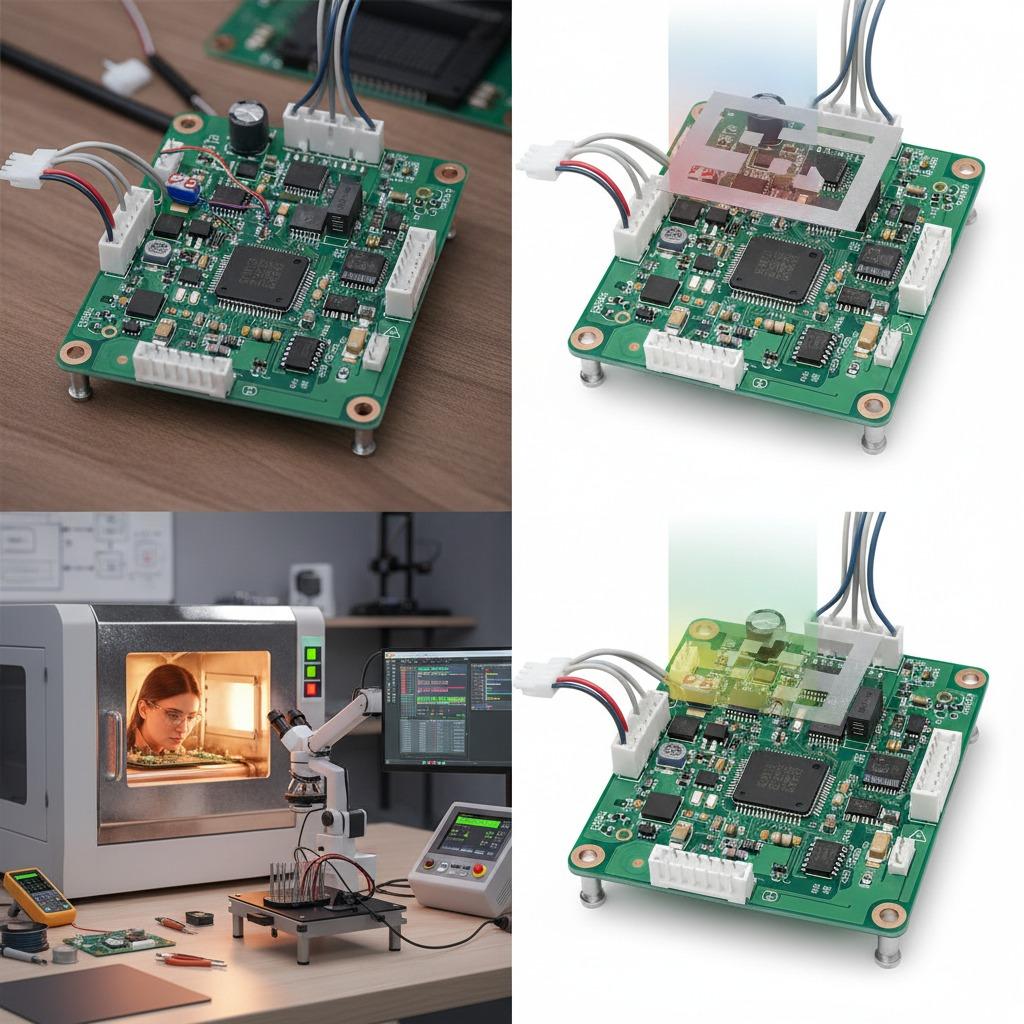
For OEMs, the board itself is only half the story. The more difficult work often sits in Custom Voice Command PCBA development: component selection, SMT assembly, test strategy, firmware loading, and design-for-manufacture checks. hcdpcba, for example, positions its services around SMT assembly, PCB prototyping, component sourcing, assembly, testing, DFMA support, and OEM/ODM work. That matters because a voice module may look small, but it still needs disciplined manufacturing if it is going into a commercial wall switch or appliance.
In practice, a sourcing manager should ask whether the supplier can handle board bring-up, repeatable assembly, and test flow for the exact connector set and audio path used in the product. The cheapest quote is often the one that assumes the least testing.
Selection criteria that deserve more attention than marketing claims
When comparing a Smart device voice recognition PCBA against alternatives, start with integration questions rather than feature slogans.
Does the board have the right mounting pattern for the enclosure? Are the connectors suitable for the cable harness you already plan to use? Is the USB-C port meant for development, programming, or power? Can the module be assembled consistently at scale with the chosen components? These questions sound basic, but they are where late-stage delays usually start.
Then move to product behavior. If the module is intended for residential switching, command reliability matters more than a long list of demo phrases. If it is meant for an appliance, recovery after power interruption matters. If it will be installed in a market with poor connectivity, offline performance is not a nice-to-have; it is the whole argument for the design.
Common mistakes buyers make
One common mistake is treating “offline recognition” as if it automatically means industrial-grade robustness. It does not. Another is assuming a voice board can be dropped into any enclosure without considering mic placement, speaker coupling, noise from relays, and cable routing. A third is buying based on visual similarity alone. Two black PCBs can look nearly identical and behave very differently once powered.
There is also the usual procurement trap: asking for final performance guarantees before the supplier has even seen the target housing or wiring map. For voice products, acoustic environment and mechanical layout can be as important as the PCB itself.
Practical next step for engineering and sourcing teams
If you are evaluating this type of board for a new product, ask for a sample set, a wiring diagram, the command list, and the test procedure used during production. If the design is being adapted into a switch panel or OEM appliance, confirm how the board will be assembled, programmed, and inspected before mass production. That is where a manufacturing partner’s value shows up.
For teams looking at SMT assembly and custom PCBA support, hcdpcba offers PCB prototype services, SMT placement, component sourcing, assembly, testing, DFMA support, and OEM/ODM manufacturing. If your product roadmap includes offline voice control, the best conversation is not about the headline feature. It is about whether the board, firmware, wiring, and enclosure can all survive real use on a real production line.