Why Bluetooth speaker PCBA matters in furniture and mirror products
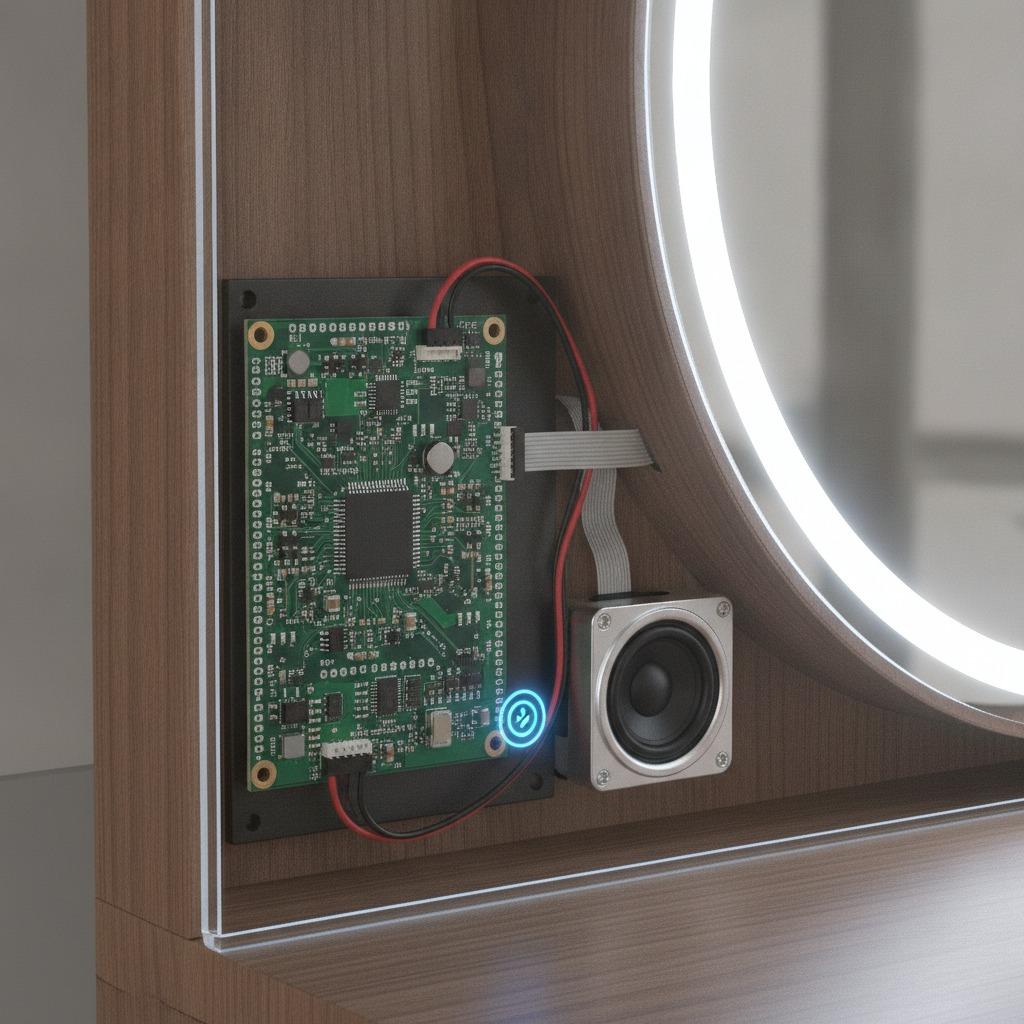
Bluetooth speaker PCBA has quietly become one of the more practical building blocks in smart furniture and illuminated mirror products. In a bedside cabinet, vanity mirror, or cabinet with integrated lighting, the electronics are doing more than playing audio. They are managing 12V power, touch input, mirror light control, and sometimes a compact speaker path in one board-level assembly. That is attractive to OEMs because it reduces wiring complexity and keeps the final product cleaner inside and out.
For sourcing teams and product engineers, the real question is not whether the board can “do Bluetooth.” It is whether the module fits the furniture architecture, the user interface, and the assembly process without creating avoidable rework later. A board that looks simple in a photo can still become a headache if the connector layout, thermal behavior, or assembly sequence is wrong.
What the pictured board appears to be
Based on the supplied product information, the module is a 12V Bluetooth control PCB / audio-lighting driver board. The visible board is a small green FR-4 PCBA with surface-mount components, a crystal oscillator, connector headers, and a printed antenna trace area associated with Bluetooth connectivity. The silkscreen includes “12V” and “SMH,” and the image text points to “Touch Control,” “Mirror Light,” and “& Speaker.”
The hardware set also appears to include a round speaker driver in a metal frame, a white molded housing or module, and wiring harness connectors. That combination fits the kind of integrated bedside cabinet mirror light system increasingly used in home furnishings and vanity products.
Where these modules are used
The practical use cases are easy to understand once you look at the end product instead of the board alone:
A bedside cabinet with a mirror light and a speaker needs low-voltage DC power, a user-friendly touch interface, and wireless audio playback.
A vanity or makeup cabinet may need lighting control near a mirror surface, while the speaker adds a small entertainment function.
Smart furniture Bluetooth PCBA designs can also support broader smart-home styling, where the electronics are hidden inside cabinetry but still need predictable access for wiring and service.
This is why an electronic circuit board supplier working in furniture electronics has to think about much more than component placement. Cable routing, connector access, and final enclosure fit matter just as much as the circuit itself.
What to look at before you commit to a design
For buyers, the first checkpoint is power. The board is marked for 12V input, which is common in furniture electronics because it is easy to distribute and generally safer than mains inside compact products. But 12V alone does not answer the key questions. You still need to know the current demand, whether the lighting and audio loads are on the same path, and how the board behaves when the system is switched on and off repeatedly.
Second, look at the control method. Touch control sounds straightforward, but touch sensitivity can change with the front panel material, thickness, grounding strategy, and even the shape of the mounting cavity. A board that works well on a bench may feel inconsistent once it is placed behind a decorative surface.
Third, check the audio architecture. The visible speaker confirms audio output hardware, but the supplied information does not verify Bluetooth version, amplifier power, impedance, or frequency performance. That means buyers should avoid making assumptions from the product photo alone. If sound quality matters, ask for the actual speaker pairing and test conditions.
Common buying mistakes
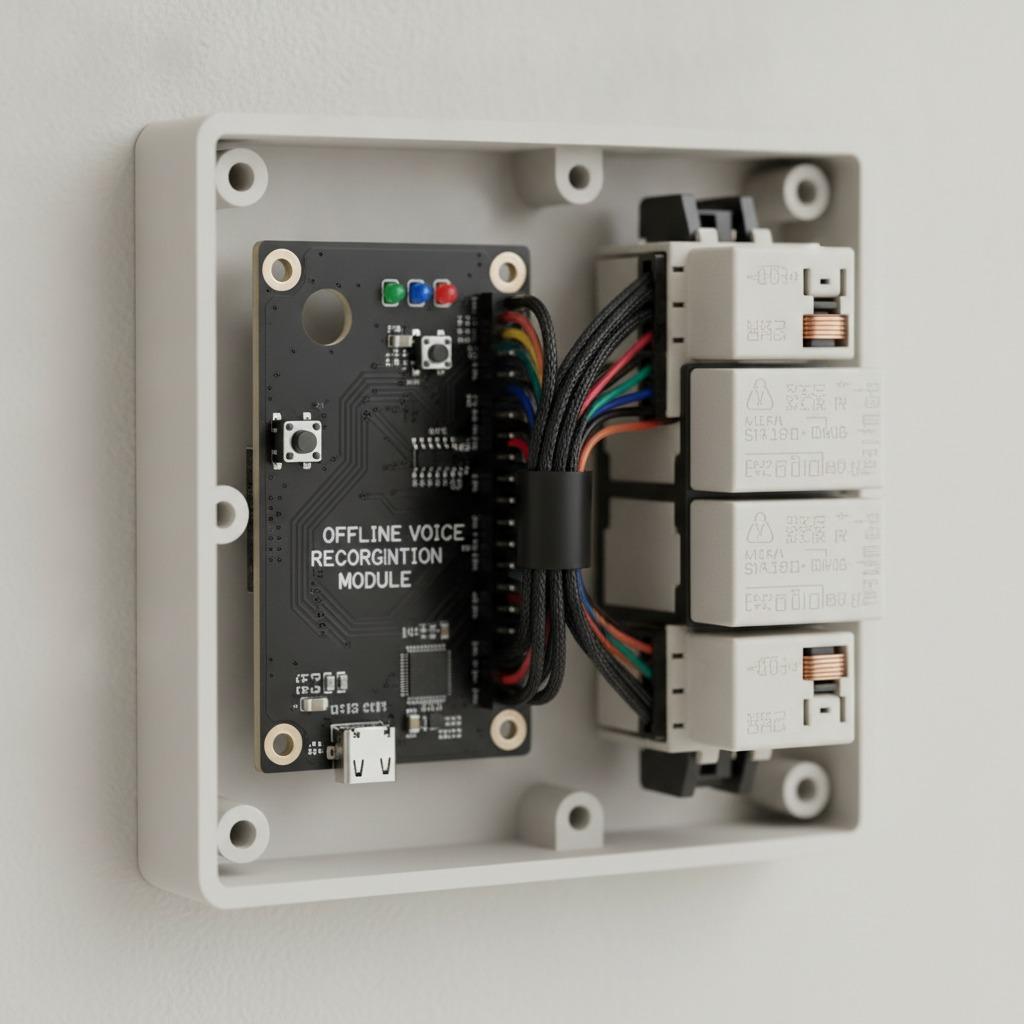
One common mistake is assuming a Bluetooth speaker PCBA and an LED mirror light control board are interchangeable. They are not. A module built for combined light and speaker use may have very different connector logic and firmware from a lighting-only board.
Another mistake is treating the connector count as proof of compatibility. Multiple plugs look convenient, but pinout and harness orientation are what determine whether the assembly works in production.
A third, and very typical, issue is underestimating serviceability. If the board is buried inside a vanity cabinet, replacement time matters. A good design should allow a technician to swap the board or speaker without dismantling the entire unit.
Why manufacturing quality matters here
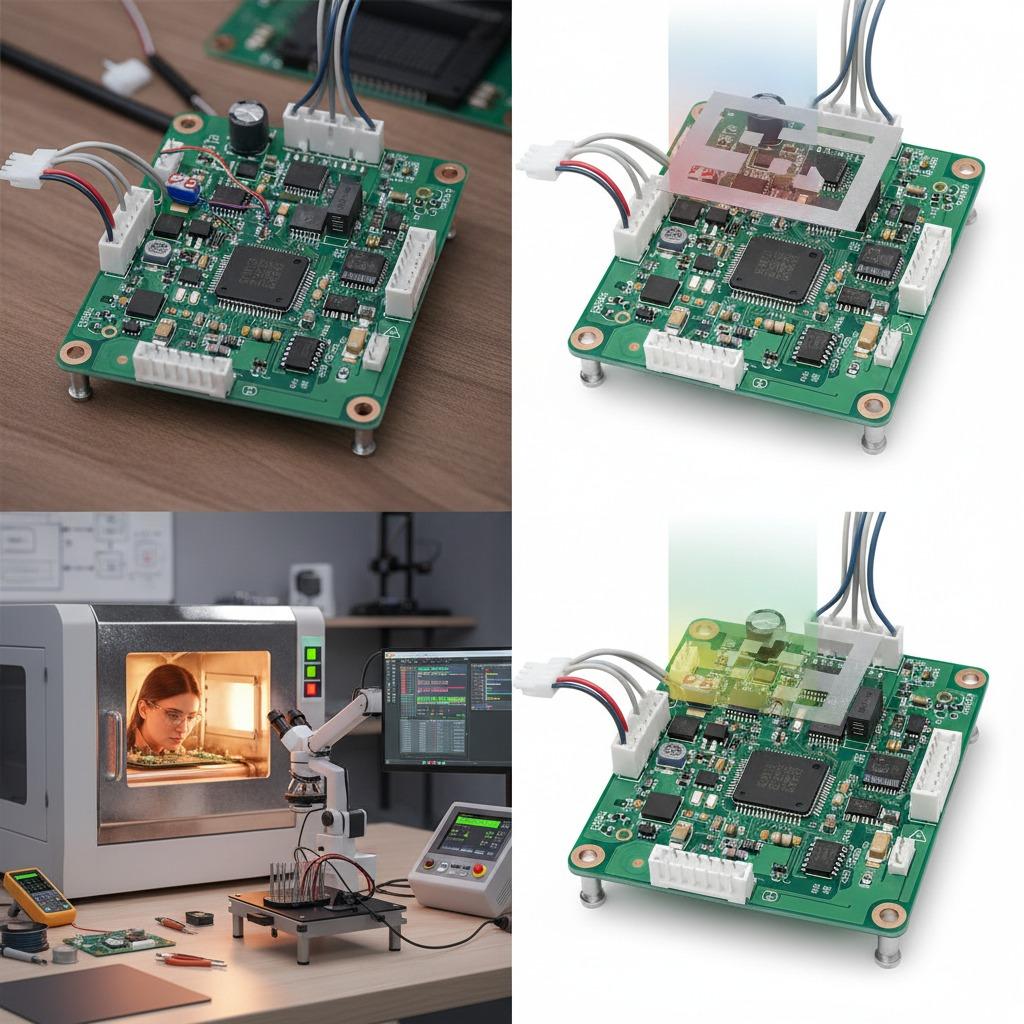
Boards like this are usually produced through SMT assembly, with possible through-hole steps for connectors or other mechanical parts. That means placement accuracy, solder joint consistency, and reflow control all affect field reliability. For consumer furniture electronics, the failure mode is often not dramatic; it is intermittent touch response, a loose connector, or a speaker path that degrades over time.
That is where a manufacturer such as hcdpcba becomes relevant. The company describes SMT patching, PCB prototyping, component sourcing, assembly, testing, DFMA support, and OEM/ODM service. For a buyer developing a mirror-light or furniture audio module, those services can shorten the path from concept to production, especially when the design needs to balance aesthetics, wiring simplicity, and repeatable assembly.
Practical questions to ask your supplier
Before ordering, ask for the exact power requirements, confirmed connector pinout, and the full mechanical drawing. Request a description of what the board actually controls: lighting only, audio only, or both. If the module includes Bluetooth, ask how pairing is handled and whether there is any firmware customization available for your product line.
If the end product is decorative furniture, ask about mounting constraints and insulation strategy as well. Furniture builds are unforgiving when the board sits too close to metal frame parts or cable bends are too tight.
Next step for OEM and ODM buyers
If your product roadmap includes a bedside cabinet mirror light system, vanity furniture with audio, or a touch-controlled Bluetooth furniture module, start with the board architecture rather than the enclosure artwork. The right Bluetooth speaker PCBA can simplify the whole product. The wrong one can force redesigns in wiring, touch sensing, and assembly.
For manufacturers that need PCB fabrication, SMT assembly, component sourcing, and board-level integration, the sensible next move is to share your mechanical layout and electrical targets with the supplier early. That is usually where the real savings are found—not in the first sample, but in the production build that does not need to be reopened later.