USB Camera Module Overview
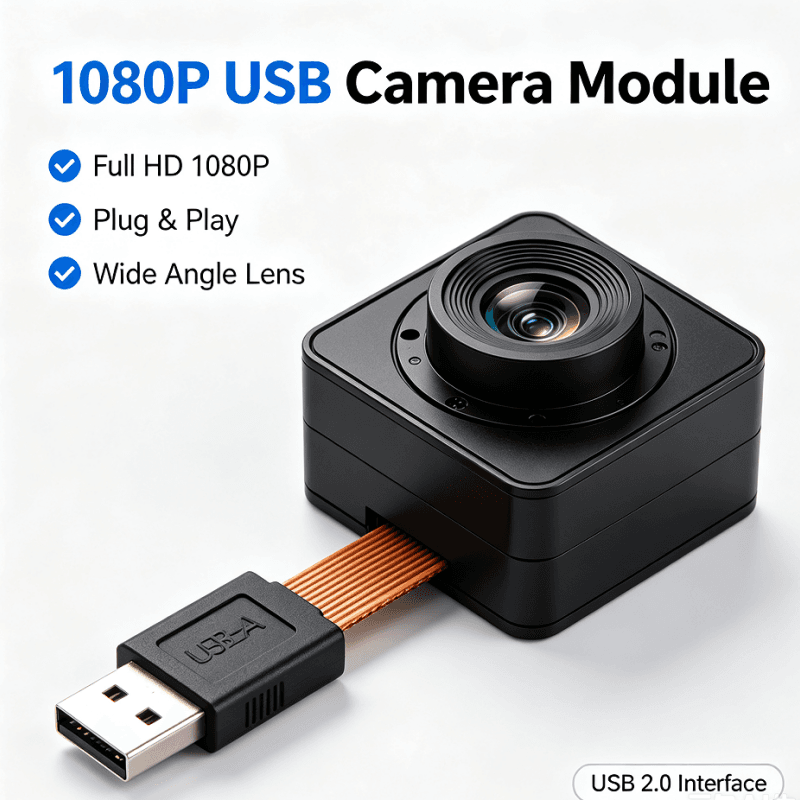
A USB camera module is a compact imaging unit that connects directly to a computer or embedded system through USB and solves a common integration problem: how to add video capture without designing a full camera stack from scratch. For buyers building webcams, inspection tools, kiosks, robotics, or prototype vision systems, this format reduces wiring complexity and shortens development time. The module described here is a small USB-based camera assembly with a visible 1080P / Full HD claim, a wide-angle lens label, and a USB 2.0 interface, making it a practical choice where simple connection and compact size matter.
hcdpcba supports electronics assembly and integration services for products like this, including SMT, PCB assembly, component sourcing, testing, OEM, and ODM workflows. That matters for buyers who need a camera module built into a larger device rather than purchased as a standalone part only.
Product Structure and Visible Features
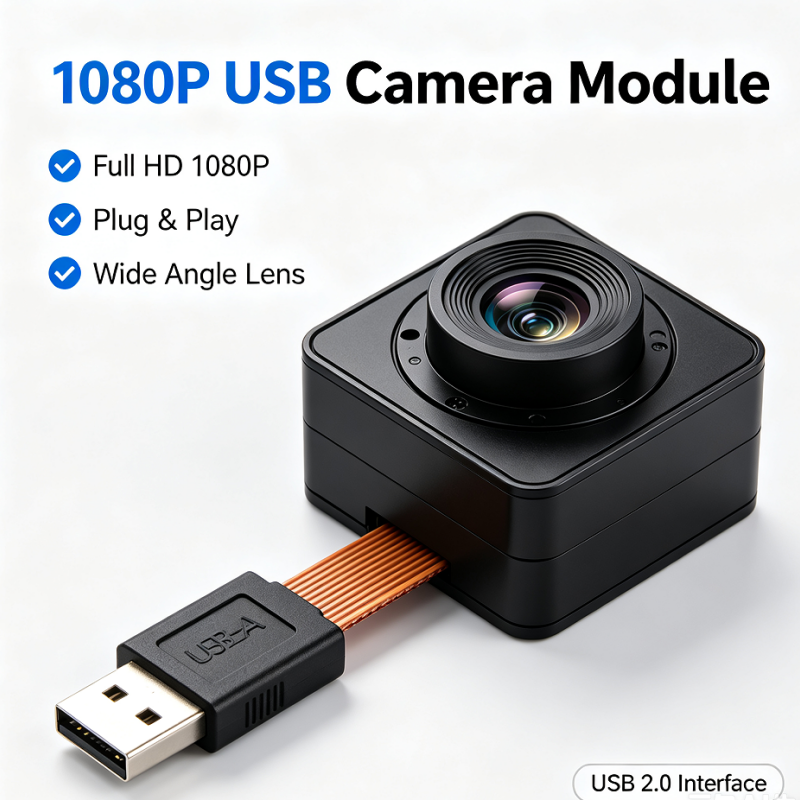
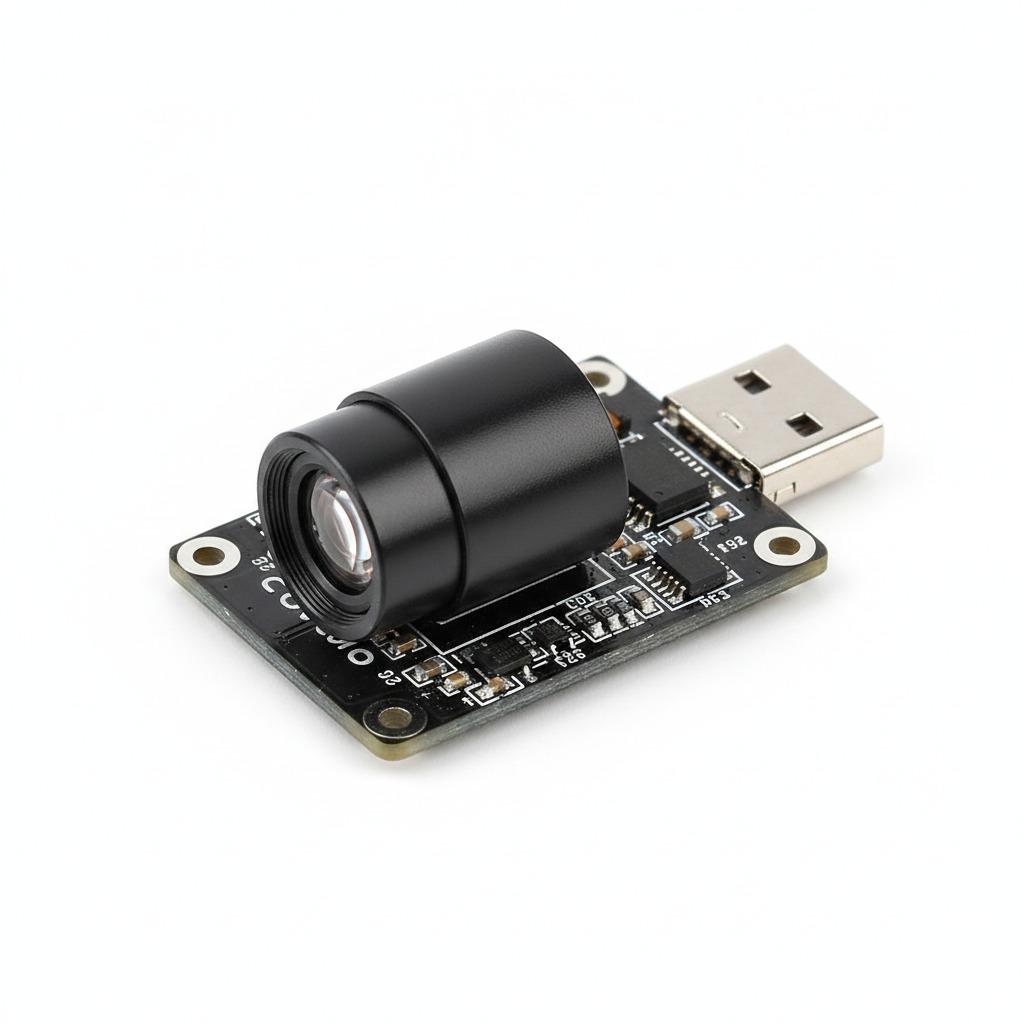
The module form factor shown in the supplied data is a compact rectangular board with a black camera housing, a cylindrical lens barrel, and a USB connection path. Visible elements include a rigid PCB, surface-mounted components, mounting holes, and a USB-A connector or plug arrangement depending on the version shown. The housing appears to be molded black plastic with a matte or satin finish, while the connector shell is metallic. An orange flex cable style lead is also visible in one version, suggesting a design intended for practical assembly and routing inside equipment.
Because only image-based information is available, internal sensor brand, exact lens specifications, and electronic chipset details should not be assumed. What can be referenced safely is the compact housing, the USB interface, the integrated lens assembly, and the user-facing claims printed in the graphic such as 1920×1080, 30 fps, and easy integration.
Key Capabilities Buyers Usually Evaluate
Resolution and Video Output
The product is presented as an 1080P camera module and an HD camera module. In procurement terms, that means the buyer is likely looking for a USB video source suitable for standard-definition or full-HD capture in monitoring, inspection, or human-machine interface applications. The visible marketing text also references 30 fps, but actual performance depends on the internal sensor, compression method, host driver support, and operating mode. Those details are not visible and should be confirmed during qualification.
Connectivity and Integration
The USB camera module uses a USB interface, and the product imagery emphasizes plug and play operation. That is valuable for teams that want faster setup in a prototype environment or a production device with minimal software overhead. A plug and play USB camera reduces the need for custom capture boards and simplifies deployment on systems that already support USB imaging devices.
Optical Form Factor
A wide-angle lens is indicated in the supplied data. For buyers, a wider view can help in kiosk interaction, desktop monitoring, enclosure-mounted observation, or short-distance inspection where capturing more of the scene is useful. Exact field of view, focus behavior, and aperture are not specified, so engineers should validate the lens performance against the intended working distance.
Materials, Finish, and Mechanical Notes
The visible construction suggests common electronics-grade materials: FR-4 style PCB, solder mask finish, plastic lens barrel or coated metal lens housing, and a metal USB connector shell. The black camera body gives a clean, compact appearance and helps reduce visual clutter in a finished product. Mounting holes on the PCB can support fastening in enclosures or brackets, although the exact mounting method is not confirmed.
These details are important for industrial camera module buyers because mechanical compatibility often decides whether a design drops into a system smoothly or requires extra adapters, spacers, or custom brackets.
Manufacturing and Assembly Considerations
From a production standpoint, this product belongs to electronics assembly and camera module integration. A typical build would include PCB fabrication, SMT placement of the imaging and support components, sensor and lens integration, cable termination, and functional testing. For a company like hcdpcba, DFMA review can help reduce assembly risk by checking component placement, connector access, cable routing, and serviceability before mass production.
Testing focus usually includes power-up verification, image output detection, USB enumeration, basic video capture, and visual inspection of lens alignment or board integrity. Buyers should ask for the specific test plan when the module is intended for commercial equipment, especially if it will be installed in a product that must ship consistently.
Typical Applications
This type of industrial camera module or embedded camera module is used in a wide range of products and prototypes. Common scenarios include PC webcams, robot vision, machine vision demonstrations, light inspection stations, access terminals, DIY electronics, monitoring devices, and embedded systems that need a USB-connected video source. The compact size and simple USB connection make it attractive for developers who need fast integration rather than a highly specialized camera stack.
It is also relevant for consumer devices and IoT hardware where the camera must fit inside a small enclosure and still provide straightforward data access to the host system.
Customization and Buyer Decision Factors
When selecting a USB camera module, buyers usually compare lens angle, focus type, image resolution, cable length, board shape, connector orientation, and compatibility with the host platform. If the module is being integrated into a finished product, request clarity on the following: sensor model, fixed-focus or adjustable-focus configuration, operating voltage, supported USB standard, mounting constraints, and software interface expectations. These items are not shown in the provided data and should be confirmed before purchase.
If customization is required, hcdpcba’s OEM and ODM capability can be relevant for board revision, connector changes, assembly support, and production scaling. For teams moving from prototype to volume build, that combination of PCB, SMT, sourcing, and testing services can reduce coordination time.
Quality Control and Procurement Guidance
Because the visible product claims include Full HD, low light performance, and easy integration, buyers should separate printed marketing statements from verified engineering data. Ask for sample validation, image samples under your actual lighting, USB compatibility notes, and test documentation. If the module will support inspection or monitoring, image stability and repeatability matter more than headline resolution alone.
For procurement teams, the main decision factors are usually mechanical fit, output quality, integration effort, and production consistency. A well-made USB camera module should be easy to install, stable in operation, and repeatable across batches.
Contact for USB Camera Module Assembly Support
If you need a camera module integrated into a larger electronics product, hcdpcba can support PCB assembly, component sourcing, testing, OEM, and ODM workflows. Share your enclosure constraints, interface needs, and target application so the module can be aligned with your build requirements.
For project discussion, you can contact hcdpcba at +86 18924624188.