
Light offline ASR voice recognition IC Overview
The Light offline ASR voice recognition IC is designed for buyers who need local voice control without relying on a cloud connection. In a smart switch or home automation product, that solves a common problem: the system should still respond when the network is unstable, the router is down, or the user simply wants a faster, more private control path. Based on the supplied product information, this board is positioned as a smart voice switch PCBA / ASR offline voice recognition module for embedded switching applications.
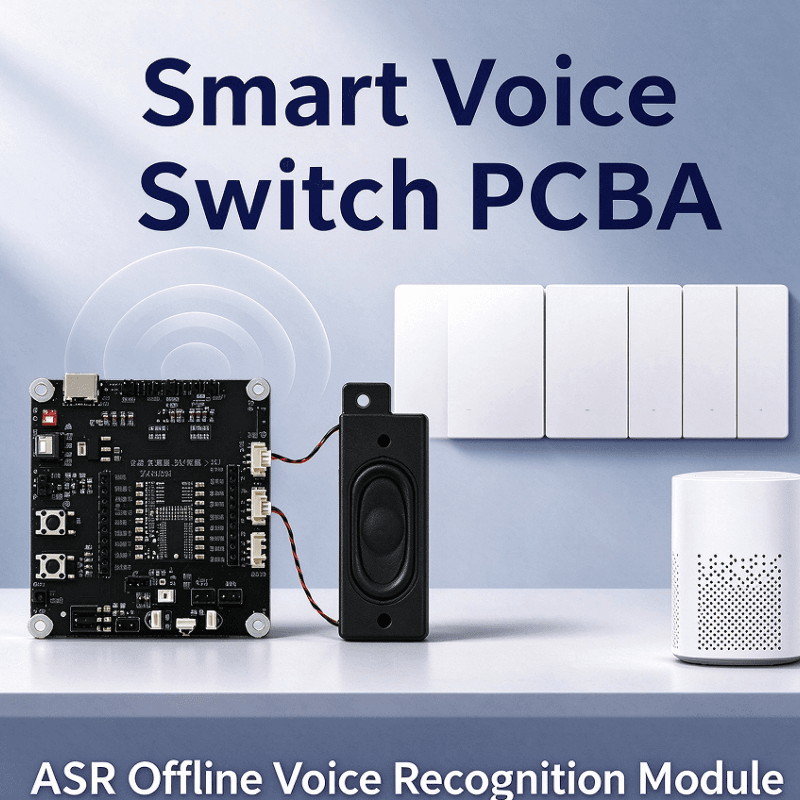
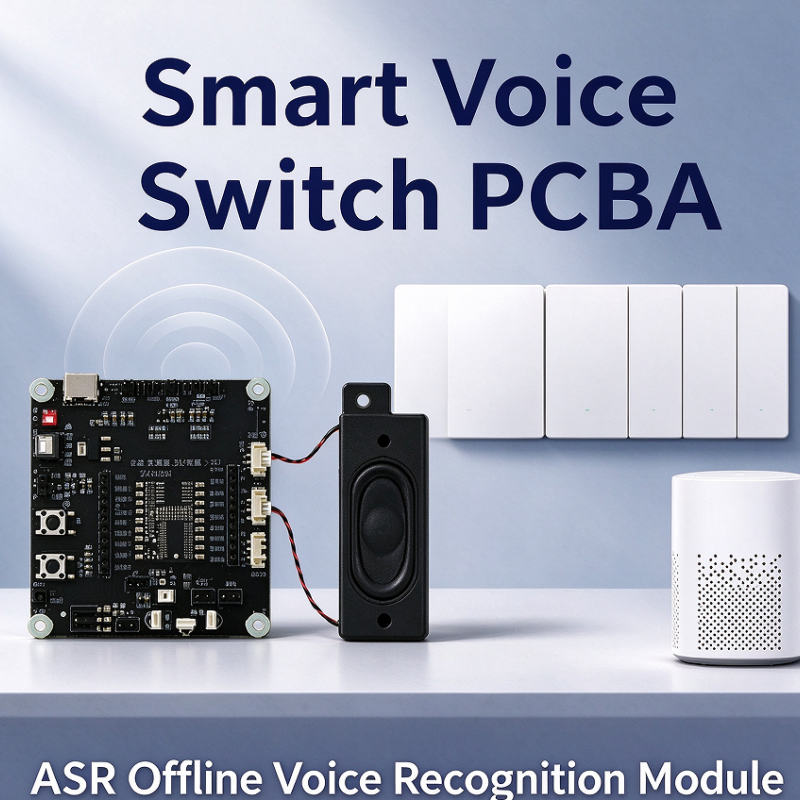
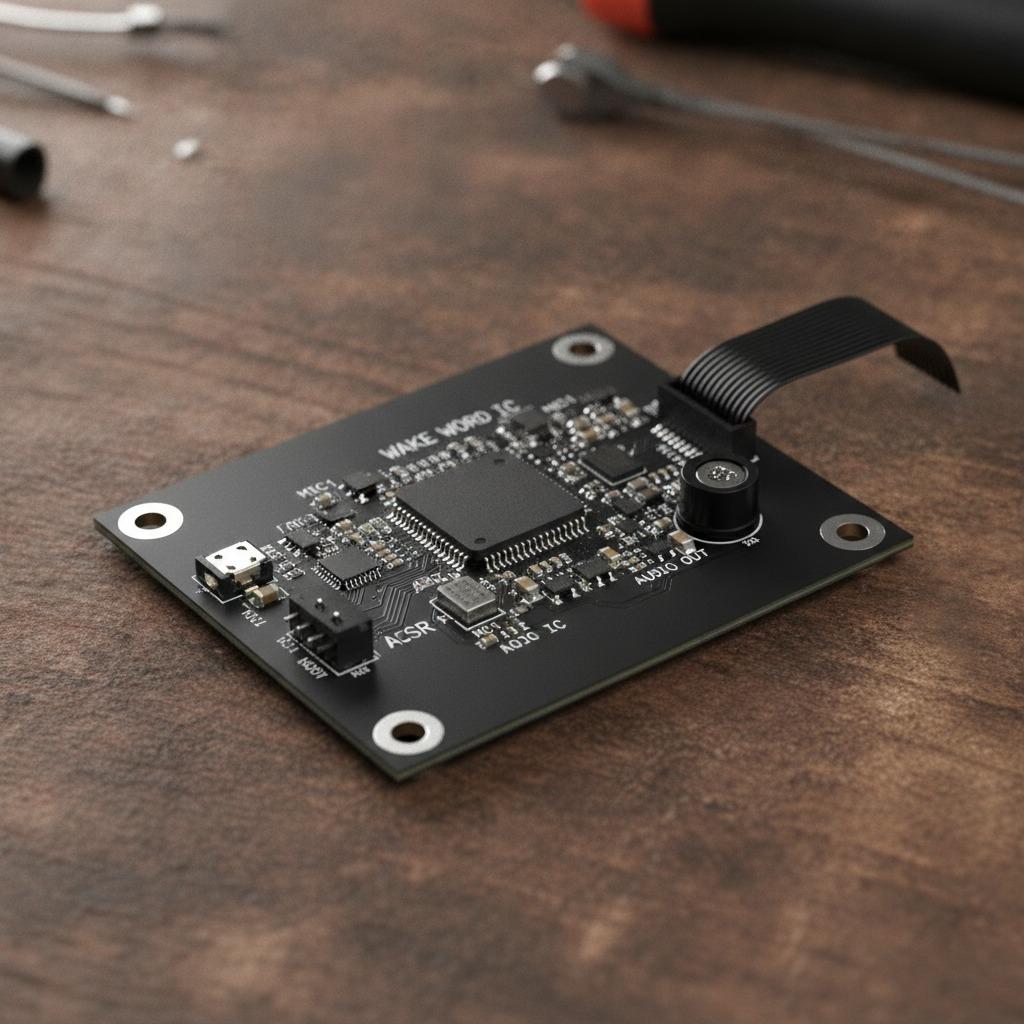
The visible design shows a black PCB with multiple connectors, corner mounting holes, and an attached wired accessory module. The product context suggests it can receive voice wake-up input, recognize offline commands, and trigger switch control for connected loads such as lights or appliances. For OEM and ODM buyers, this makes it a practical base for wall switches, control panels, and other voice-enabled terminals.
Product structure and visible features
From the provided image data, several elements are clearly identifiable. The main assembly is a rectangular PCB in a matte black solder mask with white silkscreen markings. Multiple surface-mounted components are placed across the board, and connectors are visible along one side. Four mounting holes are located near the corners, which is useful for fixture installation inside an enclosure.
The display also includes a wall-switch style panel and a small cylindrical audio device for application context. A black wired module is attached to the PCB; however, the exact function of this part cannot be confirmed from the image alone. It may be a microphone-related accessory, speaker, or buzzer-style component. Because this is not fully visible, it should be treated as a demo accessory rather than a verified final specification.
Key capabilities buyers care about
Offline voice operation
The most important value point is offline operation. A system built around an Offline ASR Speech Recognition Module can process simple voice commands locally, reducing dependence on internet access and avoiding cloud latency. That is especially relevant for lighting control and embedded switching products where immediate response matters.
Voice wake-up and switch control
The product image explicitly indicates voice wake-up and switch control functions. In practice, this type of board is often used to listen for a wake word, then execute a predefined command such as turning a channel on or off. The result is a straightforward voice interface for a wall switch or appliance controller.
Embedded integration
As a Voice Control Development Board, the assembly appears suitable for integration into a broader smart home system. Buyers looking for a Smart home voice control module PCBA typically want a compact board that can be mounted inside existing switch housings or control boxes, with wiring and firmware tailored to the target product.
Materials and finish
The PCB appears to use standard FR-4 style laminate with a matte black solder mask and white silkscreen. This is a common finish for electronic control boards and supports a clean OEM appearance. The mounted electronic parts are standard SMT components, while the visible accessory housing is black plastic. The wall switch examples shown in the scene use white plastic enclosures, which helps communicate the intended residential installation environment.
Manufacturing and assembly process
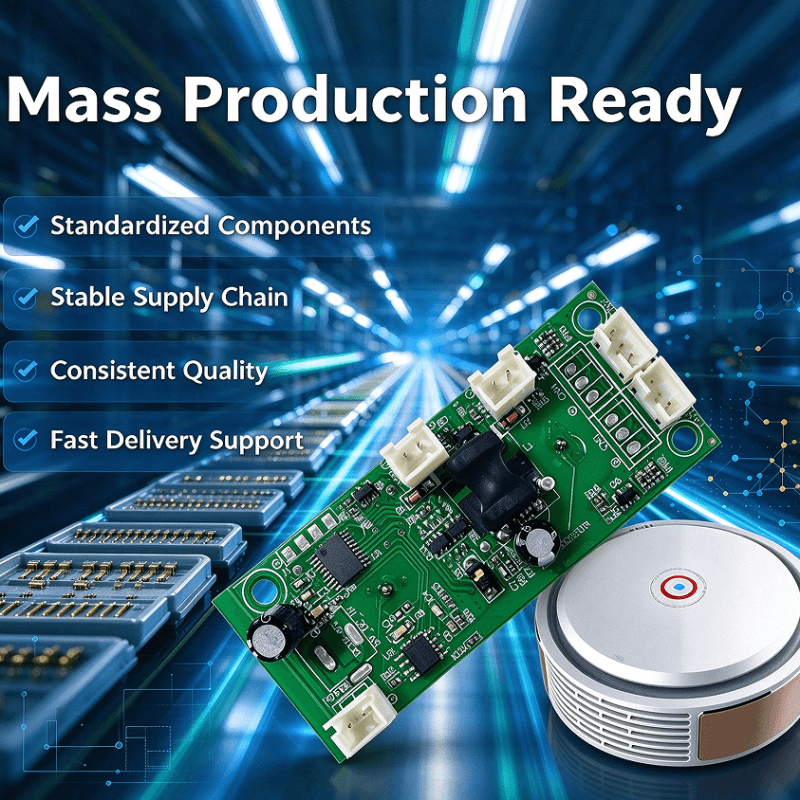
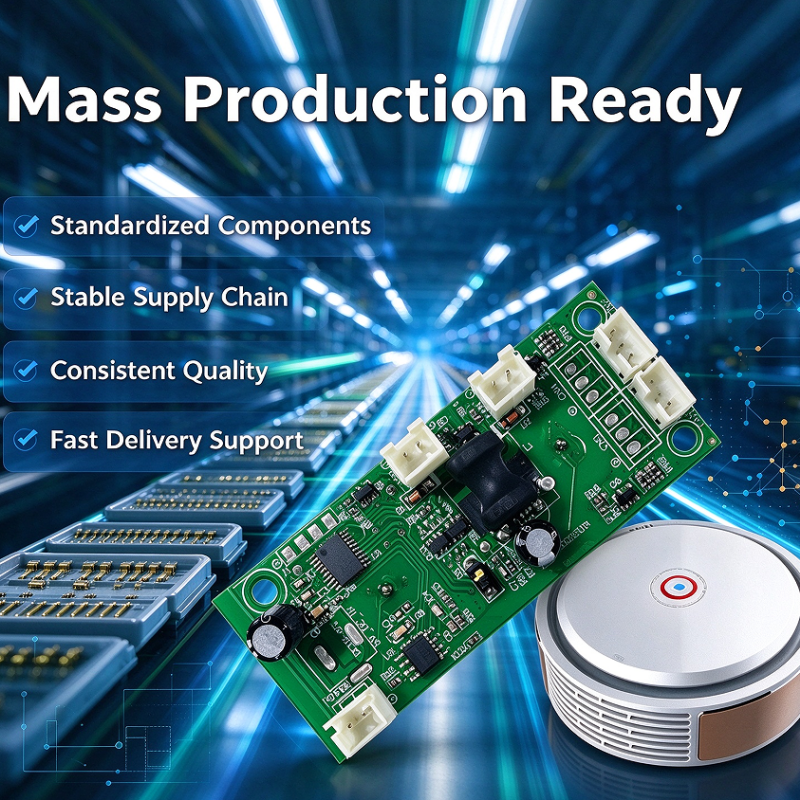
For a product in this category, the production flow usually centers on PCB fabrication, SMT placement, soldering, inspection, and functional test. hcdpcba offers SMT贴片, PCB assembly, component sourcing, testing, OEM, and ODM support, which aligns well with this type of project. If the board requires firmware integration for command matching or wake-word behavior, that step is normally handled during the embedded development phase before mass production.
A buyer evaluating a Custom voice command recognition board should also consider DFMA early in the project. Proper connector placement, microphone or audio accessory routing, and mounting hole position can simplify final assembly inside a switch housing and reduce field-installation issues.
Typical applications
This type of board is a good fit for smart home lighting control, voice-enabled wall switches, appliance switching, and other building automation products. It can also serve as a platform for offline voice control upgrades in existing devices. For brands developing a local-control product line, the module can be adapted into multi-gang switch panels, compact control terminals, or voice-assisted equipment with minimal user friction.
Because the board is positioned for offline use, it is especially relevant in spaces where network stability is inconsistent or where users prefer a deterministic local control experience. That makes it attractive for residential, hospitality, and light commercial applications.
Quality control and buyer decision factors
When sourcing this kind of PCBA, buyers usually compare more than the visible board layout. Important decision factors include command set flexibility, wake-word behavior, interface compatibility, power design, audio pickup arrangement, and whether the solution can be integrated into the target enclosure without redesigning the whole product. Exact electrical ratings, supported languages, recognition accuracy, and communication protocols are not provided here, so these should be confirmed directly before procurement.
For production orders, a reliable assembly partner should also provide incoming material checks, soldering quality control, electrical testing, and packaging suitable for electronics distribution. hcdpcba notes capabilities in component sourcing, assembly, testing, and one-to-one service, which can help reduce integration risk for OEM projects.
Customization guidance
If you are planning a voice-controlled switch product, define the required command list first, then map the board interface to your relay, triac, or load-control design. Confirm enclosure size, connector orientation, mounting position, and whether the accessory module is intended to be a microphone, speaker, or another audio element. These details affect both software behavior and final mechanical fit.
For OEM buyers, the most efficient route is usually to start with a functional sample, verify the control logic in the intended enclosure, and then move into a pilot run. That approach helps catch wiring, thermal, and user-interface issues before volume production.
Contact for OEM/ODM voice control PCBA
If you need a Light offline ASR voice recognition IC solution for smart switches or appliance control, hcdpcba can support PCB prototyping, SMT assembly, component sourcing, testing, and OEM/ODM development. Share your target enclosure, command requirements, and application scenario to start a tailored quotation and technical review.
For project discussion, contact hcdpcba at +86 18924624188.