

Circuit Board Design for 12–24V Reverse Voice Alarm Systems
Circuit Board Design for a 12–24V reverse voice alarm system addresses a practical problem in vehicles and industrial equipment: operators need a reliable audible warning when reversing, backing into blind areas, or moving in crowded work zones. In forklifts, trucks, construction machinery, warehouse vehicles, and other 12–24V equipment, a clear voice prompt or alarm can improve situational awareness without forcing the user to rely only on mirrors or visual indicators. The board shown in the preparation data appears to combine power handling, trigger logic, and audio output in one PCBA solution, which makes it suitable for customers building custom safety devices or replacing a basic beeper with a voice-based warning module.
Product Overview
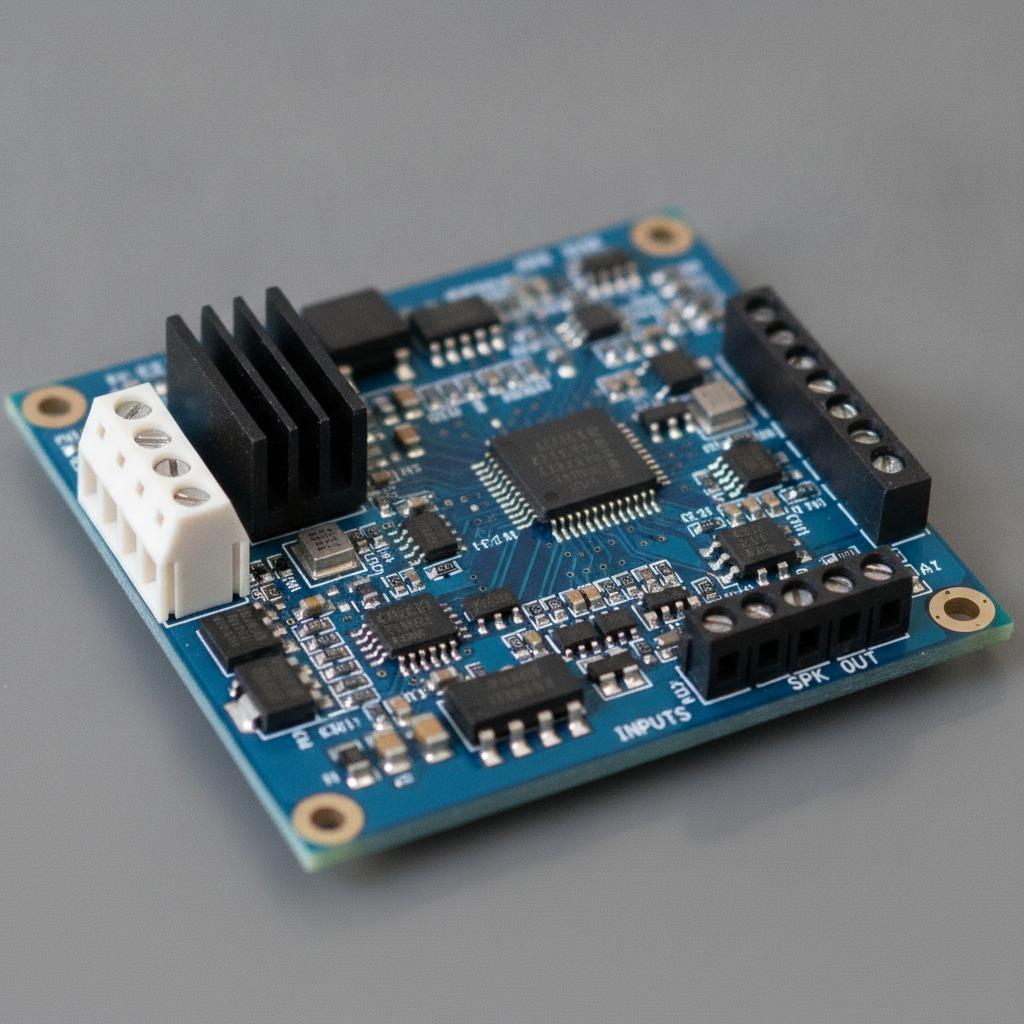
This product is best understood as a custom PCBA module rather than a simple passive board. The visible design includes a rigid PCB with SMT components, headers, screw terminals, and audio-related parts such as a speaker or buzzer-like output component and a microphone shown in the graphic. The visible labeling also suggests features such as “Stable Power,” “Clear Voice,” “Multi-Trigger,” and “Custom Firmware.” While those statements should be treated as marketing language unless verified by testing, they do indicate the intended function: a board that can accept vehicle power, respond to one or more trigger inputs, and play a warning voice or alarm output.
For buyers searching for Automotive Electronics PCBA options, this type of board sits between standard electronic control modules and fully custom embedded systems. It is relevant to OEMs, aftermarket safety device brands, and industrial equipment makers who need a compact board with embedded logic.
Key Capabilities and Visible Specifications
Power Input
The most clearly visible specification is the 12–24V input range. That makes the board compatible with many common vehicle and industrial electrical systems. This is important because reverse alarm electronics often need to survive varying supply conditions, especially in mobile equipment where voltage fluctuations are common.
Control and Trigger Logic
The board appears designed for multi-trigger use, although the exact number of trigger points is not visible. In practical terms, this means the board may be able to react to reversing signals, sensor inputs, or control commands from another module. For a Vehicle Control Board application, trigger flexibility matters because different vehicles and machines use different switch logic and wiring layouts.
Audio Output Function
The product title and surrounding components suggest the board supports recorded voice prompts or a reverse warning tone. The visible audio-related parts indicate an embedded audio pathway, but the exact sound format, volume output, and recording method are not provided. Buyers should confirm these details during the design review stage.
Materials and Finish Options
The visible board appears to use standard rigid PCB material with a solder mask finish, along with copper traces, metal leads, and plastic connector bodies. Two finish styles appear in the supplied data: a blue solder mask version and a black solder mask version, with the exploded rendering also showing a red board. These visual differences suggest that the product family may be configurable, but the exact stack-up and layer count are not disclosed.
For a 1. Automotive back-up voice alarm PCB assembly board, finish selection may depend on branding, production process, and thermal or assembly preferences. In many custom electronics projects, the buyer can choose board color, silkscreen markings, connector style, and component sourcing policy. Those options should be confirmed before release to production.
Manufacturing Process
Based on the supplied information, the service scope likely includes PCB design, SMT assembly, through-hole assembly where needed, firmware programming, and functional testing. The company information for hcdpcba also highlights PCB prototyping, component sourcing, assembly, testing, DFMA support, OEM, and ODM services. That makes the product relevant for both small-batch development and higher-volume production.
In a typical workflow, engineering begins with circuit board design and schematic validation, followed by PCB fabrication, SMT placement, soldering, inspection, firmware burn-in, and final electrical test. For a reverse voice board, additional checks may include power-up verification, trigger response, connector continuity, and audio playback confirmation. If the design needs to work in a vehicle environment, the layout should also consider protection against wiring mistakes, transient stress, and vibration-related connector issues.
Application Scenarios
This type of PCBA is suitable for equipment that needs spoken reverse warnings or audible alerts. Common use cases include forklifts, pallet trucks, warehouse machinery, utility vehicles, small construction machines, AGVs, and industrial transport platforms. It may also fit access-control equipment or automation devices that need a spoken status message when a motion state changes.
For buyers sourcing a 12–24V vehicle reverse voice prompt PCBA, the main value is integration. Instead of combining a separate controller, audio module, and power conversion board, a single custom assembly can reduce wiring complexity and simplify enclosure design.
Quality Control and Reliability Considerations
The preparation data mentions testing services, which is important for any safety-related board. Quality control for this kind of product usually focuses on solder joint quality, correct component orientation, input voltage handling, trigger behavior, and stable audio output. Since the exact certifications and environmental ratings are not provided, buyers should request documentation if the board will be used in regulated markets or harsh operating environments.
For industrial stability, the most important decision factors are not only the schematic but also the assembly quality, component sourcing, and programming consistency. A sound board may work on the bench yet fail in field use if the connector selection, grounding, or protection network is weak. That is why DFMA review and test planning matter early in the process.
Customization Guidance for Buyers
Customers should define the input voltage range, trigger method, voice content, connector layout, and installation method before production starts. If the product must support different vehicle types, the firmware may need separate logic branches for timing, repeat behavior, or mute control. Buyers should also clarify whether the microphone is for recording, sensing, or another function, because the image alone does not prove its exact role.
When discussing Automotive Electronics PCBA requirements, it helps to provide wiring diagrams, target enclosure dimensions, expected operating conditions, and preferred assembly finish. That information makes it easier to adapt the Circuit Board Design to the real installation environment.
Why Choose a Custom Board Approach
A custom reverse voice board is more adaptable than an off-the-shelf alarm module. It can match the system voltage, integrate with existing vehicle logic, and fit the desired mounting space. It also allows changes in sound file behavior, trigger response, and connector arrangement without redesigning the whole machine.
If you are evaluating a new vehicle warning module, share your electrical requirements, trigger logic, and application scenario with the engineering team. hcdpcba offers PCB prototype, SMT assembly, component sourcing, testing, and OEM/ODM support, which can help move the project from concept to production with fewer handoffs.
Request a Quote or Design Review
For project evaluation, send your schematic, board files, bill of materials, or functional brief. A focused review can confirm whether the reverse voice alarm PCBA meets your voltage, control, and assembly needs before sampling begins.