
tactical flashlight pcba Overview
The tactical flashlight pcba is the electronic core that turns a rugged handheld light into a reliable tool for field work, inspection, security, and emergency response. For buyers, the main problem it solves is straightforward: you need a compact control board that can manage switching, power delivery, and interface functions inside a limited enclosure without sacrificing stability. In a torch-style device or related compact instrument, the board must fit tightly, route signals cleanly, and survive repeated handling during assembly and use.
From the visible board structure, this type of assembly is built around a printed circuit board with mounted integrated circuits, surface-mount passives, edge contacts, and mechanical mounting points. That makes it suitable for embedded control modules, prototype validation, or production electronics where space is tight and reliability matters. hcdpcba supports PCB fabrication, SMT assembly, component sourcing, assembly, testing, and DFMA review for projects like this.
What this board type typically includes
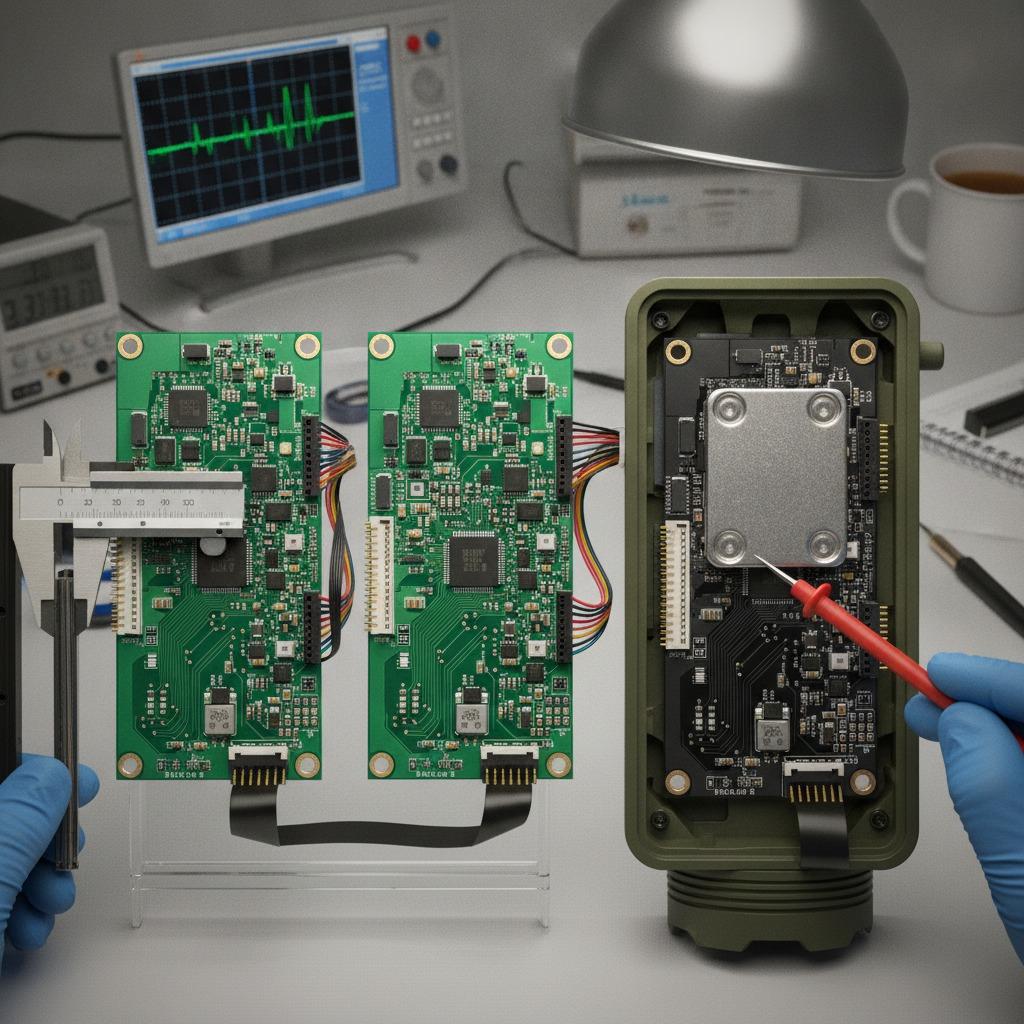
A board in this class usually focuses on compact control and interconnection rather than large power handling. The visible layout suggests a dense routing style, likely intended to keep traces short and signal paths organized. The board may serve as a subassembly for a flashlight controller, accessory module, or compact electronics platform. While exact electrical specifications are not visible, the image shows practical details buyers often look for: multiple ICs, gold-plated edge fingers or connectors, and mounting holes for secure positioning.
Visible structural features
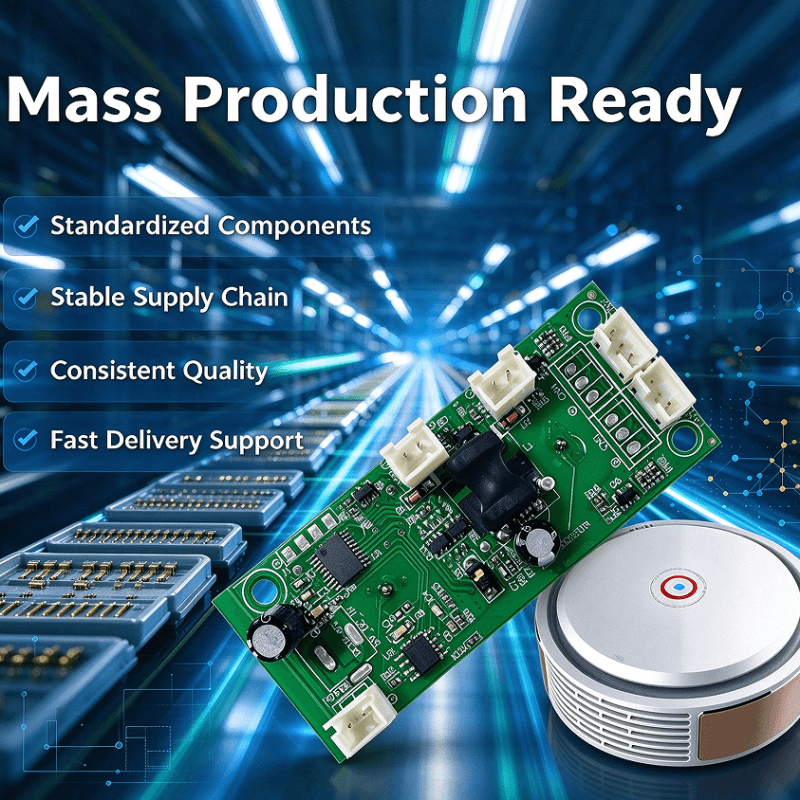
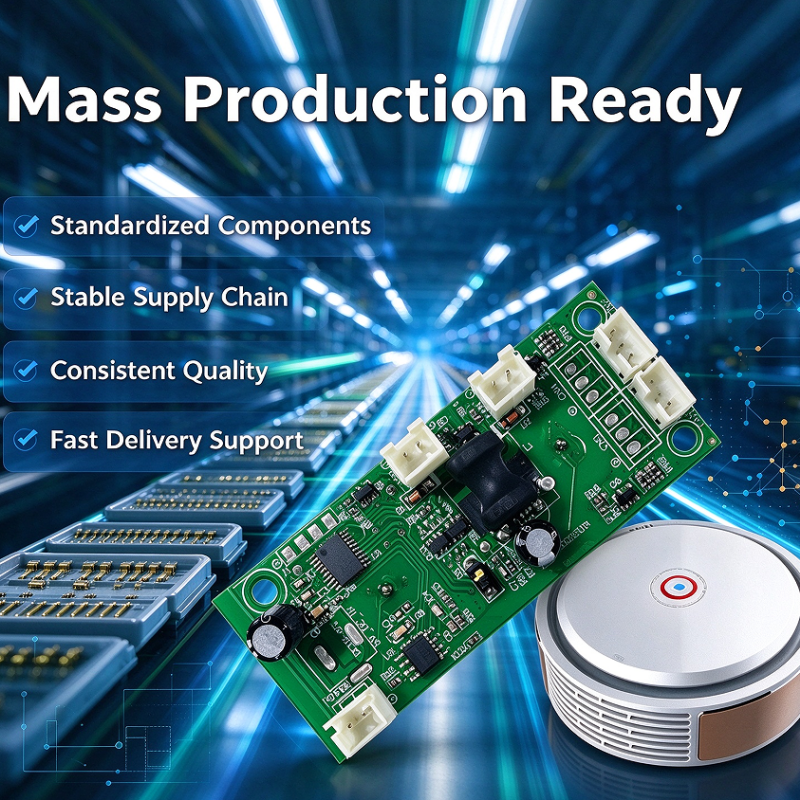
In the supplied product data, the board appears as a flat rectangular PCBA with a green solder mask or a blue solder mask depending on the referenced image set. That indicates different sample boards or product variants within the same manufacturing category. The common visible features are consistent: compact form factor, precision-drilled holes, surface-mounted components, and a layout designed for bench testing or integration into a larger device.
Materials and finish options
Most boards of this kind are built on fiberglass-reinforced laminate such as FR-4, which is a standard choice for general electronics because it balances rigidity, insulation, and manufacturability. The visible surface finishes include typical matte or gloss soldermask, with exposed copper at pads and connector fingers. If the design requires better contact wear, gold plating on edge fingers or contact areas can be used. For projects with different electrical or thermal demands, hcdpcba can support multi-layer boards, HDI, and high-frequency PCB options according to customer requirements.
Manufacturing process and assembly flow
The manufacturing path for a tactical flashlight pcba generally begins with PCB fabrication, followed by SMT placement, reflow soldering, and inspection. If the board includes headers, test pins, or other mixed technology parts, through-hole assembly may be added. For development-stage hardware, the board may also go through functional testing, continuity checks, and board-level debug before shipment. This is especially useful when the design is being verified in a lab, where oscilloscope traces, routing review, and powered testing help confirm behavior before volume production.
hcdpcba also provides PCB proofing, component sourcing, assembly, testing, and OEM/ODM support. That matters for buyers who need one team to handle the transition from prototype to small batch or production run.
Application scenarios
Although the keyword refers to tactical lighting, the same PCBA architecture can fit a wider range of compact electronics. It may be used in handheld lighting controls, rugged accessories, embedded system modules, test fixtures, security equipment, or instrumentation where a small controller board is required. Related use cases can include night vision device pcba, night vision scope circuit board, and tactical equipment circuit board projects, especially when the design needs compact routing, stable signal connections, and mechanical mounting support.
For engineers and OEMs, the value is in the board’s adaptability. A similar platform can be tuned for power management, user interface logic, sensor input, or communication functions depending on the product target.
Customization and design guidance
When specifying a custom board, buyers should define the enclosure space, connector direction, mounting hole positions, component height limits, and expected assembly volume. If the board must fit a compact flashlight housing, right-angle connectors and low-profile parts are often preferred. If the design will be copied or adapted from an existing sample, a pcb copy board service may help accelerate layout reconstruction and production preparation, but only when the original design rights and technical data are properly handled.
For hardware teams, DFMA review is worth considering early. Small layout changes can make soldering easier, reduce rework, and improve test access. That is especially important when the board includes dense pads or when probe access is limited during validation.
Quality control and buyer decision factors
Important buying factors include assembly accuracy, solder joint quality, connector alignment, inspection consistency, and whether the supplier can provide test support. In a compact electronics board, a minor placement error can affect fit or signal integrity. Buyers should also ask about material traceability, component sourcing, and whether the supplier can support functional testing before shipment.
Because the visible boards appear bench-tested or development-oriented, a practical supplier should be able to support prototype builds, debug feedback, and small-batch scaling. That is often more valuable than a generic production quote, especially for new electronics that still need validation.
Why work with hcdpcba
hcdpcba offersSMT surface mounting, PCB prototyping, component sourcing, assembly, testing, DFMA service, and OEM/ODM support. For buyers developing a tactical flashlight pcba or another compact control board, that combination can shorten the path from schematic to assembled sample. The company serves industrial control, security, medical, IoT, automotive electronics, communications, and other demanding sectors where board quality and response speed matter.
Request a quotation
If you need a compact board for a flashlight module, embedded controller, or related electronics project, send your Gerber files, BOM, assembly notes, and test requirements. hcdpcba can help review the design, prepare assembly, and support prototype or batch production with a practical manufacturing flow.