Circular PCBA Board Overview
A Circular PCBA board is a practical choice when an OEM needs a compact assembled control board that can fit a round enclosure, sensor module, or camera housing without wasting internal space. In many projects, the real challenge is not just fitting the electronics into a small footprint, but also keeping signal routing, mounting points, and connector access organized. This type of circular PCBA board addresses that problem by combining populated circuitry, plated holes, and interface connectors in a geometry that suits compact and often specialized devices. For buyers working on embedded hardware, security devices, communication modules, or industrial electronics, the value is in receiving a ready-to-integrate assembly rather than a bare PCB.
What the Product Is
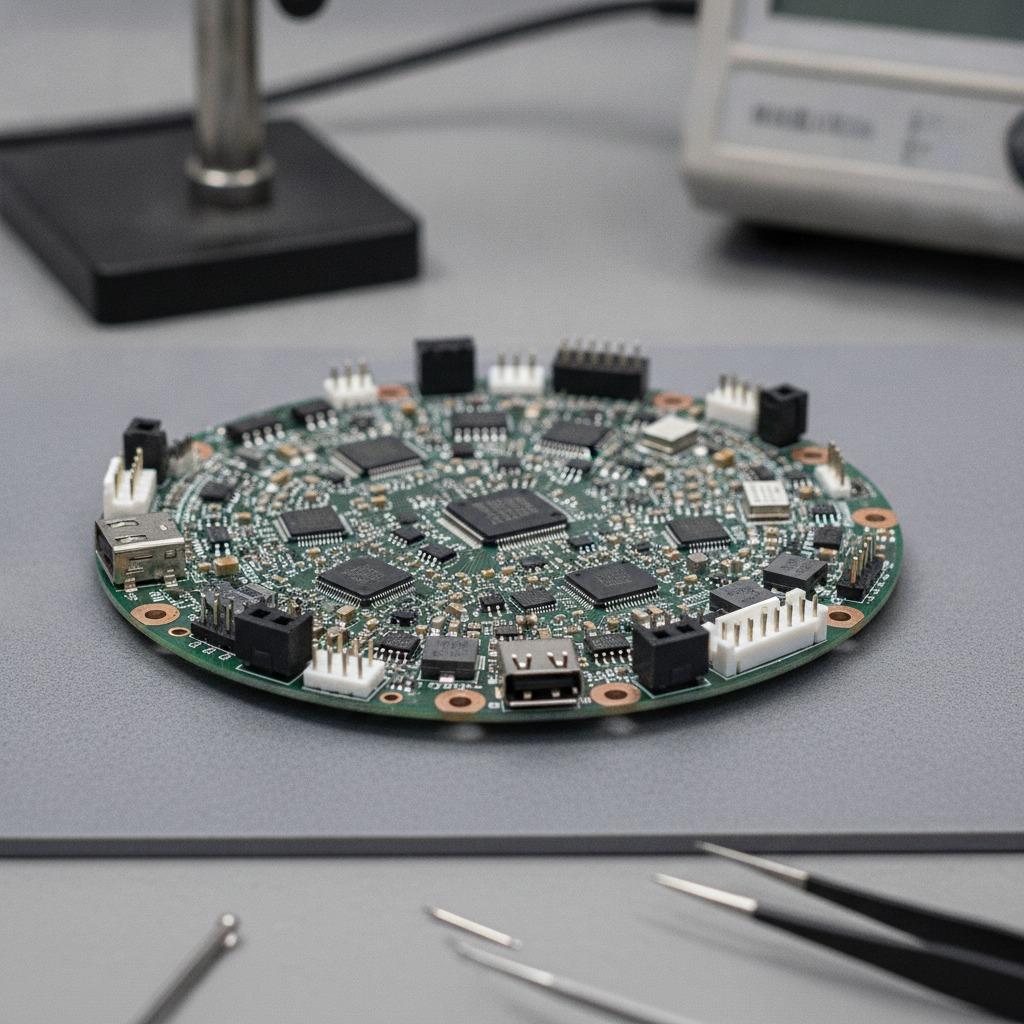
Based on the provided product data, this is a custom PCBA service centered on round or circular printed circuit board assemblies. The visible boards show dense surface-mount components, several integrated circuits, metal connector housings, and ringed mounting or via features spread across the board surface. The image also shows panelized production, which indicates the boards are processed in arrays for efficient manufacturing and then separated during assembly or downstream handling.
The product appears to support electronic signal handling, power distribution, and board-to-board or board-to-device connections. Because the exact end product is not identified, it is best described as a general-purpose assembled control or processing board rather than a finished consumer device.
Key Specifications and Visible Capabilities
Board geometry and structure
The most visible feature is the circular form factor. Unlike standard rectangular boards, a round layout can simplify integration into domed camera shells, cylindrical housings, rotating interfaces, or compact control units. The board surface appears to use a dark solder mask with white silkscreen marking, exposed copper or gold-colored pads, and multiple plated through holes.
Assembly density
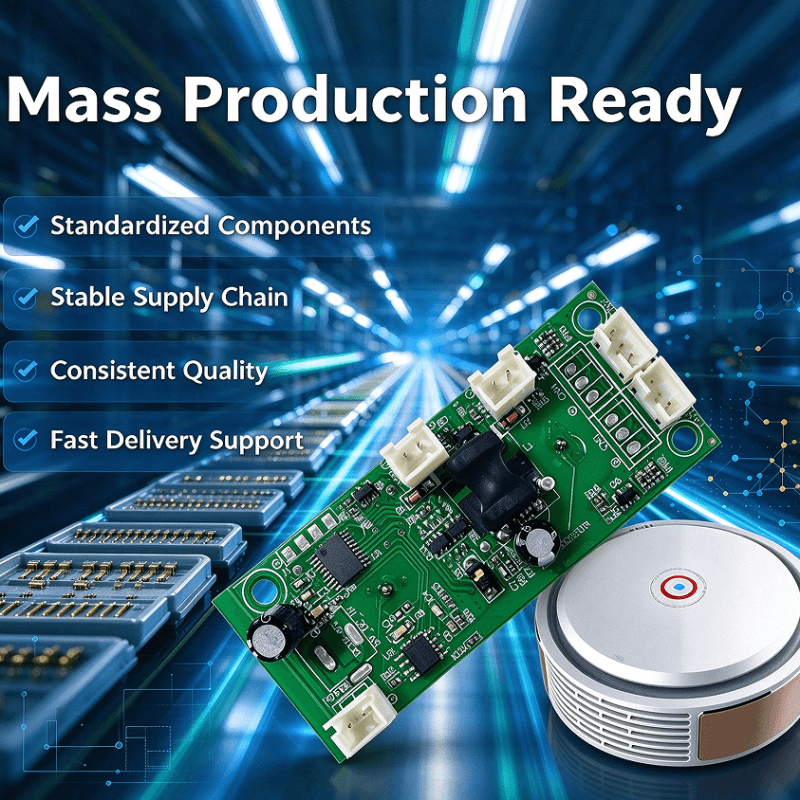
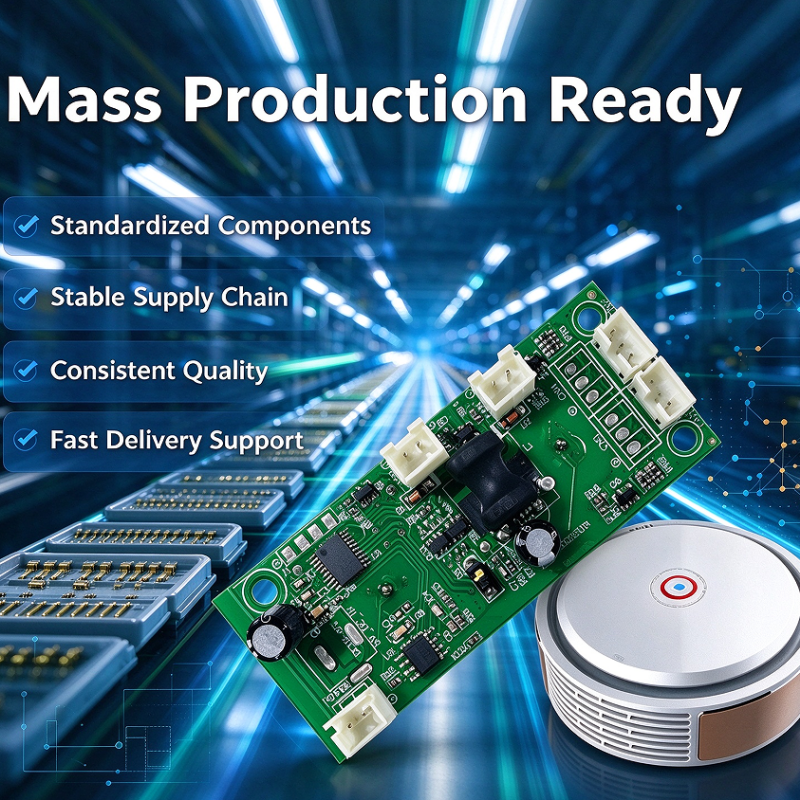
The boards are populated with a mix of IC packages, passive components, and edge or board-mounted connectors. This suggests a multi-function assembly where space is used efficiently and routing must be carefully planned. Repeated modules in the image also point to a scalable production setup suitable for prototype and batch manufacturing.
Manufacturing cues
The provided information identifies PCBA manufacturing and shows claims such as ROHS certified, UL certified, and 15 years of experience. Those statements are visible in the source graphic, but the exact certification scope and applicability to a specific board variant are not confirmed here.
Materials and Finish Options
From the image, the substrate is likely an FR-4-type fiberglass epoxy PCB, though the exact laminate grade is not specified. The visible finish includes a dark solder mask, exposed metallic pads, and plated mounting holes. Connector housings appear metallic, and the component package surfaces are matte and low-profile, which is typical for SMT assembly.
For custom builds, buyers usually discuss board color, copper weight, surface finish, solder mask type, silkscreen requirements, and whether any protective coating is needed. None of those details should be assumed from the image alone, but they are common decision points when ordering a Circular PCBA board.
Manufacturing Process
The visible layout is consistent with standard PCB fabrication followed by SMT assembly, and possibly through-hole insertion where needed. In a typical flow, the supplier may first review the design for manufacturability, then fabricate the board, apply solder paste, place components, run reflow soldering, and inspect the assembly. Depending on project needs, the service may also include component sourcing, functional test, and packaging.
hcdpcba states capabilities that include PCB prototyping, SMT assembly, component procurement, assembly, testing, DFMA support, OEM, and ODM services. That combination is useful for buyers who want one supplier to manage more than a single process step. It also reduces coordination gaps between design, procurement, and assembly.
Where This Board Type Is Used
A round security camera PCBA may be one possible application, especially when the end product uses a circular internal structure. Other application scenarios include industrial controls, IoT devices, instrumentation, communication hardware, embedded modules, and automation equipment. The same board style can also support the needs of a WiFi CCTV mainboard or an IPC camera PCBA when the enclosure and connector layout require a compact circular arrangement.
Because the actual end use is not identified in the supplied data, it is safer to treat this as a flexible custom electronic assembly platform rather than a single fixed product.
Quality Control and Compliance Considerations
The provided content highlights quality control as part of the service offering, along with ROHS and UL badges in the graphic. That indicates the supplier wants to communicate compliance-oriented manufacturing. For buyers, the more important issue is how quality is verified for their specific build: incoming component checks, solder joint inspection, polarity control, connector alignment, and functional testing are all common checkpoints in PCBA work.
When evaluating a supplier, ask what inspection methods are used, whether test fixtures can be supported, and whether the assembly includes final electrical test or only visual inspection. Those details matter more than marketing claims alone.
Customization Guidance for Buyers
If you are sourcing a Circular PCBA board, start with the mechanical envelope. The board diameter, connector positions, mounting hole locations, and component height limits should match the enclosure before mass production starts. Next, clarify whether you need prototype, pilot, or batch production, since each stage may require different procurement and test planning.
It is also useful to define whether the project needs component sourcing, assembly only, or a full turnkey service. For products such as the 553-4P2 circuit board, the finished build may depend on connector selection, firmware loading, or specific test coverage. Those requirements should be documented early to avoid redesign later.
Buyer Decision Factors
When comparing suppliers, focus on manufacturability, inspection capability, communication speed, and the ability to support repeat production. hcdpcba emphasizes rapid response, cost control, confidentiality, and one-to-one service. For many OEMs, these service factors matter as much as the board itself, especially when the project includes custom electronics or time-sensitive launches.
Also confirm whether the supplier can handle small and large runs, whether they support DFMA review, and how they manage replacement parts if an approved component becomes unavailable. A good PCBA partner should help prevent assembly risk, not simply place parts on a board.
Request a Custom Quote
If you need a circular PCBA board for an embedded device, camera module, industrial controller, or communication product, share your drawings, BOM, Gerber files, and test requirements with the supplier. A clear package shortens quotation time and improves build accuracy. For project discussion and sourcing support, contact hcdpcba at +86 18924624188 to review your prototype or production needs.