Why USB-C powered thermal and charging boards are showing up in more products
A wireless charger coil pcba is no longer just a hidden part inside a phone dock. It is now the kind of compact module product teams look at when they want to combine desktop convenience, stable power input, and a clean industrial design. The same is true for related modules used in cup warming and small appliance builds: the board is doing more than one job, and that changes how engineers think about layout, heat, sourcing, and assembly.
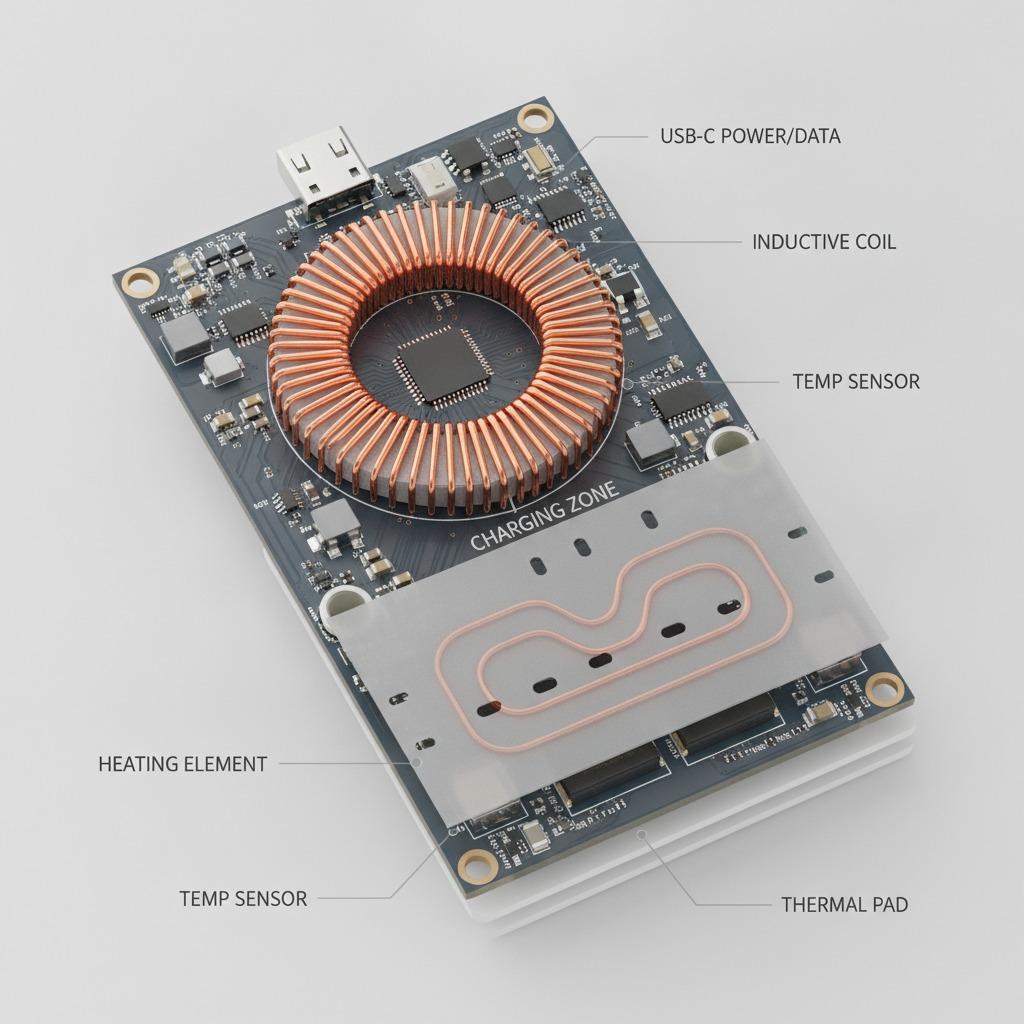
On the bench, these boards often look simple. In reality, they sit at the intersection of power electronics, thermal management, and assembly quality. A USB Type-C input connector, a circular inductive coil, surface-mount parts, and a controller circuit all have to work together without creating excess heat, noise, or instability. If you are choosing a module for a consumer product, a prototype, or an OEM build, the real question is not whether the board “works.” It is whether it can be integrated cleanly into your enclosure, meet your usage profile, and survive repeated daily use.
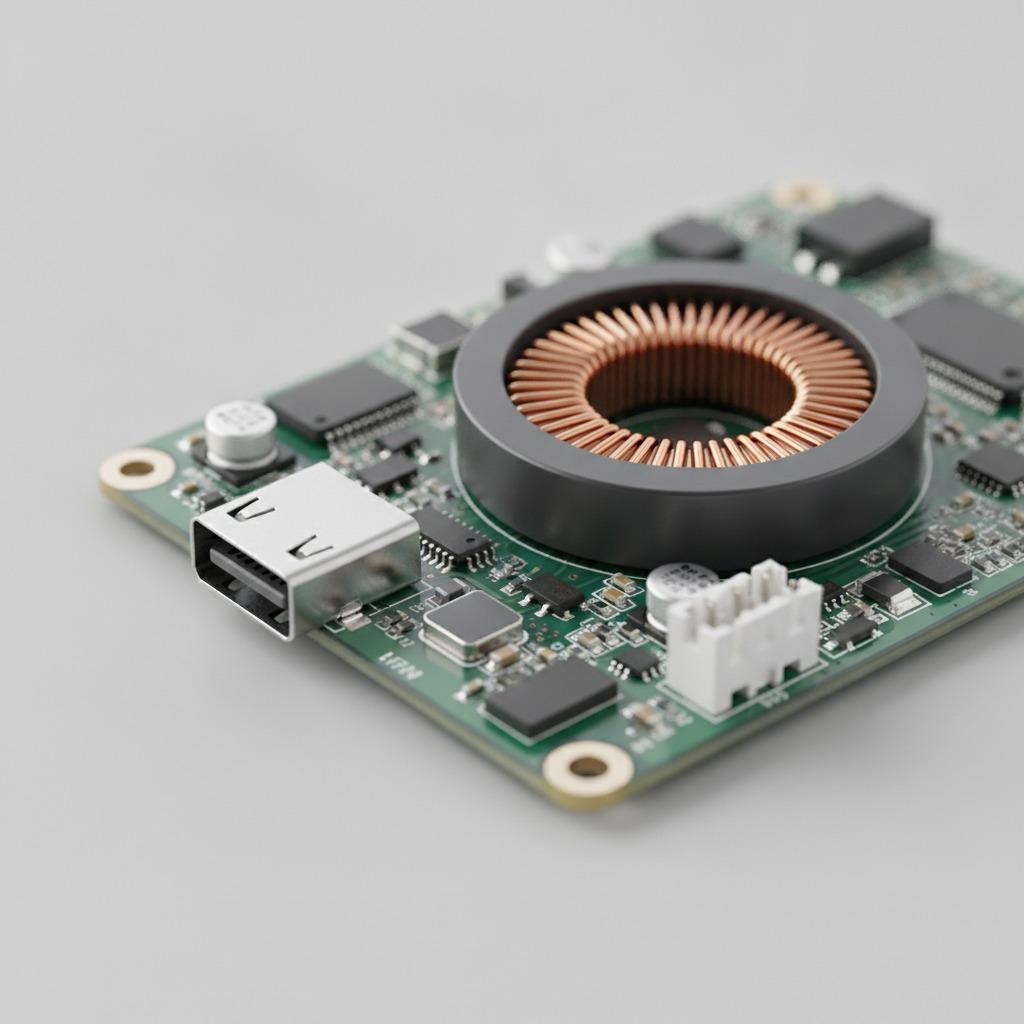
What the board is doing, depending on the product category
The same general PCB structure can serve different product types. In the provided material, there are three closely related use cases: a USB-C powered module, a constant-temperature mug warmer, and a Qi wireless charging module. That overlap is useful, because the manufacturing logic is similar even if the end product differs.
For a wireless charging build
A Qi wireless charger module typically uses a central inductive coil to transfer energy to a compatible device. The board usually needs careful coil placement, controlled switching, and enough thermal margin to keep performance stable during longer charging sessions. In buyer terms, the main concern is not just power delivery but repeatability. A charger that works once on the lab bench is not the same thing as one that behaves predictably in an enclosure with limited airflow.
For a cup warmer or desktop heating coaster
A cup warmer control board is more straightforward in concept but often more demanding in heat handling. The visible reference to 55°C suggests a constant-temperature target, which makes sense for beverage warming rather than rapid heating. That kind of product needs a practical balance: enough thermal output to hold a mug warm, but not so much that it creates unsafe surface temperatures or unnecessary power draw. For office and home products, that balance matters more than flashy features.
What to look for in a 2-in-1 board
When a design combines heating, wireless charging, or both, teams often describe it as a 2 in 1 pcba or a custom pcba for cup warmer & wireless charger. That sounds tidy on a spec sheet, but it raises real manufacturing questions.
First, the board layout has to handle two different electrical behaviors. Wireless charging depends on coil placement and signal integrity. Heating depends on power delivery and thermal dissipation. Put them together and you get more component density, more heat concentration, and more chances for a marginal solder joint or poor connector placement to become a field issue.
Second, the mechanical stack-up matters. A desktop heating coaster pcba solution, for example, has to sit under or around the heating surface without warping, loosening, or creating hotspots. The board may be small, but the enclosure tolerances and the adhesive or fastening strategy can make or break the product.
Why USB-C input is now a practical default
The visible USB-C input on these modules is not just a convenience feature. For sourcing teams, it simplifies the ecosystem. USB-C is widely recognized, easy to route into compact products, and familiar to end users. It also helps reduce connector confusion during assembly and after-sales support.
That said, USB-C on its own tells you very little about actual performance. You still need to confirm the input profile, power budget, and thermal behavior for the full product. A board can look modern and still be poorly matched to the load if the surrounding circuitry is not designed with care. This is where module selection should stay disciplined rather than optimistic.
Manufacturing details that matter more than marketing copy
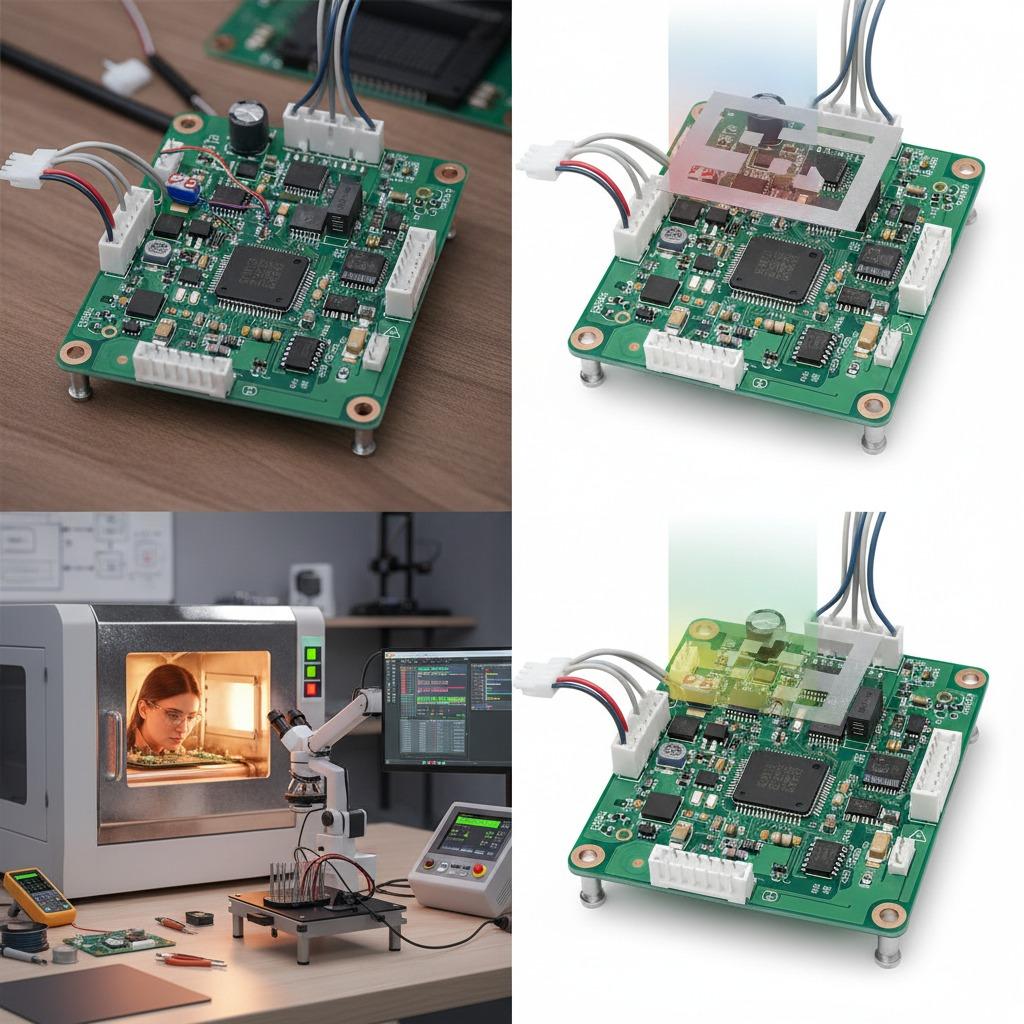
The visible boards in the provided data show the kind of mixed assembly common in compact power products: FR-4 style PCB substrates, surface-mount components, a connector shell, and coil or heating elements mounted into a tight footprint. That is a normal electronics assembly process, but the details matter.
For example, a coil that is slightly off-center can affect consistency. A connector that is not well supported can become a failure point after repeated plug cycles. A red encapsulated component may be a capacitor or another power part; whatever it is, its placement near heat-sensitive areas needs to be deliberate. These are not glamorous issues, but they are the ones that drive return rates.
Common buyer mistakes
One common mistake is treating all compact PCBA modules as interchangeable. They are not. A wireless charger module, a cup warmer board, and a generic USB-C power board may look similar from a distance, but the control strategy and thermal constraints can be very different.
Another mistake is overfocusing on the visible features and underweighting the invisible ones. The board markings, the neat coil, and the input port are useful clues, but they are not a substitute for design documentation, testing, or a proper DFMA review. If the product is going into a consumer enclosure, you want to know how it is assembled, how it is tested, and what happens when a part drifts out of spec.
How hcdpcba fits into this kind of project
hcdpcba positions itself around SMT assembly, PCB fabrication, component sourcing, assembly, testing, OEM, and ODM support. For buyers working on a wireless charger coil pcba or a heating-related module, that matters because these projects are rarely just board-only jobs. They usually need coordination across layout, sourcing, soldering, and verification.
That is especially true for custom consumer electronics where design-for-manufacture advice can save time early and avoid trouble later. If your product combines a power input stage with a thermal or inductive output stage, a supplier that can support DFMA, assembly, and testing in one chain is easier to work with than three separate vendors making different assumptions.
Practical next step for sourcing teams
If you are evaluating a desktop heating coaster pcba solution or a wireless charging module, start with the use case rather than the board photo. Define whether the product is a warmer, charger, or combined unit. Then confirm the input interface, target temperature or charging behavior, enclosure constraints, and expected duty cycle. Those basics will do more to shape a reliable build than any marketing headline.
For OEM and ODM programs, the smartest move is to ask for the PCB stack-up, assembly flow, and test approach early. That is where problems usually appear first, and also where a good manufacturing partner can add value without drama.
FAQ
Is a wireless charger coil board the same as a heating board?
No. They may share a compact PCB structure and a USB-C input, but the electrical function is different. Charging uses inductive power transfer; heating uses thermal control and power dissipation.
Can one board do both jobs?
Yes, in principle, but it becomes a more complex design. The combined thermal and electrical requirements need careful validation.
What should I request from a supplier first?
Ask for functional description, assembly flow, component sourcing approach, and the test plan. If the supplier can support DFMA and testing, that usually helps the project move faster and with fewer surprises.
If you are developing a custom pcba for cup warmer & wireless charger products, start with the board function, not the form factor. That keeps the design conversation grounded in what the product actually has to do.