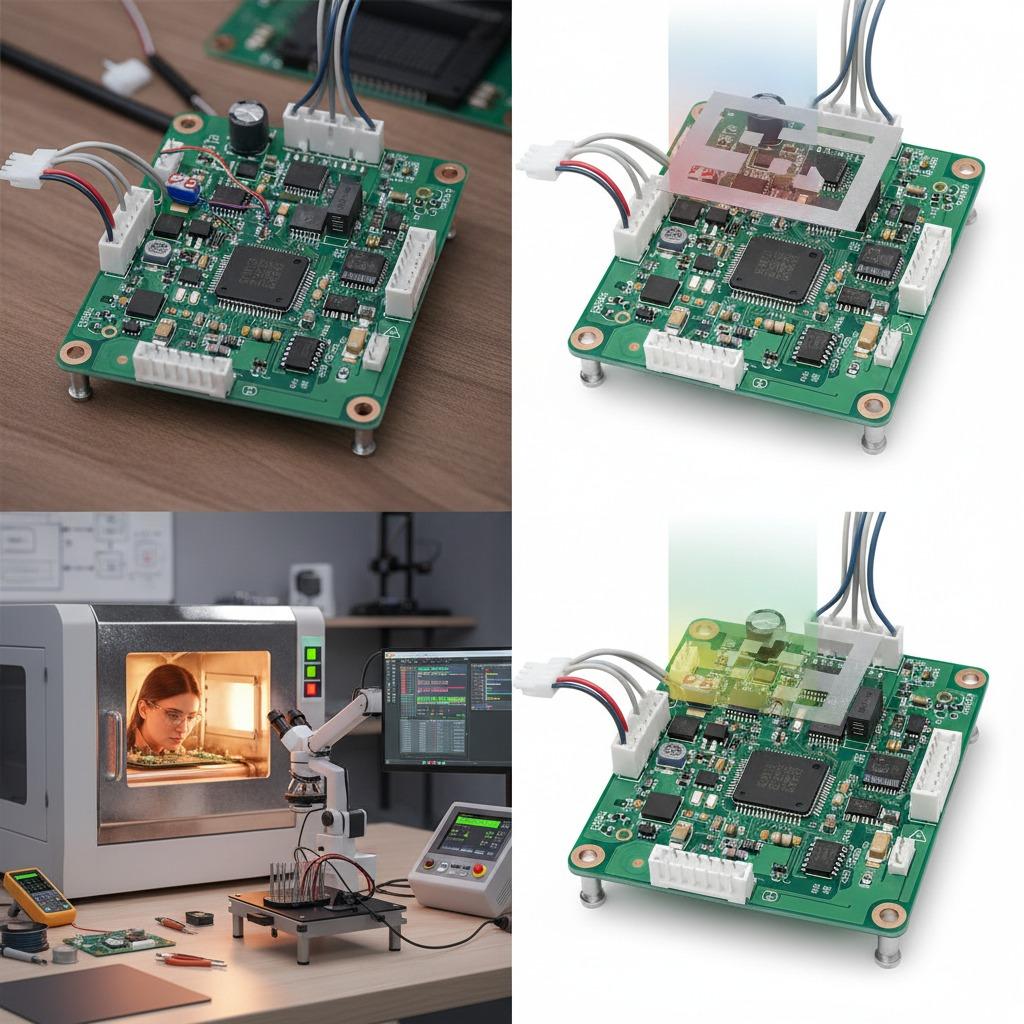
Projector Driver PCBA Manufacturer: Powering Precision and Stability in Modern Projection Systems
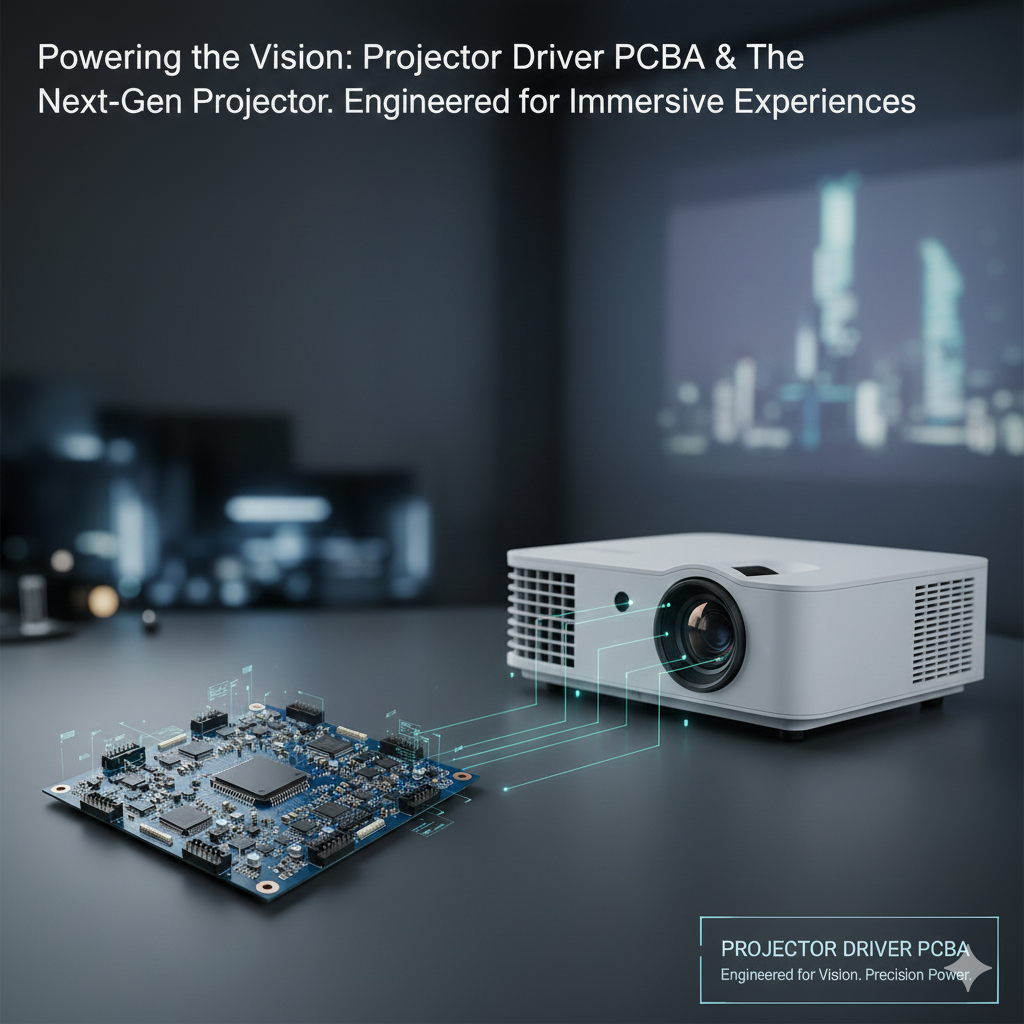
Behind every vivid, stable projection lies a silent engine — the projector driver PCBA.
This circuit board doesn’t just power the light; it orchestrates how electricity, optics, and temperature work together to create a bright, balanced, and distortion-free image.
A professional projector driver PCBA manufacturer goes beyond standard board assembly. It blends electrical precision with optical synchronization, ensuring that what you see on screen remains consistent hour after hour, frame after frame.
The Central Role of PCBA in Projection Systems
A projector is a compact symphony of technologies — light engines, image processors, cooling systems, and communication modules — all coordinated by its driver PCBA.
This board acts as the command center, converting input signals into power, motion, and light.
| Subsystem | Purpose | PCBA Engineering Focus |
|---|---|---|
| Light Source Driver | Controls LED/Laser brightness and color | PWM frequency stability, current linearity |
| Power Supply Unit | Converts AC to multiple DC rails | Low ripple (<20mV), surge protection |
| Optical Module Control | Synchronizes DMD/LCD with image signals | Timing precision, EMI suppression |
| Thermal Management System | Regulates cooling fans and sensors | Balanced heat dissipation across zones |
| Main Communication Board | Interfaces with HDMI, USB, Wi-Fi | Controlled impedance and noise isolation |
Each function interacts seamlessly through the board’s logic and layout. Any deviation in design or assembly could result in flickering, color shifts, or premature component wear.
Power Management: The Heart of Projection Stability
In projection systems, power is performance.
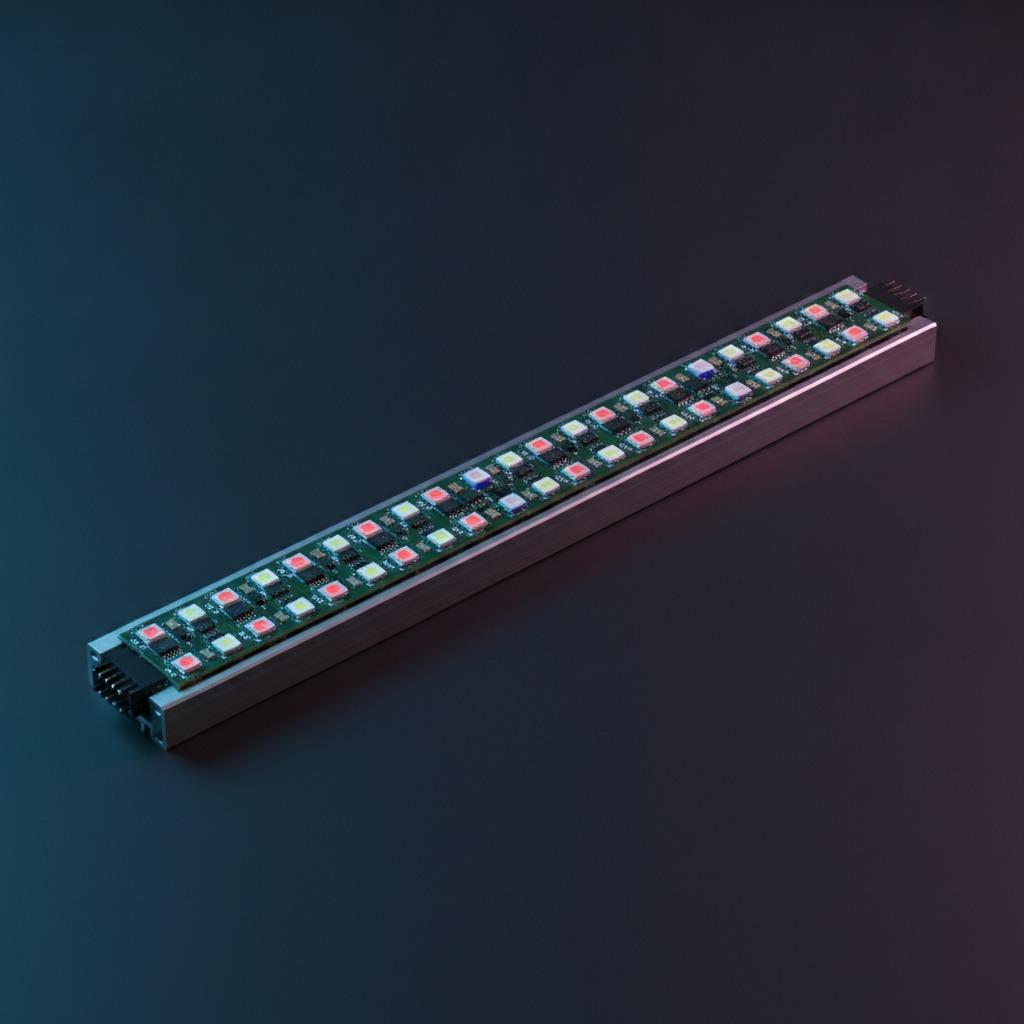
Modern LED and laser projectors rely on high-efficiency driver boards that can deliver stable current while minimizing heat buildup.
Professional power driver PCB manufacturing involves:
-
2–4 oz copper layers to handle continuous current loads.
-
Dedicated power and signal zones to prevent interference.
-
Thermal vias and copper planes beneath MOSFETs for heat evacuation.
-
Nitrogen reflow soldering for clean joints and consistent conductivity.
-
Aluminum or hybrid-core boards to accelerate thermal transfer.
These engineering details ensure that projection brightness remains steady even after hundreds of hours of continuous use.
Synchronizing Optics and Electronics
Just as light defines projection quality, timing defines image clarity.
The optical module — containing DLP chips, LCD panels, and micromirrors — must synchronize perfectly with the board’s control logic.
| Control Function | Signal Type | PCBA Requirement |
|---|---|---|
| Frame Synchronization | Clock/Sync pulses (MHz range) | Length matching ±5 mil |
| Color Wheel Control | PWM or Hall feedback | Real-time speed modulation |
| Light Intensity Adjustment | Analog dimming | EMI shielding, minimal delay |
| Signal Timing | LVDS / HDMI | Differential routing, impedance control |
When electrical timing aligns precisely with optical mechanics, the result is sharper frames, smoother color transitions, and a flicker-free viewing experience.
Durability Built for Harsh Environments
Inside a projector, the heat and vibration levels rival those of small industrial systems.
That’s why high-temperature resistant PCBA design is a non-negotiable requirement.
To endure prolonged thermal stress, manufacturers select materials and coatings that sustain performance under extreme conditions:
-
High-Tg laminates (≥170°C) prevent delamination or warping.
-
Lead-free SAC305 solder resists fatigue and microcracks.
-
Conformal coatings block moisture and dust intrusion.
-
Low-outgassing adhesives prevent optical contamination.
-
Reinforced connectors ensure long-term mechanical reliability.
Every design choice protects the projector’s light engine — ensuring your device performs flawlessly, even in 24/7 environments like theaters or exhibitions.
Testing for Reliability and Optical Precision
Consistency defines credibility.
Before shipment, each projector control board assembly undergoes multiple quality verification stages to simulate real-world performance.
| Testing Type | Objective | Verification Method |
|---|---|---|
| AOI + X-ray Inspection | Detect solder voids and misalignment | 100% inline inspection |
| Burn-In Test (8–12h) | Assess thermal reliability | Continuous load under max brightness |
| High Voltage Test | Validate insulation safety | 3kV dielectric testing |
| Functional Light Test | Confirm brightness curve | Coupled with optical engine |
| Environmental Test | Test against humidity & vibration | 60°C / 90% RH for 24 hours |
Through this comprehensive validation, manufacturers ensure every board delivers consistent performance across production batches.
Advantages of Partnering with a Specialized PCBA Manufacturer
Working with an experienced projector driver PCBA manufacturer means more than outsourcing assembly—it means gaining a technical partner.
Key advantages include:
-
Integrated Optical-Electrical Expertise – Unified design between power, optics, and signal flow.
-
Thermal-Reliable Design – Built to manage confined enclosures and extended runtime.
-
Certified Components – LED drivers, MOSFETs, and microcontrollers sourced for projection-grade stability.
-
Automated Traceability – MES-driven data collection ensures process consistency.
-
Custom Solutions – Tailored PCB layouts for LED, DLP, and laser-based projection systems.
These capabilities translate into faster product cycles, higher yields, and fewer field failures.
Versatile Applications Across Projection Industries
The applications of professional projector PCB assemblies are as diverse as the projection market itself:
-
Home entertainment systems focusing on brightness and silent cooling.
-
Educational and conference projectors requiring low energy consumption.
-
Outdoor or signage projectors designed for dust and heat resistance.
-
Automotive HUD units with miniaturized optics.
-
Cinema-grade or AR/VR projection modules demanding ultra-low latency and color fidelity.
In each case, the PCBA serves as the foundation—translating electrical control into precise visual expression.
lumination Starts with Electronic Precision
Every brilliant projection starts not with light—but with control.
The projector driver PCBA governs every watt, every frame, every hue that shapes the viewing experience.
For OEMs and technology partners seeking long-lasting projection performance, choosing the right PCBA manufacturer defines the difference between brightness and brilliance.
Explore our production capabilities at www.hcdpcba.com or contact our engineers directly via the contact page.
Because enduring light always begins with reliable electronics.