Why a mini drone circuit board is more than a small PCB
A mini drone circuit board has a simple-sounding job: fit flight control, sensing, power handling, and communication into a very small space. In practice, that little board often determines whether a drone feels crisp in the air or frustratingly unstable. For engineers and sourcing teams, the real question is not just how small the board can be, but how much performance and manufacturability can be packed into the layout without creating noise, heat, or assembly headaches.
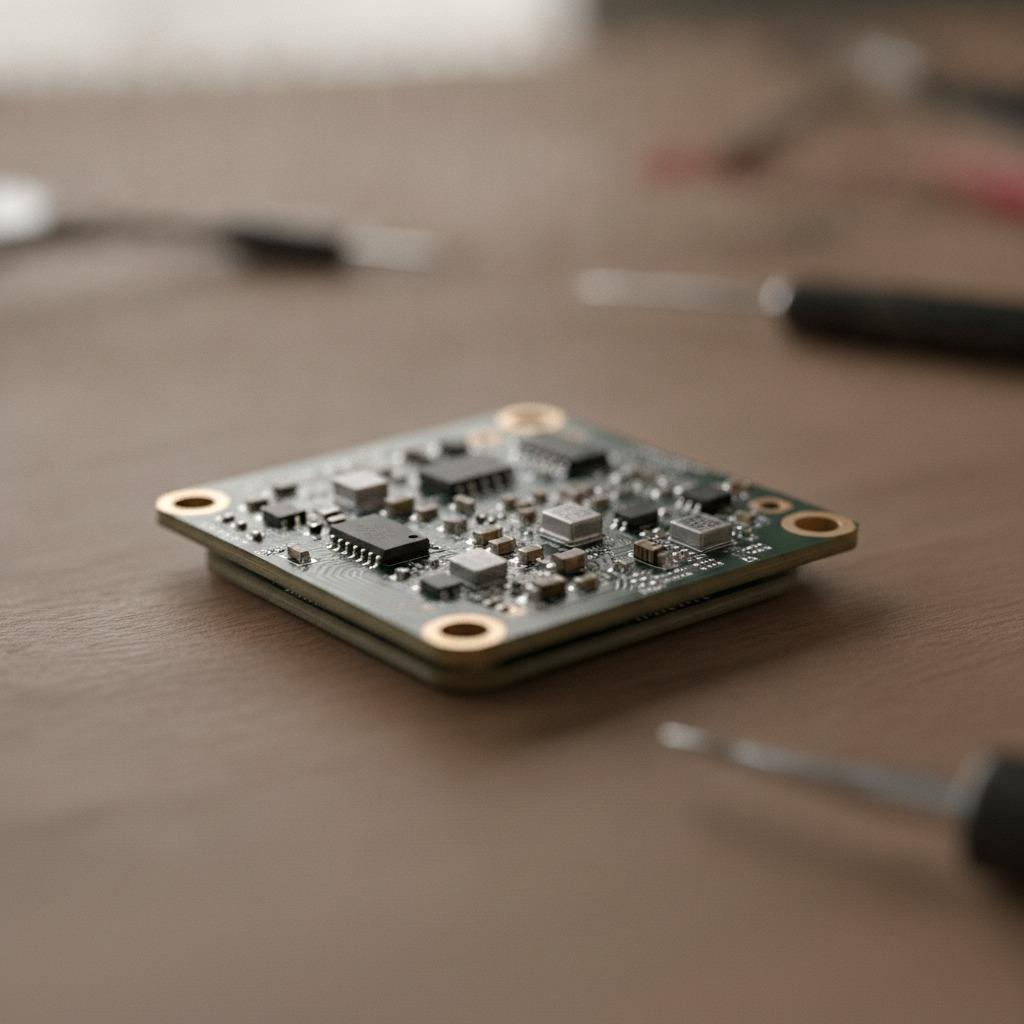
That matters across hobby drones, FPV platforms, and compact industrial UAV designs. A board that works in the lab can still fail in production if the stack-up is awkward, the component placement is crowded, or the test flow is weak. If you are comparing a drone circuit board supplier, you are really deciding how much risk you want to carry in your prototype build and ramp-up.
What usually sits on the board
Most mini drone platforms bring several functions together: flight control, sensor input, power regulation, motor signal handling, and sometimes wireless or telemetry support. In FPV setups, the board often has to respond quickly to throttle changes and vibration. In a more industrial UAV circuit board, the emphasis may shift toward reliability, stable sensing, and clean integration with other onboard electronics.
An integrated sensor drone board can combine inertial sensing and control logic in a compact format, which reduces wiring and keeps mass down. That is useful, but it also raises the bar for layout discipline. Sensors dislike electrical noise. Power stages dislike cramped thermal paths. And once the board gets small enough, simple things like connector orientation and screw-hole placement become surprisingly important.
Key design choices that affect performance
Board size and layer count
Smaller is not always better. When the layout shrinks, routing becomes tighter and the designer may need more layers to preserve signal integrity and power distribution. For a mini drone circuit board, that can improve performance, but it also complicates fabrication and assembly. The right balance depends on how much the design needs to do, not on a trend toward ultra-compact hardware.
Thermal and vibration behavior
Drones do not live in gentle operating conditions. Motors generate vibration, and power components can warm up quickly in a sealed or partially enclosed frame. Good boards make room for heat dissipation and avoid placing sensitive components where mechanical stress is highest. This is one reason an apparently modest PCB layout can become difficult in production.
Assembly friendliness
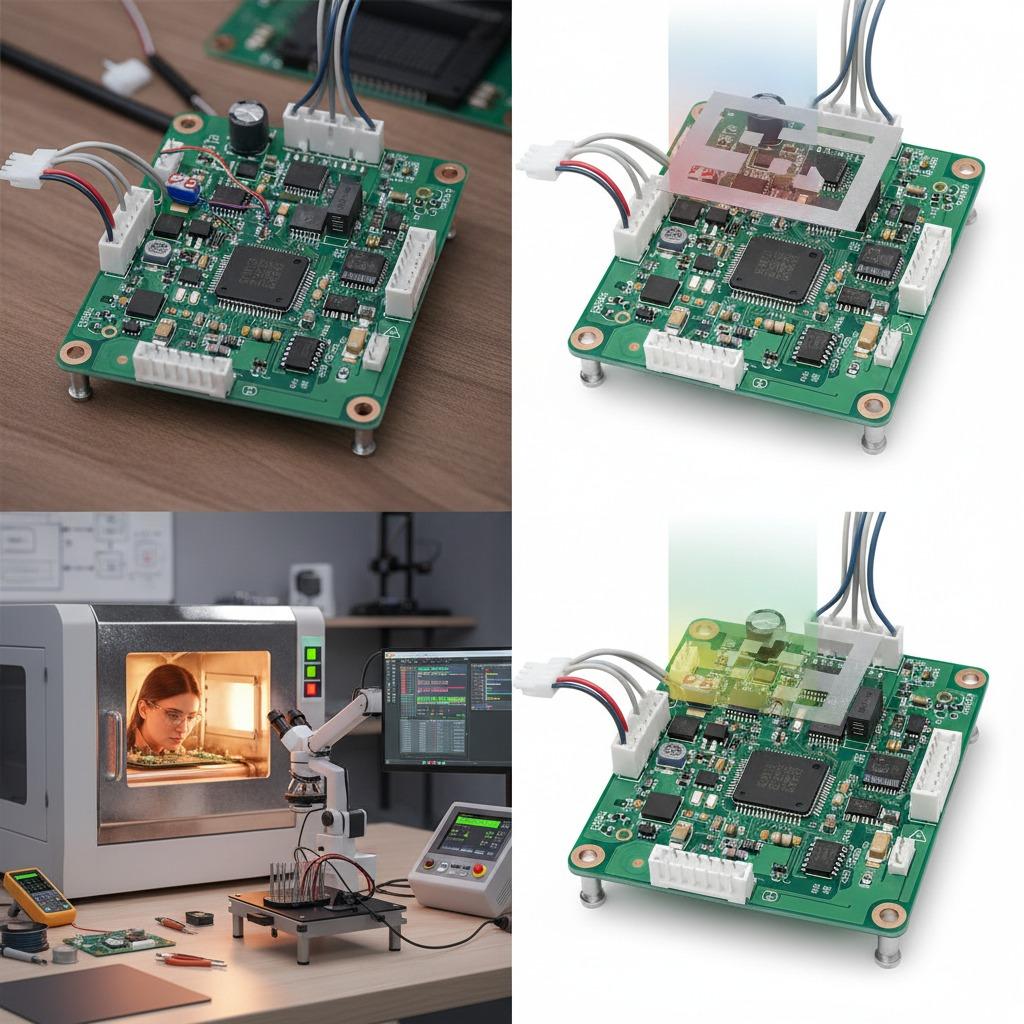
A board that is easy to prototype may still be awkward to assemble at scale. Fine-pitch components, dense connectors, and mixed package types can slow SMT lines and raise defect risk. For that reason, DFMA review is worth doing early. A small layout change can save real time later, especially when the product moves from pilot run to larger batches.
FPV, industrial, and general-purpose boards are not interchangeable
An FPV racing drone flight controller is usually tuned for fast response, tight integration, and minimal mass. An industrial UAV circuit board may need more emphasis on environmental robustness, repeatability, and long-term serviceability. A board intended for general consumer drones may sit somewhere in between. The point is simple: the best architecture depends on the use case, not just the form factor.
Buyers sometimes make the mistake of comparing board quotes without comparing the underlying build complexity. Two boards can look similar on paper while one uses denser routing, more demanding component placement, or stricter testing. That difference shows up later in yield, stability, and rework rates.
What to ask before placing an order
Before sourcing a mini drone circuit board, ask how the supplier handles PCB prototyping, SMT placement, sourcing, assembly, and test. For compact electronics, the real value often comes from one-stop coordination. hcdpcba, for example, offers PCB prototyping, SMT assembly, component sourcing, assembly, test support, and DFMA services, along with OEM and ODM support. It also works with multi-layer boards, HDI boards, and high-frequency boards, which may matter when a drone design becomes more demanding than a basic single-purpose controller.
Another practical question is whether the supplier can support both small trial runs and larger production lots without changing the process quality. That is especially relevant for drone teams moving quickly from concept hardware to flight-ready units. A fast quote is useful, but a stable process is what keeps the revision cycle under control.
Common mistakes in procurement
The first mistake is treating all small boards as commodity parts. Drone electronics are compact, but they are not generic. The second is ignoring test strategy. A board can look perfect visually and still fail under vibration, power cycling, or sensor calibration checks. The third is underestimating the value of component sourcing discipline. Substitutions can be harmless in one design and disastrous in another.
One more caution: do not assume the cheapest assembly quote is the lowest-cost option. Rework, delayed tuning, and unstable batches can erase any savings quickly. That is especially true when the application depends on responsive flight behavior.
A practical next step
If you are developing a mini drone circuit board for FPV, a compact UAV platform, or a sensor-integrated control module, start by clarifying the board’s operating role, target size, and assembly constraints. Then review stack-up, component density, and test expectations with your manufacturing partner before the design is frozen. That early conversation usually saves more time than a late-stage redesign.
For teams that need support across prototyping, SMT assembly, sourcing, and DFMA review, a supplier such as hcdpcba can help bridge engineering intent and production reality. In small drone hardware, that bridge is often the difference between a board that merely fits and a board that actually flies well.